Have you ever stopped while writing a sentence and wondered whether to use can or may?
Many people get confused because both words are used when asking for something or talking about possibility.
You may hear these words in school, offices, emails, social media comments, text messages, and daily conversations. For example, someone might ask:
- “Can I go outside?”
- “May I go outside?”
Both sound similar, but they are not always used in the same way.
Students often struggle with this topic in English grammar because teachers sometimes say one word is “more correct” than the other. At the same time, modern English speakers use both casually in daily life. This makes learners even more confused.
Understanding the difference between can or may helps you speak politely, write better English, and avoid common grammar mistakes. It also improves communication in formal situations like school assignments, interviews, and workplace emails.
In this guide, you’ll learn the meaning, examples, usage, differences, common mistakes, and simple explanations in easy English.
Can or May – Quick Answer
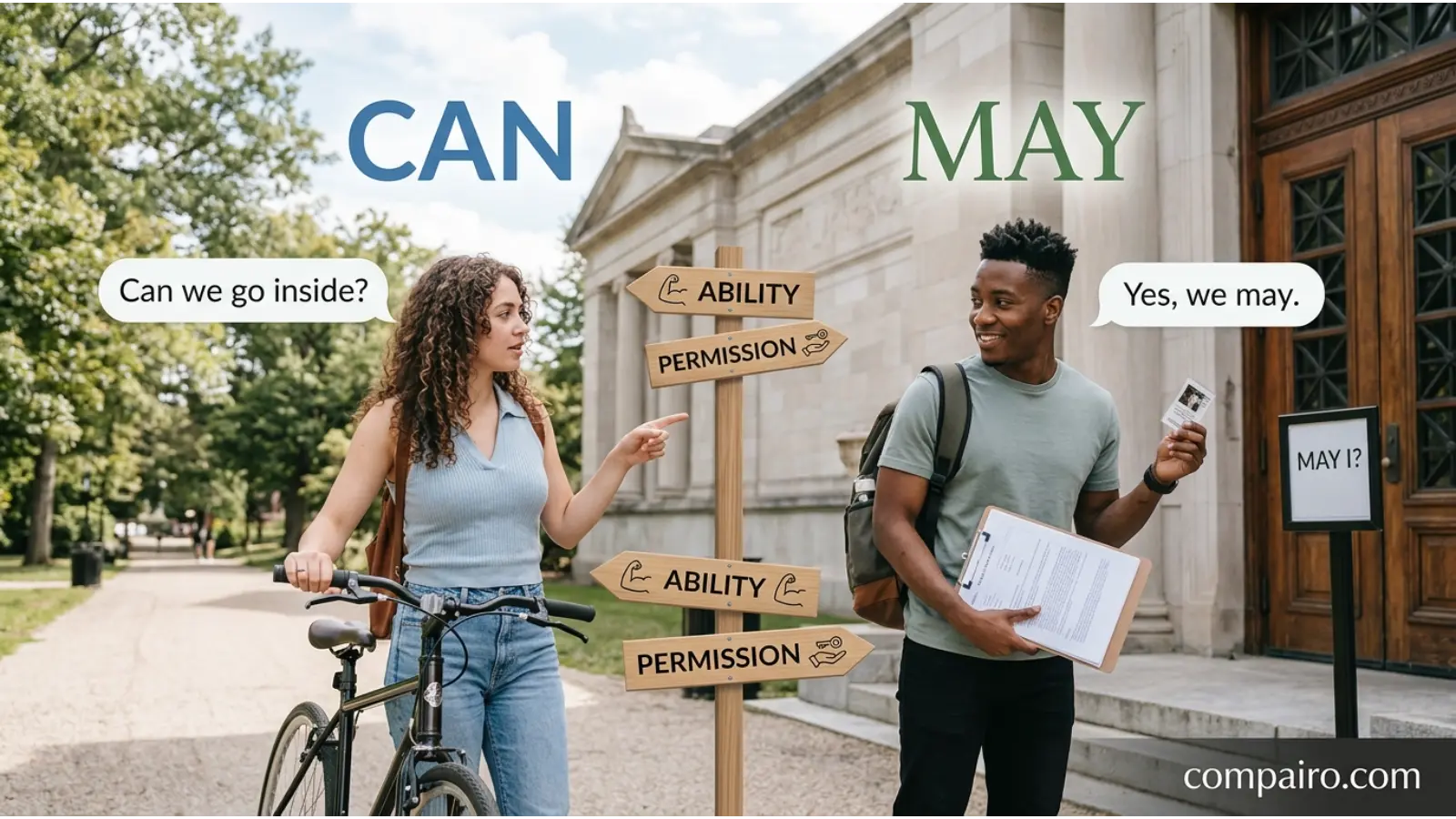
👉 Can usually talks about ability.
👉 May usually talks about permission or possibility.
Examples
✅ I can swim.
(Ability)
✅ May I enter the room?
(Permission)
✅ It may rain today.
(Possibility)
Simple Rule
👉 Can = ability
👉 May = permission or possibility
Easy memory trick:
“Can” shows power. “May” shows permission.
The Origin of Can or May
The words can and may are very old English modal verbs. They have been used for hundreds of years.
- Can came from old Germanic words meaning “to know” or “to be able.”
- May came from old words meaning “to have permission” or “to be allowed.”
In traditional English grammar, teachers strongly separated the two words:
- Can = ability
- May = permission
Over time, everyday English became more relaxed. Today, many native speakers use can when asking permission in casual conversations.
For example:
- “Can I use your phone?” is now common in spoken English.
Still, may is considered more formal and polite in schools and professional settings.
British English vs American English Usage
Both British and American English use can and may in similar ways. The main difference is formality.
| Feature | British English | American English | Notes |
|---|---|---|---|
| Permission | “May I?” often used formally | “Can I?” very common | Both are correct |
| Ability | Can | Can | Same usage |
| Possibility | May | May | Same meaning |
| Formal writing | May preferred | May preferred | More polite |
👉 Usage is mostly the same worldwide.
Which One Should You Use?
Here’s a simple guide for choosing between can or may.
Use “Can” When:
- Talking about ability
- Speaking casually
- Having everyday conversations
- Talking with friends or family
Examples:
- I can drive.
- Can you help me?
- She can speak Urdu and English.
Use “May” When:
- Asking permission politely
- Writing formal emails
- Speaking respectfully
- Talking about possibility
Examples:
- May I ask a question?
- You may leave now.
- It may snow tonight.
Formal vs Informal
| Situation | Better Choice |
|---|---|
| School classroom | May |
| Workplace email | May |
| Casual texting | Can |
| Talking with friends | Can |
| Formal speech | May |
Common Mistakes With Can or May

Mistake 1
❌ Can I leave the meeting, sir?
(In a very formal setting)
✔ “May I leave the meeting, sir?” sounds more polite.
Mistake 2
❌ I may swim very fast.
✔ “I can swim very fast.”
Use can for ability.
Mistake 3
❌ She can be late because of traffic.
✔ “She may be late because of traffic.”
Use may for possibility.
Mistake 4
❌ May you lift this heavy box?
✔ “Can you lift this heavy box?”
Use can for physical ability.
Can or May in Everyday Examples
Work
- May I schedule a meeting?
- I can complete this project today.
School
- May I go to the bathroom?
- She can solve difficult math questions.
Social Media
- You may know this trend already.
- I can’t stop watching these videos.
Daily Life
- Can you cook pasta?
- It may rain this evening.
Text Messages
- Can I call you later?
- We may arrive late.
Can or May – Google Trends & Usage Data

Many people search for can or may because English learners often mix them up.
Students in schools and colleges frequently ask:
- Which one is grammatically correct?
- Is “Can I?” rude?
- When should I use “may”?
This keyword is popular in countries where English learning is common, including:
- United States
- United Kingdom
- India
- Pakistan
- Canada
- Australia
Online grammar forums, YouTube lessons, TikTok study videos, and educational blogs also discuss this topic regularly.
Searches usually increase during:
- School exam seasons
- English grammar classes
- IELTS preparation
- Business English learning
Comparison Table: Can or May
| Feature | Can | May |
|---|---|---|
| Main Meaning | Ability | Permission/Possibility |
| Formality | Casual | Formal |
| Used for Ability | Yes | No |
| Used for Permission | Sometimes | Yes |
| Used for Possibility | Rarely | Yes |
| Common in Texting | Very common | Less common |
| Best for Formal Writing | Sometimes | Yes |
Can or May in Professional Life
In professional settings, choosing the right word helps you sound respectful and confident.
Workplace Examples
- “May I join the meeting?”
- “Can you send the report?”
- “You may begin the presentation.”
Why It Matters
Using may in formal situations often sounds more polite and professional.
Using can makes conversations feel friendly and natural.
In customer service, teaching, business emails, and interviews, grammar choices can affect communication quality.
Can or May for Students or Beginners
Many beginners struggle with can or may because both are used in similar situations.
Common Confusions
- Both can ask for permission
- Native speakers use them casually
- School grammar rules feel strict
Easy Learning Tips
- Use can for ability
- Use may for permission
- Remember that casual English is more flexible
- Listen to real conversations for practice
Helpful Practice
Ask yourself:
👉 “Am I talking about ability?” → Use can
👉 “Am I asking permission?” → Use may
Signs or Characteristics Related to Can or May
Signs You Should Use “Can”
- Talking about skills
- Describing ability
- Casual conversation
- Friendly texting
- Asking informal questions
Examples:
- I can dance.
- Can we go now?
Signs You Should Use “May”
- Asking politely
- Formal speaking
- Professional writing
- Talking about possibility
- Giving official permission
Examples:
- May I enter?
- You may begin the test.
Simple Trick to Remember Can or May
👉 Can = Ability
👉 May = Permission or Possibility
Think of it this way:
- “I can drive.” = I have the skill.
- “May I drive?” = I am asking permission.
Another easy trick:
👉 Can = Power
👉 May = Permission
This simple memory rule helps many English learners avoid mistakes quickly.
FAQS:
Is “Can I” grammatically correct?
Yes. It is correct in modern English, especially in casual conversation.
Is “May I” more polite?
Yes. “May I” sounds more formal and respectful.
Can “may” show possibility?
Yes. Example: “It may rain tomorrow.”
Do native speakers use “can” for permission?
Yes. Many native speakers say “Can I?” in daily conversations.
Which word is better for school writing?
“May” is usually better in formal school writing.
Can “can” and “may” mean the same thing?
Sometimes, especially when asking permission.
Is this grammar topic important?
Yes. It improves speaking, writing, and professional communication.
Conclusion
Understanding the difference between can or may is easier than many people think.
Use can when talking about ability or casual conversation.
Use may when asking permission politely or talking about possibility.
Even though modern English often mixes the two words, knowing the difference helps you sound clearer and more professional.
Final easy memory rule:
👉 Can = ability
👉 May = permission
Once you remember this simple trick, using these words becomes much easier in daily English.

Sara Taylor is a passionate English content writer who specializes in word meanings, spelling comparisons, and modern slang explanations. She creates easy-to-understand articles that help readers avoid common English mistakes and improve their writing skills. Her content focuses on simple learning, real-life examples, and clear explanations for everyday readers.