dwu meaning in text is something people often search for when they receive an unfamiliar abbreviation in a message. You might see DWU in a Snapchat conversation, Instagram DM, WhatsApp message, or casual text from a friend.
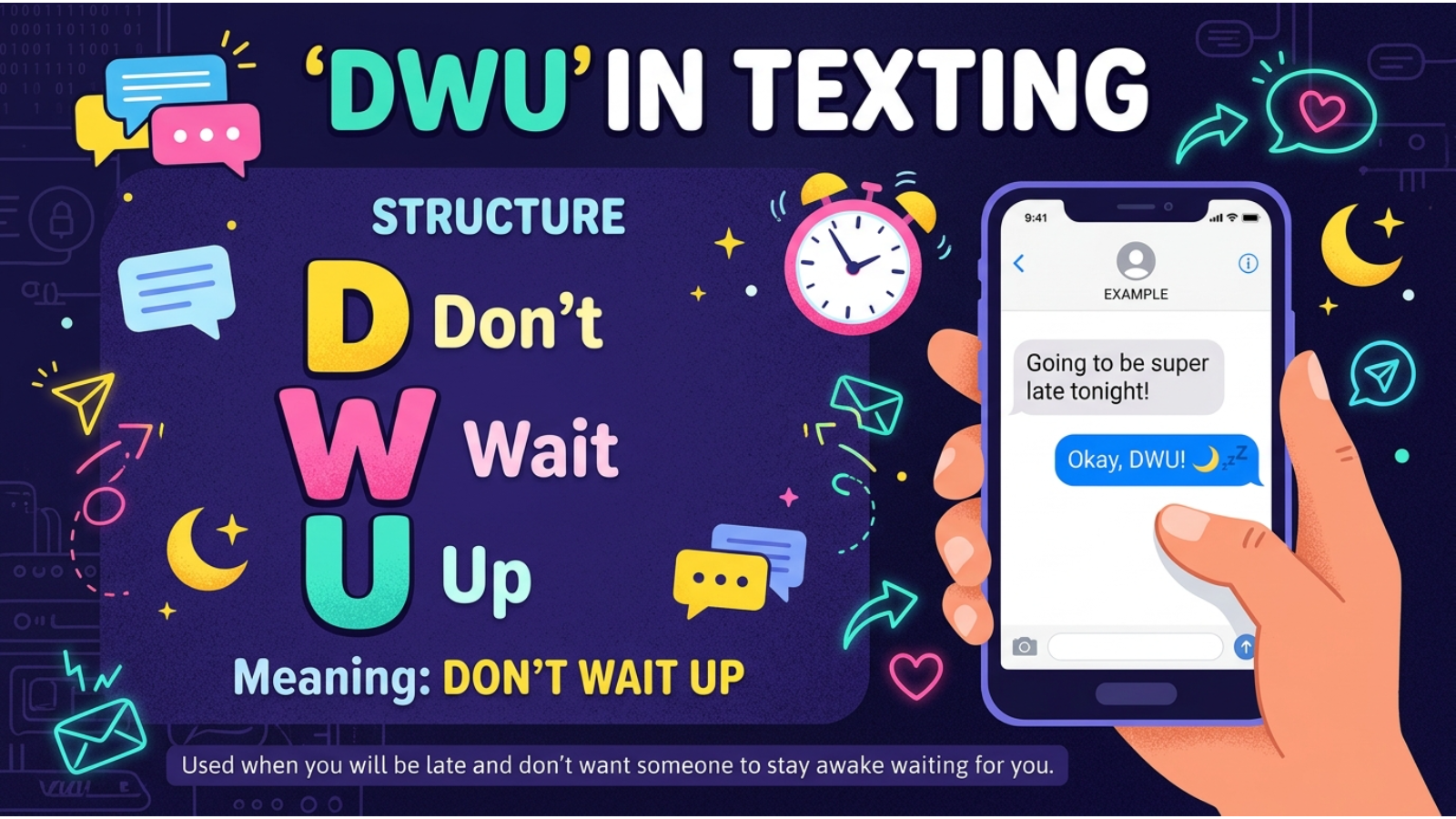
Since internet slang changes quickly, understanding these short forms can sometimes be confusing. DWU commonly stands for “Don’t Wait Up.” People use it when they want someone to know they should not stay awake or wait for them because they may arrive late or return after a long time.
However, the exact meaning can depend on the conversation. Learning how DWU works, when people use it, and how to respond can help you communicate more naturally online.
Quick Answer:
DWU commonly means “Don’t Wait Up” in texting. It tells someone not to stay awake or wait for you because you may be late or return much later.
What Does DWU Mean in Text?
DWU is a short texting abbreviation for “Don’t Wait Up.” It is commonly used in casual conversations when someone expects to be late or does not want another person to stay awake waiting for them.
For example:
Friend: “Are you coming home soon?”
You: “Not sure. DWU.”
This means you are telling your friend not to wait awake for you because you might return late.
The abbreviation makes messages shorter and saves time. Instead of typing the complete phrase, people can simply write DWU.
DWU Full Form and Definition
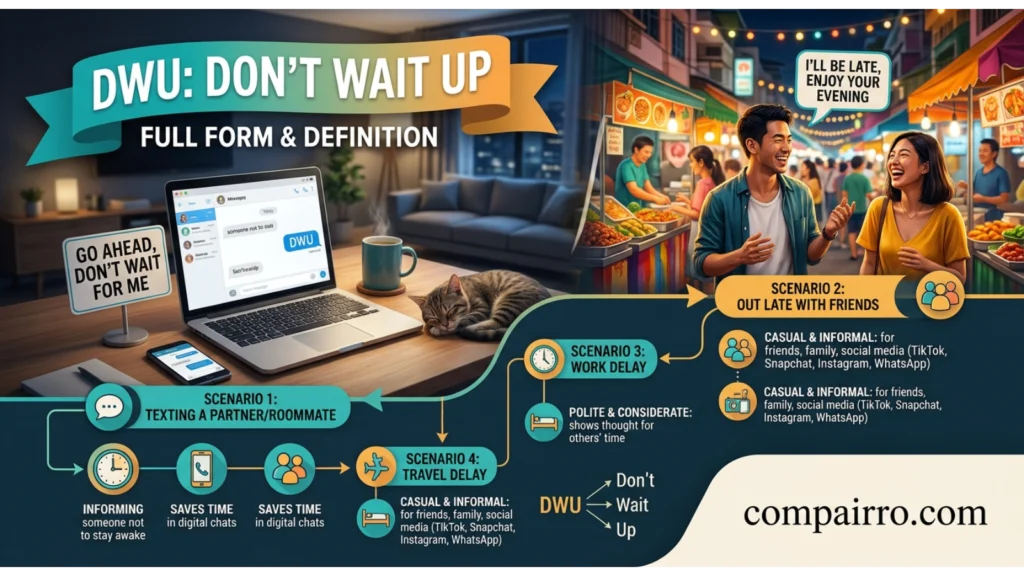
The most common full form of DWU in texting is Don’t Wait Up.
Here is what each word means:
- D: Don’t
- W: Wait
- U: Up
Together, these letters create a simple message asking someone not to stay awake waiting.
People generally use DWU when:
- They expect to arrive home late.
- They have plans that may take longer than expected.
- They do not want someone to stay awake for them.
- They want to end a conversation politely.
- They are informing someone that they will be unavailable for some time.
DWU is mainly an informal abbreviation used in everyday digital communication.
DWU Meaning in Different Contexts
The meaning and tone of DWU can change slightly depending on the situation.
1. DWU in Text Messages
In ordinary texting, DWU usually tells someone not to wait awake.
Example:
“I’m going out with friends tonight. DWU.”
Meaning: Don’t wait up because I may come back late.
2. DWU on Snapchat
On Snapchat, people often use short abbreviations to communicate quickly.
Someone might send:
“Going out tonight, DWU 😂”
This means they do not expect to return early and are telling the other person not to wait awake.
3. DWU on Instagram
DWU may appear in Instagram DMs or comments when people discuss plans, activities, or late-night conversations.
Example:
“Got a busy evening ahead. DWU!”
It communicates that the person may be unavailable or return late.
4. DWU on WhatsApp
On WhatsApp, DWU can be used between friends, family members, or people who regularly communicate.
Example:
“Meeting is taking longer than expected. DWU.”
The sender is letting the other person know not to stay awake waiting.
Is DWU Rude, Offensive, or Neutral?
DWU is generally a neutral and polite abbreviation. It is not a swear word or an offensive expression.
However, its tone depends on the situation and the relationship between the people communicating.
For example:
- Friendly: “I’m coming home late. DWU 😊”
- Casual: “Movie night with friends. DWU.”
- Serious: “My work is taking longer. DWU.”
It usually communicates information rather than anger or disrespect.
However, if someone sends DWU without explaining their plans, the recipient may feel confused. Adding a short explanation can make the message clearer.
Where Is DWU Commonly Used?
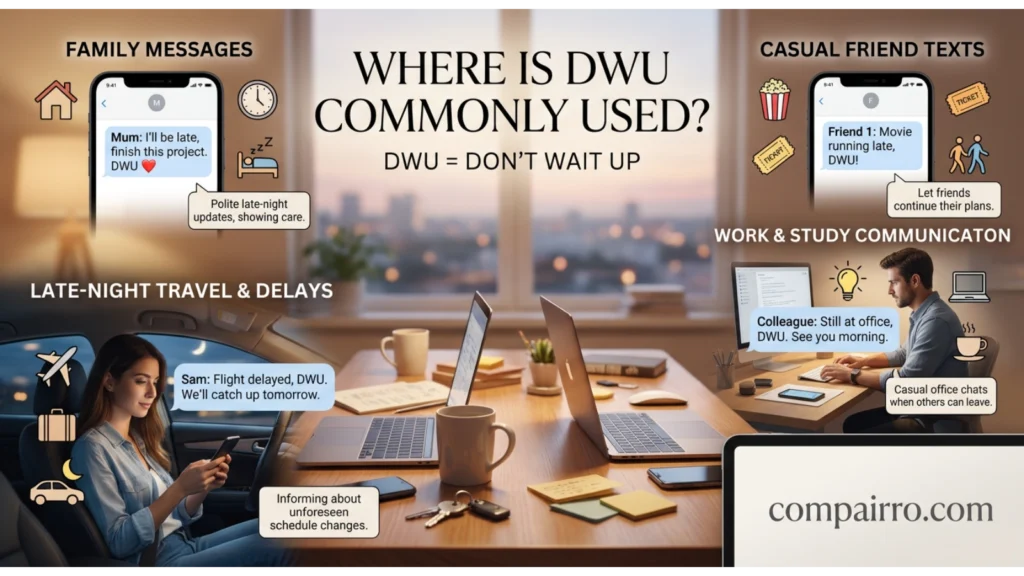
DWU is mainly found in informal digital communication.
Common platforms include:
- Snapchat
- Facebook Messenger
- TikTok messages
- Discord
- Regular SMS text messages
- Online group chats
It is especially useful when someone wants to communicate quickly about being late or staying out longer than expected.
Real-Life Conversation Examples of DWU
Here are some simple examples showing how DWU can be used in different situations.
Friendly Conversation
Alex: “Are you coming back before dinner?”
Sam: “Probably not. DWU!”
Meaning: Sam may return late and does not want Alex to wait awake.
Casual Conversation
Friend: “What time will you reach home?”
You: “Not sure yet. DWU.”
Meaning: Don’t stay awake waiting for me.
Family Conversation
Brother: “Should I wait for you?”
You: “No, DWU. I’ll probably be late.”
Meaning: You do not need to stay awake for me.
Serious Conversation
Person A: “Your shift ends at midnight, right?”
Person B: “Yes, but I have extra work today. DWU.”
Meaning: The person expects to finish late.
Funny Conversation
Friend: “Don’t forget to come back!”
You: “Haha, DWU. It’s going to be a long night!”
Meaning: The person is jokingly saying they will probably be late.
Emotional and Psychological Meaning of DWU
DWU does not have a special psychological meaning. However, it can communicate consideration and awareness of another person’s time.
For example, when someone says “DWU,” they may be trying to prevent another person from losing sleep while waiting.
It can communicate:
- Consideration for someone’s sleep.
- Awareness that plans may take longer.
- A desire to avoid unnecessary waiting.
- A simple update about availability.
The phrase itself does not prove someone’s feelings or intentions. Always consider the complete conversation before interpreting its emotional meaning.
Origin and Background of DWU
DWU developed as part of the broader use of shortened expressions in text messaging and online communication.
The original phrase, “Don’t Wait Up,” was already used in everyday English before texting became popular. It became convenient to shorten the phrase into three letters when people started communicating through mobile phones and messaging platforms.
Like other abbreviations, DWU helps people send shorter messages without typing the entire expression.
There is no single confirmed date or person responsible for creating the texting abbreviation.
DWU vs. Similar Texting Abbreviations
DWU is sometimes confused with other common texting abbreviations. However, each expression has a different meaning.
| Slang | Full Form | Meaning |
|---|---|---|
| DWU | Don’t Wait Up | Don’t stay awake waiting |
| BRB | Be Right Back | Returning shortly |
| TTYL | Talk To You Later | Ending a conversation |
| GTG | Got To Go | Need to leave |
| GN | Good Night | Wishing someone a good night |
| AFK | Away From Keyboard | Temporarily unavailable |
| TTYT | Talk To You Tomorrow | Continuing the conversation tomorrow |
Understanding these differences helps you choose the correct abbreviation.
When Should You Use DWU?
DWU is suitable for casual situations when you want someone to know they should not wait awake for you.
You can use it when:
- You expect to arrive home late.
- You have evening plans.
- You are attending an event.
- Your work or meeting is taking longer.
- You want someone to get proper rest instead of waiting.
For example:
“I’m attending a family event tonight. DWU.”
This is a simple and friendly way to communicate your plans.

When Should You Avoid Using DWU?
Although DWU is easy to understand, it is not suitable for every situation.
Avoid using it in:
- Formal business emails.
- Professional conversations.
- Official school communication.
- Messages to people unfamiliar with texting slang.
- Situations where clear instructions are important.
Instead, write the complete phrase:
“Please don’t stay awake waiting for me. I may arrive late.”
This sounds clearer and more appropriate in formal communication.
Polite Alternatives to DWU
If you do not want to use abbreviations, you can express the same message in different ways.
Here are some useful alternatives:
- Don’t wait for me.
- Please get some rest.
- I may be late tonight.
- You don’t need to stay awake.
- I’ll probably return late.
- Go to sleep; I’ll be fine.
- Don’t stay up waiting for me.
These expressions are easy to understand and work in both casual and more formal conversations.
Why Do People Use DWU?
People use DWU because short messages make online communication faster and easier.
Some common reasons include:
- Saving time: Three letters are quicker to type than the complete phrase.
- Convenience: It is useful for quick mobile messages.
- Informal communication: It fits naturally into conversations between friends.
- Clear intentions: It can tell someone not to wait awake.
- Digital culture: Internet users regularly use abbreviations to shorten everyday expressions.
Impact of Using DWU in Communication
Using DWU can make casual conversations shorter and more convenient. It also helps people communicate plans without writing long messages.
However, not everyone knows every texting abbreviation. If the recipient does not understand DWU, the message may create confusion.
For important conversations, using complete sentences is usually better.
Is DWU Safe for Social Media?
Yes, DWU is generally safe for social media because its common meaning is not offensive or inappropriate.
You can use it in ordinary conversations on platforms such as Instagram, Snapchat, TikTok, and WhatsApp.
However, remember that different people may interpret unfamiliar abbreviations differently. If you are communicating with a broad audience, writing the complete phrase is a better choice.
Common Misunderstandings About DWU
Some people misunderstand DWU because they are unfamiliar with its full form.
Common mistakes include:
- Thinking DWU means someone is ending a friendship.
- Confusing it with BRB or TTYL.
- Assuming it means someone does not want to talk.
- Believing it is an offensive expression.
- Ignoring the surrounding conversation.
Remember that DWU commonly means “Don’t Wait Up.” It usually relates to someone being late or asking another person not to stay awake.
Variations and Types of DWU
People may write DWU in different ways during online conversations.
Some common variations include:
- DWU: Standard uppercase abbreviation.
- dwu: Lowercase informal version.
- Dwu: Capitalized version.
- DWU 😊: Friendly expression.
- DWU lol: Casual or humorous message.
These variations generally do not change the basic meaning.
How to Respond When Someone Uses DWU
Your response depends on the situation.
Here are some natural replies:
| Message | Possible Response |
|---|---|
| “I’m coming home late. DWU.” | “Okay, take care!” |
| “Work is taking longer. DWU.” | “No problem, get some rest when you can.” |
| “Going out tonight. DWU.” | “Have fun!” |
| “I’ll probably be late. DWU.” | “Alright, see you tomorrow.” |
If you are unsure about the abbreviation, simply ask:
“What does DWU mean?”
Regional and Cultural Usage
DWU is used in English-language digital communication, but familiarity with it can vary between countries and online communities.
People in the United States, United Kingdom, Canada, Australia, Pakistan, and other English-speaking online communities may understand the phrase “Don’t Wait Up.”
However, not everyone uses the abbreviation regularly. Some people prefer typing the complete expression, especially in formal or family conversations.
Its meaning is generally connected to the same everyday English phrase, rather than a particular regional slang culture.
FAQs About DWU Meaning in Text
1. What does DWU mean in texting?
DWU commonly means “Don’t Wait Up.” It tells someone not to stay awake waiting because the sender may arrive late.
2. What is the full form of DWU?
The common full form of DWU is Don’t Wait Up. It is an informal abbreviation used in digital communication.
3. What does DWU mean on Snapchat?
On Snapchat, DWU generally means “Don’t Wait Up.” Someone may use it when explaining that they will be busy or return late.
4. Is DWU rude or offensive?
No, DWU is generally neutral and not offensive. It is commonly used to communicate plans or prevent someone from waiting awake.
5. How should I reply to DWU?
You can reply with “Okay, take care,” “No problem,” or “Have fun.” Choose a response that matches the conversation.
6. Is DWU the same as BRB?
No. DWU means “Don’t Wait Up,” while BRB means “Be Right Back.” They communicate different messages.
Conclusion
The dwu meaning in text is commonly “Don’t Wait Up.” People use this abbreviation when they expect to arrive late or want someone else to go to sleep instead of staying awake waiting for them.
You may see DWU in WhatsApp messages, Snapchat chats, Instagram DMs, and other social media conversations. It is generally a neutral and friendly expression suitable for informal communication.
Remember that context and tone are important when understanding texting slang. If you want to communicate more clearly, you can always write “Don’t wait up” instead of using the abbreviation DWU.

Sara Taylor is a passionate English content writer who specializes in word meanings, spelling comparisons, and modern slang explanations. She creates easy-to-understand articles that help readers avoid common English mistakes and improve their writing skills. Her content focuses on simple learning, real-life examples, and clear explanations for everyday readers.