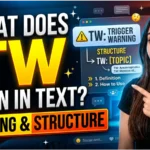
tw meaning in text can have different meanings depending on where and how someone uses it. If you have received a message containing “TW” or noticed it in an Instagram caption, TikTok post, or online discussion, you may wonder what those two letters stand for.
Unlike some popular texting abbreviations, TW does not have just one meaning in every situation. Its most widely recognized online meaning is “Trigger Warning.” People use it before sharing content that may be upsetting or emotionally difficult for some readers. However, in casual conversations, its meaning may depend on the sender and the topic being discussed.
Understanding the context can help you avoid confusion and respond appropriately.
Quick Answer:
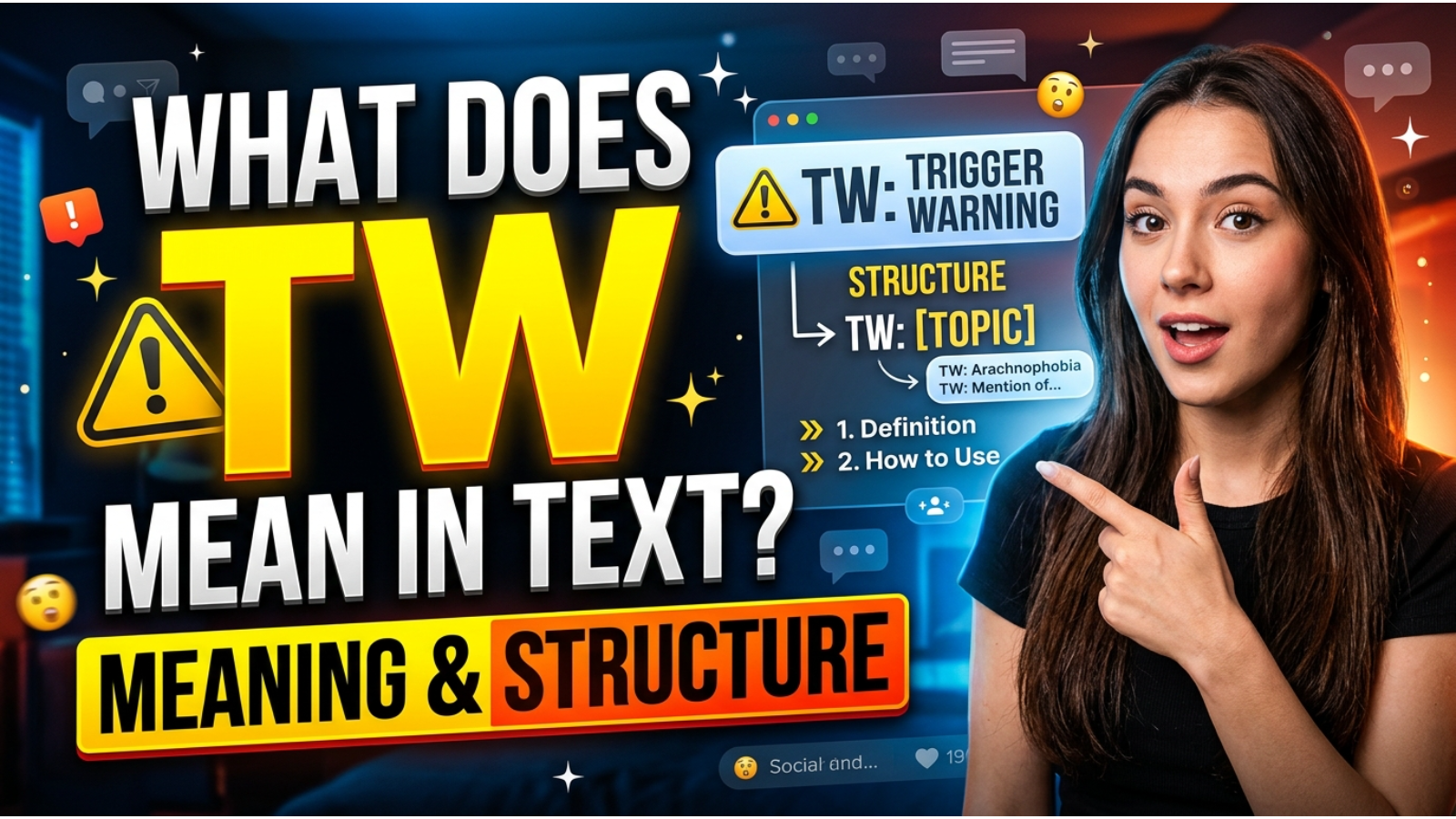
TW most commonly means “Trigger Warning” in online communication. It warns readers that the following content may include sensitive or upsetting topics.
What Does TW Mean in Text?
The most common meaning of TW in online communication is Trigger Warning.
A trigger warning is a short notice placed before content that discusses potentially upsetting subjects. It gives readers an opportunity to decide whether they want to continue reading or viewing that content.
For example:
Person A: “TW: Discussion of a difficult personal experience.”
This message alerts readers that the conversation may contain sensitive material.
However, TW can have other meanings depending on the situation. Therefore, you should always consider the complete message before deciding what someone means.

TW Full Form and Definition
The most widely recognized TW full form on social media is Trigger Warning.
It is commonly used before content involving subjects such as:
- Mental health struggles
- Grief and loss
- Bullying
- Difficult personal experiences
- Violence
- Sensitive historical events
- Disturbing news or discussions
The purpose is to provide information before someone encounters potentially upsetting material.
TW is not necessarily a sign that the content is inappropriate. It simply helps readers make an informed choice about whether they want to engage with it.
TW Meaning in Different Contexts
The meaning of TW can change depending on the platform and conversation.
1. TW Meaning on Social Media
On Instagram, TikTok, Facebook, and X, TW commonly stands for Trigger Warning.
People may place it at the beginning of a caption, video description, or post to alert their audience about sensitive topics.
Example:
“TW: This post discusses bullying and its effects.”
The warning helps readers understand the subject before continuing.
2. TW Meaning in Text Messages
In private messages, TW may also be used as a short warning before someone discusses a difficult subject.
Example:
“TW before I tell you about today’s news.”
Here, the sender is preparing the other person for a potentially upsetting conversation.
3. TW Meaning in Online Communities
Online communities often use TW to make discussions more considerate and accessible.
For example, a community discussing personal experiences may place a warning before a post that contains sensitive subjects.
4. TW in Gaming and Other Online Chats
TW does not have one standard gaming meaning. In a gaming conversation, it could be a community-specific abbreviation, a username reference, or something unrelated to Trigger Warning.
Always check the surrounding conversation before interpreting it.
5. TW in Professional Communication
In professional messages, it is usually better to explain sensitive topics clearly instead of relying only on abbreviations.
For example, write “Content warning: This document discusses difficult personal experiences” rather than assuming everyone understands TW.
Is TW Rude, Offensive, or Neutral?
TW is generally a neutral abbreviation when it means Trigger Warning.
It is not an insult or an offensive expression. Instead, it is used to communicate consideration and help readers understand what they may encounter.
However, the content following the warning may be sensitive.
You may see TW used in:
- Educational discussions
- Mental health awareness posts
- News articles
- Personal stories
- Social media captions
- Online support communities
The abbreviation itself is generally harmless, but its purpose is to prepare readers for potentially difficult material.

Where Is TW Commonly Used?
TW is particularly common in digital spaces where people share personal stories, opinions, educational information, and sensitive discussions.
Some common places include:
- Instagram posts and stories
- TikTok videos and captions
- X posts
- Facebook groups
- Reddit discussions
- Discord communities
- Blogs and online forums
- Private text messages
Its use is especially noticeable in online communities that discuss personal experiences and sensitive subjects.
Real-Life Conversation Examples
Here are some simple examples showing how TW may appear in different conversations.
Friendly Example
A: “I want to share something personal with you.”
B: “Okay, what’s up?”
A: “TW: It’s about a difficult experience I had.”
The sender is giving the other person a warning before discussing the subject.
Casual Example
A: “I’m sharing a documentary recommendation.”
B: “What’s it about?”
A: “TW: It discusses bullying and emotional struggles.”
Here, TW prepares the reader for the documentary’s subject.
Serious Example
Person A: “TW: This article discusses grief and loss.”
Person B: “Thanks for letting me know.”
This is a straightforward example of a content warning.
Confusing Example
A: “TW”
B: “What does TW mean?”
A: “I mean Trigger Warning.”
This shows why asking for clarification is useful when an abbreviation appears without enough context.
Emotional and Psychological Meaning of TW
TW does not describe a person’s emotional condition. Instead, it communicates that certain content may be emotionally difficult for some readers.
It can help people:
- Prepare themselves before reading sensitive material.
- Decide whether they want to continue.
- Understand the subject of a discussion.
- Avoid unexpected exposure to upsetting topics.
- Feel more comfortable participating in online conversations.
However, a trigger warning does not guarantee that someone will not feel upset. Its main purpose is to provide advance information and allow readers to make their own choices.
Origin and Background of TW
The use of trigger warnings became more visible through online discussions, blogs, forums, and social media communities.
The term is connected to discussions about psychological triggers and experiences that may cause emotional distress.
As internet communication developed, people began using the shorter form TW to save space and make warnings easier to recognize.
Today, it is commonly used in online posts, educational discussions, and personal content.
TW vs. Similar Texting Abbreviations
Several abbreviations are used to label or explain online content. Although they may look similar, their purposes are different.
| Abbreviation | Full Form | Meaning |
|---|---|---|
| TW | Trigger Warning | Warns about potentially upsetting content |
| CW | Content Warning | Identifies sensitive material |
| NSFW | Not Safe for Work | Indicates content unsuitable for some workplaces |
| FYI | For Your Information | Shares useful information |
| PSA | Public Service Announcement | Shares an important public message |
| BTW | By the Way | Introduces additional information |
TW vs. CW: What’s the Difference?
TW and CW are closely related, but they are not always used in exactly the same way.
- TW (Trigger Warning): Often used when content may be emotionally triggering.
- CW (Content Warning): A broader label that identifies potentially sensitive or disturbing material.
Both help readers understand what a post contains before engaging with it.
When Should You Use TW?
You can use TW when sharing content that may be difficult or upsetting for some readers.
For example:
- Before discussing a traumatic personal experience.
- When publishing an article about bullying.
- Before sharing sensitive historical information.
- When posting about grief or loss.
- When discussing difficult mental health topics.
Try to make your warning specific.
For example:
“TW: Discussion of bullying.”
This is more helpful than simply writing “TW” because readers know what subject the warning refers to.
When Should You Avoid Using TW?
Although TW is useful, it is not necessary for every post or conversation.
Avoid using it unnecessarily when:
- The content is completely ordinary.
- There is no sensitive subject being discussed.
- The warning is unrelated to the actual content.
- A clear description would communicate the subject better.
Also, do not assume that adding TW makes every type of content suitable for every audience.
Polite Alternatives to TW
If you are communicating with people who may not understand the abbreviation, you can use clearer alternatives.
Here are some examples:
- Content Warning
- Sensitive Topic Ahead
- Please Read With Care
- Warning: Difficult Subject
- This Post Discusses Sensitive Topics
- Reader Discretion Advised
These phrases are useful in professional communication, educational content, and public posts.
Why Do People Use TW?
People use TW because it makes online communication more considerate.
Some common reasons include:
- Awareness: It tells readers what a post discusses.
- Preparation: It gives people time to decide whether to continue.
- Respect: It recognizes that different readers have different experiences.
- Clarity: It identifies sensitive topics before the main content.
- Choice: It allows readers to decide what they want to engage with.

Impact of Using TW in Communication
Using TW can improve communication by helping people understand the nature of a discussion before reading it.
It can also make online communities more considerate and welcoming.
However, warnings should be accurate and specific. A vague warning may not give readers enough information to make an informed decision.
Using clear language alongside the abbreviation is often the best approach.
Is TW Safe for Social Media?
Yes. TW is generally safe to use on social media when it is used appropriately as a content warning.
It is not inherently offensive, inappropriate, or harmful.
For better communication:
- Identify the sensitive topic clearly.
- Place the warning before the relevant content.
- Avoid misleading descriptions.
- Use simple language.
- Consider the audience of your post.
Remember that TW is a communication label, not a guarantee that everyone will react to content in the same way.
Common Misunderstandings About TW
People sometimes misunderstand TW because they assume it always has the same meaning.
Here are some common mistakes:
- Thinking TW is always an insult or rude expression.
- Assuming it has only one meaning in every conversation.
- Confusing TW with CW.
- Believing every social media post needs a trigger warning.
- Assuming a warning completely prevents emotional discomfort.
The easiest way to understand TW is to consider the topic and platform where it appears.
Variations and Types of TW
You may see TW written in several ways:
- TW: Standard abbreviation.
- tw: Lowercase version.
- TW: Trigger Warning.
- TW: Bullying: A warning about bullying-related content.
- TW: Grief: A warning about discussions of loss.
- TW: Sensitive Topic: A general warning before difficult material.
Capitalization usually does not change the meaning.
How to Respond When Someone Uses TW
If someone uses TW in a message, your response depends on the situation.
Here are a few natural replies:
- “Thanks for the warning.”
- “I understand.”
- “What topic does it cover?”
- “Thanks for letting me know.”
- “I’ll decide whether I’m comfortable reading it.”
If you do not understand the abbreviation, simply ask what it means.
Regional and Cultural Usage
TW is recognized in many English-language online communities, but its use may vary across countries and platforms.
In Pakistan, India, the United States, the United Kingdom, Canada, and Australia, English-speaking social media users may encounter TW in posts and online discussions.
However, not everyone knows internet abbreviations. Some people may be more familiar with the complete phrase “Trigger Warning” than its shortened form.
Therefore, using both the abbreviation and its explanation can make your message easier to understand.
FAQs About TW Meaning in Text
1. What does TW mean in texting?
TW commonly means “Trigger Warning.” It is used before content that may be upsetting or emotionally difficult for some readers.
2. What is the full form of TW?
The most widely recognized full form of TW in online communication is Trigger Warning.
3. Is TW rude or offensive?
No. TW is generally a neutral abbreviation used to provide information about sensitive content.
4. What does TW mean on Instagram?
On Instagram, TW usually means Trigger Warning. It may appear in captions, stories, or posts discussing sensitive subjects.
5. What is the difference between TW and CW?
TW stands for Trigger Warning, while CW means Content Warning. Both identify sensitive material, but CW is often used as a broader label.
6. How should I respond to TW?
You can say “Thanks for the warning” or ask what topic the warning refers to if you need more information.
Conclusion
The tw meaning in text is most commonly Trigger Warning, an abbreviation used to alert readers about potentially upsetting or sensitive content. You may see it on Instagram, TikTok, Reddit, Discord, and other online platforms.
People use TW to provide information, show consideration, and allow others to decide if they want to continue reading or watching.
Although TW is generally neutral and safe for social media, its meaning can depend on context. Remember that CW is another related abbreviation, meaning Content Warning.
If you see TW in a message, consider the surrounding conversation before interpreting it. Understanding the meaning of texting abbreviations helps you communicate more clearly and confidently online.

Sara Taylor is a passionate English content writer who specializes in word meanings, spelling comparisons, and modern slang explanations. She creates easy-to-understand articles that help readers avoid common English mistakes and improve their writing skills. Her content focuses on simple learning, real-life examples, and clear explanations for everyday readers.