When flu season arrives, many people start worrying about getting sick. You may hear someone say they have Influenza A, while another person says they have Influenza B. Both types can cause fever, cough, body aches, headaches, and tiredness. However, many people wonder: Is Flu A or B worse?
This is a common question because both infections can make people feel very unwell. Some people believe Flu A is always more dangerous, while others think Flu B causes more serious symptoms. The truth is a little more complicated.
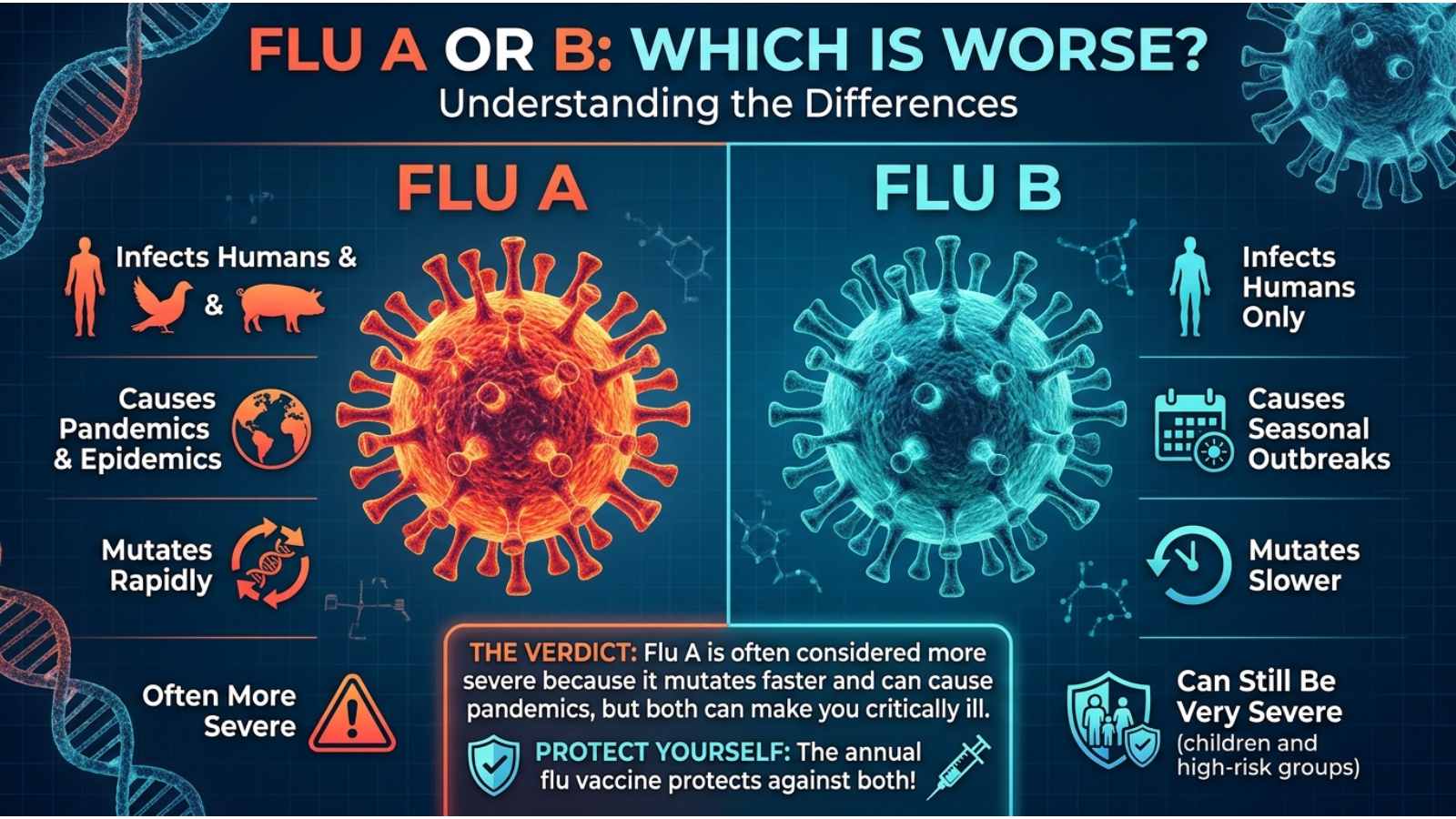
Influenza A and B are the two main types of flu viruses that cause seasonal illness in humans. They share many symptoms, but they also have important differences. For example, Influenza A can infect different animals and cause global pandemics. Influenza B mainly spreads among humans and is usually linked to seasonal outbreaks.
People search for this topic to understand their symptoms, compare test results, and learn when medical care is needed. This information is also useful for parents, students, teachers, and workers who want to protect themselves and their families.
Understanding the differences between Flu A and B can help you make better health decisions. However, neither type should be ignored, especially in young children, older adults, pregnant people, and those with certain health conditions.
In this guide, you’ll learn the meaning, examples, usage, differences, common mistakes, and simple explanations in easy English.
Flu A or B Worse? – Quick Answer
Influenza A is often linked to larger outbreaks and pandemics, but Flu B can also cause serious illness. Neither type is always worse.
The severity depends on several factors, including:
- A person’s age.
- Their overall health.
- Their immune system.
- The virus strain.
- Whether complications develop.
Simple examples:
- Flu A can cause severe seasonal illness and has the potential to cause pandemics.
- Flu B can cause high fever, cough, body aches, and serious complications.
- Both types can lead to pneumonia and hospital treatment.
Simple rule:
Flu A has greater pandemic potential, but both Flu A and Flu B can make people seriously ill.

The Origin of Flu A and Flu B
Influenza viruses belong to a group of viruses that infect the respiratory system. They affect the nose, throat, and lungs.
Scientists classify influenza viruses into four main types:
- Influenza A
- Influenza B
- Influenza C
- Influenza D
However, Influenza A and B are the main causes of seasonal flu outbreaks in humans.
Influenza A
Influenza A viruses can infect humans, birds, pigs, and other animals. They change over time, which allows new strains to appear.
Some Influenza A strains have caused major global pandemics.
Influenza B
Influenza B mainly spreads among humans. It also changes over time, but it does not have the same pandemic potential as Influenza A.
Both types can spread through respiratory droplets and small particles released when an infected person coughs, sneezes, or talks.
Discover More Post:
British English vs American English Usage
There is no major difference between British and American English when discussing Flu A or Flu B.
Both countries use the same medical terms:
- Influenza A
- Influenza B
- Flu A
- Flu B
However, there can be small differences in everyday vocabulary.
| Feature | British English | American English | Notes |
|---|---|---|---|
| Common term | Flu | Flu | Same meaning |
| Medical term | Influenza A | Influenza A | Same |
| Medical term | Influenza B | Influenza B | Same |
| Fever | Temperature | Fever | Different everyday wording |
| Doctor | GP | Doctor | Different common usage |
The medical meaning remains the same in both countries.
Which One Should You Be More Concerned About?
If you are comparing Flu A and B, it is important to understand that both deserve attention.
You should not assume that Flu B is harmless simply because it is often associated with seasonal outbreaks.
Here are some important points:
- Flu A: Can cause seasonal epidemics and global pandemics.
- Flu B: Can cause serious seasonal illness and complications.
- High-risk people: Both viruses can be dangerous for certain groups.
- Medical attention: Severe symptoms should be checked by a healthcare professional.
Who is at higher risk?
People who may face a higher risk of flu complications include:
- Children younger than five, especially those under two.
- Adults aged 65 or older.
- Pregnant people.
- People with asthma or heart disease.
- People with diabetes.
- People with weakened immune systems.
If you belong to a high-risk group, contact a healthcare professional early if you develop flu symptoms.
Common Mistakes About Flu A and B
Many people misunderstand the differences between these two viruses.
Here are five common mistakes to avoid.
Mistake 1: Thinking Flu A is always worse
❌ Flu A is always more dangerous than Flu B.
✔ Both viruses can cause mild, moderate, or severe illness. The outcome depends on the person and the infection.
Mistake 2: Believing Flu B is harmless
❌ Flu B is just a mild cold.
✔ Flu B is a real influenza infection and can cause serious complications.
Mistake 3: Thinking both viruses have different symptoms
❌ Flu A causes fever, but Flu B does not.
✔ Both can cause fever, cough, sore throat, headache, and body aches.
Mistake 4: Assuming antibiotics cure the flu
❌ Antibiotics can treat Influenza A and B.
✔ Antibiotics treat bacterial infections, not influenza viruses. Antiviral medicines may be prescribed for flu.
Mistake 5: Thinking the flu vaccine prevents every infection
❌ Getting a flu vaccine means you can never catch the flu.
✔ Flu vaccination lowers the risk of infection and serious complications, but it does not provide complete protection.
Flu A or B in Everyday Examples
Understanding these viruses becomes easier when you look at real-life situations.
1. At Work
Imagine two coworkers become sick.
- One tests positive for Influenza A.
- Another tests positive for Influenza B.
Both should stay home while sick and follow medical advice to reduce the spread of infection.
2. At School
A student develops a fever, cough, and body aches.
A healthcare professional recommends a flu test, which confirms Influenza B.
This shows that Flu B can affect students and other young people.
3. On Social Media
You may see posts saying:
- Flu A is worse than Flu B.
- Flu B is less dangerous.
- A new flu strain is spreading.
Always check health information through trusted medical sources instead of believing every online claim.
4. In Daily Life
A family member develops flu symptoms.
Another person in the house should wash their hands, improve indoor ventilation, avoid close contact when possible, and follow recommended vaccination advice.
5. During Medical Testing
A doctor may recommend a flu test to identify whether a person has Influenza A or B.
The result helps healthcare professionals understand the infection and guide treatment.
Flu A or B – Google Trends and Usage Data
People search for Flu A or B worse because they want to know which infection is more dangerous and how the two viruses affect the body.
Common search questions include:
- Is Flu A worse than Flu B?
- Which flu lasts longer?
- Can Flu B be serious?
- What are the symptoms of Flu A?
- How long does the flu last?
Popular Countries
Interest in influenza information can increase during flu season in different parts of the world.
People in the following countries commonly look for seasonal flu information:
- United States: People search for flu symptoms, vaccination, and seasonal outbreaks.
- United Kingdom: People look for NHS guidance and influenza updates.
- India: People search for flu symptoms, prevention, and treatment.
- Pakistan: People often look for information about fever, cough, and seasonal infections.
- Canada: Seasonal flu updates and vaccination information are common topics.
- Australia: People search for influenza information during the country’s flu season.
Why Is This Keyword Popular?
There are several reasons:
- People receive different flu test results.
- Parents want to understand their children’s infections.
- Patients want to know which type is more serious.
- Seasonal outbreaks increase health-related searches.
- People want to understand treatment and recovery.
Note: These are general search-interest patterns, not verified Google Trends rankings. Exact popularity and country rankings require current Google Trends data.

Comparison Table: Flu A vs Flu B
Here is a simple comparison of the two influenza types.
| Feature | Flu A | Flu B |
|---|---|---|
| Full name | Influenza A | Influenza B |
| Main hosts | Humans and animals | Mainly humans |
| Seasonal outbreaks | Yes | Yes |
| Pandemic potential | Yes | No known pandemic history |
| Common symptoms | Fever, cough, aches | Fever, cough, aches |
| Serious complications | Possible | Possible |
| Spread | Respiratory particles | Respiratory particles |
| Treatment | Antiviral medicines when appropriate | Antiviral medicines when appropriate |
| Prevention | Flu vaccination and hygiene | Flu vaccination and hygiene |
Which is worse?
Flu A has greater potential to cause widespread outbreaks. However, either type can cause severe illness in an individual.
Flu A or B in Professional Life
Influenza can affect people in almost every profession.
For example, teachers, office workers, healthcare staff, and business owners can all catch the flu.
When someone develops flu symptoms, staying home when possible can protect coworkers and customers.
Here are some useful workplace practices:
- Avoid going to work while you have a fever.
- Follow workplace sick-leave rules.
- Wash your hands regularly.
- Keep shared spaces clean.
- Improve ventilation where possible.
- Follow recommended flu vaccination guidance.
Remember, protecting your health also helps protect other people.

Flu A or B for Students or Beginners
Students and beginners may find it difficult to understand the difference between Flu A and Influenza B.
Both infections affect the respiratory system and can produce very similar symptoms.
Why Do Beginners Get Confused?
The main reason is that symptoms alone cannot reliably identify the virus.
For example, someone with Flu A and someone with Flu B may both experience:
- Fever.
- Cough.
- Headache.
- Sore throat.
- Body aches.
- Tiredness.
Easy Learning Tips
Use these simple points to remember the differences:
- Flu A can infect humans and animals.
- Flu B mainly infects humans.
- Both cause seasonal flu.
- Flu A has pandemic potential.
- Both can cause serious complications.
A laboratory test is often needed to identify which type of influenza is present.
Signs or Characteristics Related to Flu A and B
Influenza A and Flu B share many common signs.
Symptoms often begin suddenly and can affect everyday activities.
Common Symptoms
- Fever or chills.
- Dry or persistent cough.
- Sore throat.
- Runny or blocked nose.
- Headache.
- Muscle and body aches.
- Tiredness and weakness.
Some people may also experience vomiting or diarrhea, especially children.
Warning Signs That Need Urgent Medical Attention
Although most people recover, influenza can sometimes cause serious complications.
Seek urgent medical help if someone experiences:
- Difficulty breathing.
- Chest pain or pressure.
- Confusion or unusual difficulty waking.
- Severe dehydration.
- Symptoms that improve but then return or become worse.
For children, warning signs can also include bluish lips or face, poor responsiveness, or signs of dehydration.
Do not delay medical care when serious warning signs appear.
How Long Does Flu Usually Last?
Many people recover from the flu within several days to about two weeks.
However, tiredness and cough may continue for longer.
Recovery time depends on the person’s health, age, and whether complications develop.
Simple Trick to Remember Flu A or B
Here is an easy way to remember the main differences.
👉 Flu A = Animals + Humans + Pandemic Potential
👉 Flu B = Mainly Humans + Seasonal Outbreaks
Think of it this way:
Flu A can spread among different animal species and humans. It can also cause a global pandemic when a suitable new virus emerges.
Flu B mainly spreads among humans and causes seasonal outbreaks.
Important memory rule: Influenza A has greater pandemic potential, but Flu B is not automatically mild or harmless.
FAQs:
1. Is Flu A or B worse?
Neither type is always worse. Flu A has greater pandemic potential, but both types can cause severe illness and complications.
2. Which flu is more dangerous, A or B?
Both can be dangerous, especially for young children, older adults, pregnant people, and people with certain health conditions.
3. Does Flu A last longer than Flu B?
Not always. Recovery time varies from person to person and depends on health, age, and complications.
4. Can Flu B be serious?
Yes. Influenza B can cause pneumonia, hospitalization, and other serious health problems.
5. Are Flu A and Flu B symptoms the same?
They have very similar symptoms, including fever, cough, sore throat, headache, and body aches.
6. Can you get Influenza A and Flu B in the same season?
Yes. A person can become infected with different influenza types during the same flu season, although this does not happen to everyone.
7. How can I prevent Flu A and Flu B?
Annual flu vaccination, handwashing, good ventilation, and avoiding close contact with sick people can help reduce your risk.
Conclusion
So, is Flu A or B worse? The answer depends on the person and the severity of the infection.
Flu A is known for its ability to cause widespread outbreaks and pandemics. However, Flu B can also cause serious illness and health complications.
Both viruses share similar symptoms, including fever, cough, sore throat, headaches, and body aches.
The most important thing is not to ignore flu symptoms. Follow medical advice, stay home when sick, and seek help if warning signs appear.
Final memory rule: Flu A has greater pandemic potential, but both Flu A and Flu B deserve attention and proper care.

Sara Taylor is a passionate English content writer who specializes in word meanings, spelling comparisons, and modern slang explanations. She creates easy-to-understand articles that help readers avoid common English mistakes and improve their writing skills. Her content focuses on simple learning, real-life examples, and clear explanations for everyday readers.