Have you ever seen the words wear and ware and wondered which one is correct? Many English learners get confused because these two words sound exactly the same. They are known as homophones, which means they have the same pronunciation but different meanings and spellings.
You may come across wear and ware in school assignments, workplace emails, social media posts, online articles, and everyday conversations. Because they sound alike, people sometimes use the wrong word in writing.
For example, should you write “I like to wear a jacket” or “I like to ware a jacket”? What about words like software, hardware, or tableware? Understanding the difference can help you write more clearly and avoid common mistakes.
Learning the correct usage of these words is important for students, professionals, and anyone who wants to improve their English skills. Once you know the meanings, it becomes much easier to choose the right word.
In this guide, you’ll learn the meaning, examples, usage, differences, common mistakes, and simple explanations in easy English.
Wear or Ware – Quick Answer
👉 Wear means to have clothing, jewelry, or something on your body. It can also mean something becoming damaged through use.
👉 Ware usually means goods, products, or items for sale.
Examples
1 I wear a blue shirt to school.
2 The shoes show signs of wear.
3 This store sells kitchenware and glassware.
Simple Rule
👉 Wear = Clothing or use over time
👉 Ware = Products or goods
The Origin of Wear or Ware
Both words come from Old English, but they developed different meanings over time.
- Wear comes from an old word meaning “to carry or have on the body.”
- Ware comes from a word meaning “goods” or “merchandise.”
Today, wear is commonly used when talking about clothes, fashion, and damage caused by use. Ware appears in compound words such as:
- Software
- Hardware
- Kitchenware
- Glassware
- Tableware
Because they sound alike, confusion still happens, especially among English learners.
British English vs American English Usage
There is no major difference between British English and American English for these words.
| Feature | British English | American English | Notes |
|---|---|---|---|
| Wear | Wear | Wear | Same meaning |
| Ware | Ware | Ware | Same meaning |
| Pronunciation | Similar | Similar | Sounds almost identical |
| Usage Rules | Same | Same | No spelling difference |
Which One Should You Use?
Use wear when talking about:
- Clothes
- Shoes
- Accessories
- Damage from use
- Fashion
Use ware when talking about:
- Products
- Goods
- Merchandise
- Software
- Hardware
- Household items
Formal and Informal Usage
- Wear works in both formal and informal writing.
- Ware is common in business, retail, and technology contexts.
Common Mistakes With Wear or Ware
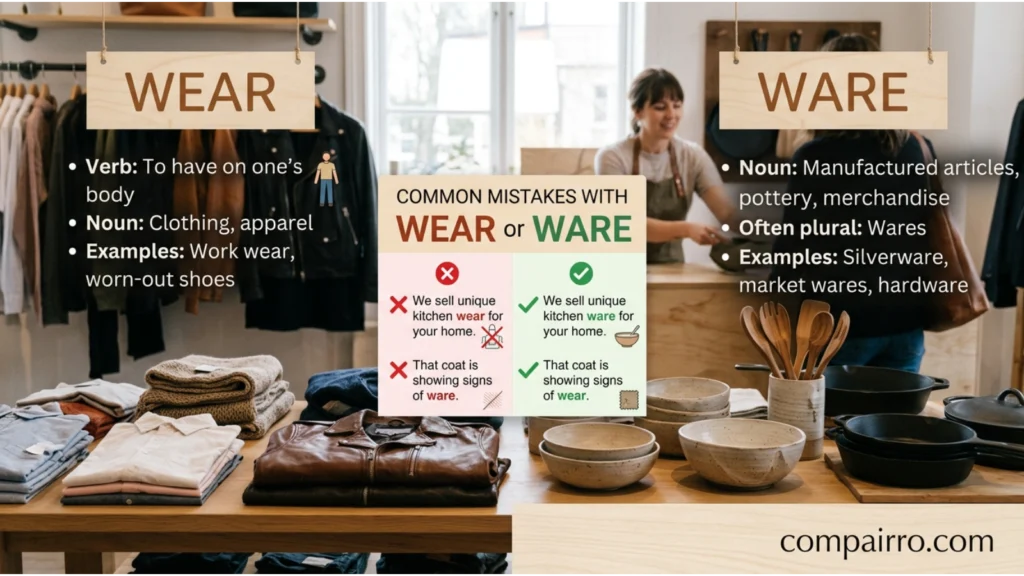
Mistake 1
❌ I ware a uniform every day.
✔ Use wear because it refers to clothing.
Correct: I wear a uniform every day.
Mistake 2
❌ The shop sells sports wear and kitchen wear.
✔ Use ware for products.
Correct: The shop sells sportswear and kitchenware.
Mistake 3
❌ My shoes have a lot of ware.
✔ Use wear when talking about damage from use.
Correct: My shoes have a lot of wear.
Mistake 4
❌ I bought new wear for my computer.
✔ Computer products are usually called hardware or software.
Correct: I bought new hardware for my computer.
Wear or Ware in Everyday Examples
Work
- Employees should wear their ID cards.
- The company sells office ware products.
School
- Students must wear uniforms.
- The science lab ordered new laboratory ware.
Social Media
- What will you wear to the event?
- This brand sells eco-friendly kitchenware.
Daily Life
- I wear sneakers when walking.
- We bought new tableware for dinner.
Text Messages
- “What will you wear tonight?”
- “I ordered some new cookware online.”
Wear or Ware – Google Trends & Usage Data
Many people search for wear or ware because the words sound the same but have different meanings.
The topic is especially popular among:
- English learners
- Students
- Content writers
- Bloggers
- Job seekers
Countries where this confusion is commonly searched include:
- United States
- United Kingdom
- India
- Pakistan
- Canada
- Australia
Online searches often increase during school terms and language-learning activities. Many users want quick answers about spelling and grammar.
Comparison Table: Wear or Ware
| Feature | Wear | Ware |
|---|---|---|
| Meaning | To have on the body | Goods or products |
| Part of Speech | Verb or noun | Noun |
| Related To | Clothing, fashion, damage | Merchandise, products |
| Example | Wear a jacket | Kitchenware |
| Common Use | Daily conversation | Business and retail |
| Easy Memory | Wear = Clothes | Ware = Goods |
Wear or Ware in Professional Life
Both words can appear in professional settings.
Wear
Used in:
- Workplace dress codes
- Safety equipment
- Uniform policies
Example:
“Employees must wear safety helmets.”
Ware
Used in:
- Retail businesses
- Product catalogs
- Technology companies
Example:
“Our company develops software and hardware.”
Understanding the difference helps improve professional communication.
Wear or Ware for Students or Beginners

Many beginners struggle because the words sound the same.
Common Confusion
- Same pronunciation
- Different spellings
- Different meanings
Easy Learning Tips
- Connect wear with clothes.
- Connect ware with products.
- Read example sentences daily.
- Practice writing both words.
The more you use them, the easier they become to remember.
Signs or Characteristics Related to Wear or Ware
Characteristics of Wear
- Connected to clothing
- Can be a verb
- Can describe damage from use
- Common in daily conversations
- Often related to fashion
Characteristics of Ware
- Refers to products or goods
- Usually a noun
- Common in business language
- Found in compound words
- Often related to shopping and technology
Common Examples
- Wear a hat
- Wear a watch
- Sportswear
- Hardware
- Software
- Kitchenware
Simple Trick to Remember Wear or Ware
👉 Wear = What you put on
👉 Ware = What you sell or buy
Think of it this way:
- You wear a jacket.
- A store sells ware.
Another simple memory trick:
👉 Wear has “ea” like “jeans” (clothing).
👉 Ware has “ar” like “market” (goods for sale).
This small trick can help you choose the correct word quickly.
FAQs:
1. What is the difference between wear and ware?
Wear relates to clothing or damage from use, while ware refers to goods or products.
2. Are wear and ware pronounced the same?
Yes. They are homophones and sound the same in English.
3. Is “I ware a jacket” correct?
No. The correct sentence is “I wear a jacket.”
4. What does ware mean?
Ware means products, goods, or merchandise.
5. What are examples of ware?
Software, hardware, kitchenware, cookware, and tableware.
6. Can wear be a noun?
Yes. Wear can describe damage caused by use, such as wear and tear.
7. Why do people confuse wear and ware?
Because they have the same pronunciation but different meanings and spellings.
Conclusion
Understanding wear or ware is easier once you know their meanings. Wear is used for clothing and damage caused by use, while ware refers to goods, products, or merchandise.
The most important thing to remember is:
👉 Wear = Put it on
👉 Ware = Sell it or buy it
By practicing these words in everyday sentences, you can avoid common mistakes and use them correctly with confidence.

Sara Taylor is a passionate English content writer who specializes in word meanings, spelling comparisons, and modern slang explanations. She creates easy-to-understand articles that help readers avoid common English mistakes and improve their writing skills. Her content focuses on simple learning, real-life examples, and clear explanations for everyday readers.