Have you ever wanted to comfort someone who was feeling sad, stressed, or upset? Maybe a friend failed an exam, a coworker lost a job opportunity, or a family member was going through a difficult time. In these situations, you may hear people use the words sympathize and empathize.
Many people get confused about these two words because they both relate to understanding someone’s feelings. They are often used in conversations, schools, workplaces, social media posts, and even professional communication. Because the meanings are similar, people sometimes use one word when the other would be more accurate.
Understanding the difference between sympathize or empathize can help you communicate more clearly and build stronger relationships. It can also improve your emotional intelligence and help you respond appropriately when others share their experiences.
Whether you are a student, professional, teacher, parent, or simply someone who wants better communication skills, learning these terms is useful in everyday life.
In this guide, you’ll learn the meaning, examples, usage, differences, common mistakes, and simple explanations in easy English.
Sympathize or Empathize – Quick Answer
👉 Sympathize means feeling sorry for someone else’s situation.
👉 Empathize means understanding and sharing how someone feels because you can imagine their experience.
Examples
1 “I sympathize with your loss.”
2 “I empathize with your stress because I faced a similar challenge.”
3 “She empathized with the student who felt nervous before the exam.”
Simple Rule
👉 Sympathy = Feel for someone
👉 Empathy = Feel with someone
The Origin of Sympathize or Empathize
The word sympathize comes from the Greek word sympatheia, meaning “feeling together.”
The word empathize comes from the Greek word empatheia, meaning “feeling into.”
For many years, sympathy was more commonly used in English. Later, empathy became popular in psychology, counseling, education, and leadership discussions.
Today, both words are widely used around the world, especially in conversations about emotions, mental health, relationships, and communication.
British English vs American English Usage
The meanings of sympathize and empathize are generally the same in British and American English.
| Feature | British English | American English | Notes |
|---|---|---|---|
| Sympathize | Common | Common | Same meaning |
| Empathize | Common | Common | Same meaning |
| Usage | Same | Same | No major difference |
| Professional use | Common | Common | Used in workplaces and education |
Which One Should You Use?
Use sympathize when:
- You feel sorry for someone’s situation.
- You want to express concern.
- You have not experienced the same problem yourself.
Use empathize when:
- You understand someone’s feelings deeply.
- You can imagine their experience.
- You want to create a stronger emotional connection.
Formal Usage
- Both words are acceptable in professional settings.
- Empathize is common in counseling, healthcare, and leadership.
Informal Usage
- Both are commonly used in everyday conversations.
- Empathize often sounds more personal and emotional.
Common Mistakes With Sympathize or Empathize
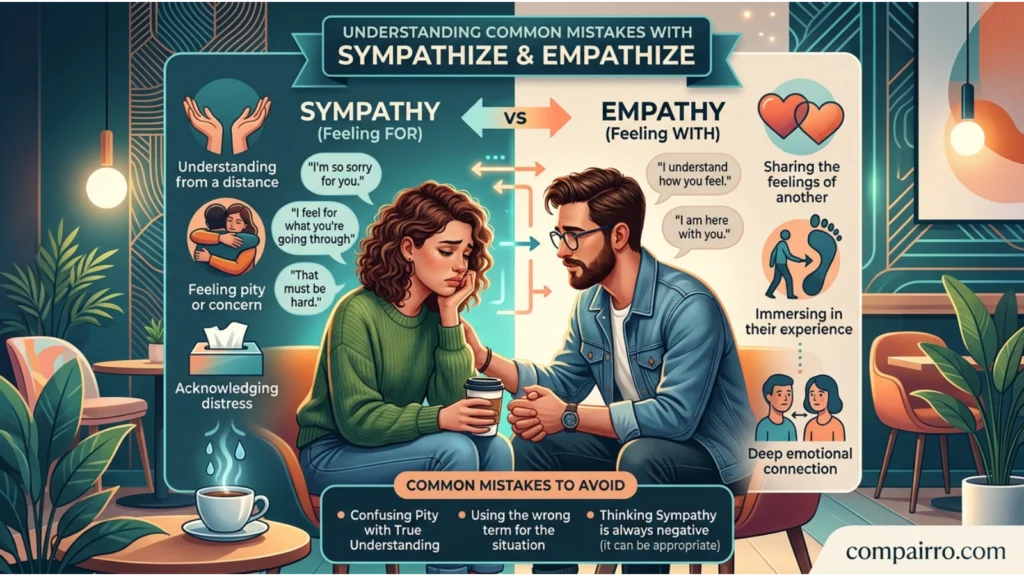
Mistake 1
❌ “I empathize with your loss because I feel sorry for you.”
✔ If you mainly feel sorry for someone, sympathize may be more accurate.
Mistake 2
❌ Thinking both words mean exactly the same thing.
✔ Sympathy and empathy are related but not identical.
Mistake 3
❌ Using empathize without understanding the person’s feelings.
✔ Empathy involves trying to understand another person’s emotions.
Mistake 4
❌ Assuming empathy requires the same experience.
✔ You can empathize even if you have never experienced the exact situation.
Sympathize or Empathize in Everyday Examples
Work
Sympathize:
“I sympathize with your workload. It looks very busy.”
Empathize:
“I empathize with your stress because I worked on a similar project.”
School
Sympathize:
“The teacher sympathized with students after a difficult exam.”
Empathize:
“The teacher empathized with students’ anxiety before presentations.”
Social Media
Sympathize:
“Many users sympathized with the family after reading the news.”
Empathize:
“People empathized with her story because they had similar experiences.”
Daily Life
Sympathize:
“I sympathize with your situation.”
Empathize:
“I empathize because I went through something similar.”
Text Messages
Sympathize:
“Sorry to hear that. I really sympathize with you.”
Empathize:
“I understand how you feel. I empathize with what you’re going through.”
Sympathize or Empathize – Google Trends & Usage Data
Many people search for sympathize or empathize because they are unsure about the difference between the two words.
Popular searches often include:
- Sympathy vs empathy
- When to use empathize
- What does sympathize mean
- Examples of empathy
- Empathy in communication
The topic is frequently searched in:
- United States
- United Kingdom
- India
- Pakistan
- Canada
- Australia
The rise of discussions about mental health, leadership, customer service, and emotional intelligence has increased interest in empathy-related topics online.
Comparison Table: Sympathize or Empathize
| Feature | Sympathize | Empathize |
|---|---|---|
| Basic Meaning | Feel sorry for someone | Understand and share feelings |
| Emotional Depth | Moderate | Deeper |
| Personal Connection | Not always needed | Often stronger |
| Similar Experience Needed | No | Not necessarily |
| Common Use | Comforting someone | Understanding emotions |
| Workplace Use | Common | Very common |
| Psychology Use | Less common | Frequently used |
Sympathize or Empathize in Professional Life
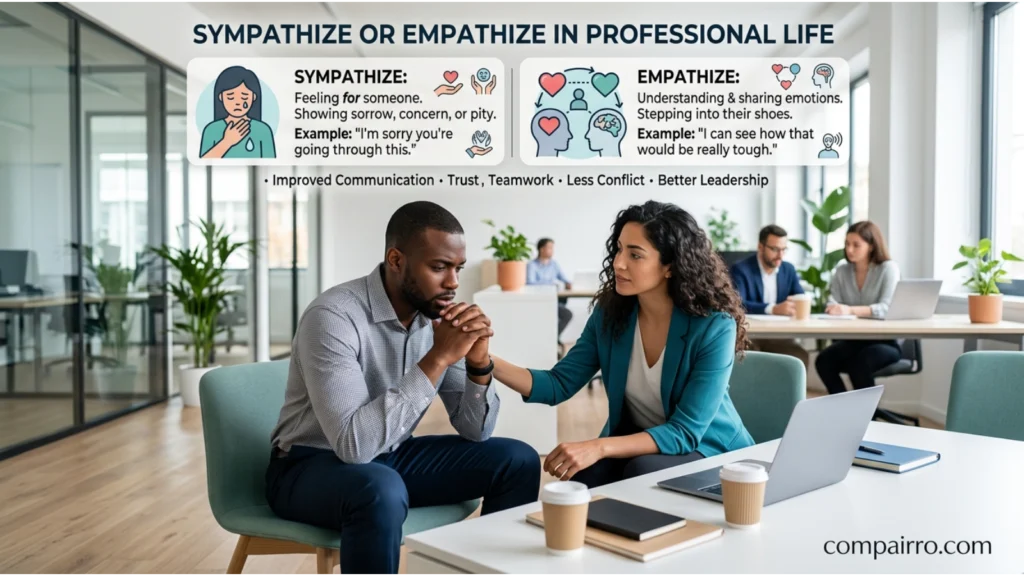
In modern workplaces, empathy is often considered an important leadership skill.
Managers who empathize with employees may:
- Build trust
- Improve teamwork
- Increase employee satisfaction
- Create a positive work environment
Sympathy is also valuable when supporting colleagues during difficult situations, such as illness or personal challenges.
Customer service professionals often use both sympathy and empathy to help clients feel understood and respected.
Sympathize or Empathize for Students or Beginners
Many learners struggle because the words seem very similar.
Common Confusions
- Both involve feelings.
- Both are used when someone is upset.
- Both show care and concern.
Easy Learning Tips
- Remember that sympathy focuses on concern.
- Remember that empathy focuses on understanding.
- Practice using both words in daily conversations.
- Read examples to see the difference clearly.
Signs or Characteristics Related to Sympathize or Empathize
Characteristics of Sympathy
- Feeling concern for someone
- Offering comfort
- Showing kindness
- Recognizing another person’s struggle
- Expressing support
Characteristics of Empathy
- Understanding emotions deeply
- Listening carefully
- Imagining another person’s experience
- Building emotional connection
- Responding with understanding
Shared Characteristics
- Compassion
- Respect
- Emotional awareness
- Human connection
- Helpful communication
Simple Trick to Remember Sympathize or Empathize
👉 Sympathy = Feel FOR someone
👉 Empathy = Feel WITH someone
Think of it this way:
If your friend loses a game:
Sympathy:
“I’m sorry that happened to you.”
Empathy:
“I know how disappointing that feels because I’ve felt it too.”
Another example:
Sympathy: Standing beside someone.
Empathy: Standing beside someone and understanding their feelings.
FAQs:
1. What is the main difference between sympathize and empathize?
Sympathize means feeling sorry for someone, while empathize means understanding their feelings more deeply.
2. Is empathy stronger than sympathy?
Many people consider empathy a deeper emotional connection because it focuses on understanding feelings.
3. Can I empathize without having the same experience?
Yes. You can imagine another person’s feelings even if you have not experienced the same situation.
4. Is sympathize a positive word?
Yes. It shows kindness, concern, and support.
5. Why is empathy important?
Empathy helps improve communication, relationships, and emotional understanding.
6. Are sympathy and empathy both useful?
Yes. Both help people feel supported and cared for.
7. Which word is more common in workplaces?
Empathize is often used more in leadership, teamwork, customer service, and professional communication.
Conclusion
Understanding sympathize or empathize can make communication clearer and more meaningful. While both words show care and concern, they are not exactly the same. Sympathy means feeling sorry for someone’s situation, while empathy means understanding and sharing their feelings more deeply.
Using the right word can help you express support in a way that feels genuine and appropriate. Whether you’re talking with friends, classmates, coworkers, or family members, knowing the difference can strengthen your relationships.
Easy memory rule:
👉 Sympathy = Feel FOR someone
👉 Empathy = Feel WITH someone

Sara Taylor is a passionate English content writer who specializes in word meanings, spelling comparisons, and modern slang explanations. She creates easy-to-understand articles that help readers avoid common English mistakes and improve their writing skills. Her content focuses on simple learning, real-life examples, and clear explanations for everyday readers.