ily meaning in text is something people often search for when they receive this short abbreviation in a message. You might see someone write “ILY” at the end of a conversation, in an Instagram comment, or in a Snapchat message.
If you are unfamiliar with texting slang, you may wonder if it expresses friendship, affection, or romantic feelings. The good news is that ILY has a simple and widely recognized meaning.
However, the feelings behind it can change depending on who sends it and the situation. Friends, family members, and romantic partners may all use this abbreviation to express care and appreciation.
Quick Answer:
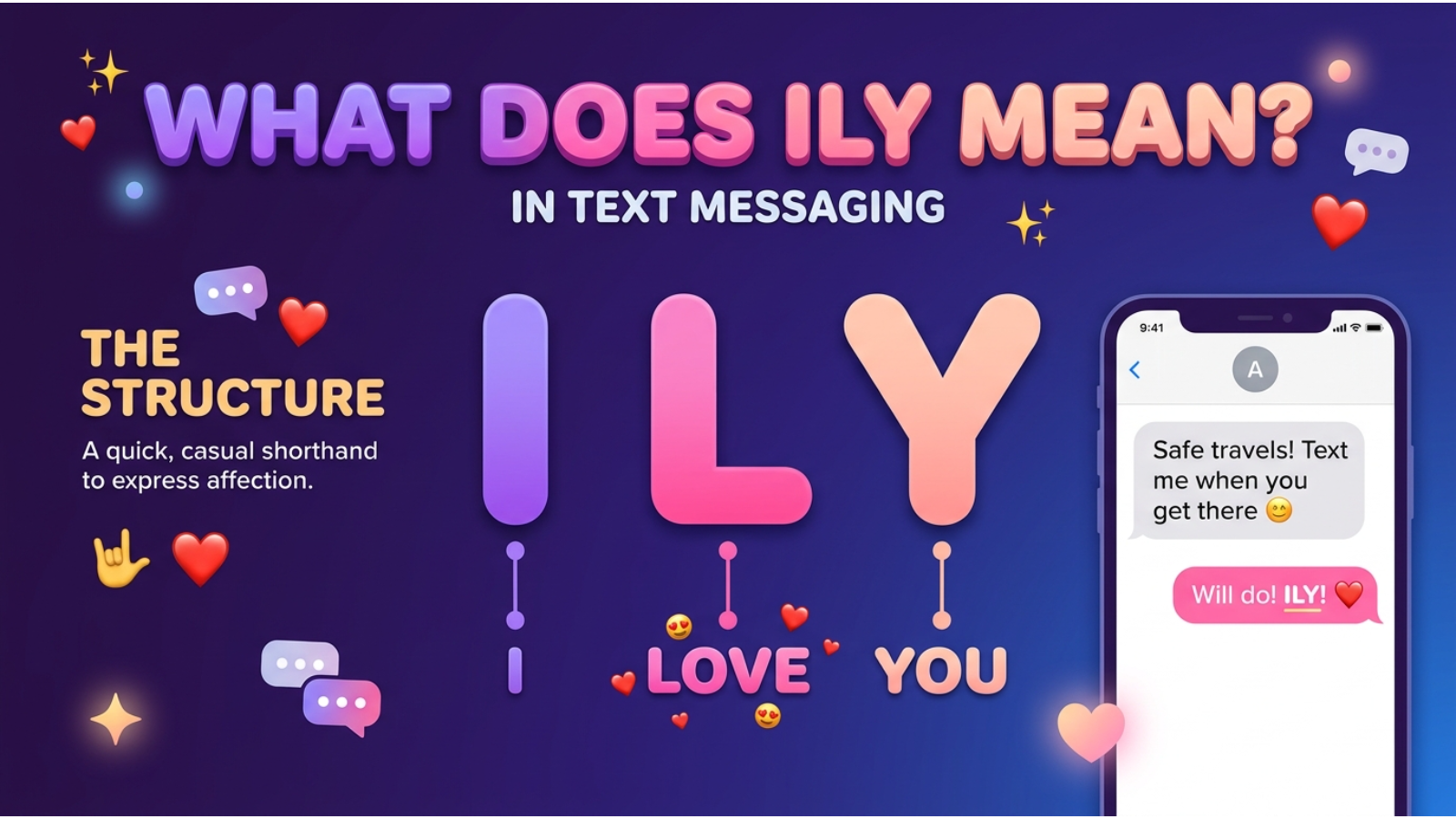
ILY stands for “I Love You.” It is a popular texting abbreviation used to express love, affection, care, or appreciation toward someone.
What Does ILY Mean in Text?
In texting, ILY means “I Love You.” People use it as a shorter way to express their feelings without typing the complete phrase.
It is one of the most common abbreviations in online communication. You may receive it from a close friend, family member, or someone special.
For example:
Person A: “Thank you for always supporting me.”
Person B: “ILY ❤️”
In this conversation, ILY expresses love and appreciation.
The meaning is usually positive, but the relationship between the sender and receiver helps explain the exact emotion behind it.
ILY Full Form and Definition
The full form of ILY is I Love You.
It is a simple abbreviation that represents a meaningful expression of affection.
People commonly use ILY to communicate:
- Love and affection
- Friendship and care
- Emotional support
- Appreciation
- Gratitude
- Warm feelings toward someone
Unlike some internet slang terms, ILY has a clear and widely accepted meaning.
ILY Meaning in Different Contexts
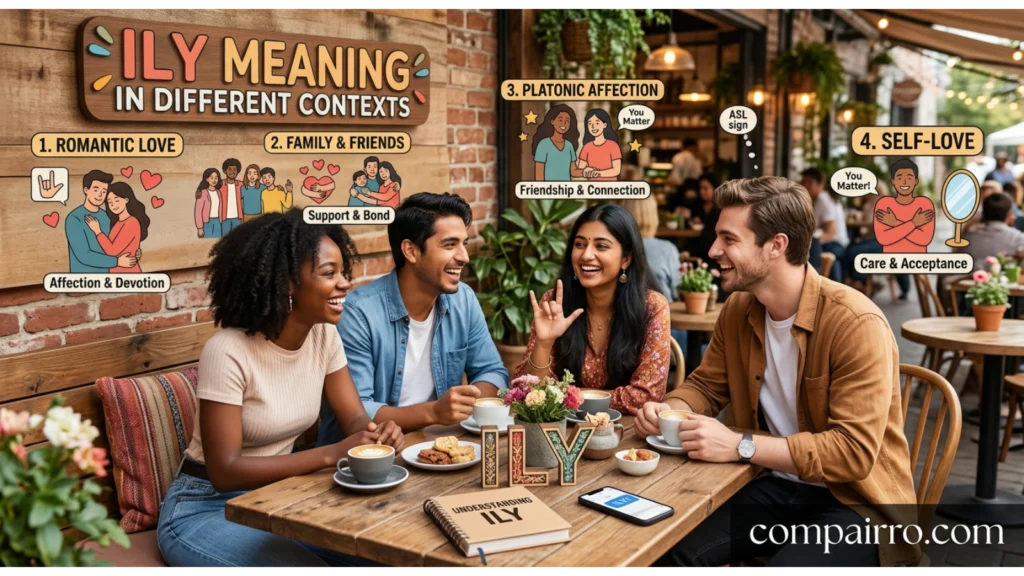
The meaning of ILY can feel slightly different depending on the relationship and conversation.
1. ILY Meaning Between Friends
Friends often use ILY to express appreciation, closeness, and strong friendship.
Example:
Friend 1: “You always make me laugh.”
Friend 2: “ILY 😂”
Here, it expresses friendly affection rather than necessarily romantic interest.
2. ILY Meaning in a Romantic Conversation
In a romantic relationship, ILY usually expresses love and emotional affection.
Example:
Person A: “I had a wonderful time today.”
Person B: “ILY ❤️”
The message communicates romantic affection, although the full relationship context matters.
3. ILY Meaning in Family Chats
Family members also use ILY to show care and emotional connection.
Example:
Parent: “Take care of yourself.”
Child: “ILY!”
It is a simple way to express love toward family members.
4. ILY Meaning on Social Media
On platforms like Instagram, TikTok, and Snapchat, ILY is often used in comments, captions, and direct messages.
For example:
“ILY guys, thanks for all the support!”
Here, the person is expressing appreciation and affection toward their audience.
Is ILY Rude, Offensive, or Neutral?
ILY is generally a positive and affectionate abbreviation. It is not considered rude or offensive.
However, its meaning can be misunderstood if the sender and receiver have different expectations.
For example:
- Between friends, it may express friendship.
- Between family members, it shows family love.
- Between romantic partners, it can express romantic feelings.
- In group chats, it may show general appreciation.
It is always important to consider the relationship before interpreting the message.
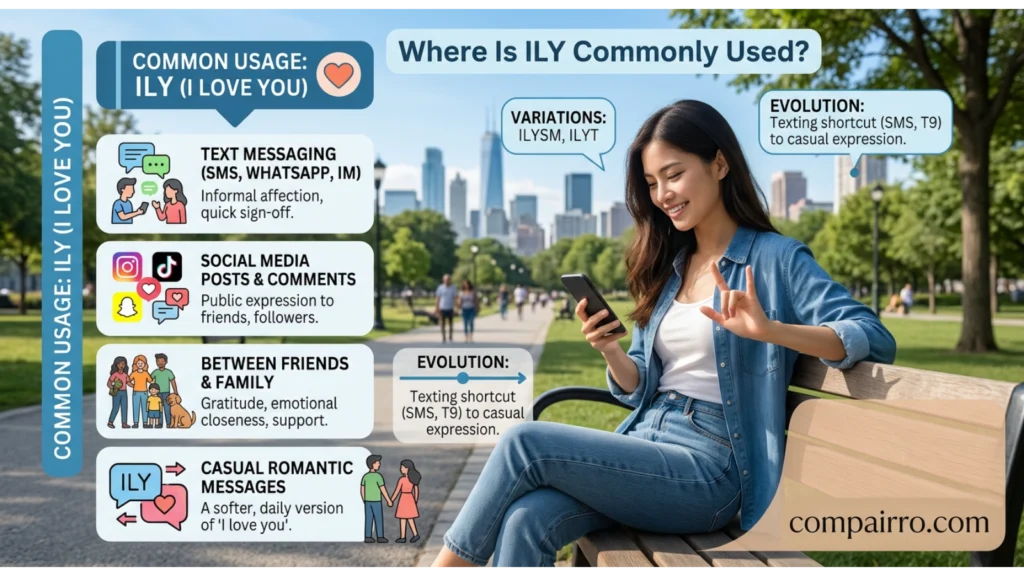
Where Is ILY Commonly Used?
ILY is popular across many digital communication platforms.
You may see it in:
- WhatsApp messages
- Instagram DMs and comments
- Snapchat conversations
- TikTok comments
- Facebook messages
- Discord chats
- Online gaming conversations
- Everyday text messages
It is especially common in informal conversations where people prefer short and quick expressions.
Real-Life Conversation Examples
Here are some examples showing how ILY can be used in different situations.
Friendly Example
Friend: “Thanks for helping me with my homework.”
You: “No problem, ILY!”
Meaning: You appreciate your friend and care about them.
Casual Example
Person A: “Good night. Talk to you tomorrow.”
Person B: “Good night, ILY!”
Meaning: A warm and affectionate goodbye.
Emotional Example
Person A: “You have always been there when I needed help.”
Person B: “ILY. You’re an amazing friend.”
Meaning: The sender is expressing genuine appreciation and affection.
Playful Example
Friend 1: “I brought your favorite snacks!”
Friend 2: “OMG ILY 😂”
Meaning: The person is jokingly expressing happiness and appreciation.
Emotional and Psychological Meaning of ILY
ILY can communicate different positive emotions depending on the situation.
It may express:
- Affection: Showing that someone is important to you.
- Appreciation: Thanking someone for their kindness.
- Connection: Showing closeness and friendship.
- Support: Reminding someone that they are cared for.
- Happiness: Sharing positive feelings during a conversation.
However, receiving ILY does not automatically mean someone has romantic feelings. Friends and family members use it too.
The best way to understand the emotion is to consider the relationship and the conversation.

Origin and Background of ILY
ILY developed as part of the wider trend of shortening common phrases in digital communication.
As text messaging and internet chats became popular, people started using abbreviations to communicate faster.
ILY became a convenient way to write “I Love You” without typing all three words.
It is now widely recognized across messaging platforms, social media, and online communities.
ILY Compared With Similar Texting Slang
Several other abbreviations express love, affection, or appreciation.
| Slang | Full Form | Meaning |
|---|---|---|
| ILY | I Love You | Expressing love |
| ILU | I Love You | Another short form of I Love You |
| ILYSM | I Love You So Much | Expressing stronger affection |
| LY | Love You | Short expression of affection |
| XOXO | Hugs and Kisses | Showing affection |
| IMY | I Miss You | Expressing that someone is missed |
| LOML | Love of My Life | Referring to someone very special |
These expressions are similar, but they are not always interchangeable.
When Should You Use ILY?
ILY is suitable for informal conversations with people you care about.
You can use it when:
- Thanking a close friend.
- Expressing love to family members.
- Ending a friendly conversation.
- Appreciating someone’s kindness.
- Communicating affection with a romantic partner.
- Sending a warm social media comment.
For example:
“Thanks for making my day better. ILY!”
It is a short and friendly way to express positive feelings.
When Should You Avoid Using ILY?
Although ILY is a positive expression, it may not be appropriate in every situation.
Avoid using it when:
- Communicating in formal business emails.
- Messaging someone you barely know.
- You are unsure whether the other person is comfortable with affectionate language.
- The conversation requires a professional tone.
- Your message could create an unintended misunderstanding.
In formal communication, expressions such as “I appreciate your help” or “Thank you for your support” are more suitable.
Polite Alternatives to ILY
If you want to express care without directly saying I Love You, consider these alternatives:
- I appreciate you.
- You mean a lot to me.
- Thanks for everything.
- You’re amazing.
- I care about you.
- Sending lots of love.
- You’re a wonderful friend.
- I’m grateful to have you in my life.
Choose an expression that matches your relationship and the situation.
Why Do People Use ILY?
People use ILY because it makes expressing affection quick and easy.
Some common reasons include:
- Saving time while texting.
- Expressing love in a short message.
- Showing appreciation.
- Making conversations warmer.
- Staying connected with friends and family.
- Sharing positive emotions through digital communication.
It is also easy to understand, which makes it popular among different age groups.
Impact of Using ILY in Communication
Using ILY can make digital conversations feel warmer and more personal.
A short message can remind someone that they are appreciated and cared for. It can also strengthen communication between friends and family members.
However, people may interpret the abbreviation differently. Someone may see it as a friendly expression, while another person may consider it more meaningful.
Therefore, understanding the relationship and situation is important.
Is ILY Safe for Social Media?
Yes, ILY is generally safe and appropriate for social media.
It is a positive abbreviation and does not contain offensive language.
You can use it in:
- Instagram comments
- TikTok captions
- Snapchat messages
- WhatsApp statuses
- Facebook posts
- Friendly group chats
However, always consider your audience and the message you want to communicate.
Common Misunderstandings About ILY
Although ILY has a simple meaning, people sometimes misunderstand its emotional purpose.
Here are some common misunderstandings:
1. Thinking it always means romantic love: Friends and family members also use ILY.
2. Confusing ILY with ILYSM: ILY means “I Love You,” while ILYSM means “I Love You So Much.”
3. Assuming it is always serious: Sometimes people use ILY playfully or casually.
4. Thinking it is only for couples: Anyone can use it with someone they genuinely care about.
Variations and Types of ILY
ILY appears in several forms in online conversations.
- ILY: I Love You.
- ily: The lowercase version of ILY.
- ILU: Another abbreviation for I Love You.
- ILYSM: I Love You So Much.
- LY: Love You.
- ILY2: I Love You Too.
Capitalization usually does not change the meaning. People choose different versions depending on their typing style.
How to Respond When Someone Uses ILY
Your response depends on your relationship with the sender and how you feel.
Here are some simple replies:
| Their Message | Possible Reply |
|---|---|
| ILY ❤️ | ILY too! |
| ILYSM | Aww, thank you! |
| Love you! | Love you too! |
| ILY friend | You’re the best! |
| ILY, take care | You too! Take care. |
You should always respond naturally. You do not have to use the same words if you are not comfortable doing so.
Regional and Cultural Usage
ILY is widely understood in English-language digital communication and is used across many countries.
People in the United States, United Kingdom, Canada, Australia, Pakistan, and other countries may use it in everyday online conversations.
Its basic meaning remains the same, although the level of affection it communicates can depend on local culture, personal habits, and relationships.
FAQs About ILY Meaning in Text
1. What does ILY mean in texting?
ILY means “I Love You.” It is a common abbreviation used to express love, care, affection, and appreciation.
2. What is the full form of ILY?
The full form of ILY is I Love You. People use it to make messages shorter and easier to type.
3. Does ILY mean love from a girl?
Yes, a girl may use ILY to express affection, friendship, or romantic feelings. The exact meaning depends on your relationship and the conversation.
4. Is ILY romantic or friendly?
ILY can be both romantic and friendly. Friends, family members, and romantic partners all use it.
5. What is the difference between ILY and ILYSM?
ILY means “I Love You,” while ILYSM means “I Love You So Much.” Both express affection, but ILYSM adds extra emphasis.
6. How do you reply to ILY?
You can reply with “ILY too,” “Love you too,” or another natural expression. Your response should reflect how you feel.
Conclusion
The ily meaning in text is simple: it stands for “I Love You.” People use this popular abbreviation to express affection, friendship, appreciation, and emotional connection.
You may receive ILY from a friend, family member, or romantic partner. However, it does not always indicate romantic feelings. The relationship and conversation help explain its real meaning.
ILY is suitable for casual chats, social media, and personal messages. For professional communication, complete and more formal expressions are usually better.
Understanding the meaning and context of ILY helps you communicate naturally and avoid misunderstandings when texting.

Sara Taylor is a passionate English content writer who specializes in word meanings, spelling comparisons, and modern slang explanations. She creates easy-to-understand articles that help readers avoid common English mistakes and improve their writing skills. Her content focuses on simple learning, real-life examples, and clear explanations for everyday readers.