Should Eggs Sink or Float is a common question when checking if eggs are fresh or spoiled. You may have heard that fresh eggs sink in water while old eggs float. But does this simple kitchen test really tell you if an egg is safe to eat? Understanding this trick can help you avoid wasting food and make better choices in your kitchen.
The should eggs sink or float question is especially important for people who want to know whether their eggs are fresh and safe to eat. Eggs are a common food used for breakfast, baking, cooking, and many other meals. However, it is not always easy to tell how fresh an egg is just by looking at its shell.
The water test, also known as the egg float test, is a simple home method that helps you understand how old an egg may be. It works by showing how the air space inside an egg changes over time. As an egg gets older, its air cell becomes larger, which can make it float.
Still, there is one important thing to remember: floating does not automatically mean an egg is unsafe, and sinking does not guarantee that it is safe. You should also check its smell, appearance, storage history, and expiration or best-before date.
In this guide, you’ll learn the meaning, examples, usage, differences, common mistakes, and simple explanations in easy English.
Should Eggs Sink or Float? – Quick Answer
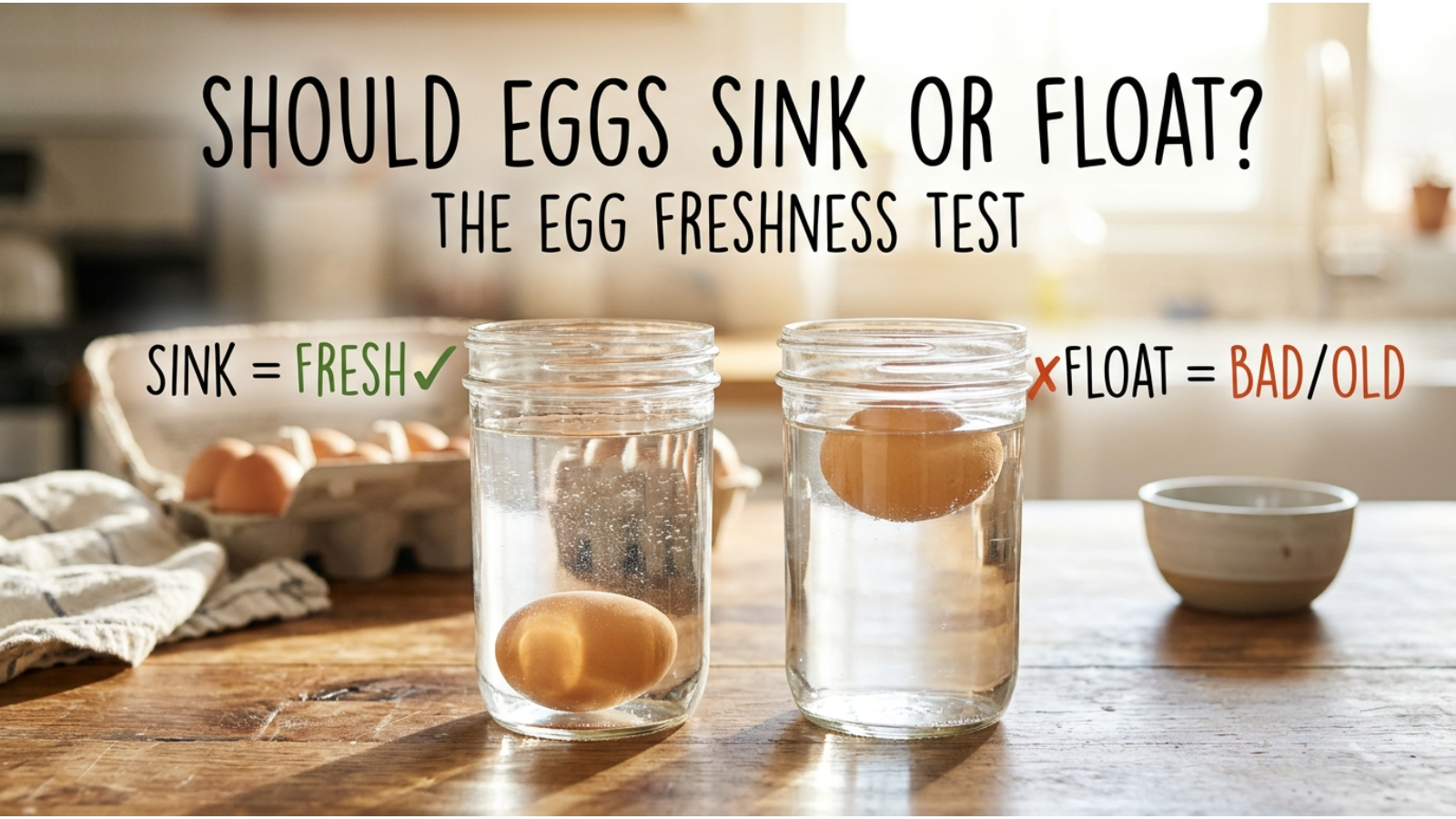
Fresh eggs should sink in water and lie flat on their sides. Older eggs may stand upright at the bottom, while very old eggs may float to the surface.
The egg float test helps estimate freshness, but it cannot confirm whether an egg is safe to eat.
Here is what each result means:
- Egg sinks and lies flat: Usually a sign of a fresher egg.
- Egg sinks but stands upright: The egg is older but may still be usable.
- Egg floats: The egg is older and should be discarded as a precaution.
Simple rule:
- Sink = Usually fresher.
- Stand upright = Older.
- Float = Discard.
The Origin of the Egg Float Test
The egg float test is an old household method used to estimate how fresh an egg is. Before modern food storage and freshness checks became common, people used simple water tests to check eggs at home.
This method is based on a natural change that happens inside an egg over time.
An eggshell has tiny pores that allow air and moisture to pass through. As an egg gets older, moisture and carbon dioxide gradually escape, while air enters through these pores.
As a result, the air cell inside the egg becomes larger. This changes the egg’s density and makes it more likely to float in water.
Today, the egg float test remains popular because it is quick, simple, and requires only a bowl of water.
Discover More Post:
British English vs American English Usage
The phrase “should eggs sink or float” has the same meaning in British and American English.
There is no major spelling or usage difference. People in both countries use the water test to check the freshness of eggs.
| Feature | British English | American English | Notes |
|---|---|---|---|
| Egg | Egg | Egg | Same spelling |
| Fresh egg | Fresh egg | Fresh egg | Same meaning |
| Floating test | Egg float test | Egg float test | Same method |
| Expiration date | Use-by or best-before date | Expiration or best-by date | Label wording may differ |
| Eggshell | Eggshell | Eggshell | Same spelling |
Therefore, you can use the phrase naturally in both countries.
Which One Should You Use?
If you are checking eggs at home, the sinking egg is generally a better sign of freshness.
Here is how to understand the results:
1. Fresh eggs that sink
How to Tell If Eggs Are Bad (Simple Tests That Work)
- They usually lie flat at the bottom.
- They have a smaller air cell.
- They are generally fresher than floating eggs.
2. Older eggs that stand upright
Så vet du om dina ägg är gamla – enkla knepet | Femina
- They remain at the bottom.
- One end may point upward.
- They have a larger air cell.
- They are older, but floating alone does not determine safety.
3. Eggs that float
You Can Tell If An Egg Is Expired By Dropping It In A Glass Of Water – AOL
- They rise toward the water’s surface.
- They usually have a larger air cell.
- They are older.
- It is safest to discard them.
Important: Never taste an egg to check whether it is safe. If an egg smells bad, looks unusual, or has been stored incorrectly, throw it away.
Common Mistakes With the Egg Float Test
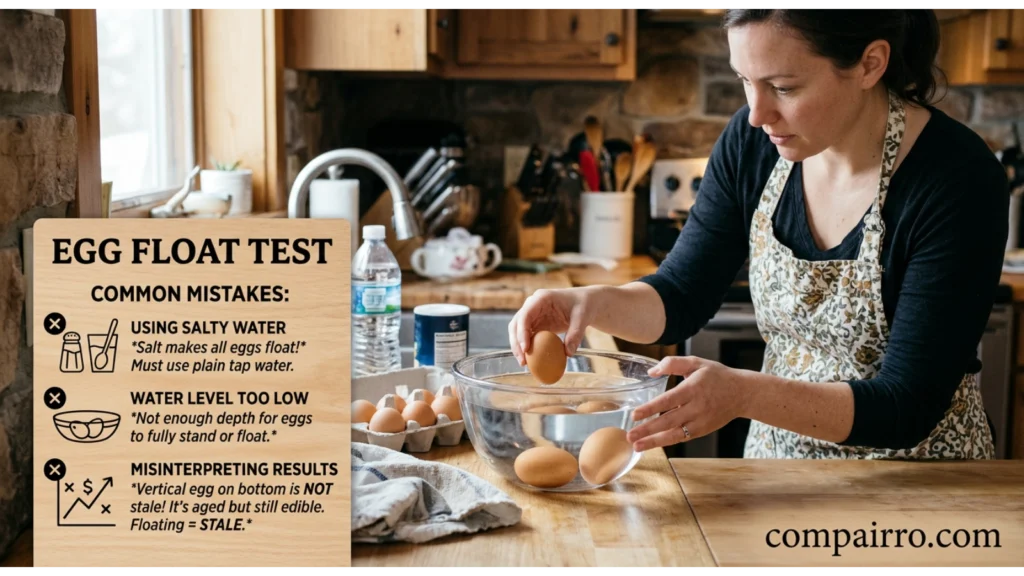
People sometimes misunderstand what the egg float test actually tells them. Here are five common mistakes to avoid.
Mistake 1: Thinking every floating egg is rotten
❌ Incorrect: Every floating egg is definitely rotten.
✔ Correct: Floating usually means an egg is older. However, the float test cannot confirm spoilage or safety. It is best to discard a floating egg.
Mistake 2: Thinking every sinking egg is safe
❌ Incorrect: If an egg sinks, it is always safe to eat.
✔ Correct: A sinking egg can still contain harmful bacteria. Proper storage and safe cooking are important.
Mistake 3: Ignoring the smell
❌ Incorrect: The water test is the only thing you need.
✔ Correct: A rotten egg often has a strong unpleasant smell when cracked open. Discard it if it smells unusual.
Mistake 4: Using hot water
❌ Incorrect: Use hot water to test egg freshness.
✔ Correct: Use a bowl of cool or room-temperature water for the float test.
Mistake 5: Confusing egg age with food safety
❌ Incorrect: An older egg is always dangerous.
✔ Correct: Age and safety are not exactly the same. Storage conditions, contamination, and handling also matter.
Should Eggs Sink or Float? Everyday Examples
The egg float test is easy to understand through everyday situations.
1. At Home
Imagine you are preparing breakfast and find some eggs in your refrigerator.
You place one egg in a bowl of water. It sinks and lies flat.
This usually means the egg is relatively fresh.
2. At School
A science teacher may use eggs and water to explain density.
Students can observe how eggs behave differently in water as their air cells grow.
3. On Social Media
You may see videos showing people placing eggs in glasses of water.
These videos often explain the difference between fresh and older eggs.
However, remember that the test is only a freshness guide.
4. In Daily Life
You are baking a cake and find an egg that stands upright at the bottom of the bowl.
This means the egg is older. You should not rely on its position alone to decide whether it is safe.
5. During Grocery Shopping
You should check egg cartons for date labels, damaged shells, and proper storage instructions.
Buying and storing eggs correctly is more useful than relying only on the float test.
Should Eggs Sink or Float? – Google Trends and Usage Data
People search for “should eggs sink or float” because they want a quick and simple way to check egg freshness.
This topic is especially popular among:
- People who cook at home.
- Students learning basic science.
- Parents checking food freshness.
- People who store eggs for several days.
- Beginners learning about food safety.
Search interest can come from different countries, including:
- US: People often search for egg freshness and expiration dates.
- UK: Users may look for ways to check whether eggs are still fresh.
- India: Home cooks often search for simple egg freshness tests.
- Pakistan: People may want to know how to identify fresh eggs before cooking.
- Canada: Users may search for egg storage and food safety tips.
- Australia: Home cooks may look for practical ways to check older eggs.
These are likely search-intent patterns, not verified country rankings. Exact search volume and country popularity require current Google Trends data.
The topic also appears in educational videos, cooking blogs, and social media posts because the experiment is easy to demonstrate.
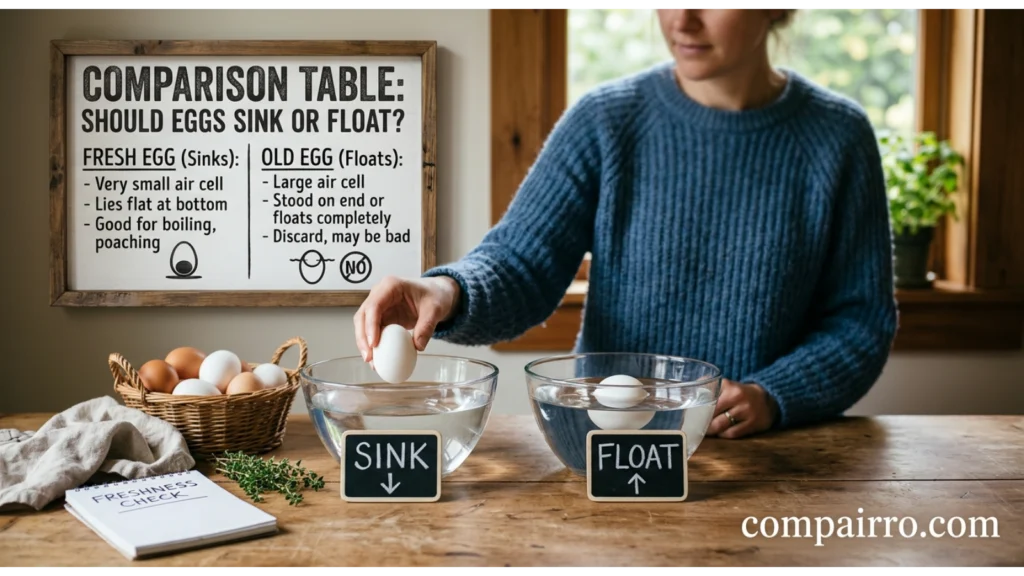
Comparison Table: Should Eggs Sink or Float?
The following table explains the three common results of the egg float test.
| Egg Position | What It Means | Freshness Level | What to Do |
|---|---|---|---|
| Lies flat at bottom | Smaller air cell | Usually fresh | Check storage and condition |
| Stands upright | Larger air cell | Older | Check carefully |
| Floats on top | Large air cell | Very old | Discard |
Remember: This table describes freshness indicators, not a complete food safety test.
Eggs in Professional Life
Understanding egg freshness is useful in several professional settings.
Restaurants: Restaurant workers need to handle and store eggs safely.
Bakeries: Bakers use eggs in cakes, cookies, bread, and other products. Freshness and safe storage are important.
Food businesses: Grocery stores and food suppliers must follow proper storage and handling rules.
Cooking professionals: Chefs need to understand food safety, egg quality, and proper cooking temperatures.
The float test may help identify older eggs, but professional food businesses should follow food safety rules rather than depend on this test alone.
Should Eggs Sink or Float? A Guide for Students and Beginners
Students often learn about the egg float test in basic science lessons.
It is a simple way to understand density, air spaces, and changes inside food.
Why beginners get confused:
- They think sinking always means safe.
- They believe floating always proves an egg is rotten.
- They do not understand how air enters the eggshell.
- They confuse freshness with food safety.
Easy learning tips:
- Remember that fresh eggs usually sink.
- Notice whether the egg lies flat or stands upright.
- Understand that older eggs develop larger air cells.
- Never use the float test as the only safety check.
- Learn proper egg storage and cooking practices.
Signs or Characteristics Related to Egg Freshness
There are several things you can observe when checking eggs.
1. Shell Condition
- The shell should be clean and uncracked.
- Avoid eggs with damaged shells.
- Do not wash eggs before storage unless following appropriate food safety guidance.
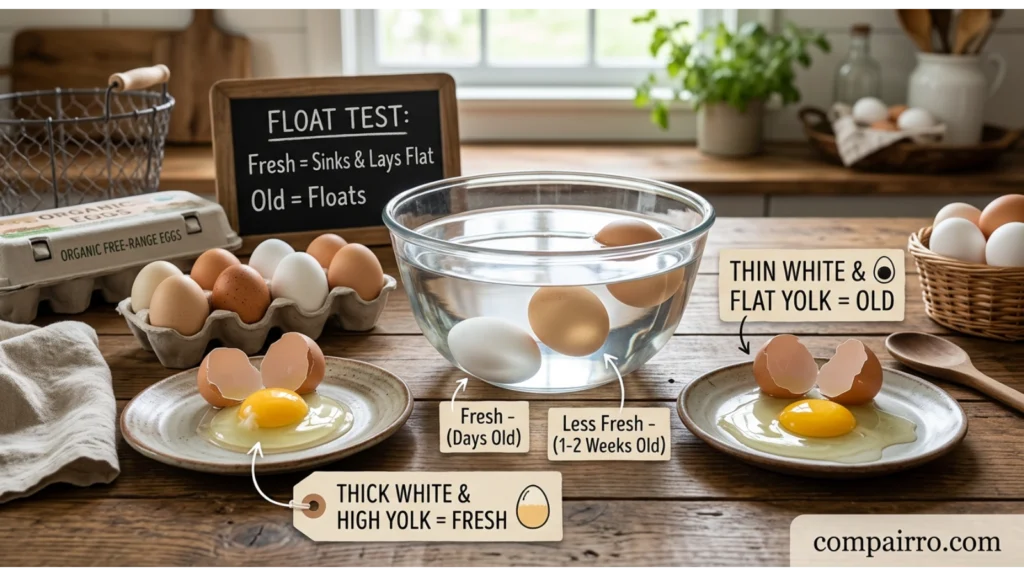
2. Egg Position in Water
- Fresh eggs usually sink and lie flat.
- Older eggs may stand upright.
- Very old eggs may float.
3. Smell
- Fresh eggs should not have a strong unpleasant smell.
- A rotten egg may produce a bad odor after cracking.
4. Appearance
After cracking an egg into a separate clean bowl, check its appearance.
- Look for unusual colors.
- Check for unexpected changes.
- Discard eggs with unusual appearance or odor.
5. Storage Conditions
- Keep eggs refrigerated when required.
- Follow the storage instructions on the carton.
- Avoid leaving eggs at room temperature for long periods.
6. Date Labels
Always check the date on the carton. However, remember that date labels and storage conditions should be considered together.
Simple Trick to Remember: Should Eggs Sink or Float?
Here is an easy way to remember the egg float test:
Bozuk Yumurta Nasıl Anlaşılır? Taze, Bozuk ve Bayat Yumurta Nasıl Anlaşılır, Pişince Nasıl Olur?
Sink = Fresh
Usually a sign of a fresher egg.
Kako proveriti da li su jaja sveža: Testovi koji otkrivaju da li su za jelo – Blic
Stand = Older
The egg has a larger air cell.
Как проверить свежесть яиц: надежные способы в домашних условиях
Float = Discard
Do not rely on it as food.
Think of it this way:
- A fresh egg is usually heavier compared with its volume.
- An older egg develops a larger air pocket.
- More air inside makes the egg more likely to float.
This simple trick can help you remember the basic idea.
FAQs:
1. Should fresh eggs sink or float?
Fresh eggs usually sink to the bottom of water and lie flat on their sides.
2. Does a floating egg mean it is bad?
A floating egg is usually old. However, the test cannot prove spoilage. The safest choice is to discard it.
3. Can you eat eggs that stand upright in water?
An upright egg is older, but its position alone cannot confirm safety. Check storage history and other signs, and never use an egg with an unusual smell or appearance.
4. Why do old eggs float in water?
As eggs age, moisture and carbon dioxide escape through tiny shell pores. This makes the air cell larger and changes the egg’s density.
5. How do you check egg freshness without water?
Check the carton date, shell condition, storage history, and smell after cracking the egg into a separate clean bowl.
6. Should eggs be refrigerated?
In countries where eggs are sold refrigerated, keep them refrigerated. Follow the carton instructions and local food safety guidance.
7. Can a fresh egg still contain bacteria?
Yes. Even a fresh-looking, sinking egg can contain harmful bacteria. Handle eggs safely and cook them thoroughly.
Conclusion
So, should eggs sink or float? The simple answer is that fresh eggs usually sink and lie flat at the bottom of water. Older eggs may stand upright, while very old eggs may float to the surface.
The egg float test is a useful way to estimate egg freshness at home. However, it cannot tell you if an egg is completely safe to eat.
Always check the storage conditions, carton date, shell condition, smell, and appearance. Cook eggs properly and avoid eating eggs that seem spoiled.
Final memory rule: Sink means usually fresh, stand means older, and float means discard.

Sara Taylor is a passionate English content writer who specializes in word meanings, spelling comparisons, and modern slang explanations. She creates easy-to-understand articles that help readers avoid common English mistakes and improve their writing skills. Her content focuses on simple learning, real-life examples, and clear explanations for everyday readers.