Imagine you’re designing a product box or preparing artwork for a printing company. While reading packaging instructions, you come across two similar words: dieline and dyeline. At first glance, they seem interchangeable, but are they?
Many designers, students, business owners, and printing professionals search for this topic because both spellings appear online. The confusion often happens when people hear the term spoken before seeing it written. Since “die” and “dye” sound similar, it’s easy to assume either spelling might be correct.
This term is commonly used in packaging design, printing projects, product manufacturing, graphic design courses, and workplace discussions. Understanding the correct spelling can help you communicate more professionally and avoid mistakes when working with printers or packaging suppliers.
Whether you’re creating a product label, designing a carton, or simply learning industry terminology, knowing the right word matters. It helps ensure clear communication and makes it easier to follow packaging guidelines.
In this guide, you’ll learn the meaning, examples, usage, differences, common mistakes, and simple explanations in easy English.
Dieline or Dyeline – Quick Answer
👉 Dieline is the correct spelling used in the printing and packaging industry.
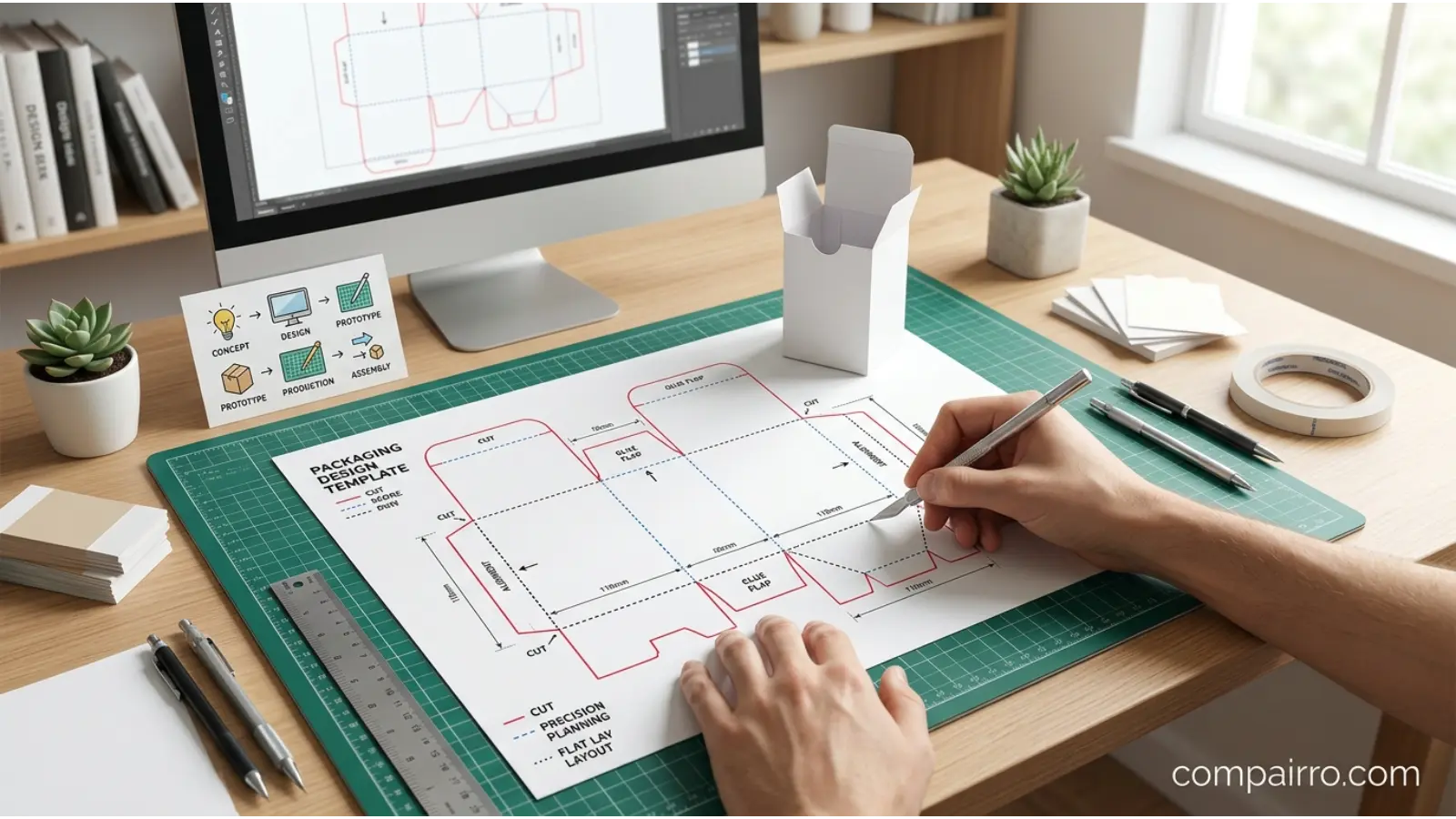
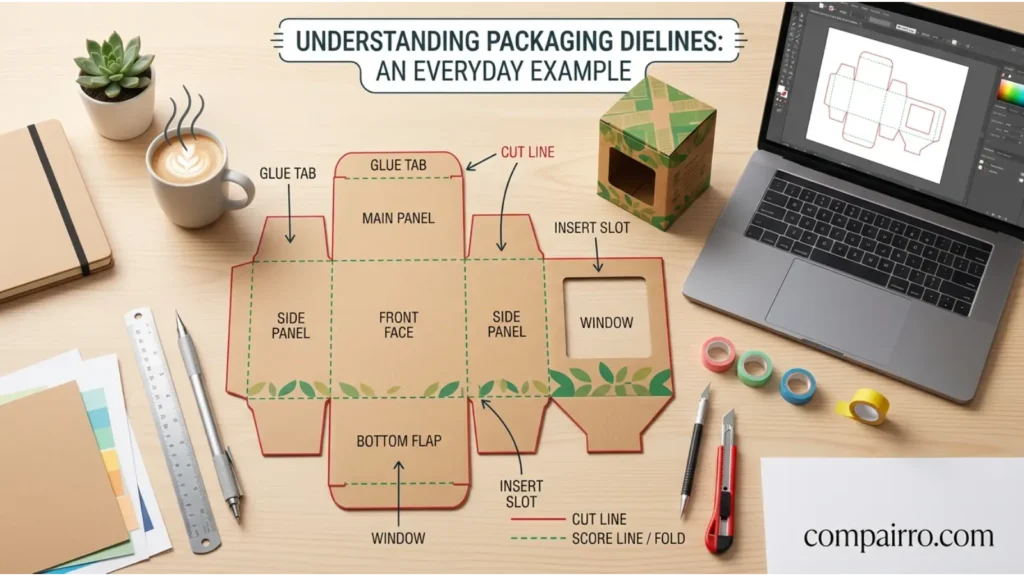
A dieline is a template that shows where packaging should be cut, folded, trimmed, or assembled.
Examples
1 The packaging designer sent the dieline to the printer.
2 Make sure all artwork stays inside the template boundaries.
3 The box cannot be produced until the dieline is approved.
Simple Rule
👉 Think of “die” as the cutting tool and “line” as the guide.
Dieline = a guide for cutting and folding packaging.
The Origin of the Term
The word comes from traditional printing and manufacturing processes.
A die is a specialized tool used to cut shapes from materials such as cardboard, paper, or plastic. The outline showing where these cuts will happen became known as a dieline.
Before digital design software existed, manufacturers relied on physical cutting tools and printed templates. As packaging design moved to computers, the term remained widely used.
Today, packaging designers create these templates digitally and share them with printers and manufacturers around the world.
British English vs American English Usage
Unlike many English words, this term does not change between British and American English.
| Feature | British English | American English | Notes |
|---|---|---|---|
| Preferred spelling | Dieline | Dieline | Same worldwide |
| Packaging industry use | Common | Common | Industry standard |
| Alternative spelling | Rare | Rare | Generally avoided |
| Professional documents | Used | Used | Preferred choice |
Conclusion: Professionals in both regions use the same spelling.
Which One Should You Use?
The accepted industry term is dieline.
Best Situations to Use It
- Packaging design projects
- Printing instructions
- Product box creation
- Label production
- Manufacturing discussions
- Design portfolios
Professional Usage
- Client presentations
- Packaging specifications
- Artwork submissions
- Production files
Informal Usage
Even in casual conversations among designers, the standard spelling remains the preferred choice.
Dieline or Dyeline Common Mistakes People Make
Mistake 1
❌ Assuming both spellings are equally correct.
✔ Industry professionals overwhelmingly use dieline.
Mistake 2
❌ Thinking the template is the finished package.
✔ It is only a guide used before production begins.
Mistake 3
❌ Ignoring fold and trim marks.
✔ These markings are essential for proper assembly.
Mistake 4
❌ Placing important text too close to edges.
✔ Important content should remain within safe areas.
Dieline or Dyeline Everyday Examples in Packaging Design
At Work
A designer prepares a package layout for a new snack product.
At School
Students learn how boxes are designed before printing.
On Social Media
Design communities share packaging tutorials and template examples.
In Daily Business
A company reviews packaging files before launching a product.
In Messages
“Can you send the packaging template before the meeting?”
“Please check the fold lines before final approval.”
Dieline or Dyeline Google Trends and Search Interest
Many people search for this topic because they encounter different spellings online.
Why People Search for It
- Packaging design projects
- Printing requirements
- Graphic design training
- Product development
- Professional terminology
Popular Countries
Interest commonly comes from:
- United States
- United Kingdom
- India
- Pakistan
- Canada
- Australia
Why Beginners Get Confused
The main reason is pronunciation. Since “die” and “dye” sound alike in conversation, many people assume the alternative spelling is acceptable.
However, professional design resources almost always use the industry-standard version.
Comparison Table
| Feature | Dieline | Dyeline |
|---|---|---|
| Industry standard | Yes | No |
| Used by printers | Yes | Rarely |
| Found in design software | Yes | No |
| Professional documentation | Yes | Not recommended |
| Packaging education | Yes | Rarely |
| Recommended spelling | Yes | No |
Dieline or Dyeline Professional Use in Printing and Packaging
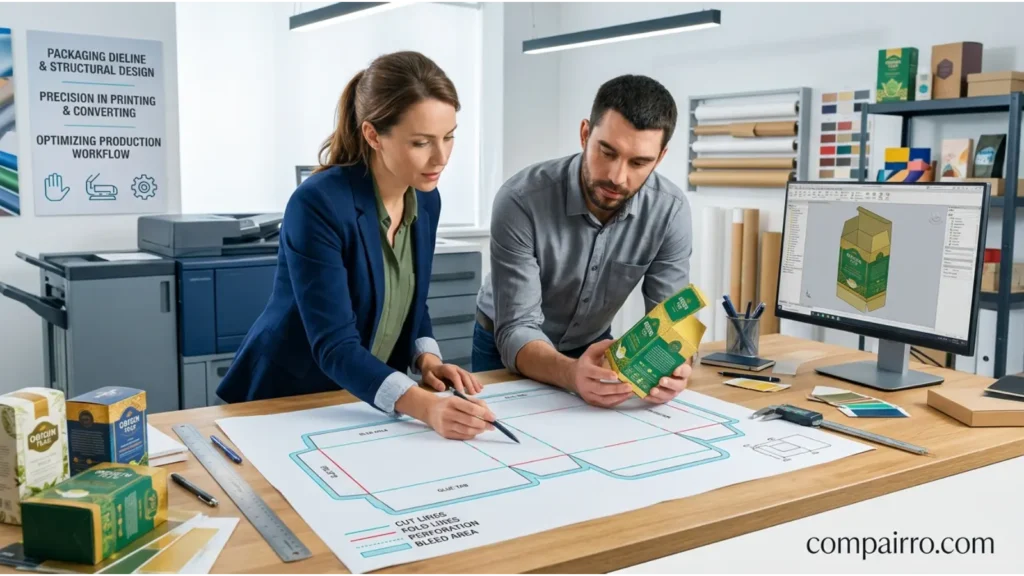
Packaging projects rely heavily on accurate templates.
Before production begins, manufacturers need clear instructions showing:
- Cut locations
- Fold points
- Bleed areas
- Safe zones
- Final dimensions
Without these guides, printing mistakes can occur, leading to wasted materials and higher costs.
For this reason, packaging professionals treat these templates as a critical part of the production process.
Tips for Students and Beginners
Many newcomers find packaging terminology confusing.
Common Challenges
- Learning technical vocabulary
- Understanding fold lines
- Understanding bleed areas
- Distinguishing templates from artwork
Easy Learning Tips
- Study real packaging examples.
- Practice creating simple box layouts.
- Learn the meaning of cut and fold marks.
- Review professional packaging files.
The more examples you see, the easier these concepts become.
Key Features of a Packaging Template
Most packaging layouts contain several important elements.
Cut Lines
Show where the material will be trimmed.
Fold Lines
Indicate where the package should bend.
Bleed Area
Provides extra space for printing beyond the trim edge.
Safety Margin
Protects important text and graphics from being cut off.
Dimensions
Display the package’s size and measurements.
Assembly Instructions
Help manufacturers understand how the package fits together.
Simple Trick to Remember the Correct Spelling
A simple memory trick can help:
👉 Die = Cutting Tool
👉 Line = Guide
Together, they form the term used in packaging production.
Think of It This Way
If a cardboard box needs to be cut into shape, a cutting tool performs the work, and the template shows where it should happen.
That’s why the spelling starts with “die”, not “dye.”
FAQS:
1. Which spelling is correct?
The accepted professional spelling is dieline.
2. What is it used for?
It helps printers and manufacturers know where packaging should be cut and folded.
3. Is the alternative spelling ever used?
It may appear online occasionally, but it is not the preferred industry term.
4. Who creates these templates?
Packaging designers, graphic designers, and production specialists.
5. Are they only used for boxes?
No. They are also used for labels, cartons, sleeves, and other packaging materials.
6. Can beginners learn packaging templates easily?
Yes. With practice and real examples, the concepts become much easier to understand.
7. Why are they important?
They help ensure packaging is produced accurately and efficiently.
Conclusion
When comparing dieline or dyeline, the correct choice is dieline. It is the recognized term used throughout the printing and packaging industry.
These templates help designers, printers, and manufacturers create packaging accurately by showing cut lines, fold points, dimensions, and assembly instructions. Understanding the correct spelling can improve communication and prevent confusion during production.
A simple rule to remember is:
👉 Die = cutting tool
👉 Dieline = cutting and folding guide
Once you remember that connection, choosing the correct spelling becomes easy.

Sara Taylor is a passionate English content writer who specializes in word meanings, spelling comparisons, and modern slang explanations. She creates easy-to-understand articles that help readers avoid common English mistakes and improve their writing skills. Her content focuses on simple learning, real-life examples, and clear explanations for everyday readers.