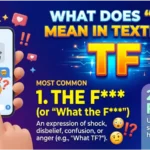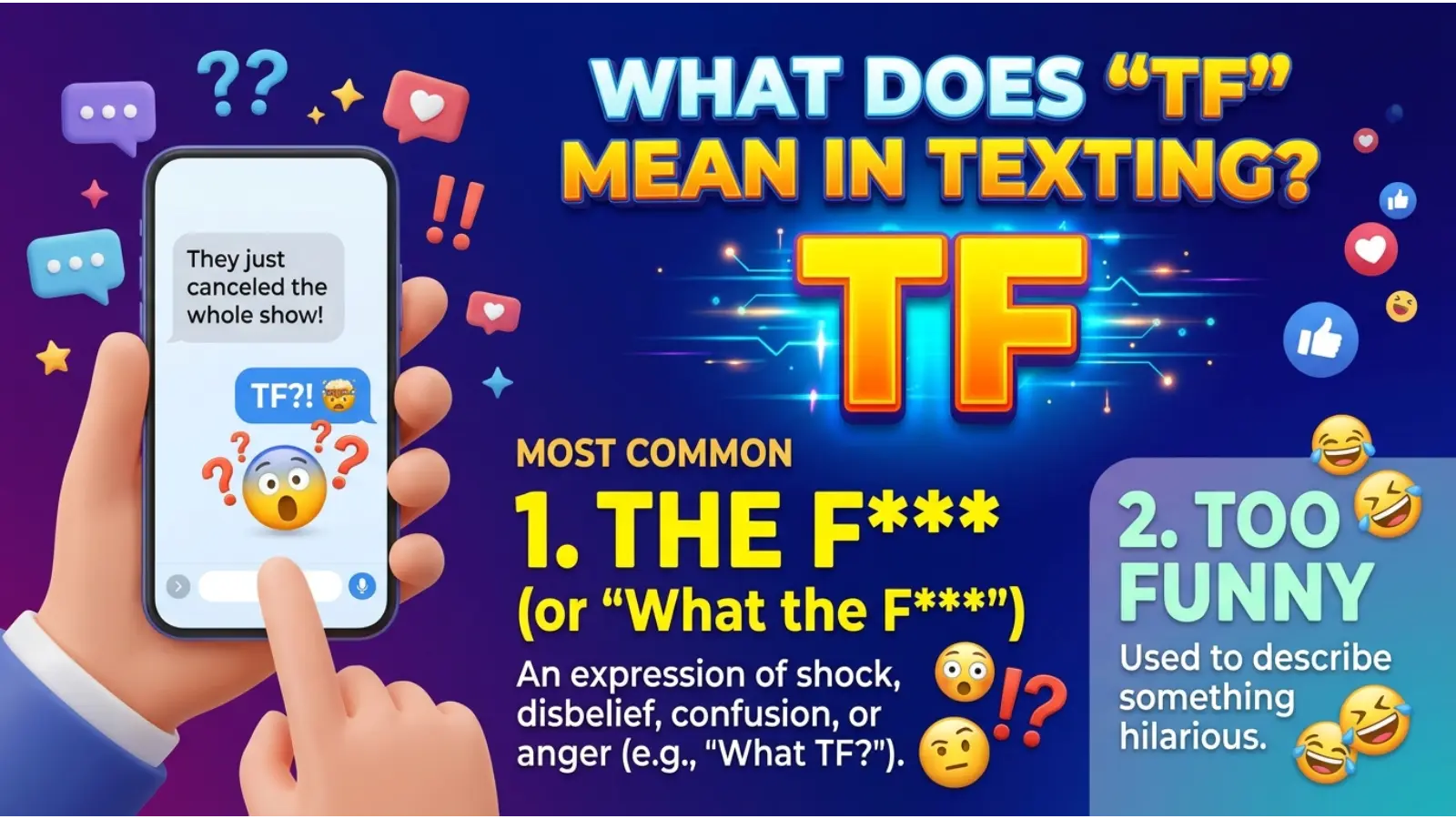
tf meaning in text is a common question for people who see this abbreviation in messages, social media comments, or online conversations. You might receive a message like “What tf happened?” or see someone comment “TF is going on?” and wonder what those letters mean. TF is widely used in informal digital communication, especially when people want to express surprise, confusion, frustration, or disbelief.
TF usually stands for “the fuck,” a slang expression that adds strong emotion or emphasis to a question or statement. Although it is common in casual texting, it contains profanity and may sound rude in some situations. The exact tone depends on the sentence, the relationship between the people, and the topic being discussed.
Quick Answer:
TF means “the fuck” in texting. People commonly use it to express surprise, confusion, anger, or disbelief, but it is informal and can be offensive.
What Does TF Mean in Text?
The abbreviation TF most commonly stands for “the fuck.” It is an informal expression used to add emphasis to a question, reaction, or statement.
For example:
- “What tf happened?” means “What happened?” with stronger surprise or frustration.
- “Where tf are you?” expresses impatience or confusion.
- “Who tf said that?” shows disbelief or a strong reaction.
In these examples, TF does not usually change the basic meaning of the sentence. Instead, it makes the message sound more emotional or forceful.
People often use TF because it is shorter than typing the full expression. However, the phrase it represents contains profanity, so it is best suited to informal conversations.
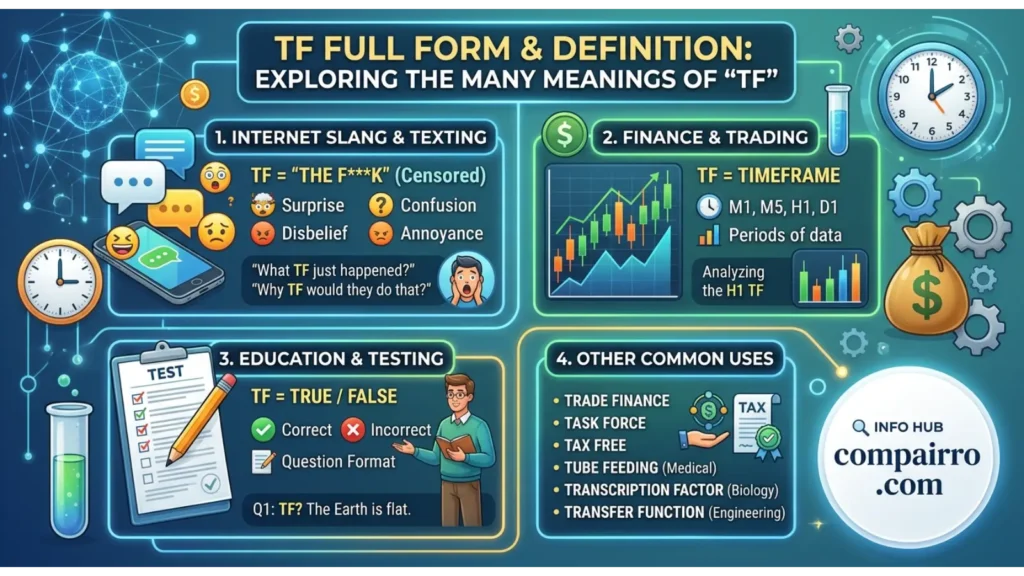
TF Full Form and Definition
The most common TF full form in texting is “the fuck.” It is often used as an intensifier, which means it adds emphasis to the words around it.
Depending on the context, TF can communicate:
- Surprise: “What tf!”
- Confusion: “What tf does this mean?”
- Frustration: “Why tf is this not working?”
- Disbelief: “How tf did that happen?”
- Curiosity with a strong tone: “Who tf is that?”
TF is not always intended as a direct insult. Someone may use it simply because they are surprised or confused. Still, its tone can sound aggressive to people who dislike profanity.

TF Meaning in Different Contexts
1. TF in Casual Texting
In everyday texting, TF is often used to make a question sound more intense.
Example:
Friend A: “I accidentally deleted the whole file.”
Friend B: “How tf did that happen?”
Here, the sender sounds surprised and wants an explanation.
2. TF on Social Media
TF appears in comments, captions, memes, and replies on platforms such as TikTok, Instagram, Snapchat, and X.
For example:
“TF is this trend?”
This expresses confusion or surprise about something the person has seen.
3. TF in Gaming Chats
Gamers may use TF when reacting to unexpected events, mistakes, or surprising gameplay.
Example:
Player A: “The match ended already.”
Player B: “What tf happened?”
The abbreviation adds emphasis to the question.
4. TF in Arguments
During disagreements, TF can make a message sound angry or confrontational.
For example:
“Why tf would you say that?”
This may sound accusatory, even if the sender simply wants an explanation.
5. TF in Other Fields
TF can have other meanings outside internet slang. Its interpretation depends on the subject. In a technical discussion, workplace document, or specialized community, it may be an abbreviation unrelated to profanity.
Always consider the full sentence before deciding what TF means.
Is TF Rude, Offensive, or Neutral?
TF is generally considered informal and potentially offensive because it represents a phrase containing profanity.
However, its effect depends on the situation.
It may be acceptable when:
- Talking casually with close friends who use similar language.
- Reacting to a funny or unexpected situation.
- Discussing memes in an informal group chat.
It may be inappropriate when:
- Speaking with teachers, employers, or customers.
- Writing professional emails.
- Communicating with someone who dislikes swearing.
- Posting content for a broad or younger audience.
Even when you do not intend to offend anyone, the expression can make a message sound harsh. If you are unsure, choose a cleaner alternative.

Where Is TF Commonly Used?
TF is frequently seen in informal digital communication, including:
- Text messages and group chats
- Instagram comments and direct messages
- TikTok videos and comments
- Snapchat conversations
- Discord servers
- Online gaming chats
- Memes and reaction posts
Its popularity comes from the way people use short expressions to communicate emotions quickly. However, its tone may differ between friend groups and online communities.
Real-Life Examples of TF in Texting
Here are examples showing how TF can appear in different situations.
Friendly Example
Alex: “I just found my missing headphones.”
Sam: “Where tf were they? 😂”
Meaning: Sam is surprised and curious. The emoji makes the message seem playful.
Casual Example
Person A: “The restaurant is closed today.”
Person B: “Why tf didn’t they update their hours?”
Meaning: The sender is frustrated or confused.
Surprised Example
Friend: “He finished the entire project in one hour.”
You: “How tf did he do that?”
Meaning: You are expressing disbelief or amazement.
Argumentative Example
Person A: “I told everyone about the plan.”
Person B: “Why tf would you do that without asking me?”
Meaning: The sender sounds angry and may be challenging the other person’s decision.
Social Media Example
Comment: “TF is happening in this video?”
Meaning: The commenter is confused or surprised by what they are watching.
These examples show that TF can express different emotions. The complete sentence and surrounding conversation help determine the intended tone.
Emotional and Psychological Meaning of TF
TF does not have one fixed emotional meaning. It is mainly an intensifier that helps people express a stronger reaction.
Depending on the context, it may suggest:
- Surprise at unexpected news.
- Confusion about a situation.
- Frustration with a problem.
- Disbelief about something unusual.
- Anger during a disagreement.
However, seeing TF in a message does not automatically mean someone is angry with you. For example, “What tf is this funny video?” may express amusement or surprise rather than hostility.
Look at the entire message instead of judging the sender’s feelings from two letters alone.

Origin and Background of TF
TF developed as a shortened form of a common English profanity used in informal speech. Like many internet abbreviations, it became convenient to type in chats, forums, comments, and text messages.
People often shorten familiar phrases because digital conversations move quickly. Abbreviations such as LOL, WTF, IDK, and TBH are also widely recognized online.
TF is closely related to WTF, which stands for “what the fuck.” Both can express surprise or disbelief, but they are used differently in sentences.
TF vs. Similar Slang Terms
TF is similar to several other internet abbreviations, but each has a different use.
| Slang | Full Form | Common Meaning |
|---|---|---|
| TF | The fuck | Adds strong emphasis |
| WTF | What the fuck | Expresses surprise or disbelief |
| WTH | What the heck | Cleaner expression of surprise |
| FR | For real | Shows agreement or seriousness |
| OMG | Oh my God | Expresses surprise or excitement |
| SMH | Shaking my head | Shows disappointment or disbelief |
| IDK | I don’t know | Expresses uncertainty |
For example, “What tf happened?” and “WTF happened?” can express similar reactions. However, WTH is a less offensive alternative.
When Should You Use TF?
TF may be suitable when you are chatting with friends who understand your tone and are comfortable with profanity.
You might use it when:
- Reacting to unexpected news.
- Expressing confusion about a funny video.
- Talking informally with friends.
- Showing disbelief about a surprising event.
Before using it, consider who will read your message and whether the expression could sound disrespectful.
When Should You Avoid TF?
Avoid TF in formal situations where clear and respectful language matters.
These include:
- School assignments and academic writing.
- Job applications and interviews.
- Professional emails and business chats.
- Conversations with people you do not know well.
- Public posts intended for a wide audience.
Instead of writing “What tf happened?” in a professional conversation, write “What happened?” or “Could you explain what happened?”
Polite Alternatives to TF
If you want to express the same emotion without profanity, try these alternatives:
- What the heck? — for surprise or confusion.
- What on earth? — for disbelief.
- Seriously? — for surprise or frustration.
- What happened? — for a neutral question.
- How is that possible? — for disbelief.
- Why would that happen? — for confusion.
- I can’t believe it! — for surprise.
These expressions are generally more suitable for school, work, and conversations with unfamiliar people.
Why Do People Use TF?
People use TF because it is short, familiar, and emotionally strong. It can make a message sound more expressive than the same sentence without it.
Common reasons include:
- Saving time while typing.
- Showing surprise or frustration.
- Making a reaction sound stronger.
- Matching the informal tone of a conversation.
- Expressing disbelief in memes or comments.
Although slang can make casual communication feel natural, too much profanity may distract from the message or create misunderstandings.
Is TF Safe for Social Media?
TF is commonly used on social media, but it contains profanity. Whether it is appropriate depends on your audience, the platform’s rules, and the type of content you share.
For personal chats, friends may understand the intended tone. For public pages, educational accounts, or professional profiles, cleaner wording is usually a better choice.
If you are unsure, use alternatives such as “what the heck,” “seriously,” or “what happened?” They communicate your reaction without the same level of profanity.
Common Misunderstandings About TF
Several mistakes can lead to confusion when people encounter TF.
Thinking it always means anger: TF can express surprise, confusion, amusement, or frustration. It does not always indicate hostility.
Assuming it is always directed at someone: In “What tf is going on?” the speaker may be reacting to a situation rather than insulting a person.
Using it in every conversation: Not everyone is comfortable with profanity, so consider your audience.
Confusing TF with WTF: The two abbreviations are related, but TF usually appears inside a sentence, while WTF commonly appears as a complete reaction or question.
Variations and Types of TF Usage
TF may appear in several common forms:
- TF: The basic abbreviation, often used within a sentence.
- WTF: A related abbreviation used to express surprise or disbelief.
- What tf: A phrase that emphasizes a question.
- Why tf: A strongly worded question about a reason.
- How tf: A question expressing surprise about how something happened.
- Who tf: A question expressing confusion about someone’s identity.
Capitalization may vary between users. In casual texting, people often type these expressions in lowercase.
How to Respond When Someone Uses TF
Your response should depend on the message’s meaning and tone.
If they are confused: Explain the situation clearly.
If they are surprised: Give them the information they need.
For they sound frustrated: Respond calmly instead of matching their tone.
If the wording feels disrespectful: You can ask them to speak more politely.
For example:
Them: “What tf happened?”
You: “There was a delay, so the plan changed.”
A clear answer can help resolve confusion without making the conversation more tense.
Regional and Cultural Usage
TF is widely recognized in informal English-language internet communication, but comfort with profanity varies by person, culture, age group, and social setting.
Some friend groups use it casually, while others consider it disrespectful. People may also use different expressions depending on their region or the online community they belong to.
The safest approach is to consider your audience and use language that fits the situation.
FAQs About TF Meaning in Text
1. What does TF mean in texting?
TF usually stands for “the fuck.” It is used to express surprise, confusion, frustration, or disbelief.
2. Is TF a bad word?
TF is an abbreviation for a phrase containing profanity. It is informal and may offend some people, so avoid it in formal situations.
3. What does TF mean from a girl or a boy?
The meaning is generally the same regardless of who sends it. The sentence and context help explain whether the person is surprised, confused, joking, or frustrated.
4. What is the difference between TF and WTF?
TF stands for “the fuck,” while WTF stands for “what the fuck.” Both can add emphasis, but WTF is commonly used as a complete reaction.
5. What can I say instead of TF?
You can use “what the heck,” “seriously,” “what on earth,” or “what happened?” depending on the situation.
6. Can I use TF on social media?
Yes, it is common in informal online conversations. However, because it represents profanity, consider your audience and the platform’s rules before using it publicly.
Conclusion
The tf meaning in text is usually “the fuck,” an informal expression used to add emphasis and communicate surprise, confusion, frustration, or disbelief. You may see it in text messages, social media comments, memes, and gaming chats.
Although TF is common online, it contains profanity and may sound rude in professional or unfamiliar settings. Always consider the sentence, the conversation, and your audience before using it.
If you prefer cleaner language, alternatives such as “what the heck,” “seriously,” and “what happened?” can communicate the same general idea. Understanding the context and tone will help you interpret TF correctly and respond appropriately.

Sara Taylor is a passionate English content writer who specializes in word meanings, spelling comparisons, and modern slang explanations. She creates easy-to-understand articles that help readers avoid common English mistakes and improve their writing skills. Her content focuses on simple learning, real-life examples, and clear explanations for everyday readers.