Are Dahlias Annuals or Perennials? is a common question among gardeners who want to enjoy these colorful flowers year after year. Dahlias are famous for their bright blooms, wide range of colors, and beautiful shapes. However, their growing habits can confuse beginners, especially when deciding how to care for them during winter.
If you have ever asked, “Are dahlias annuals or perennials?” you are not alone. Many gardeners have this question, especially when growing dahlias for the first time. The answer depends on your local climate and how you care for the plants during winter.
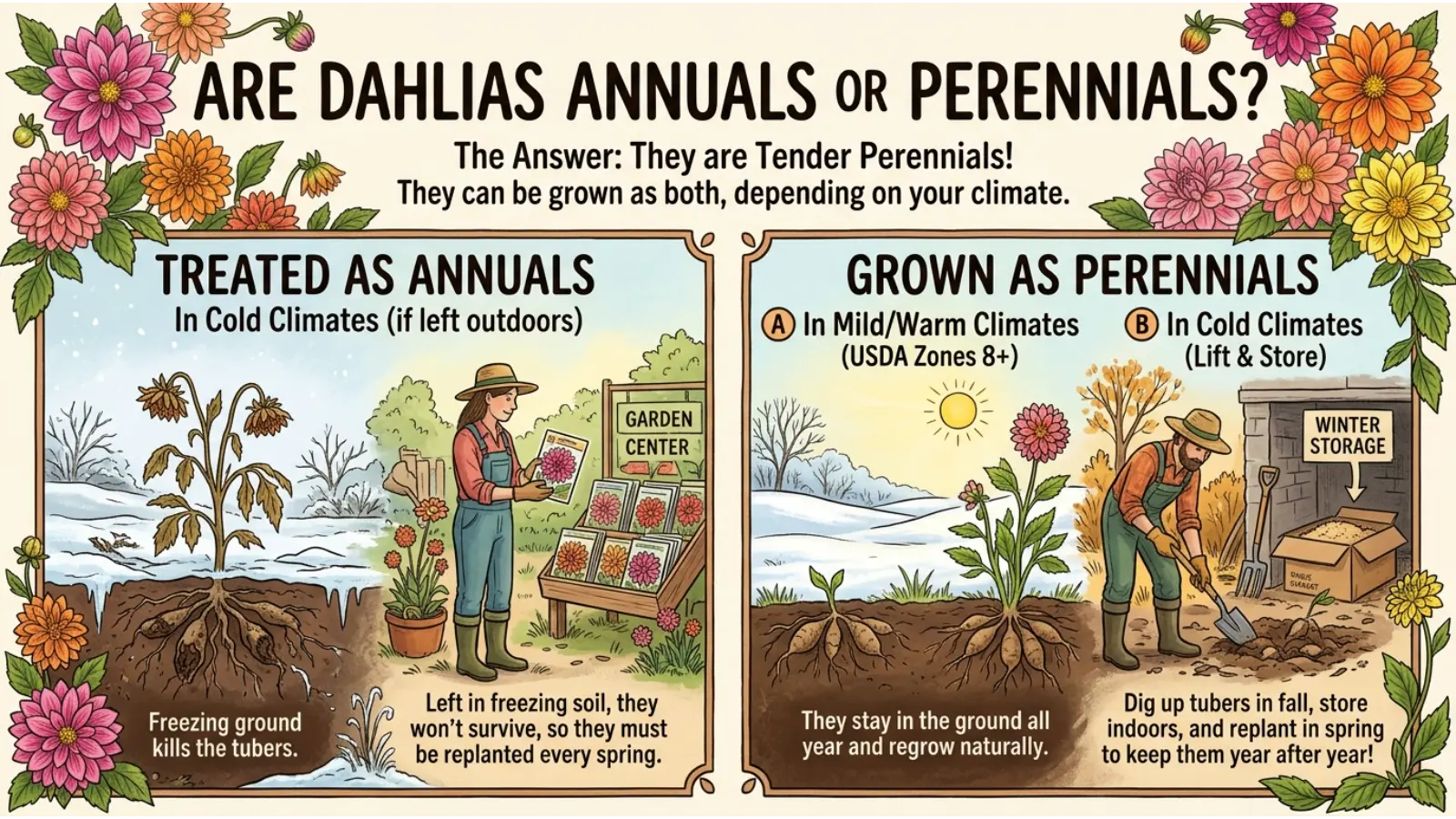
Dahlias are popular flowering plants that can produce beautiful blooms from summer into autumn. They grow from underground tubers, which store energy for future growth. In warm areas, these tubers can often stay in the ground and grow again the following year. In colder places, gardeners may need to dig them up and store them safely during winter.
Understanding the difference between annual and perennial plants can help you make better choices for your garden. It can also save you time, effort, and money. Whether you grow dahlias in garden beds, pots, or containers, knowing how they survive winter is important.
In this guide, you’ll learn the meaning, examples, usage, differences, common mistakes, and simple explanations in easy English.
Are Dahlias Annuals or Perennials? – Quick Answer
Dahlias are tender perennials, not true annuals. This means they can live and bloom for several years, but they need protection from freezing temperatures.
Dahlias grow from tubers, which are thick underground parts that store food and help the plant grow again. In warm climates, the tubers can often remain in the ground during winter. In cold climates, they may need to be dug up and stored indoors.
Here are three simple examples:
- Warm climate: Dahlias may return every spring without being dug up.
- Cold climate: Gardeners often lift the tubers before the ground freezes and replant them in spring.
- Container gardening: Dahlias can be grown in pots and protected during cold if.
Simple rule: Dahlias are perennials by nature, but they may behave like annuals in places with cold winters.
The Origin of Dahlias
Dahlias originally come from Mexico and parts of Central America. They were grown by Indigenous people long before they became popular garden flowers around the world.
The plants were later introduced to Europe, where gardeners began growing them for their colorful blooms and many flower shapes. Over time, breeders developed hundreds of varieties.
Today, dahlias are popular in countries such as the United States, the United Kingdom, Canada, and Australia. Gardeners enjoy them in flower beds, borders, containers, and cutting gardens.
Their ability to grow again from underground tubers is one reason dahlias are considered perennials.
British English vs American English Usage
The answer to whether dahlias are annuals or perennials is the same in British and American English. However, local weather can affect how gardeners grow them.
| Feature | British English | American English | Notes |
|---|---|---|---|
| Plant type | Tender perennial | Tender perennial | Both terms describe dahlias. |
| Flower name | Dahlia | Dahlia | Spelling is the same. |
| Winter care | Often lift tubers in colder areas | Often lift tubers in colder areas | Local climate matters. |
| Growing season | Spring to autumn | Spring to autumn | Timing varies by region. |
| Frost protection | Often needed | Often needed | Dahlias are sensitive to frost. |
In both countries, dahlias can grow for many years if their tubers survive winter.
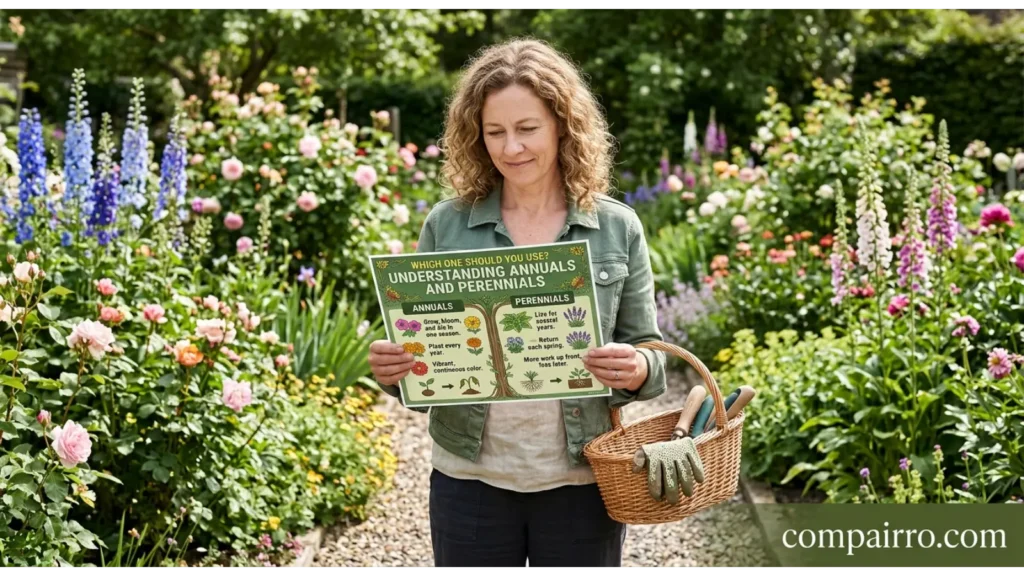
Which One Should You Use? Understanding Annuals and Perennials
When choosing dahlias for your garden, it helps to understand the difference between annual and perennial plants.
- Annual plants: These complete their life cycle in one growing season. They grow, flower, produce seeds, and die.
- Perennial plants: These can live for several years and grow again during suitable seasons.
- Tender perennials: These are perennials that cannot safely survive very cold conditions without protection.
Dahlias belong to the third group.
Here is how to decide what to do with your dahlias:
- If your winters are mild: You may be able to leave dahlias in the ground, especially in well-drained soil.
- If your winters bring hard frost: Dig up the tubers after the foliage has been damaged by frost and before the ground freezes solid.
- If you grow dahlias in pots: Move the pots to a suitable frost-free place during winter, keeping the tubers from becoming too wet.
- If you want flowers every year: Protect the tubers and provide suitable growing conditions in spring.
You can also grow dahlias as annuals by planting new tubers each spring and treating them as one-season flowers.
Common Mistakes With Dahlias
Even experienced gardeners can make mistakes when caring for dahlias. Here are four common problems and how to avoid them.
Mistake 1: Thinking Dahlias Are True Annuals
❌ Incorrect: “Dahlias always die after one growing season.”
✔ Correct: Dahlias are tender perennials. They can grow again from healthy tubers if the tubers survive winter.
Mistake 2: Leaving Tubers in Frozen Soil
❌ Incorrect: “Dahlia tubers can survive every winter outdoors.”
✔ Correct: Freezing conditions can damage or kill tubers. In cold areas, lift and store them before the ground freezes.
Mistake 3: Storing Tubers While They Are Too Wet
❌ Incorrect: “Wet soil and damp storage are best for dahlia tubers.”
✔ Correct: Excess moisture can cause rot. Store healthy tubers in a cool, frost-free place with suitable ventilation and enough moisture to prevent excessive shriveling.
Mistake 4: Planting Dahlias Too Early
❌ Incorrect: “Dahlias should be planted outside as soon as winter begins to end.”
✔ Correct: Wait until the danger of frost has passed and the soil has warmed. Cold, wet soil can slow growth and damage tubers.
Dahlias in Everyday Examples
Dahlias are useful plants for different gardening situations. Here are some practical examples.
In the Home Garden
A gardener in a warm area may leave dahlia tubers in the ground after the flowers fade. If the soil drains well and the tubers avoid frost damage, the plants may return next spring.
In a School Garden
Students can grow dahlias to learn about plant life cycles. They can observe how the plants grow, flower, and store energy in underground tubers.
On Social Media
Gardeners often share pictures of their dahlias during summer and autumn. These pictures can inspire others to try growing dahlias in different colors and sizes.
In Daily Gardening
A gardener living in a cold area may dig up dahlia tubers in autumn, store them over winter, and replant them in spring.
In a Container Garden
Dahlias can grow well in suitable containers with drainage holes. In cold weather, the pots can be moved to a protected place where the tubers will not freeze.
Are Dahlias Annuals or Perennials? Google Trends and Usage Data
People search for “are dahlias annuals or perennials” because they want to understand how long these plants live and whether they need to buy new ones each year.
The question is especially useful for beginners who are planning a flower garden or trying to protect their plants during winter.
Here are some common reasons for searching this topic:
- Plant care: Gardeners want to know how to keep dahlias alive.
- Winter preparation: People need to know whether to dig up tubers.
- Garden planning: Beginners want to choose flowers that return each year.
- Saving money: Gardeners want to reuse healthy tubers rather than buy new plants every season.
Gardeners in the US, UK, Canada, and Australia may search for winter care advice because their climates differ from region to region. People in India and Pakistan may be more interested in planting seasons, suitable temperatures, and growing dahlias in pots or garden beds.
Dahlia searches often become more relevant during planting time and as autumn or winter approaches in colder regions. However, exact search volume, country rankings, and seasonal patterns require current Google Trends data.
The main point is that climate matters more than the country name alone. Some regions have mild winters, while others experience freezing temperatures.
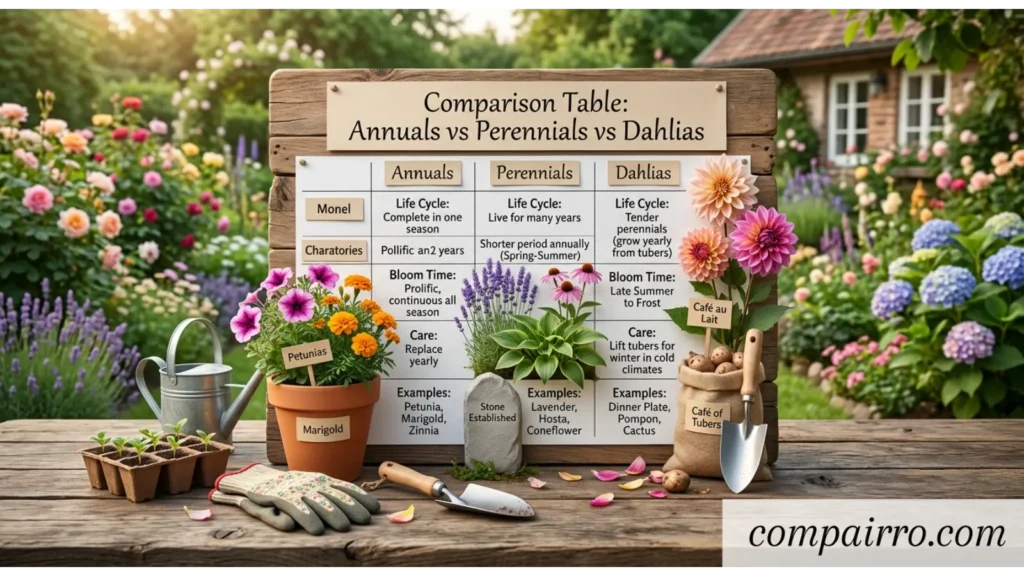
Comparison Table: Annuals vs Perennials vs Dahlias
The following table explains how dahlias compare with annual and perennial plants.
| Feature | Annual Plants | Perennial Plants | Dahlias |
|---|---|---|---|
| Life span | Usually one growing season | Several years | Several years in suitable conditions |
| Grow again next year | Usually not from the same plant | Yes | Yes, if tubers survive |
| Winter survival | Often die naturally | Depends on the plant | Sensitive to freezing conditions |
| Underground tubers | Not typical | Found in some species | Yes |
| Need winter protection | Depends on the plant | Depends on the plant | Often needed in cold areas |
| Can grow in pots | Yes | Yes | Yes |
| Example | Marigold grown as an annual | Peony | Dahlia |
Remember that plant behavior depends on the species and climate. Some plants that are perennials in warm places are grown as annuals in colder areas.
Dahlias in Professional Gardening
Professional gardeners, landscapers, and flower growers often choose dahlias because they produce colorful blooms over a long growing season.
Their flowers can be used in garden displays, flower arrangements, weddings, and other events. Different varieties offer a wide range of colors, sizes, and shapes.
However, professional growers must plan for winter care. In colder climates, they may lift, label, divide, and store tubers so they can use them again next season.
For anyone growing dahlias commercially, healthy tubers and proper storage can help reduce plant losses and unnecessary replacement costs.
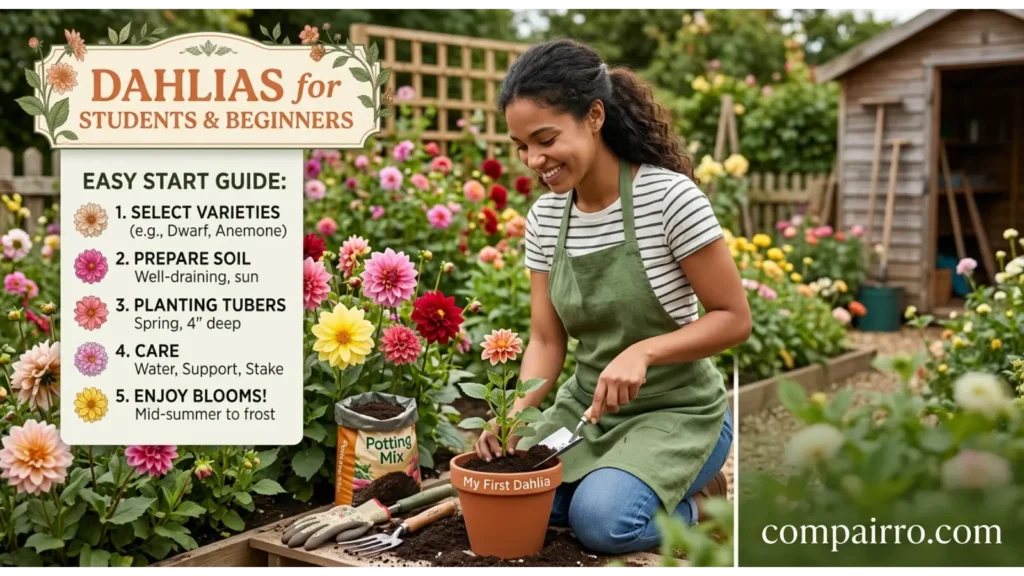
Dahlias for Students or Beginners
If you are new to gardening, dahlias are a useful way to learn about annual and perennial plants.
Beginners often become confused because dahlias may die back above the ground in cold weather. This does not always mean the entire plant has died.
The underground tuber may still be alive and able to produce new growth.
Here are some easy tips for beginners:
- Choose a sunny spot that receives around six to eight hours of sunlight.
- Use fertile, well-drained soil.
- Water regularly without keeping the soil soggy.
- Protect plants from frost.
- Label stored tubers with the variety name.
- Check stored tubers occasionally for signs of rot or excessive drying.
Beginner tip: Learn about your local winter temperatures before deciding whether to leave dahlias in the ground.
Signs or Characteristics of Dahlias
Dahlias have several features that help gardeners recognize and care for them.
- Colorful flowers: They grow in many shades, including red, pink, yellow, orange, purple, and white.
- Underground tubers: These store energy that supports future growth.
- Seasonal growth: New shoots usually appear during suitable growing conditions.
- Long flowering period: Many varieties bloom from summer into autumn.
- Frost sensitivity: Freezing temperatures can damage the plants and their tubers.
- Different sizes: Some varieties grow compactly, while others become tall and need support.
- Repeat growth: Healthy tubers can produce new shoots in later seasons.
These characteristics explain why dahlias can be grown as long-lasting garden plants when they receive the right care.
Simple Trick to Remember Are Dahlias Annuals or Perennials?
Here is an easy way to remember the answer:
- Annual = one growing season.
- Perennial = returns for several years.
- Dahlia = tender perennial that needs winter protection in cold areas.
Think of it this way: the flowers may fade in autumn, and the leaves may die back after frost, but the underground tubers can remain alive.
For example, a gardener in a mild climate may see dahlias return naturally in spring. A gardener in a colder climate may need to store the tubers indoors and replant them after winter.
The simple memory rule is: Dahlias can return every year, but their tubers must survive winter.
FAQs:
1. Are dahlias annuals or perennials?
Dahlias are tender perennials. They can live for several years if their tubers survive winter and receive proper care.
2. Do dahlias come back every year?
Yes, dahlias can return each year. In cold climates, their tubers often need to be lifted and stored indoors during winter.
3. Can dahlias survive winter in the ground?
They may survive in mild climates with well-drained soil. In areas with hard freezes, tubers are safer when lifted and stored properly.
4. Should I dig up dahlias every year?
You should usually lift dahlias in regions where the ground freezes. In mild areas, you may be able to leave them in the ground.
5. Do dahlias grow back after frost?
The foliage may be damaged by frost, but the tubers may remain alive. Protect them from freezing soil and excessive moisture.
6. Can I grow dahlias in pots?
Yes. Dahlias grow well in suitable containers with drainage holes, enough sunlight, and regular watering. Protect the tubers from freezing temperatures.
7. What is the best time to plant dahlias?
Plant dahlia tubers outdoors after the danger of frost has passed and the soil has warmed. Exact planting times depend on your local climate.
Conclusion
So, are dahlias annuals or perennials? Dahlias are tender perennials that can grow and flower for many years. However, their ability to return depends on the climate and how well their tubers survive winter.
In warm areas, you may be able to leave the tubers in the ground. In colder regions, digging them up and storing them in a cool, frost-free place is often the safest choice.
With the right sunlight, soil, water, and winter protection, you can enjoy beautiful dahlia flowers year after year.
Final memory rule: Dahlias are perennials, but protecting their tubers from freezing temperatures helps them return next season.

Sara Taylor is a passionate English content writer who specializes in word meanings, spelling comparisons, and modern slang explanations. She creates easy-to-understand articles that help readers avoid common English mistakes and improve their writing skills. Her content focuses on simple learning, real-life examples, and clear explanations for everyday readers.