Have you ever heard someone say, “He gave us a hearty welcome,” or “This plant is very hardy,” and felt confused about the words? You are not alone. Many people mix up hardy and hearty because they sound similar and both describe strength in some way.
These words are common in school writing, workplace conversations, books, social media posts, and everyday English. You may also see them in cooking blogs, gardening articles, fitness content, or motivational quotes online.
The confusion usually happens because both words can describe people, food, health, or energy. But their meanings are different. Using the wrong word can change the meaning of your sentence completely.
Understanding the difference between hardy or hearty helps you speak and write more clearly. It also improves grammar skills, especially for students, beginners, and English learners.
In this guide, you’ll learn the meaning, examples, usage, differences, common mistakes, and simple explanations in easy English.
Hardy or Hearty – Quick Answer
👉 Hardy means strong, tough, and able to survive difficult conditions.
👉 Hearty means warm, energetic, cheerful, or large and satisfying.
Sentence examples ✅
- The cactus is a hardy plant.
- We enjoyed a hearty meal after the game.
- She gave a hearty laugh.
- Farmers grow hardy crops in cold weather.
Simple rule:
👉 Hardy = Hard conditions
👉 Hearty = Heart and warmth
THE ORIGIN OF HARDY OR HEARTY
The word hardy comes from old French and Germanic words related to strength and bravery. It has been used for hundreds of years to describe strong people, animals, and plants.
The word hearty comes from the word heart. It originally described kindness, warmth, and deep feelings. Later, it also became connected to big meals and energetic behavior.
Today, both words are popular in books, blogs, food content, gardening topics, and daily conversations.
BRITISH ENGLISH VS AMERICAN ENGLISH USAGE
The usage of hardy and hearty is mostly the same in British and American English.
| Feature | British English | American English | Notes |
|---|---|---|---|
| Hardy | Same usage | Same usage | Means strong or tough |
| Hearty | Same usage | Same usage | Means warm or satisfying |
| Spelling | Same | Same | No spelling difference |
| Pronunciation | Slight accent change | Slight accent change | Meaning stays the same |
WHICH ONE SHOULD YOU USE?
Use hardy when talking about strength, survival, or toughness.
Use hardy for:
- Plants
- Weather resistance
- Strong people
- Tough animals
Examples:
- Hardy vegetables
- Hardy workers
- Hardy mountain animals
Use hearty when talking about warmth, energy, friendliness, or food.
Use hearty for:
- Meals
- Laughs
- Greetings
- Friendly behavior
Examples:
- Hearty breakfast
- Hearty welcome
- Hearty laugh
Formal vs informal use
- Both words work in formal and informal English.
- They are common in essays, blogs, conversations, and business writing.
COMMON MISTAKES WITH HARDY OR HEARTY
Mistake 1
❌ We ate a hardy dinner.
✔ Use hearty for meals because it means filling and satisfying.
Mistake 2
❌ This flower is hearty enough for winter.
✔ Use hardy for plants that survive cold weather.
Mistake 3
❌ He gave me a hardy smile.
✔ Use hearty for warm and friendly emotions.
Mistake 4
❌ Penguins are hearty animals in cold places.
✔ Use hardy because penguins survive harsh conditions.
HARDY OR HEARTY IN EVERYDAY EXAMPLES
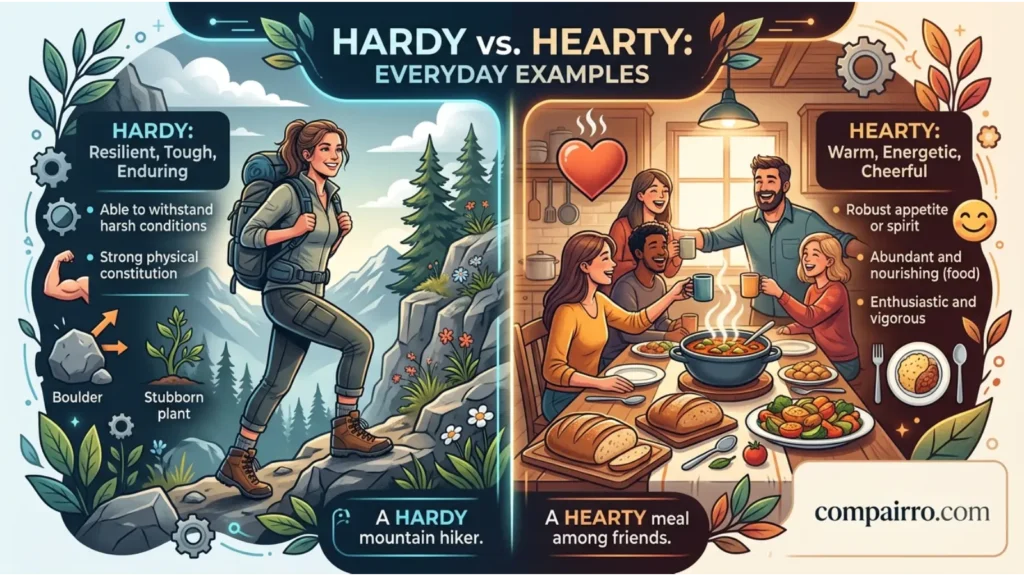
Work
- Our company needs hardy workers during busy seasons.
- The manager gave everyone a hearty congratulations.
School
- Students planted hardy trees in the garden project.
- The teacher received a hearty thank-you from the class.
Social Media
- “Enjoying a hearty breakfast today!” 🍳
- “Looking for hardy plants for my balcony garden.”
Daily Life
- Grandma cooked a hearty soup for dinner.
- Camels are hardy animals in the desert.
Text Messages
- “Thanks for the hearty support!”
- “This phone case looks hardy enough.”
HARDY OR HEARTY – GOOGLE TRENDS & USAGE DATA

Many people search for hardy or hearty because the words sound alike. Students, writers, bloggers, and English learners often want to know which word fits the sentence correctly.
Searches for these words are popular in:
- United States
- United Kingdom
- India
- Pakistan
- Canada
- Australia
Online trends show:
- Hearty is common in food blogs and motivational content.
- Hardy is common in gardening, farming, and survival topics.
People also search:
- Hardy vs hearty meaning
- Hearty meal meaning
- Hardy plant definition
- Difference between hardy and hearty
COMPARISON TABLE: HARDY OR HEARTY
| Feature | Hardy | Hearty |
|---|---|---|
| Main Meaning | Strong and tough | Warm, cheerful, satisfying |
| Used For | Plants, people, animals | Food, greetings, emotions |
| Related Idea | Survival | Warmth and energy |
| Common Example | Hardy plant | Hearty breakfast |
| Tone | Toughness | Friendliness |
| Easy Memory Tip | Hard conditions | Heart and warmth |
HARDY OR HEARTY IN PROFESSIONAL LIFE
In professional life, both words can appear in emails, meetings, and business writing.
Hardy in professional use
- Describing durable products
- Talking about strong workers
- Discussing weather-resistant materials
Example:
- “We need a hardy system for outdoor use.”
Hearty in professional use
- Friendly communication
- Warm congratulations
- Positive teamwork culture
Example:
- “Please accept our hearty congratulations.”
Both words help make communication clearer and more professional.
HARDY OR HEARTY FOR STUDENTS OR BEGINNERS
Students often struggle with these words because:
- They sound similar
- Both relate to strength in some way
- Spellcheck may not catch the mistake
Easy learning tips
- Connect hardy with “hard.”
- Connect hearty with “heart.”
- Practice with simple sentences daily.
- Read food and gardening examples separately.
The more examples you read, the easier it becomes.
SIGNS OR CHARACTERISTICS RELATED TO HARDY OR HEARTY
Characteristics of Hardy
- Strong and durable
- Survives difficult weather
- Tough under pressure
- Resistant to damage
- Long-lasting
Examples:
- Hardy plants
- Hardy travelers
- Hardy animals
Characteristics of Hearty
- Warm and friendly
- Full of energy
- Cheerful behavior
- Filling food
- Strong emotional support
Examples:
- Hearty soup
- Hearty laughter
- Hearty welcome
SIMPLE TRICK TO REMEMBER HARDY OR HEARTY
👉 Hardy = Hard conditions
👉 Hearty = Heart feelings
Think of it this way:
- A hardy plant survives snow and heat.
- A hearty meal makes your stomach full and happy.
Another simple example:
- Tough = Hardy
- Warm = Hearty
This trick helps many beginners remember the difference quickly.
FAQS:
1. What is the difference between hardy and hearty?
Hardy means strong and tough. Hearty means warm, cheerful, or filling.
2. Can hardy describe a person?
Yes. A hardy person is physically strong and able to handle difficult conditions.
3. What does hearty meal mean?
A hearty meal is large, filling, and satisfying.
4. Is hearty positive or negative?
Hearty is usually positive because it shows warmth, energy, or friendliness.
5. Are hardy and hearty interchangeable?
No. They have different meanings and should not replace each other.
6. Which word is used for plants?
Hardy is used for plants that survive harsh weather.
7. Why do people confuse hardy and hearty?
People confuse them because they sound similar and both relate to strength or energy.
CONCLUSION
Understanding hardy or hearty is easier once you know the main difference. Hardy is about strength and survival, while hearty is about warmth, friendliness, and satisfying feelings.
These words are common in daily English, school work, social media, food content, and professional writing. Using the correct word makes your communication clearer and more natural.
Final easy memory rule:
👉 Hardy = Hard conditions
👉 Hearty = Heart and warmth
Once you remember this simple trick, you will rarely mix them up again.

Sara Taylor is a passionate English content writer who specializes in word meanings, spelling comparisons, and modern slang explanations. She creates easy-to-understand articles that help readers avoid common English mistakes and improve their writing skills. Her content focuses on simple learning, real-life examples, and clear explanations for everyday readers.