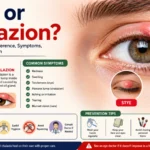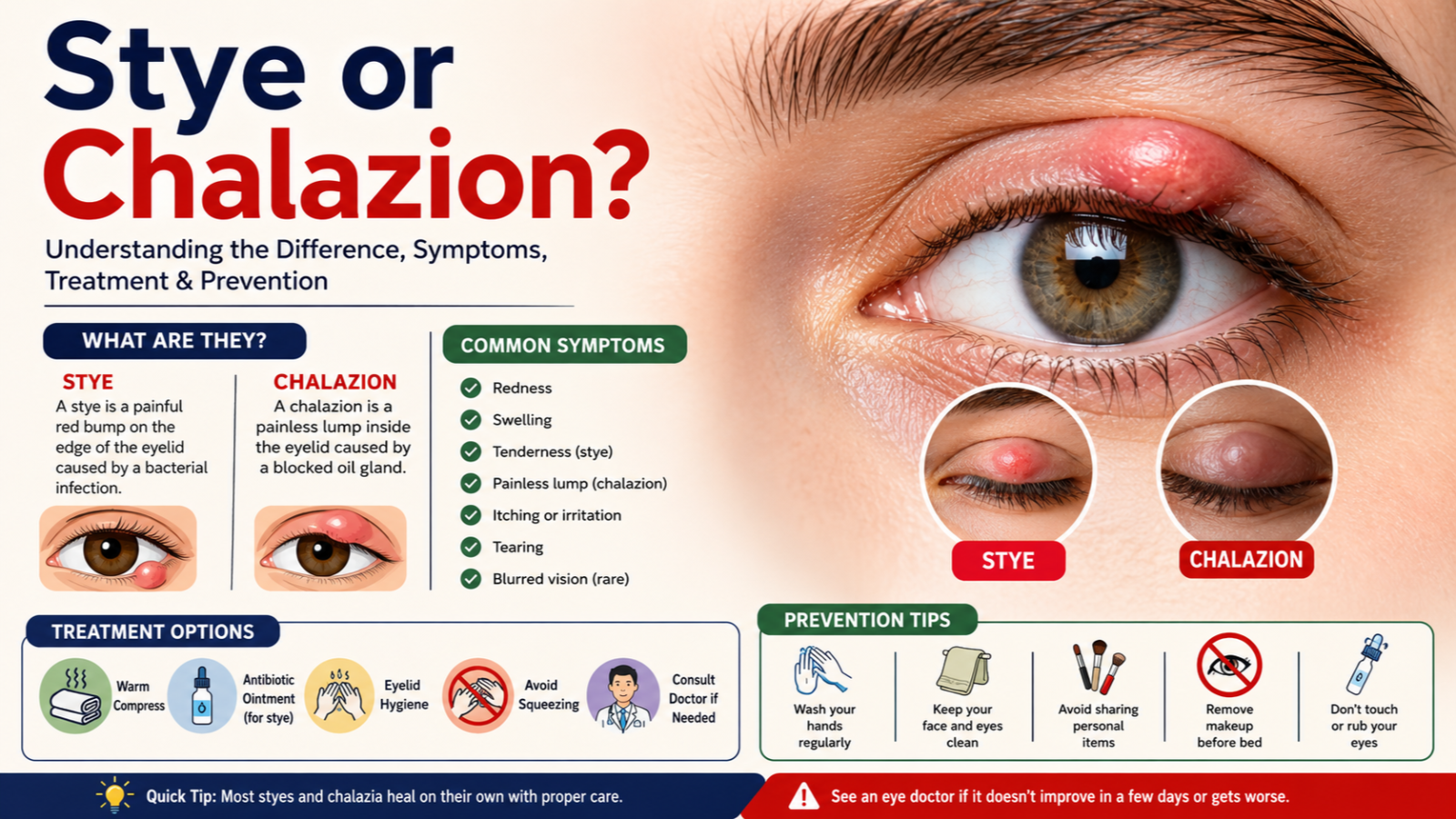
Have you ever noticed a small, painful bump on your eyelid and wondered what it is? You may search online for stye or chalazion because both can look similar at first. However, they are not exactly the same.
A stye and a chalazion are both common eyelid problems. A stye is usually a painful, red bump caused by an infection or inflammation around an eyelash follicle or eyelid gland. A chalazion is usually a firm lump caused by a blocked oil gland in the eyelid. It is often less painful than a stye.
This is why people often confuse a stye with a chalazion. The bump may appear on the upper or lower eyelid, and both can cause swelling. In some cases, a stye can also develop into a painless lump that looks more like a chalazion.
People commonly search for stye or chalazion when they notice an eyelid bump at home, at school, at work, or while looking in the mirror. Photos and health posts on social media can also make people curious about the difference.
Understanding the basic signs can help you know what may be happening. However, an online article cannot replace an eye examination when symptoms are severe, unusual, or do not improve.
In this guide, you’ll learn the meaning, examples, usage, differences, common mistakes, and simple explanations in easy English.
Stye or Chalazion – Quick Answer
👉 Stye = usually a painful, red eyelid bump often linked to infection or inflammation.
👉 Chalazion = usually a firm eyelid lump caused by a blocked oil gland and often not very painful.
Examples
- A red, tender bump near the eyelashes may be a stye.
- A firm lump inside the eyelid that is not very painful may be a chalazion.
- Both can cause eyelid swelling and discomfort.
Simple rule:
👉 Stye = more likely painful and red.
👉 Chalazion = more likely firm and less painful.
These are general patterns, not a way to diagnose yourself.
The Origin of Stye or Chalazion
The word stye is an old English medical term for a small inflammatory lump around the eyelid. It is also known medically as a hordeolum.
The word chalazion comes from an ancient Greek word related to a small lump or hailstone-like swelling. In modern medicine, it describes a lump caused by a blocked oil-producing gland in the eyelid.
Both terms have been used in eye care for a long time. Today, doctors and eye specialists commonly use “stye” and “chalazion” to describe these different types of eyelid bumps.
British English vs American English Usage
There is no major British-versus-American spelling difference for stye or chalazion. The terms are used in both forms of English.
| Feature | British English | American English | Notes |
|---|---|---|---|
| Stye | Stye | Stye | Same spelling |
| Chalazion | Chalazion | Chalazion | Same spelling |
| Medical meaning | Same | Same | No major difference |
| Plural of stye | Styes | Styes | Same |
| Medical writing | Stye / chalazion | Stye / chalazion | Both are standard terms |
Therefore, you can use stye or chalazion naturally in health articles, school research, or everyday conversations in either British or American English.
Which One Should You Use?
If you are describing an eyelid problem, choose the term that matches the condition being discussed.
- Use stye when talking about a usually painful, tender, red bump.
- Use chalazion when talking about a blocked oil gland that forms a firm lump.
- Use stye or chalazion when comparing the two conditions.
- In formal medical writing, doctors may use terms such as hordeolum for a stye.
- If you are unsure which one you have, avoid making a definite diagnosis based only on appearance.
A healthcare professional can examine the eyelid and determine what is causing the lump.
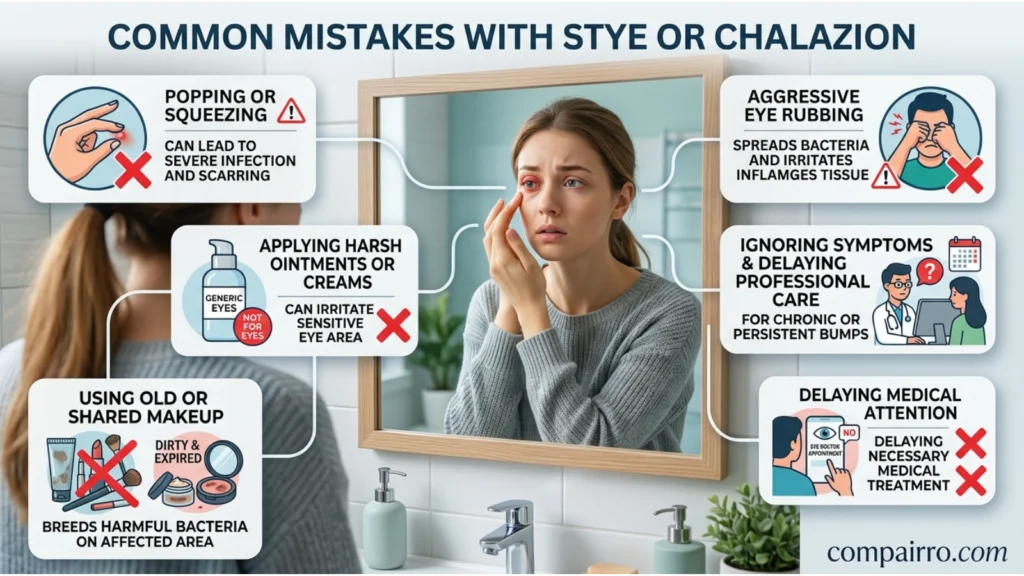
Common Mistakes With Stye or Chalazion
Mistake 1: Thinking they are exactly the same
❌ “A stye and a chalazion are the same thing.”
✔ They can look similar, but they have different typical causes and symptoms.
Mistake 2: Assuming every eyelid lump is a stye
❌ “I have a bump on my eyelid, so it must be a stye.”
✔ Other eyelid problems can also cause bumps. A painless, firm lump may be a chalazion.
Mistake 3: Squeezing the bump
❌ Trying to squeeze or pop an eyelid bump.
✔ Avoid squeezing it. This can irritate the area and may make inflammation worse.
Mistake 4: Ignoring severe symptoms
❌ “All eyelid bumps are harmless, so I do not need help.”
✔ Seek medical care if swelling becomes severe, vision changes, pain is significant, or symptoms are getting worse.
Mistake 5: Using random medicines
❌ Using eye medicine without knowing whether it is suitable.
✔ Ask a doctor or pharmacist before using medicines around the eye, especially if symptoms are unusual or severe.
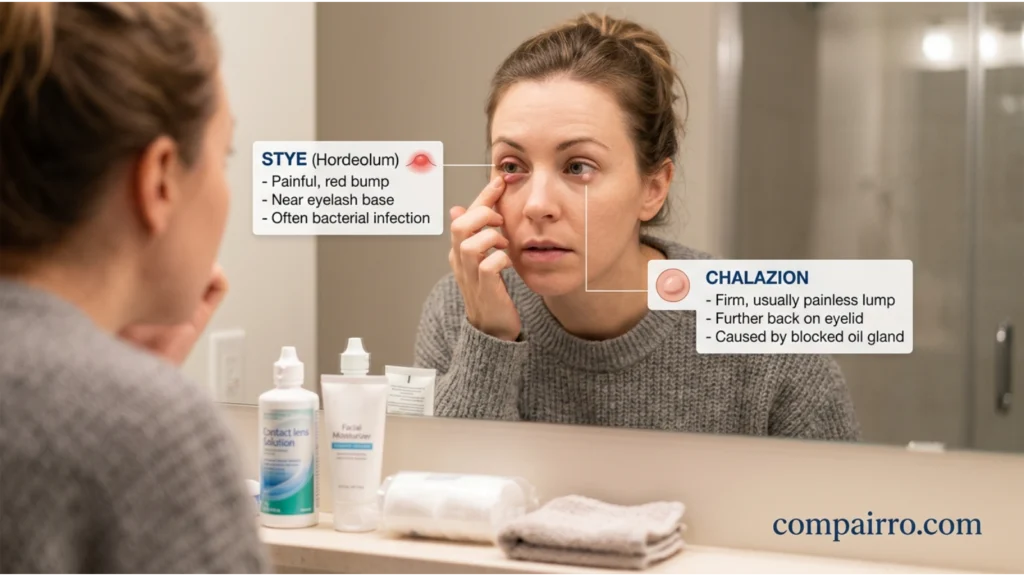
Stye or Chalazion in Everyday Examples
At Work
Someone may notice a swollen eyelid before going to work and search for stye or chalazion to understand the difference.
For example:
“I have a small painful bump near my eyelashes. Could it be a stye?”
A painful, tender bump can fit the typical pattern of a stye, but only a professional can confirm the cause.
At School
A student may notice a small eyelid lump and become worried.
A simple explanation is:
“A stye is often painful, while a chalazion is often a firmer, less painful lump.”
On Social Media
People often see eye-health posts or pictures online and try to compare their own symptoms.
Remember that pictures can be misleading. Different eyelid conditions can look alike.
In Daily Life
A person might wake up with a swollen eyelid and wonder whether it is a stye or chalazion. Mild cases often improve with time, but worsening symptoms should not be ignored.
Text Messages
In casual conversation, someone might simply say:
“I think I have a stye.”
The word stye is much more common in everyday speech than the more medical-sounding word chalazion.

Stye or Chalazion – Google Trends & Usage Data
People search for stye or chalazion because eyelid bumps are common and the two conditions can look similar.
Search interest can change over time. It may increase when people share health information online, when seasonal eye problems become more noticeable, or when people search for symptoms after noticing an eyelid lump.
The terms may be searched in countries where English health information is widely used, including:
- United States
- United Kingdom
- India
- Pakistan
- Canada
- Australia
However, exact Google Trends rankings and search volumes change over time and depend on the selected country, date range, and search term. Therefore, fixed search-volume claims should not be treated as permanent facts.
A common reason for beginner confusion is that “stye” and “chalazion” can both describe a visible eyelid bump, even though they usually have different causes.
Comparison Table: Stye or Chalazion
| Feature | Stye | Chalazion |
|---|---|---|
| Main cause | Often infection or inflammation | Blocked oil gland |
| Pain | Usually painful or tender | Often little or no pain |
| Appearance | Red, swollen bump | Firm lump |
| Location | Often near eyelash edge | Often deeper in the eyelid |
| Redness | Common | May be less noticeable |
| Swelling | Common | Common |
| Vision | Usually normal | Can become blurry if large |
| How it starts | Often develops fairly quickly | May develop gradually |
| Medical term | Hordeolum | Chalazion |
| Treatment | Often improves with simple care; medical treatment may be needed | Often improves over time; persistent cases may need medical care |
These features are general. A healthcare professional should assess symptoms that are severe, persistent, or unclear.
Stye or Chalazion in Professional Life
An eyelid bump can be uncomfortable at work, especially if the eye feels sore or swollen.
Most importantly, avoid sharing personal eye products such as eye makeup or towels when you have an eye problem. Good hand hygiene can also help reduce the spread of germs.
If the eyelid becomes very swollen, painful, or affects your vision, it is better to get medical advice instead of trying to manage the problem yourself.
For healthcare workers, the terms stye, hordeolum, and chalazion are more specific than simply saying “eye bump.”
Stye or Chalazion for Students or Beginners
Beginners often struggle with this topic because both conditions affect the eyelid and can appear as a small lump.
Here are easy ways to learn the difference:
- Remember pain: A stye is often painful.
- Remember blockage: A chalazion usually results from a blocked oil gland.
- Look at the pattern: A stye often looks red and tender.
- Do not diagnose from pictures alone: Appearance can vary.
- Know when to ask for help: Severe or worsening symptoms need medical attention.
Students can remember the terms by connecting them to their basic features instead of trying to memorize long medical definitions.
Signs or Characteristics Related to Stye or Chalazion
Common signs of a stye
- A red eyelid bump
- Tenderness or pain
- Swelling around the eyelid
- A sore area near the eyelashes
- Feeling like something is irritating the eye
- Possible watering of the eye
Common signs of a chalazion
- A firm lump in the eyelid
- Usually little pain
- Localized eyelid swelling
- A lump that may remain after redness or tenderness improves
- Possible blurry vision if the lump becomes large enough to press on the eye
When to seek medical advice
Get medical help if:
- Vision changes occur.
- The swelling is severe or spreading.
- Pain is significant or getting worse.
- You have trouble moving the eye.
- You develop symptoms that make you feel seriously unwell.
- The lump does not improve or keeps coming back.
These signs can point to a problem that needs professional assessment.
Simple Trick to Remember Stye or Chalazion
Here is an easy memory trick:
👉 Stye = Sore
👉 Chalazion = Closed/blocked gland
A stye is commonly sore and tender.
A chalazion is commonly a firm lump caused by a blocked oil gland.
Think of it this way:
Imagine two eyelid bumps.
Bump A: It is red and hurts when touched.
→ Think stye.
Bump B: It feels like a firm lump and does not hurt much.
→ Think chalazion.
This trick helps you remember the general difference, but it does not replace a medical diagnosis.
FAQs:
1. Is a stye or chalazion more painful?
A stye is usually more painful or tender. A chalazion is often painless or only mildly uncomfortable.
2. Can a stye turn into a chalazion?
Yes. A stye can sometimes leave a blocked gland and develop into a more persistent chalazion-like lump.
3. Can a chalazion go away on its own?
Many chalazia improve over time. If one remains for a long time or causes problems, an eye professional can advise on treatment.
4. Should I squeeze a stye or chalazion?
No. Squeezing an eyelid lump can irritate the area and may cause complications.
5. Are styes and chalazia contagious?
A chalazion itself is generally not contagious. A stye may involve bacteria, so good hand hygiene is still important.
6. Can a stye or chalazion affect vision?
Usually vision is not affected. However, a large lump can sometimes press against the eye and cause temporary blurry vision.
7. When should I see a doctor?
Seek medical advice if symptoms are severe, getting worse, affecting vision, spreading around the eye, or not improving as expected.
Conclusion
When comparing stye or chalazion, the easiest difference to remember is that a stye is usually a painful, red, tender bump, while a chalazion is usually a firmer and less painful lump caused by a blocked oil gland.
Both conditions affect the eyelid and can look similar, so it is easy to confuse them. Avoid squeezing an eyelid bump, keep your hands clean, and seek professional advice if symptoms are severe, persistent, or affect your vision.
Final memory rule:
👉 Stye = sore and often red.
👉 Chalazion = blocked gland and usually less painful.

Sara Taylor is a passionate English content writer who specializes in word meanings, spelling comparisons, and modern slang explanations. She creates easy-to-understand articles that help readers avoid common English mistakes and improve their writing skills. Her content focuses on simple learning, real-life examples, and clear explanations for everyday readers.