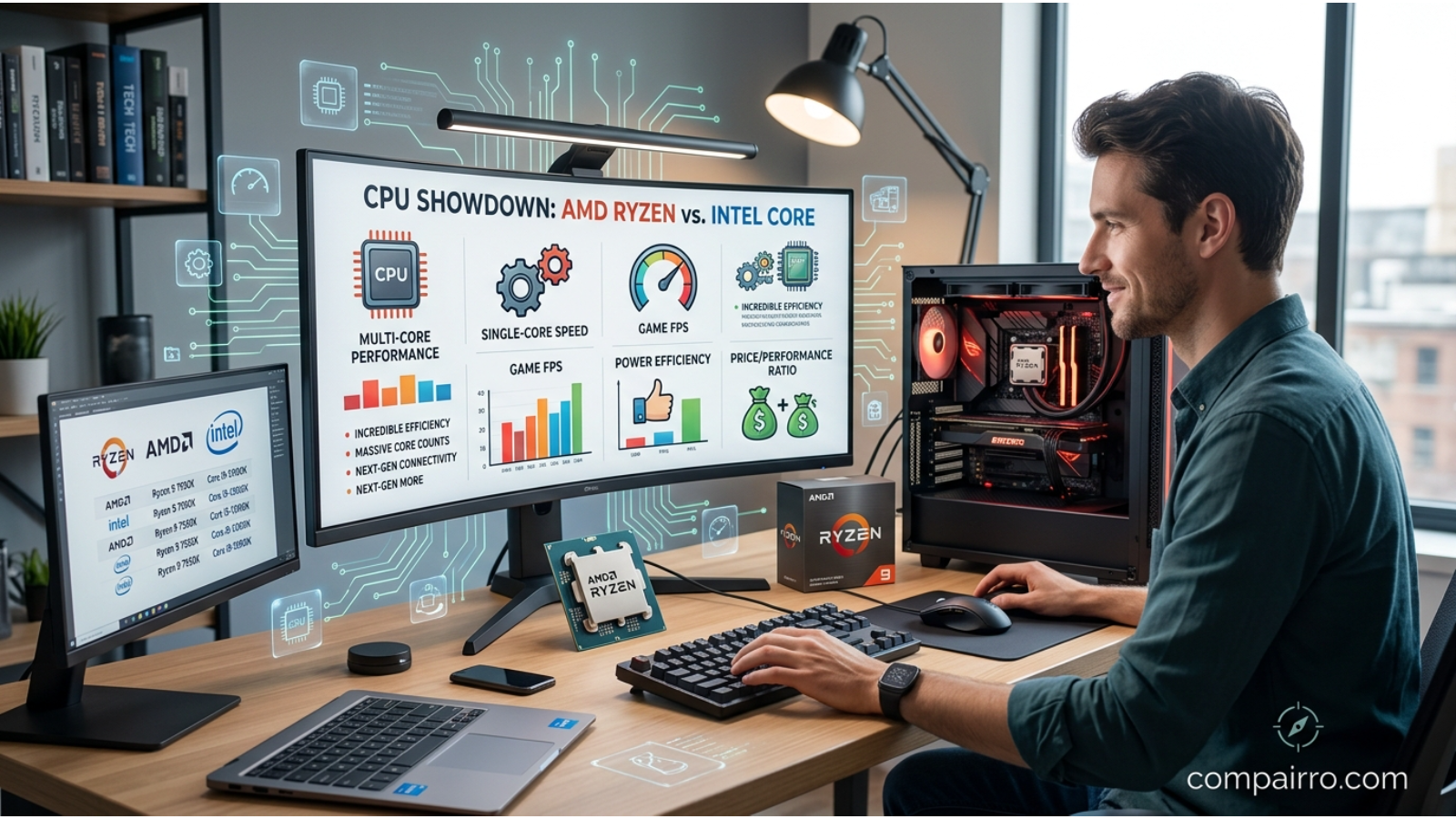
Intel or AMD is one of the most common questions people ask when buying a new computer or upgrading an old one. Whether you’re shopping for a laptop, building a gaming PC, or choosing a computer for work or school, you’ve probably seen people comparing Intel and AMD processors.
Choosing between Intel or AMD is one of the most important decisions when building or upgrading a computer. Both companies offer powerful processors designed for gaming, content creation, professional workloads, and everyday use. While This is known for its strong single-core performance and wide compatibility, AMD stands out for its excellent multi-core performance and value for money. Understanding the differences in performance, pricing, power efficiency, and features can help you select the processor that best fits your needs and budget. In this guide, we’ll compare Intel vs. AMD to help you make an informed decision.
The right choice depends on what you need. Some people want the fastest gaming performance, while others need a processor for video editing, programming, office work, or everyday browsing. Understanding the differences can help you spend your money wisely and avoid buying a processor that doesn’t fit your needs.
Luckily, you don’t need to be a computer expert to understand the basics. Once you know how Intel and AMD compare in performance, price, power use, and features, choosing the right processor becomes much easier.
In this guide, you’ll learn the meaning, examples, usage, differences, common mistakes, and simple explanations in easy English.
Intel or AMD – Quick Answer
👉 Intel or AMD refers to the two biggest CPU (processor) manufacturers for personal computers.
- Intel is known for strong single-core performance, reliability, and excellent gaming performance.
- AMD is famous for offering great value, powerful multi-core performance, and competitive pricing.
Examples
1 “I’m buying an Intel processor for office work.”
2 “My gaming PC uses an AMD Ryzen processor.”
3 “Many creators choose AMD for video editing.”
Simple Rule
👉 Intel = Great all-around performance
👉 AMD = Excellent value and multi-tasking
The Origin of Intel or AMD
Intel was founded in 1968 in the United States. It became one of the first companies to make computer processors and has been a leader in the CPU industry for many years.
AMD, short for Advanced Micro Devices, was founded in 1969. It started as a competitor to Intel and became much more popular after launching the Ryzen processor series in 2017.
Today, both companies produce powerful processors used in millions of laptops, desktops, gaming computers, and workstations around the world.
British English vs American English Usage
There is no spelling difference between Intel and AMD in British and American English.
| Feature | British English | American English | Notes |
|---|---|---|---|
| Intel | Intel | Intel | Same worldwide |
| AMD | AMD | AMD | Same worldwide |
| CPU terms | Same | Same | Technology names stay the same |
Which One Should You Use?
Your choice depends on how you use your computer.
Choose Intel if:
- You mainly play competitive games.
- You want strong single-core performance.
- You use software that works better with Intel processors.
- You prefer many laptop options.
Choose AMD if:
- You want better value for your money.
- You edit videos or stream content.
- You often run many programs at once.
- You need more cores without spending too much.
Both brands are suitable for:
- School
- Office work
- Programming
- Content creation
- Everyday use
Common Mistakes with Intel or AMD
Mistake 1
❌ Intel is always faster.
✔ Modern AMD processors can match or even beat Intel in many tasks.
Mistake 2
❌ AMD is only for gaming.
✔ AMD processors work well for gaming, work, editing, and programming.
Mistake 3
❌ More cores always mean better performance.
✔ Some programs benefit more from faster individual cores than from having many cores.
Mistake 4
❌ Every Intel processor is better than every AMD processor.
✔ Performance depends on the specific processor model, not just the brand.
Intel or AMD in Everyday Examples
Work
An accountant buys an Intel laptop for office software and daily business tasks.
School
A student chooses an AMD laptop because it offers strong performance at a lower price.
Social Media
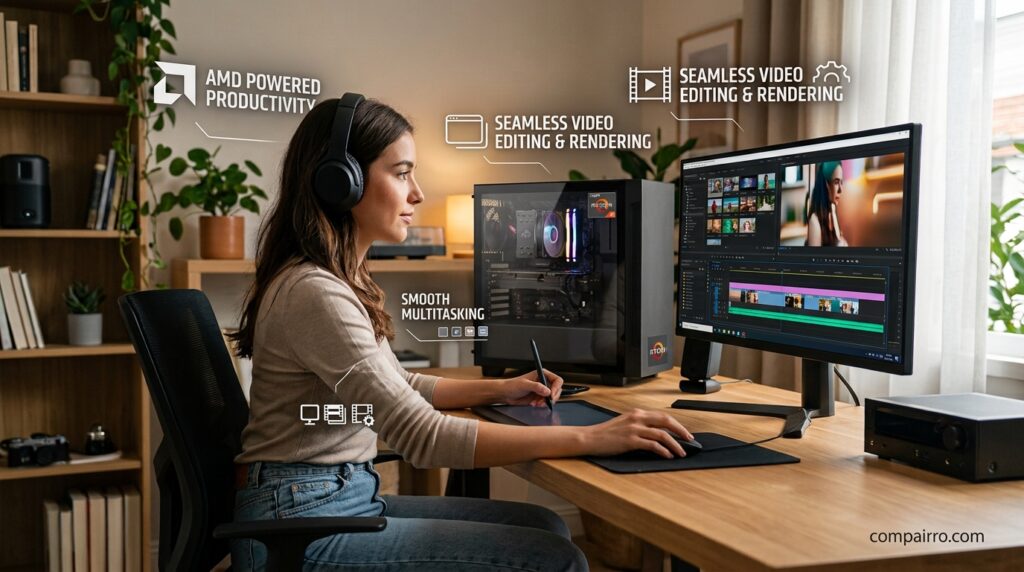
A YouTuber recommends AMD Ryzen for video editing and streaming.
Daily Life
A family computer uses either Intel or AMD for web browsing, movies, and online shopping.
Gaming
A gamer compares Intel Core i7 with AMD Ryzen 7 before building a new PC.
Intel or AMD – Google Trends & Usage Data

Intel or AMD is one of the most searched technology comparisons online.
People usually search this topic because they:
- Want to buy a new laptop.
- Build a custom PC.
- Compare gaming performance.
- Look for the best processor within their budget.
- Watch technology reviews before purchasing.
Popular search interest comes from:
- United States
- United Kingdom
- India
- Pakistan
- Canada
- Australia
Searches often increase during new processor launches and holiday shopping seasons.
Comparison Table: Intel or AMD
| Feature | Intel | AMD |
|---|---|---|
| Gaming | Excellent | Excellent |
| Multi-tasking | Very Good | Excellent |
| Price | Often higher | Often better value |
| Power Efficiency | Very Good | Very Good |
| Video Editing | Excellent | Excellent |
| Entry-Level Options | Good | Excellent |
| High-End Performance | Excellent | Excellent |
| Best For | Gaming, office, business | Gaming, creators, budget builds |
Intel or AMD in Professional Life
Professionals use both Intel and AMD processors depending on their work.
Office workers often choose reliable business laptops with Intel processors.
Graphic designers and video editors may prefer AMD because many Ryzen processors offer more cores for demanding tasks.
Software developers, engineers, architects, and data analysts use both brands successfully. The best processor depends on software requirements and budget.
Intel or AMD for Students or Beginners

Many beginners struggle because there are so many processor names.
Examples include:
- Intel Core i3
- Intel Core i5
- Intel Core i7
- Intel Core i9
- AMD Ryzen 3
- AMD Ryzen 5
- AMD Ryzen 7
- AMD Ryzen 9
Easy Learning Tips
- Ignore brand names first.
- Decide your budget.
- Think about what you’ll use the computer for.
- Compare processors in the same price range.
- Read recent reviews before buying.
Signs or Characteristics Related to Intel or AMD
Intel Characteristics
- Strong gaming performance
- Reliable for business
- Wide laptop availability
- Excellent single-core speed
- Trusted by many manufacturers
AMD Characteristics
- Great value for money
- More cores in many models
- Strong multi-tasking
- Excellent for creators
- Competitive gaming performance
Shared Features
- Run Windows and Linux
- Support modern software
- Suitable for school and work
- Available in desktops and laptops
Simple Trick to Remember Intel or AMD
👉 Intel = Fast individual performance
👉 AMD = More value and more cores
Think of it this way:
If two friends are carrying boxes:
- Intel is one person who carries each box very quickly.
- AMD is someone who carries several boxes at the same time.
Both finish the job well, but they work differently.
FAQs:
1. Which is better, Intel or AMD?
Neither is always better. The best choice depends on your budget and needs.
2. Is AMD good for gaming?
Yes. Modern AMD Ryzen processors offer excellent gaming performance.
3. Is Intel better for office work?
Intel performs very well for office tasks, but – is also an excellent choice.
4. Which processor lasts longer?
Both Intel and AMD processors can last many years if used properly.
5. Is AMD cheaper than Intel?
Many AMD processors offer better value, but prices change regularly.
6. Can I upgrade from Intel to AMD?
Yes, but you usually need a compatible motherboard because Intel and it use different sockets.
7. Which processor is best for students?
A mid-range it Core i5 or AMD Ryzen 5 is enough for most students.
Conclusion
The Intel or AMD debate does not have one perfect answer. Both companies make powerful and reliable processors for different users. Intel is known for excellent gaming and strong single-core performance, while AMD often provides better value and impressive multi-core performance for creators and multitaskers.
Before buying, think about your budget, daily tasks, and future needs instead of choosing a brand based on popularity alone.
Easy memory rule: Intel = Great speed. AMD = Great value. Compare models within your budget, and you’ll make a smart choice.

Sara Taylor is a passionate English content writer who specializes in word meanings, spelling comparisons, and modern slang explanations. She creates easy-to-understand articles that help readers avoid common English mistakes and improve their writing skills. Her content focuses on simple learning, real-life examples, and clear explanations for everyday readers.