Imagine feeling discomfort in your abdomen and searching online for answers. You come across terms like constipation and contractions, but you’re not sure whether they mean the same thing. This confusion is common because both words are often discussed in health-related conversations.
People encounter these terms in doctor visits, health websites, pregnancy forums, school lessons, social media posts, and everyday discussions. While both involve physical sensations in the body, they refer to very different conditions.
One is connected to the digestive system and bowel movements, while the other is related to muscles tightening, especially during pregnancy and labor. Knowing the difference can help you understand symptoms better and communicate more clearly with healthcare professionals.
Many people search for this topic because they want to know whether their symptoms are related to digestion or muscle activity. Understanding these terms can prevent unnecessary worry and help you find the right information faster.
In this guide, you’ll learn the meaning, examples, usage, differences, common mistakes, and simple explanations in easy English.
Constipation or Contractions – Quick Answer
👉 Constipation is a digestive condition that makes bowel movements difficult or less frequent.
👉 Contractions are muscle tightenings that often occur during pregnancy and labor, though they can happen in other muscles too.
Examples
1 “Drinking more water helped relieve her constipation.”
2 “The contractions became stronger as labor progressed.”
3 “A lack of fiber can contribute to digestive discomfort.”
Simple Rule
👉 Digestive problem = Constipation
👉 Muscle tightening = Contractions
The Origin of These Medical Terms
Constipation
The word comes from the Latin term constipare, which means “to crowd together” or “press together.” It has been used in medical language for centuries to describe difficulty passing stool.
Contractions
This term comes from the Latin word contrahere, meaning “to draw together.” In medicine, it refers to muscles shortening and tightening.
Both words have long histories in healthcare and are recognized worldwide.
British English vs American English Usage
There is no significant difference between British and American English when using these terms.
| Feature | British English | American English | Notes |
|---|---|---|---|
| Digestive condition | Constipation | Constipation | Same spelling |
| Muscle tightening | Contractions | Contractions | Same spelling |
| Medical usage | Common | Common | No major differences |
| Healthcare meaning | Same | Same | Used internationally |
Which One Should You Use?
Choose the word based on the situation.
Use “Constipation” When Talking About:
- Difficulty passing stool
- Digestive health concerns
- Diet and hydration issues
- Bowel movement problems
Use “Contractions” When Talking About:
- Pregnancy and labor
- Muscle tightening
- Childbirth preparation
- Certain medical conditions involving muscles
In Formal and Informal Settings
Both terms are acceptable in:
- Medical discussions
- Workplace conversations about health
- School and educational settings
- Everyday communication
Constipation or Contractions Common Mistakes People Make
Mistake 1
❌ Using the childbirth term when discussing digestive issues.
✔ Bowel movement difficulties are related to constipation, not labor pains.
Mistake 2
❌ Assuming both conditions affect the same body system.
✔ One affects digestion, while the other involves muscles.
Mistake 3
❌ Thinking every abdominal pain means labor.
✔ Many causes of abdominal discomfort exist, including digestive issues.
Mistake 4
❌ Ignoring persistent symptoms.
✔ Ongoing health concerns should be discussed with a healthcare professional.
constipation or contractions Everyday Examples

At Work
- An employee may miss work because of severe digestive discomfort.
- A pregnant employee may leave early when labor signs begin.
At School
- Students often learn about digestion in health classes.
- Biology lessons may explain how muscles work during childbirth.
On Social Media
- Health influencers share tips for improving bowel health.
- Parents discuss their labor experiences and delivery stories.
In Daily Life
- Drinking enough water supports healthy digestion.
- Expecting parents often monitor signs that labor is approaching.
In Text Messages
- “I’ve been having stomach issues lately.”
- “The doctor said the baby may arrive soon.”
Constipation or Contractions- Google Trends & Usage Data
Health-related searches remain popular because people often look for information about symptoms and body changes.
Why People Search This Topic
- To understand unusual symptoms
- To prepare for pregnancy
- To improve digestive health
- To learn basic medical vocabulary
Countries Where Searches Are Common
- United States
- United Kingdom
- India
- Pakistan
- Canada
- Australia
Online Interest
Medical information is one of the most searched categories online. Pregnancy forums, health blogs, and healthcare websites frequently discuss both topics.
Comparison Table
| Feature | Constipation | Contractions |
|---|---|---|
| Related System | Digestive | Muscular/Reproductive |
| Main Symptom | Difficulty passing stool | Tightening muscles |
| Common Cause | Low fiber, dehydration | Labor or muscle activity |
| Typical Feeling | Fullness or bloating | Cramping or tightening |
| Treatment Approach | Diet, fluids, activity | Medical monitoring if needed |
| Common Audience | General population | Often pregnant individuals |
Constipation or Contractions In Professional Life
Healthcare workers use these terms regularly because they describe very different conditions.
Doctors, nurses, midwives, and medical educators must clearly explain symptoms to patients. Using the correct term helps avoid misunderstandings and supports proper treatment.
Outside healthcare, understanding these words can improve communication when discussing personal health or family medical situations.
Constipation or Contractions For Students or Beginners
Learning medical vocabulary can feel challenging at first. These two words are sometimes confused because they are often discussed in health-related content.
Common Confusion
- Both may involve abdominal discomfort.
- Both appear in medical articles.
- Both are common healthcare terms.
Easy Learning Tips
- Connect digestion with bowel movements.
- Connect muscle tightening with childbirth.
- Read examples in context.
- Practice using each term in a sentence.
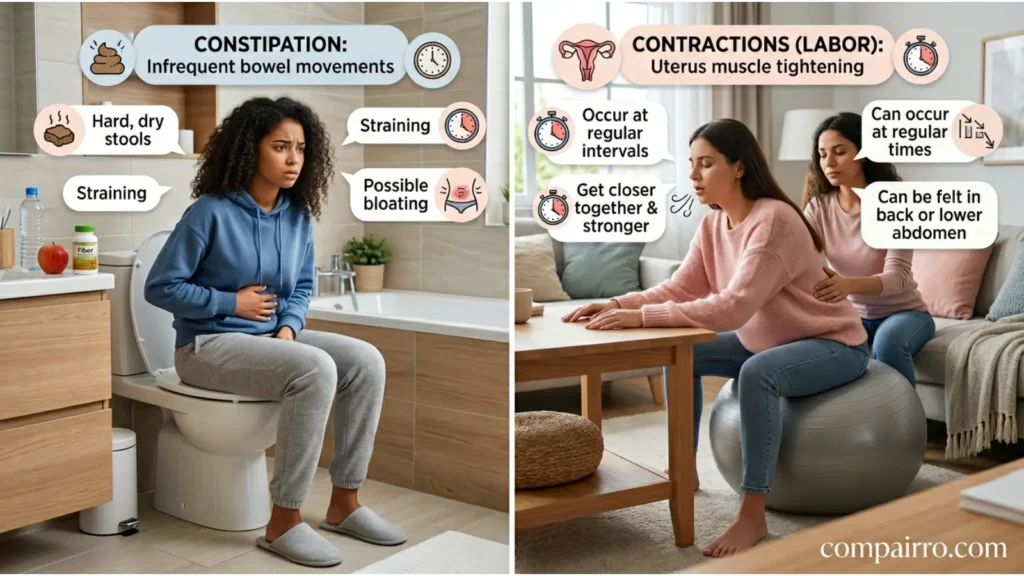
Signs or Characteristics
Digestive Issues Often Include
- Fewer bowel movements than usual
- Hard or dry stool
- Straining when using the bathroom
- Bloating
- Stomach discomfort
Muscle Tightening During Labor Often Includes
- Regular cramping
- Pressure in the lower abdomen
- Tightening sensations
- Increasing intensity over time
- Repeating patterns
Simple Trick to Remember the Difference
A quick memory trick can make these terms easy to remember.
👉 Constipation = Bathroom problem
👉 Contractions = Muscle problem
Think of it this way:
If someone is talking about digestion, fiber, water intake, or bowel movements, the topic is likely constipation.
If someone is discussing pregnancy, labor, or muscles tightening, they are likely talking about contractions.
This simple connection helps many beginners remember the difference instantly.
FAQS:
1. Are these two medical terms related?
No. They describe different conditions and affect different parts of the body.
2. Can digestive problems happen during pregnancy?
Yes. Many pregnant women experience changes in digestion.
3. What causes bowel movement difficulties?
Common causes include low fiber intake, dehydration, and lack of physical activity.
4. Do muscle tightenings always mean labor has started?
No. Some muscle activity can occur before true labor begins.
5. Is it normal to search these terms together?
Yes. Many people want to understand the difference between them.
6. When should someone seek medical advice?
If symptoms are severe, persistent, or concerning, professional medical guidance is recommended.
7. Why do people confuse these words?
Because both are health-related terms and may involve abdominal sensations.
Conclusion
Although these terms are sometimes confused, they refer to very different conditions. One relates to the digestive system and bowel movements, while the other describes muscles tightening, often during pregnancy and childbirth.
Understanding the difference can help you identify symptoms more accurately and communicate clearly in medical and everyday situations.
A simple way to remember it is:
👉 Bathroom issue = Constipation
👉 Muscle tightening = Contractions
Keeping this rule in mind makes it much easier to use the correct term whenever the topic comes up.

Sara Taylor is a passionate English content writer who specializes in word meanings, spelling comparisons, and modern slang explanations. She creates easy-to-understand articles that help readers avoid common English mistakes and improve their writing skills. Her content focuses on simple learning, real-life examples, and clear explanations for everyday readers.