Have you ever felt so tired during the day that you thought, “I need a quick nap, or I can’t do anything else”? Many people experience this feeling, especially after a busy morning, a long school day, or hours of work.
The phrase “nap or nothing” has become more popular in conversations, social media posts, memes, and lifestyle discussions. People often use it when they feel extremely tired and believe that resting is the only solution. It can also describe a personal habit where someone prefers taking a nap instead of pushing through exhaustion.
Many people search for nap or nothing because they want to understand its meaning, how it is used, and whether it is just a funny expression or a real lifestyle approach. You may see it on TikTok, Instagram, X, Facebook, online forums, or hear it in everyday conversations.
Understanding this phrase can help you better understand modern internet culture, sleep habits, and the importance of rest in daily life. It is also useful for students, workers, and anyone trying to manage energy levels during a busy day.
In this guide, you’ll learn the meaning, examples, usage, differences, common mistakes, and simple explanations in easy English.
Nap or Nothing – Quick Answer
👉 Nap or nothing means a person feels they must take a nap or they will not be productive, focused, or energetic.
Simple Definition
It is an informal expression used to show that rest is necessary before continuing daily activities.
Examples
✅ “After studying for five hours, it was nap or nothing.”
✅ “I had a busy morning at work. It’s nap or nothing for me today.”
✅ “She skipped lunch because all she wanted was a nap or nothing.”
Simple Rule
👉 Nap or nothing = So tired that only a nap will help.
The Origin of Nap or Nothing
The phrase nap or nothing does not have a formal historical origin like many traditional English expressions.
It developed naturally through everyday speech and internet culture. People started using it to describe moments of extreme tiredness when resting felt like the only option.
The phrase became more visible through:
- Social media posts
- Memes
- Lifestyle blogs
- Sleep-related discussions
- Student and workplace humor
Today, it is commonly used online to express exhaustion in a funny and relatable way.
British English vs American English Usage
There is no major difference between British English and American English when using nap or nothing.
The meaning remains the same worldwide.
| Feature | British English | American English | Notes |
|---|---|---|---|
| Meaning | Same | Same | No difference |
| Informal Usage | Common | Common | Used in conversation |
| Social Media Use | Popular | Popular | Widely understood |
| Workplace Humor | Used | Used | Casual expression |
Which One Should You Use?
If you want to express extreme tiredness in a casual way, nap or nothing is appropriate.
Best Situations
- Casual conversations
- Text messages
- Social media posts
- Talking with friends
- Lifestyle discussions
Formal Situations
Avoid using it in:
- Academic papers
- Business reports
- Official documents
Better Formal Alternatives
- I need some rest.
- I am experiencing fatigue.
- I need a short break.
Common Mistakes With Nap or Nothing
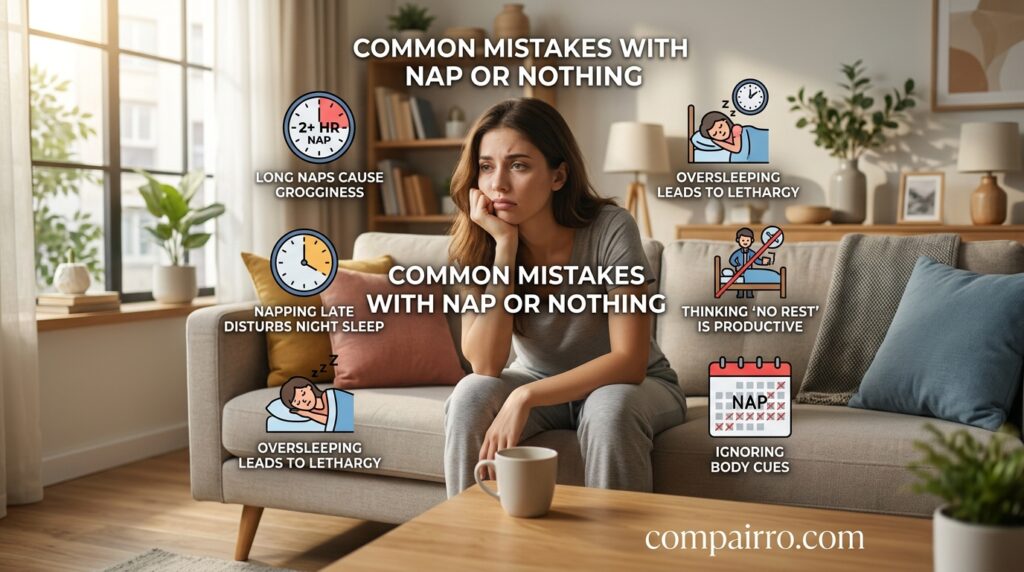
Mistake 1
❌ “Nap or nothing means being lazy.”
✔ It usually means being genuinely tired, not lazy.
Mistake 2
❌ Using it in formal business writing.
✔ It is mainly an informal expression.
Mistake 3
❌ Thinking it refers only to sleeping.
✔ It often expresses exhaustion, even if a person does not actually take a nap.
Mistake 4
❌ Assuming everyone uses it the same way.
✔ Some people use it humorously, while others use it seriously.
Nap or Nothing in Everyday Examples
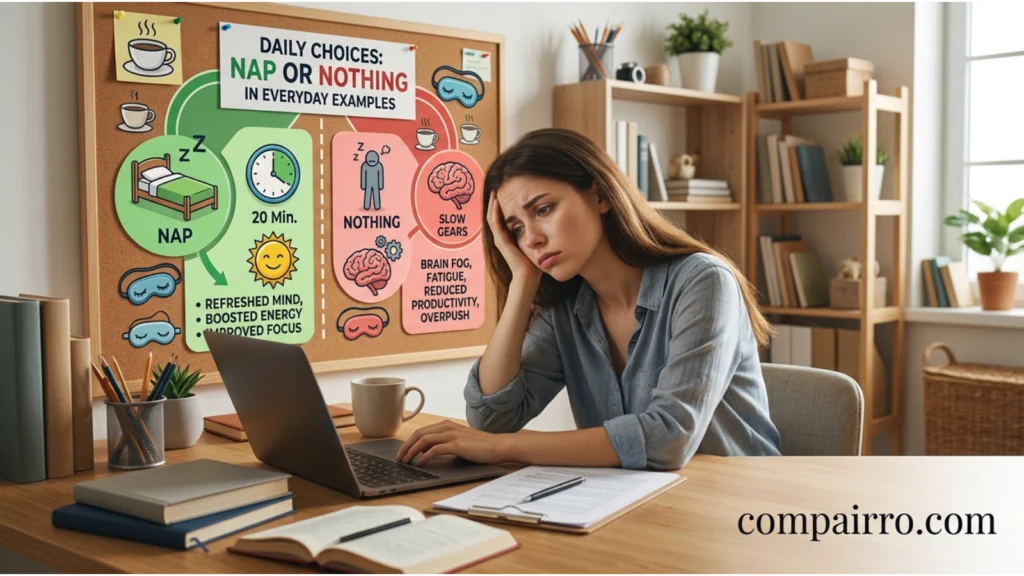
Work
“I’ve been in meetings all morning. It’s nap or nothing now.”
School
“After the exam, it was definitely nap or nothing.”
Social Media
“Weekend mood: nap or nothing 😴”
Daily Life
“I cleaned the whole house. It’s nap or nothing this afternoon.”
Text Messages
Friend: “Want to go shopping?”
You: “Maybe later. Right now it’s nap or nothing.”
Nap or Nothing – Google Trends & Usage Data
The phrase has become more visible because people are paying more attention to:
- Sleep quality
- Mental wellness
- Work-life balance
- Productivity habits
Why People Search It
People often want to know:
- What it means
- How to use it
- Whether it is slang
- Why it appears on social media
Popular Countries
Searches and usage commonly come from:
- United States
- United Kingdom
- India
- Pakistan
- Canada
- Australia
Online Popularity
The phrase appears frequently in:
- Sleep-related content
- Student memes
- Workplace humor
- Lifestyle posts
- Productivity discussions
Comparison Table: Nap or Nothing
| Phrase | Meaning | Usage | Formality |
|---|---|---|---|
| Nap or Nothing | Need a nap badly | Casual conversation | Informal |
| Need Some Rest | Require rest | Everyday use | Neutral |
| Exhausted | Extremely tired | Work and daily life | Neutral |
| Burned Out | Mentally and physically tired | Workplace discussions | Semi-formal |
| Sleepy | Feeling like sleeping | Everyday use | Informal |
Nap or Nothing in Professional Life
Although the phrase is informal, it reflects an important workplace topic: energy management.
Many professionals recognize that fatigue can affect:
- Focus
- Productivity
- Decision-making
- Mood
Some workplaces now encourage healthy breaks and better sleep habits.
Instead of saying “nap or nothing” in a formal meeting, employees may say:
- I need a short break.
- I’m feeling fatigued.
- I need some time to recharge.
Nap or Nothing for Students or Beginners
Students often relate strongly to this phrase.
Why Students Struggle
- Long study hours
- Late-night homework
- Exam stress
- Poor sleep schedules
Common Confusion
Some students think taking a nap is wasting time.
In reality, short naps can improve:
- Concentration
- Memory
- Learning ability
Easy Learning Tips
- Maintain a sleep schedule.
- Take short breaks while studying.
- Avoid staying awake too late.
- Use naps wisely when needed.
Signs or Characteristics Related to Nap or Nothing
People who say nap or nothing often experience:
Physical Signs
- Heavy eyelids
- Frequent yawning
- Low energy
- Feeling sluggish
Mental Signs
- Difficulty concentrating
- Forgetfulness
- Slow thinking
- Reduced motivation
Behavioral Patterns
- Looking for a quiet place to rest
- Avoiding difficult tasks
- Wanting a break from activities
- Spending more time relaxing
Common Situations
- After exams
- After long work shifts
- Following poor sleep
- During busy schedules
Simple Trick to Remember Nap or Nothing
Easy Memory Trick
👉 Nap = Rest
👉 Nothing = No other option
Simple Meaning
👉 “I need a nap because nothing else will help.”
Think of it this way:
Imagine your phone battery is at 1%.
You can keep trying to use it, but it may shut down soon.
A nap works like charging the battery.
That’s why people say:
“It’s nap or nothing.”
FAQs
1. What does nap or nothing mean?
It means a person feels so tired that taking a nap seems like the only solution.
2. Is nap or nothing a slang phrase?
Yes, it is considered an informal modern expression.
3. Can I use nap or nothing at work?
You can use it casually with coworkers, but avoid it in formal documents.
4. Is nap or nothing popular on social media?
Yes. It is often used in memes and posts about being tired.
5. Does nap or nothing always mean sleeping?
Not always. Sometimes it simply expresses extreme tiredness.
6. Is the phrase used in British and American English?
Yes. The meaning is generally the same in both.
7. Why do students use nap or nothing?
Students often feel exhausted after studying, exams, or late-night work.
Conclusion
Nap or nothing is a simple and popular expression used when someone feels extremely tired and believes that resting is the best option. It is commonly seen on social media, in conversations, and in everyday life.
The phrase is informal, easy to understand, and relatable for students, workers, and busy people. While it should not be used in formal writing, it works well in casual communication.
A simple rule to remember is:
👉 Nap or nothing = So tired that only a nap seems helpful.
Understanding this phrase makes it easier to follow modern conversations and online trends while also recognizing the importance of rest and healthy sleep habits.

Sara Taylor is a passionate English content writer who specializes in word meanings, spelling comparisons, and modern slang explanations. She creates easy-to-understand articles that help readers avoid common English mistakes and improve their writing skills. Her content focuses on simple learning, real-life examples, and clear explanations for everyday readers.