This is a very common grammar question. Many students, English learners, and even native speakers sometimes get confused about these two words. They look similar, but they are used in different situations.
You may see will and would in school assignments, workplace emails, social media posts, text messages, books, and everyday conversations. Because both words talk about actions, choices, or future situations, people often mix them up.
For example, should you say:
- I will help you.
- I would help you.
Both sentences are correct, but they do not mean exactly the same thing.
Understanding the difference can help you speak more clearly, write better English, and avoid common grammar mistakes. It can also make your conversations sound more natural and confident.
In this guide, you’ll learn the meaning, examples, usage, differences, common mistakes, and simple explanations in easy English.
Will or Would – Quick Answer
👉 Will is used for future actions, decisions, promises, and predictions.
👉 Would is used for imagined situations, polite requests, preferences, and talking about the future from a past point of view.
Examples
1 I will call you tomorrow.
2 She will arrive at 5 PM.
3 I would help you if I had time.
4 Would you like some tea?
Simple Rule
👉 Will = Real future
👉 Would = Possible, imagined, or polite
The Origin of Will or Would
The words will and would come from Old English.
Originally, will was connected to desire or intention. Over time, it became one of the main ways to talk about the future.
Would developed as the past form of will. Later, English speakers began using it for polite speech, hypothetical situations, and conditional sentences.
Today, both words are among the most common helping verbs in English and are used around the world.
British English vs American English Usage
The good news is that will and would are used almost the same way in British English and American English.
There are no major spelling differences between the two varieties.
| Feature | British English | American English | Notes |
|---|---|---|---|
| Will | Common | Common | Same meaning |
| Would | Common | Common | Same meaning |
| Polite Requests | Very common | Very common | No major difference |
| Conditional Sentences | Same | Same | Grammar rules match |
Which One Should You Use?
Use will when:
- Talking about future actions
- Making promises
- Offering help
- Making predictions
- Giving decisions
Examples:
- I will finish the project tomorrow.
- We will visit London next year.
Use would when:
- Being polite
- Talking about imaginary situations
- Expressing preferences
- Reporting future ideas from the past
- Using conditional sentences
Examples:
- Would you help me?
- I would travel more if I had money.
Formal vs Informal
Will
- Formal ✔
- Informal ✔
Would
- Formal ✔
- Informal ✔
Both words work well in academic writing, workplaces, emails, and casual conversations.
Common Mistakes With Will or Would
Mistake 1
❌ If I had money, I will buy a car.
✔ If I had money, I would buy a car.
Use would for imaginary situations.
Mistake 2
❌ Would you be at school tomorrow?
✔ Will you be at school tomorrow?
Use will for real future plans.
Mistake 3
❌ I would call you tomorrow.
✔ I will call you tomorrow.
Use will for definite future actions.
Mistake 4
❌ Will you like some coffee?
✔ Would you like some coffee?
Use would for polite offers and invitations.
Will or Would in Everyday Examples

Work
Will
- I will send the report today.
- We will meet next week.
Would
- I would appreciate your feedback.
- Would you review this document?
School
Will
- I will study tonight.
- The test will start at 9 AM.
Would
- I would choose science as my favorite subject.
- Would you explain this lesson again?
Social Media
Will
- I will post new photos tomorrow.
Would
- I would love to visit that place.
Daily Life
Will
- I will clean my room later.
Would
- I would buy that jacket if it were cheaper.
Text Messages
Will
- I will call you later.
Would
- Would you like to come with us?
Will or Would – Google Trends & Usage Data
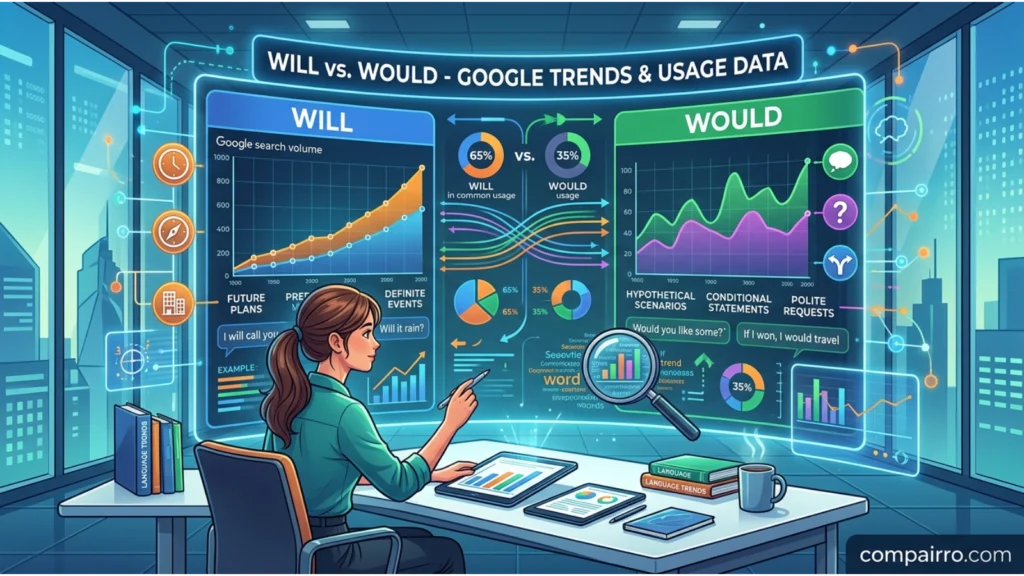
Many people search for will or would because these words are among the most confusing parts of English grammar.
Students often struggle with understanding when to use each one correctly. English learners frequently search for examples and easy rules.
Popular Countries Searching This Topic
- United States
- United Kingdom
- India
- Pakistan
- Canada
- Australia
Why People Search It
- Grammar homework
- English exams
- IELTS preparation
- Workplace writing
- Email communication
- Spoken English improvement
Online Popularity
Questions about will or would regularly appear on:
- Google Search
- YouTube lessons
- Language-learning apps
- Grammar blogs
- Social media discussions
Comparison Table: Will or Would
| Feature | Will | Would |
|---|---|---|
| Main Purpose | Future actions | Imagined or conditional actions |
| Time Reference | Future | Hypothetical or past future |
| Politeness | Normal | More polite |
| Certainty | Higher | Lower |
| Offers | Sometimes | Often |
| Requests | Direct | Polite |
| Example | I will help. | I would help. |
Will or Would in Professional Life
In workplaces, both words are important.
Will is often used when discussing plans, deadlines, and commitments.
Examples:
- I will complete the task today.
- We will launch the project next month.
Would is often used to sound professional and polite.
Examples:
- I would appreciate your response.
- Would you be available for a meeting?
Using would correctly can make emails sound more respectful and professional.
Will or Would for Students or Beginners
Many beginners struggle because both words seem to talk about future events.
Common confusion includes:
- Knowing when a situation is real or imaginary
- Understanding conditional sentences
- Making polite requests
- Writing formal English
Easy Learning Tips
- Use will for real future actions.
- Use would for imagined situations.
- Notice how native speakers use polite questions.
- Practice with simple example sentences every day.
The more examples you read, the easier it becomes.
Signs or Characteristics Related to Will or Would
Characteristics of “Will”
- Talks about the future
- Shows promises
- Expresses decisions
- Makes predictions
- Shows certainty
Characteristics of “Would”
- Shows politeness
- Expresses preference
- Describes imaginary situations
- Appears in conditional sentences
- Often sounds softer than “will”
Common Usage Patterns
- Will + future action
- Would + condition
- Would + polite request
- Will + promise
- Would + preference
Simple Trick to Remember Will or Would
👉 Will = It will really happen
👉 Would = It could happen under certain conditions
Think of it this way:
Will
- I will go to school tomorrow.
- The plan is real.
Would
- I would go to school if I felt better.
- The plan depends on something.
A simple memory trick:
👉 Will = Certain future
👉 Would = Conditional future
FAQs:
1. What is the main difference between will or would?
Will talks about real future actions, while would talks about imagined situations or polite requests.
2. Is would the past tense of will?
Yes. Traditionally, would is considered the past form of will.
3. Can I use would for polite questions?
Yes. For example: Would you help me?
4. Which sounds more polite, will or would?
Would usually sounds more polite.
5. Is will used for future plans?
Yes. Will is commonly used for future decisions and actions
6. Can would be used in conditional sentences?
Yes. It is very common in conditional grammar.
Example: I would travel if I had enough money.
7. Why do students confuse will or would?
Because both words can refer to future-related ideas, but they are used in different situations.
Conclusion
Understanding will or would is easier when you remember their basic purpose.
Will is used for real future actions, promises, decisions, and predictions. Would is used for polite requests, preferences, and situations that depend on conditions or imagination.
The most important thing to remember is:
👉 Will = Real future
👉 Would = Possible, imagined, or conditional future
Practice with simple sentences every day, and choosing between will or would will soon become natural and easy.

Sara Taylor is a passionate English content writer who specializes in word meanings, spelling comparisons, and modern slang explanations. She creates easy-to-understand articles that help readers avoid common English mistakes and improve their writing skills. Her content focuses on simple learning, real-life examples, and clear explanations for everyday readers.