Where or were is a common grammar question that confuses many English learners. Have you ever written a sentence and stopped to think, “Should I use where or were here?” If yes, you are not alone.
Many people search for the difference between these two words because they sound somewhat similar when spoken quickly. Students often mix them up in school assignments. Professionals may accidentally use the wrong word in emails. You can also see this mistake in text messages, social media posts, online comments, and everyday conversations.
The confusion happens because both words are very common in English. However, they have completely different meanings and uses. Using the wrong one can change the meaning of a sentence and make your writing look incorrect.
Learning the difference is actually quite simple once you understand a few basic rules. With practice, you will be able to choose the correct word every time.
In this guide, you’ll learn the meaning, examples, usage, differences, common mistakes, and simple explanations in easy English.
Where or Were – Quick Answer
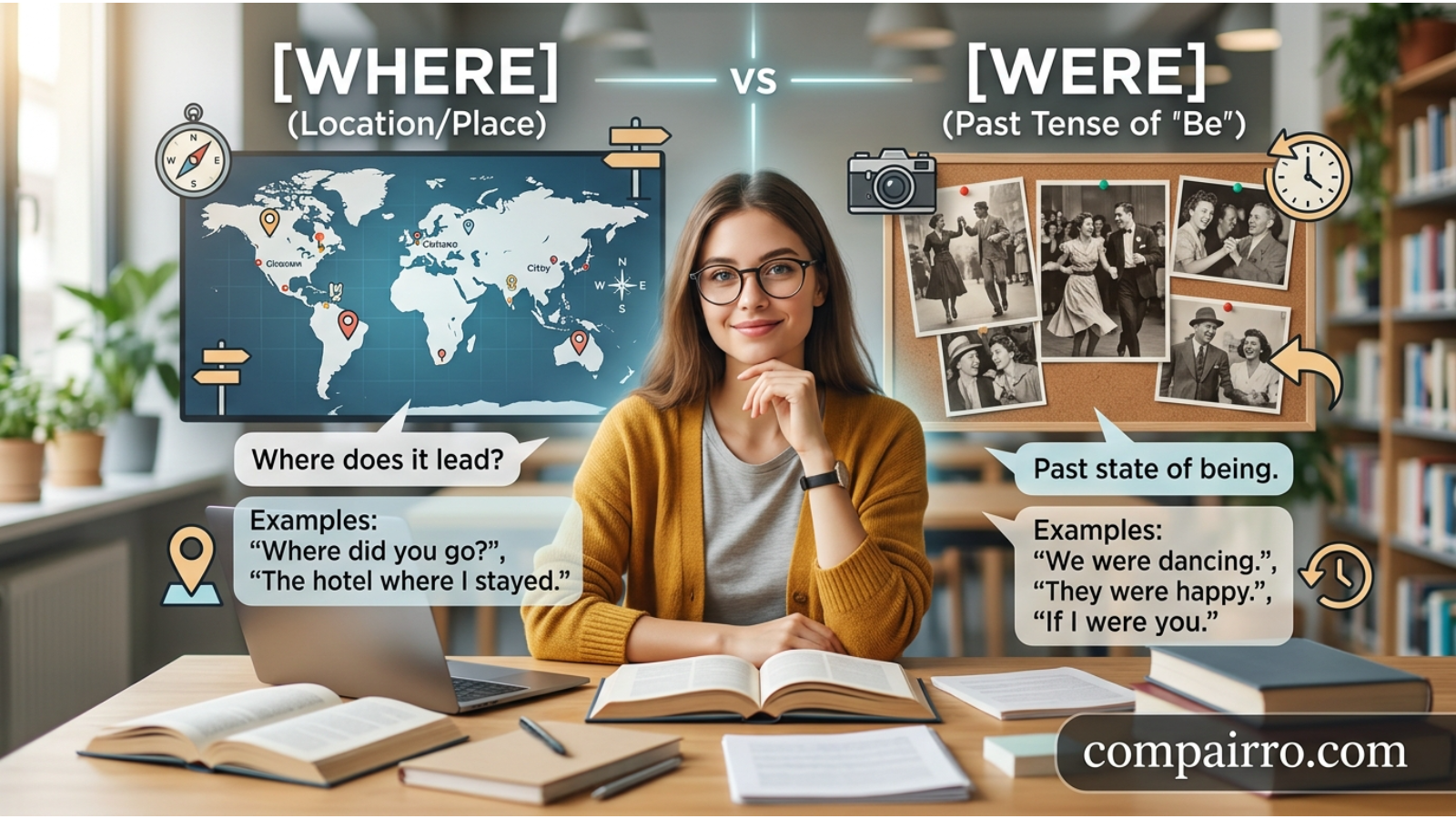
👉 Where refers to a place or location.
👉 Were is the past tense form of the verb to be.
Examples
Where
1 Where are you going?
2 Where is my book?
3 Do you know where she lives?
Were
1 They were happy yesterday.
2 We were late for class.
3 You were right.
Simple Rule
👉 Where = Place
👉 Were = Past tense of “are”
A quick memory trick:
- Where contains the word here, which helps you think about places.
- Were talks about something that happened in the past.
THE ORIGIN OF WHERE OR WERE
Both words come from Old English, but they developed different meanings over time.
Origin of “Where”
The word where comes from an ancient English word that meant “in what place.” It has been used for hundreds of years to ask about locations.
Origin of “Were”
The word were comes from the old forms of the verb to be. It became the past tense form used with words like we, you, and they.
Today, both words remain among the most frequently used words in English writing and speech.
BRITISH ENGLISH VS AMERICAN ENGLISH USAGE
There is no major difference between British English and American English when using where and were.
| Feature | British English | American English | Notes |
|---|---|---|---|
| Where | Same usage | Same usage | Means location |
| Were | Same usage | Same usage | Past tense of “be” |
| Spelling | Same | Same | No variation |
| Meaning | Same | Same | Used worldwide |
Both versions of English follow the same grammar rules for these words.
WHICH ONE SHOULD YOU USE?
Where when talking about a location, place, or position.
Use were when describing something that happened in the past.
Use “Where” When:
- Asking about a place
- Describing a location
- Giving directions
- Talking about positions
Examples:
✅ Where do you work?
✅ Where is the restaurant?
Use “Were” When:
- Talking about the past
- Describing previous situations
- Writing past-tense sentences
Examples:
✅ We were tired.
✅ They were at the park.
Formal and Informal Usage
Both words can be used in:
- Academic writing
- Business communication
- Text messages
- Social media
- Casual conversations
COMMON MISTAKES WITH WHERE OR WERE
Mistake 1
❌ Were are you going?
✔ Use where because you are asking about a place.
✅ Where are you going?
Mistake 2
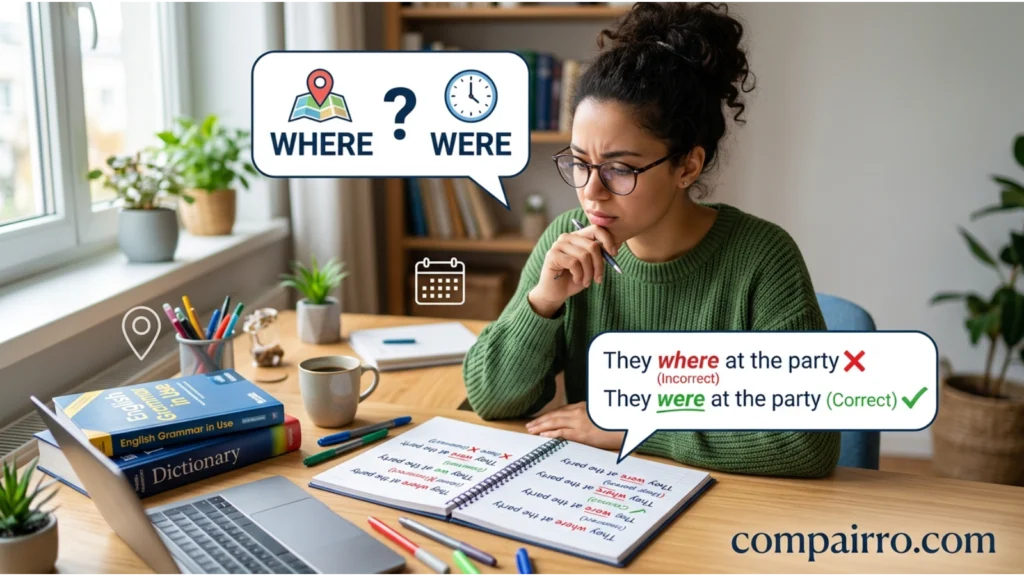
❌ They where happy yesterday.
✔ Use were because the sentence talks about the past.
✅ They were happy yesterday.
Mistake 3
❌ Where late for school.
✔ Use were because it is the past tense verb.
✅ We were late for school.
Mistake 4
❌ Were is my phone?
✔ Use where because you are asking about location.
✅ Where is my phone?
WHERE OR WERE IN EVERYDAY EXAMPLES
Work
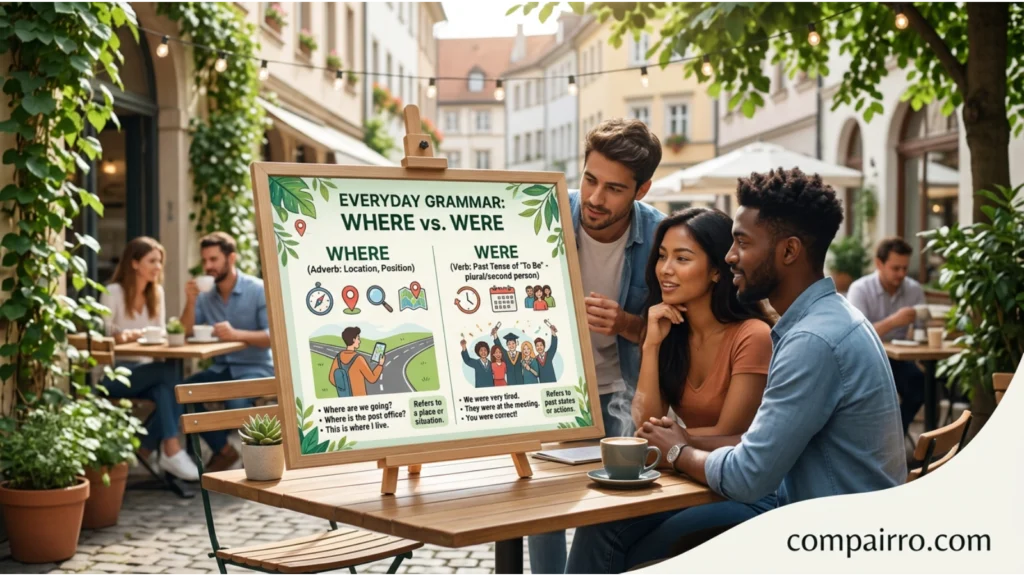
✅ Where is the meeting room?
✅ We were busy yesterday.
School
✅ Where is your classroom?
✅ The students were quiet.
Social Media
✅ Where was this picture taken?
✅ We were having fun at the beach.
Daily Life
✅ Where did you buy that shirt?
✅ They were at home all day.
Text Messages
✅ Where are you now?
✅ We were waiting for you.
WHERE OR WERE – GOOGLE TRENDS & USAGE DATA
The keyword where or were is searched by thousands of people because it is a common grammar confusion.
Why People Search It
- Similar pronunciation
- Frequent spelling mistakes
- School assignments
- English learning
- Social media writing
Popular Countries
People often search this topic in:
- United States
- United Kingdom
- India
- Pakistan
- Canada
- Australia
Search Trends
Grammar-related searches continue to grow because more people communicate online through emails, websites, social media, and messaging apps.
Beginner Confusion
Most beginners understand the meanings separately but struggle when choosing the correct word while writing quickly.
COMPARISON TABLE: WHERE OR WERE
| Feature | Where | Were |
|---|---|---|
| Word Type | Question/Location Word | Verb |
| Main Meaning | Place or location | Past tense of “be” |
| Time Reference | Any time | Past time |
| Example | Where is the store? | They were happy. |
| Used for Questions | Yes | Usually No |
| Refers to Location | Yes | No |
| Refers to Past Actions | No | Yes |
WHERE OR WERE IN PROFESSIONAL LIFE
Using the correct word is important in professional communication.
Business Emails
Correct:
✅ Where should we send the documents?
✅ The reports were completed yesterday.
Workplace Communication
Employees who use proper grammar often appear more professional and clear.
Using the wrong word can create confusion and make messages harder to understand.
Customer Service
Correct communication helps businesses provide better service and maintain professionalism.
WHERE OR WERE FOR STUDENTS OR BEGINNERS
Many students struggle with where or were because the words can sound alike in fast speech.
Common Learning Challenges
- Mixing location and past tense meanings
- Typing too quickly
- Not proofreading writing
- Pronunciation confusion
Easy Learning Tips
- Read your sentence slowly.
- Ask yourself if you’re talking about a place.
- Ask yourself if you’re talking about the past.
- Practice with simple examples daily.
The more you read English, the easier it becomes to recognize the correct word.
SIGNS OR CHARACTERISTICS RELATED TO WHERE OR WERE
Characteristics of “Where”
- Refers to a place
- Often starts questions
- Used to ask for locations
- Can connect ideas in a sentence
Examples:
✅ Where do you live?
✅ I know where she works.
Characteristics of “Were”
- Past tense verb
- Used with we, you, and they
- Describes past situations
- Common in storytelling
Examples:
✅ We were excited.
✅ They were ready.
Patterns to Notice
- If you can replace it with location, use where.
- If you can replace it with past tense of are, use were.
SIMPLE TRICK TO REMEMBER WHERE OR WERE
Easy Memory Trick
👉 Where = Place
👉 Were = Past
Think of it this way:
- Where contains here, and here is a place.
- Were sounds like something that already happened.
Examples:
👉 Where is the bus? = Asking about a place.
👉 We were on the bus. = Talking about the past.
This simple trick helps many beginners remember the difference quickly.
FAQs
1. What is the difference between where and were?
Where refers to a place, while were is the past tense of the verb to be.
2. Is “where” a verb?
No. Where is not a verb. It is mainly used to ask about locations.
3. Is “were” a verb?
Yes. Were is a past-tense verb.
4. Why do people confuse where and were?
They can sound similar in some accents, especially during fast speech.
5. Which word is used for location?
Use where when talking about a place or position.
6. Which word is used for past events?
Use were when describing something that happened in the past.
7. How can I remember where or were?
Remember: Where = Place and Were = Past.
CONCLUSION
Understanding where or were is easier than many people think. The key difference is simple: where talks about a location, while were is the past tense form of the verb to be.
Whenever you feel confused, ask yourself one question: Am I talking about a place or the past? If it is a place, use where. If it is the past, use were.
Final memory rule:
👉 Where = Place
👉 Were = Past
With this simple trick and regular practice, you’ll be able to use where or were correctly in school, work, texting, and everyday English.

Sara Taylor is a passionate English content writer who specializes in word meanings, spelling comparisons, and modern slang explanations. She creates easy-to-understand articles that help readers avoid common English mistakes and improve their writing skills. Her content focuses on simple learning, real-life examples, and clear explanations for everyday readers.