Have you ever read a Bible passage and wondered if to write psalm or psalms? You may have seen both words in books, church services, school assignments, or online searches. Although they look almost the same, they have different uses.
The confusion is easy to understand. Both words are related to the Book of Psalms in the Bible, and both refer to sacred songs, prayers, or poems. However, choosing the correct word depends on if you are talking about one psalm or more than one.
People search for “is it psalm or psalms” because they want to write correctly, understand Bible references, or learn how to pronounce these words. Students, teachers, writers, and readers may all face this question. You might also see these words on social media, in religious discussions, or during everyday conversations.
The good news is that the difference is simple once you learn one basic grammar rule. Psalm is singular, while psalms is plural. However, the word Psalms is also commonly used as the name of a book in the Bible.
In this guide, you’ll learn the meaning, examples, usage, differences, common mistakes, and simple explanations in easy English.
Is It Psalm or Psalms? – Quick Answer
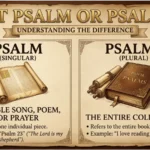
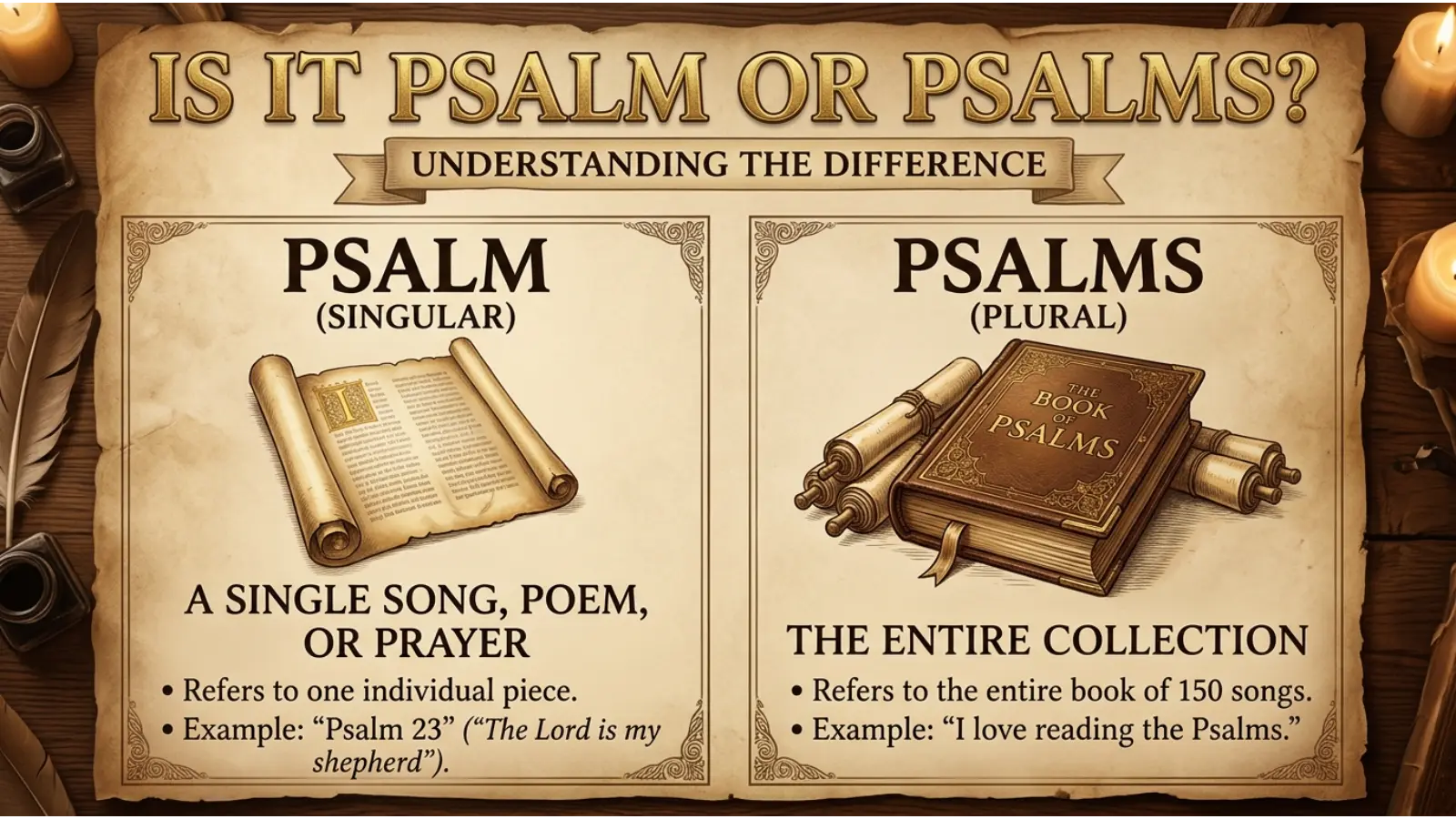
Psalm is the singular form, meaning one sacred song, prayer, or poem. Psalms is the plural form, meaning two or more of these songs or poems. The word Psalms is also the traditional name of a book in the Bible.
Here are three simple examples:
- Psalm: I read one psalm this morning.
- Psalms: I enjoy reading the psalms in the Bible.
- Book of Psalms: Psalm 23 is found in the Book of Psalms.
Simple rule: Use psalm for one and psalms for more than one. When referring to the biblical book, use Psalms.
The Origin of Psalm and Psalms
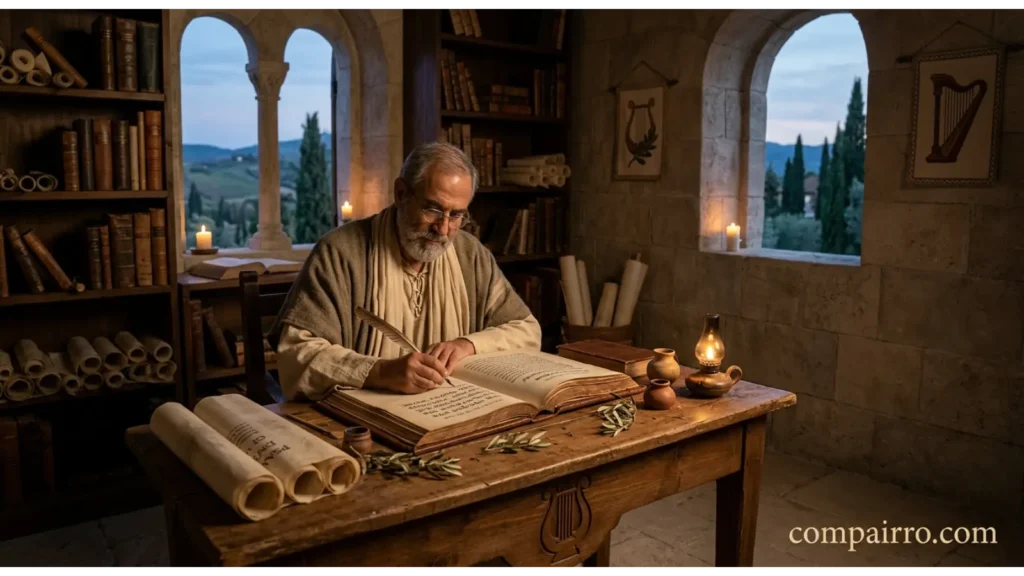
The word psalm comes through Old English and Latin from the Greek word psalmos. The Greek term was connected with plucking the strings of a musical instrument and eventually referred to a song sung with musical accompaniment.
In the Bible, psalms are sacred poems and songs that express praise, thanks, sadness, hope, and trust in God. Many are traditionally linked to King David, although the Book of Psalms includes works associated with several writers.
Over time, the collection became widely known as the Book of Psalms. That is why people often see the plural word Psalms even when they are talking about the book as a whole.
Today, both forms remain common in Bible reading, religious studies, worship, and everyday writing.
British English vs. American English Usage
There is no major difference between British and American English when using psalm and psalms. Both forms follow the same singular and plural grammar rules in both varieties of English.
The main difference is pronunciation style, which can vary slightly by speaker and accent.
| Feature | British English | American English | Notes |
|---|---|---|---|
| Singular | Psalm | Psalm | One sacred song or poem |
| Plural | Psalms | Psalms | More than one sacred song or poem |
| Biblical book | Book of Psalms | Book of Psalms | The name of the Bible book |
| Pronunciation | Often “sahm” | Often “sahm” | The p is silent |
| Grammar | Singular and plural | Singular and plural | The rules are the same |
For example, a British writer and an American writer would both write, “I read a psalm yesterday.”
Which One Should You Use?
Choosing between psalm and psalms depends on what you mean.
Use psalm when you are talking about one individual song, prayer, or poem.
- “My favorite psalm is Psalm 23.”
- “The pastor read a psalm during the service.”
- “I learned a new psalm today.”
Use psalms when you mean several songs or poems, or when referring to the biblical book by its traditional name.
- “I read three psalms last night.”
- “The Psalms contain many prayers and songs.”
- “She studies the Book of Psalms.”
Remember that the word Psalms is capitalized when it refers to the Bible book. When you are talking about psalms in general, lowercase psalms is usually appropriate.
Common Mistakes With Psalm and Psalms
Even though these words are easy to learn, writers sometimes use them incorrectly. Here are five common mistakes and how to fix them.
Mistake 1: Using Psalm for More Than One
❌ I read two psalm last night.
✔ I read two psalms last night.
Why? The number two tells us that more than one psalm is being discussed, so the plural form is needed.
Mistake 2: Using Psalms for One Individual Song
❌ I read one psalms before bed.
✔ I read one psalm before bed.
Why? Use the singular form psalm when referring to just one.
Mistake 3: Forgetting the Silent P
❌ Pronouncing the word as “p-salm.”
✔ Pronouncing it as “sahm.”
Why? The letter p is silent in the English pronunciation of psalm.
Mistake 4: Confusing a Psalm With the Book of Psalms
❌ Psalm is the name of the entire biblical book.
✔ Psalms is the traditional name of the biblical book, while a psalm is one individual song or poem.
Why? The distinction helps readers understand whether you mean one passage or the whole collection.
Mistake 5: Using Incorrect Capitalization
❌ I read the book of psalms in the Bible.
✔ I read the Book of Psalms in the Bible.
Why? When referring to the specific biblical book, capitalize Psalms. In general references to several songs, lowercase psalms is normally correct.
Psalm or Psalms in Everyday Examples
Seeing these words in different situations can help you remember the correct form.
1. At Work
Writers, editors, and religious publishers may use these words when preparing articles, reports, or educational materials.
- “The article explains the meaning of Psalm 23.”
- “The study guide includes several psalms.”
2. At School
Students may encounter these terms in religious studies, literature, or Bible lessons.
- “Our teacher asked us to discuss one psalm.”
- “We studied the Book of Psalms in class.”
3. On Social Media
People often share Bible verses, inspirational messages, and religious reflections online.
- “Psalm 23 gives me comfort.”
- “Here are three psalms I enjoy reading.”
4. In Daily Life
You might use these words while reading, praying, or discussing the Bible with friends and family.
- “I read a psalm every morning.”
- “My grandmother enjoys reading the Psalms.”
5. In Text Messages
The same grammar rules apply to texting. Informal writing does not change the difference between singular and plural.
Example conversation:
Alex: “What did you read today?”
Sam: “I read a psalm from the Bible.”
Alex: “Which one?”
Sam: “Psalm 91.”
This conversation uses psalm correctly because Sam is talking about one individual passage.
Psalm or Psalms – Google Trends and Usage Data
People search for “is it psalm or psalms” to understand grammar, biblical references, spelling, and pronunciation. The question is especially useful for beginners who know the Book of Psalms but are unsure how to refer to one of its individual entries.
The terms may appear in searches from the United States, United Kingdom, India, Pakistan, Canada, and Australia. However, their exact popularity can vary by country and time.
Without checking live Google Trends data, it would not be accurate to claim that one country has the highest search volume or that searches are currently increasing.
Common reasons people search for these terms include:
- Understanding the difference between singular and plural nouns.
- Learning how to pronounce psalm correctly.
- Finding a particular Bible passage, such as Psalm 23 or Psalm 91.
- Preparing schoolwork, articles, or religious study notes.
- Understanding why the biblical book is called Psalms.
The search phrase reflects a common language question rather than a new internet slang trend. Its main purpose is to help readers use the correct word in context.
Comparison Table: Psalm vs. Psalms
The following table summarizes the key differences between the two words.
| Feature | Psalm | Psalms |
|---|---|---|
| Word form | Singular | Plural |
| Meaning | One sacred song or poem | Two or more sacred songs or poems |
| Common example | Psalm 23 | The Psalms |
| Grammar | Used with “a” or “one” | Used with “many,” “several,” or plural meanings |
| Bible reference | One individual entry | The biblical collection or multiple entries |
| Example sentence | I read a psalm. | I read several psalms. |
Important: Psalm 23 refers to one specific psalm. The Book of Psalms refers to the biblical book containing the collection.

Psalm and Psalms in Professional Life
These words are useful in religious writing, publishing, education, and translation. Writers need to choose the correct form so readers can understand exactly what a sentence means.
For example, a writer preparing an article about one biblical passage might use the heading “The Meaning of Psalm 23.” An article discussing the entire collection might use “An Introduction to the Book of Psalms.”
Editors also need to check capitalization. Psalms should be capitalized when it names the biblical book, while psalm can remain lowercase when used as a general noun.
Using the correct form makes writing clearer and more professional.
Psalm or Psalms for Students and Beginners
Beginners may find these words confusing because the biblical book uses the plural form, even though each individual entry is called a psalm.
Here are three easy ways to learn the difference:
- Look for a number. If you are talking about one passage, use psalm. If you are talking about several, use psalms.
- Check the meaning. If you mean the entire biblical book, use Psalms or the Book of Psalms.
- Read the sentence aloud. Phrases such as “one psalm” and “three psalms” make the difference easier to notice.
Try this quick practice:
- I read ___ psalm today. (one)
- I read four ___. (several)
- I am studying the Book of ___.
Answers: psalm, psalms, Psalms.
Signs or Characteristics Related to Psalm and Psalms
You can identify the correct word by looking at its purpose in a sentence.
- Psalm: Refers to one sacred song, prayer, or poem.
- Psalms: Refers to multiple sacred songs or poems.
- Psalms as a book title: Refers to the biblical collection.
- Psalm 23: Names one particular psalm.
- The Psalms: Often refers to the biblical collection as a whole.
- Pronunciation: The initial p is silent in both forms.
- Capitalization: The title of the biblical book is capitalized; general uses of the noun are usually lowercase.
These clues make it easier to decide which word fits your sentence.
Simple Trick to Remember Psalm or Psalms
The easiest trick is to connect the ending -s with more than one.
- Psalm = one
- Psalms = more than one
- Psalms = the name of the biblical book
Think of it this way:
If you read one song, you read a psalm. For you read five songs, you read five psalms. If you are talking about the whole Bible book, you can call it the Book of Psalms.
For example:
- “I read one psalm.”
- “I read two psalms.”
- “I am reading the Book of Psalms.”
Memory rule: One psalm, many psalms, the Book of Psalms.
FAQs:
1. Is it Psalm or Psalms in the Bible?
Both are correct. Psalm refers to one individual song or poem, while Psalms refers to multiple entries or the biblical book.
2. Is Psalm 23 correct or Psalms 23?
Psalm 23 is the correct form when referring to that specific chapter or entry. The plural form is not used for a single psalm reference.
3. Why is the Book of Psalms plural?
The book contains a collection of many individual psalms. Therefore, its traditional name is the Book of Psalms.
4. Is the P silent in Psalm?
Yes. The p is silent, so psalm is pronounced approximately like “sahm.”
5. What is the plural of psalm?
The plural of psalm is psalms. For example, “I read three psalms today.”
6. Should Psalms always be capitalized?
No. Capitalize Psalms when referring to the biblical book. Use lowercase psalms when discussing sacred songs or poems in general, unless it begins a sentence.
7. Is it correct to say “I read a Psalms”?
No. Say “I read a psalm” when referring to one. You can say “I read the Book of Psalms” when referring to the entire biblical book.
Conclusion
The difference between psalm and psalms is simple. A psalm is one sacred song, prayer, or poem, while psalms refers to two or more. Psalms is also the traditional name of a book in the Bible.
Both words are used in British and American English, and the p is silent in their pronunciation. The main thing to remember is if you are discussing one individual psalm, several psalms, or the whole biblical collection.
Final memory rule: One = psalm. More than one = psalms. The Bible book = the Book of Psalms.

Sara Taylor is a passionate English content writer who specializes in word meanings, spelling comparisons, and modern slang explanations. She creates easy-to-understand articles that help readers avoid common English mistakes and improve their writing skills. Her content focuses on simple learning, real-life examples, and clear explanations for everyday readers.