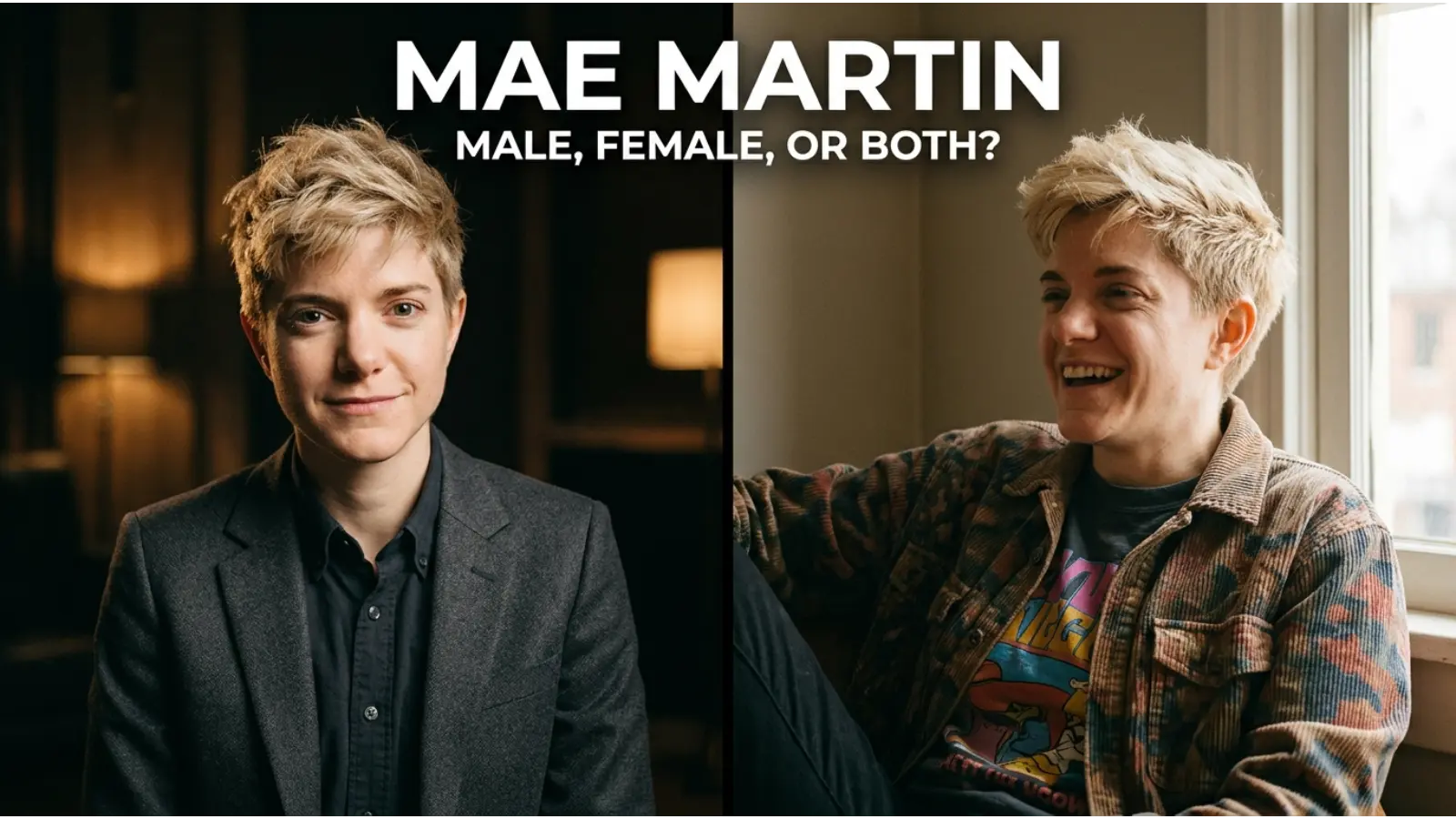
Mae Martin Male or Female is a popular question among fans who want to learn more about the comedian, actor, and writer. Mae Martin has gained attention through stand-up comedy, television appearances, and the hit Netflix series Feel Good. However, many people are curious about Mae Martin’s gender identity and the pronouns they use.
People search for “Mae Martin male or female” because they want to understand Mae Martin’s gender identity. Some viewers may have seen Mae in comedy shows, interviews, or Netflix content and become interested in learning more about their personal background.
Mae Martin is a Canadian comedian, actor, writer, and performer. However, the answer to the gender question is not simply male or female. Mae Martin identifies as non-binary and uses they/them pronouns.
Non-binary is a gender identity for people who do not identify only as a man or a woman. It is important to understand that gender identity is personal, and people may describe themselves in different ways.
You may come across questions about Mae Martin on Google, TikTok, Instagram, YouTube, entertainment websites, and online discussions. Understanding the correct information helps avoid confusion and encourages respectful conversations.
In this guide, you’ll learn the meaning, examples, usage, differences, common mistakes, and simple explanations in easy English.
Mae Martin Male or Female – Quick Answer
Mae Martin is non-binary, not exclusively male or female. Female publicly identifies as non-binary and uses they/them pronouns.
In simple words, non-binary means someone does not identify completely as a man or a woman.
Here are three important facts:
- Name: Mae Martin
- Gender identity: Non-binary
- Pronouns: They/them
Examples:
- Correct: Mae Martin is a non-binary comedian.
- Correct: They are known for their comedy and acting.
- Correct: Mae Martin is a Canadian performer.
Simple rule: Remember that Mae Martin identifies as non-binary, so use they/them pronouns when talking about Mae.
The Origin of Mae Martin’s Gender Identity and Public Recognition
Mae Martin is a Canadian comedian, writer, actor, and television personality. Female became widely known for comedy performances and work in television.
Mae has also received attention for discussing personal experiences and identity through comedy and public conversations.
Their work includes the comedy series Feel Good, which brought greater attention to their acting and writing.
Mae Martin’s gender identity has also become a topic of interest among fans. As more people discover their work, they often search for information about their identity and preferred pronouns.
It is important to understand that non-binary is not a new word or a recent internet trend. People with gender identities outside the traditional male-and-female categories have existed across different societies and cultures for a long time.
Social media has simply made these conversations more visible.
British English vs American English Usage
The question “Mae Martin male or female” does not involve a spelling difference between British and American English.
Both countries use the same terms to describe Mae Martin’s publicly stated gender identity.
| Feature | British English | American English | Notes |
|---|---|---|---|
| Gender identity | Non-binary | Non-binary | Same spelling |
| Pronouns | They/them | They/them | Same usage |
| Male | Man | Man | Traditional gender term |
| Female | Woman | Woman | Traditional gender term |
| Respectful language | They/them | They/them | Used for Mae Martin |
Whether you are in the UK, USA, Canada, Australia, India, or Pakistan, the respectful way to refer to Mae Martin is by using they/them pronouns.
Which Gender Term Should You Use for Mae Martin?
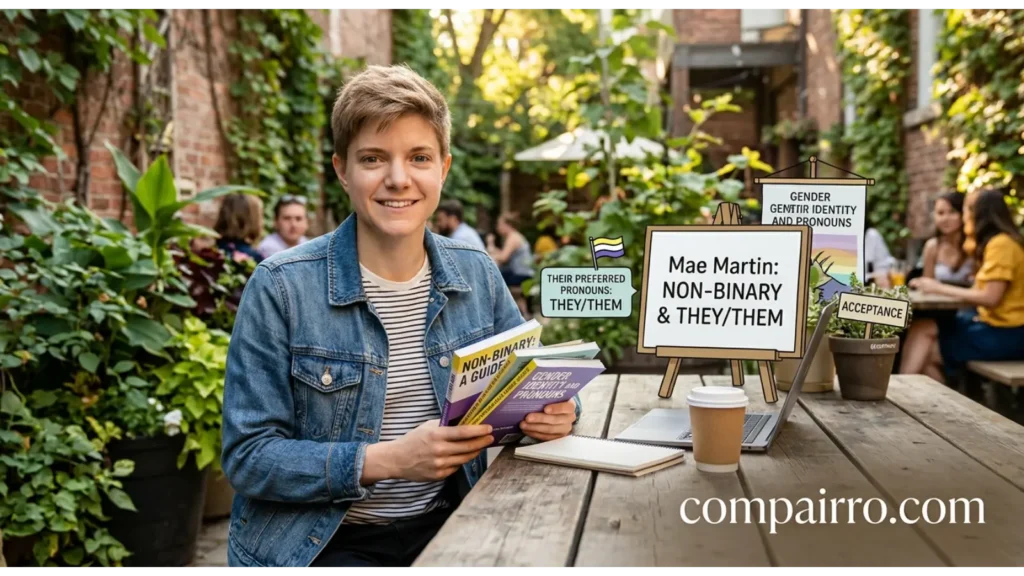
When discussing Mae Martin, the best choice is to use the gender identity and pronouns Mae has publicly shared.
Here are some simple guidelines:
- Use non-binary: This describes Mae Martin’s publicly stated gender identity.
- Use they/them: These are Mae’s preferred pronouns.
- Use Mae or Mae Martin: These are respectful ways to refer to the performer.
- Avoid guessing: Do not decide someone’s gender identity based only on their appearance, clothing, or voice.
- Use respectful language: When writing an article or discussing Mae online, follow their publicly stated identity.
Formal vs Informal Usage
In formal writing, you can say:
“Mae Martin is a Canadian non-binary comedian and actor.”
In casual conversation, you can say:
“Mae Martin is a comedian. They are really talented.”
Both examples use respectful language and correctly describe Mae.
Common Mistakes About Mae Martin’s Gender Identity
People sometimes misunderstand gender identity, especially when they are unfamiliar with the term non-binary.
Here are five common mistakes to avoid.
Mistake 1: Calling Mae Martin exclusively male
❌ Incorrect: Mae Martin identifies as a man.
✔ Correct: Mae Martin identifies as non-binary.
Mistake 2: Calling Mae Martin exclusively female
❌ Incorrect: Mae Martin identifies as a woman.
✔ Correct: Mae Martin publicly identifies as non-binary.
Mistake 3: Using the wrong pronouns
❌ Incorrect: He is a comedian.
✔ Correct: They are a comedian.
Mistake 4: Confusing appearance with gender identity
❌ Incorrect: Someone’s appearance tells you their gender identity.
✔ Correct: Gender identity should be understood through how a person describes themselves.
Mistake 5: Thinking non-binary is another word for transgender
❌ Incorrect: Non-binary and transgender always mean exactly the same thing.
✔ Correct: These terms are related but have different meanings. Some non-binary people identify as transgender, while others do not.
Mae Martin in Everyday Examples
Understanding Mae Martin’s gender identity becomes easier when you see how to use their name and pronouns in everyday situations.
Here are some practical examples.
1. At Work
If someone discusses Mae Martin during a workplace conversation, they can say:
- “Mae Martin is a comedian and writer.”
- “They have worked in television.”
- “Their comedy often explores personal experiences.”
2. At School
Students may discuss Mae Martin when learning about entertainment, media, or gender identity.
Examples:
- “Mae Martin identifies as non-binary.”
- “They use they/them pronouns.”
- “Non-binary is a gender identity.”
3. On Social Media
People may discuss Mae Martin on Instagram, TikTok, Facebook, or YouTube.
Examples:
- “I watched Mae Martin’s comedy show.”
- “Their performance was interesting.”
- “They are a talented writer and comedian.”
4. In Daily Life
You can also use their pronouns in simple conversations.
Examples:
- “Have you heard about Mae Martin?”
- “Yes, they are a Canadian comedian.”
- “I recently watched their television work.”
5. In Text Messages
Here are some natural texting examples:
| Message | Meaning |
|---|---|
| Mae Martin is non-binary. | Describes their gender identity |
| They use they/them pronouns. | Explains their pronouns |
| I watched their show. | Uses a respectful pronoun |
| They are a comedian. | Describes their profession |
Mae Martin – Google Trends and Usage Data
The keyword “Mae Martin male or female” reflects curiosity about a public figure’s gender identity.
People may search for this phrase after watching a comedy performance, seeing a television interview, or finding Mae Martin on social media.
However, exact search volume, ranking, and country popularity should be checked through Google Trends or a keyword research tool. Without live search data, it would not be accurate to claim that one country has the highest search interest.
Why Do People Search This Keyword?
There are several possible reasons:
- They recently discovered Mae Martin.
- They want to understand Mae’s gender identity.
- They are unfamiliar with non-binary terminology.
- They want to know which pronouns Mae uses.
- They have seen discussions about Mae on social media.
Search Interest Across Different Countries
The keyword may be relevant to English-speaking audiences and people interested in entertainment worldwide.
| Country | Possible Search Interest |
|---|---|
| USA | Entertainment and celebrity information |
| UK | Comedy and television audiences |
| India | Celebrity and gender identity questions |
| Pakistan | Curiosity about international performers |
| Canada | Interest in a Canadian entertainer |
| Australia | Comedy and entertainment searches |
These are potential audience interests, not verified Google Trends rankings.
Comparison Table: Male vs Female vs Non-Binary
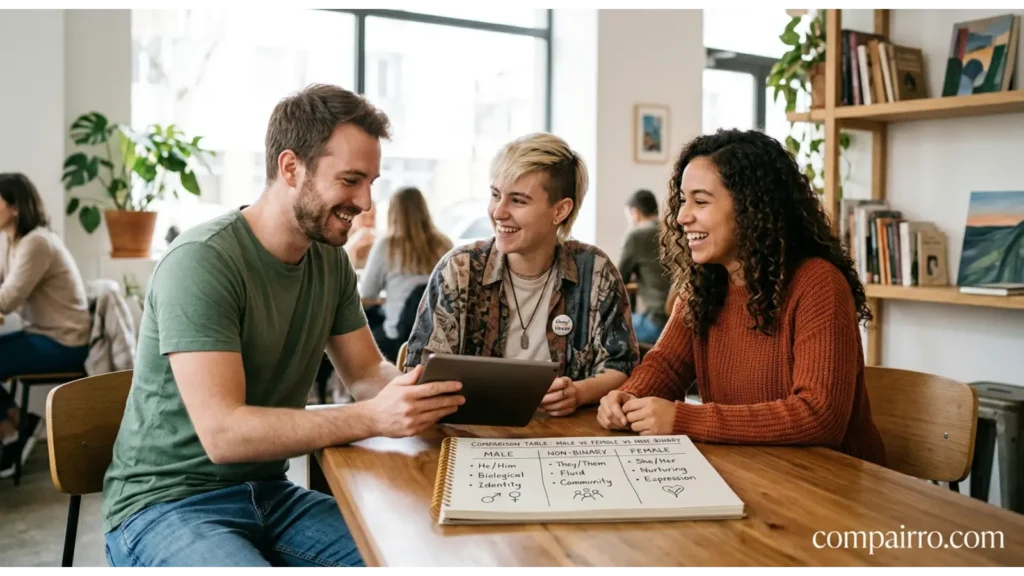
To understand why people ask whether Mae Martin is male or female, it helps to know the difference between these gender identity terms.
| Term | Simple Meaning | Example |
|---|---|---|
| Male | A sex-related term often associated with men | Male identity |
| Female | A sex-related term often associated with women | Female identity |
| Man | A person who identifies as a man | A man |
| Woman | A person who identifies as a woman | A woman |
| Non-binary | Someone who does not identify only as a man or woman | Mae Martin |
Important: Sex and gender identity are related but are not identical concepts. A person’s gender identity is not something that should be guessed from their physical appearance.
Female Martin Pronouns publicly identifies as non-binary.
Mae Martin in Professional Life
Mae Martin has built a career in entertainment through comedy, acting, and writing.
Their professional work includes television projects, comedy performances, and creative writing.
One well-known project is Feel Good. The series helped introduce Mae Martin to a wider audience.
Mae has also appeared on comedy television programs and worked in different areas of entertainment.
Why Is Gender Identity Important in Professional Life?
Respectful language is important in every workplace, including television, film, comedy, and media.
Here are a few reasons:
- It shows respect for personal identity.
- It helps create clear communication.
- It reduces unnecessary misunderstandings.
- It supports a respectful working environment.
- It helps writers and journalists share accurate information.
When writing about Mae Martin professionally, using they/them pronouns is a simple way to show respect.
Mae Martin for Students or Beginners
Students and beginners may find the topic confusing because they are more familiar with the traditional terms male and female.
However, learning about different gender identities can help people understand modern conversations.
Why Do Beginners Get Confused?
Some common reasons include:
- They have not heard the word non-binary before.
- They think everyone identifies as either a man or a woman.
- They confuse gender identity with physical appearance.
- They do not understand singular they/them pronouns.
Easy Learning Tips
- Learn the meaning of non-binary.
- Understand the difference between sex and gender identity.
- Remember Mae Martin’s publicly stated pronouns.
- Use respectful language in conversations.
- Avoid making assumptions about other people.
Beginner-friendly explanation: Mae Martin is a non-binary person who works as a comedian, actor, and writer.
Signs or Characteristics Related to Non-Binary Gender Identity
Non-binary is a gender identity, not a physical appearance or medical condition.
There is no single appearance, personality, or behavior that makes someone non-binary.
People who identify as non-binary can have different experiences and ways of expressing themselves.
Some common features of the term include:
- Gender identity: A person does not identify only as a man or a woman.
- Pronouns: Some non-binary people use they/them pronouns.
- Expression: Clothing and personal style can vary.
- Personal experience: Each person’s experience of gender can be different.
- Language: Respectful terms help people communicate clearly.
- Individual choice: Not every non-binary person describes their identity in the same way.
In Mae Martin’s case, the important public information is that Mae identifies as non-binary and uses they/them pronouns.
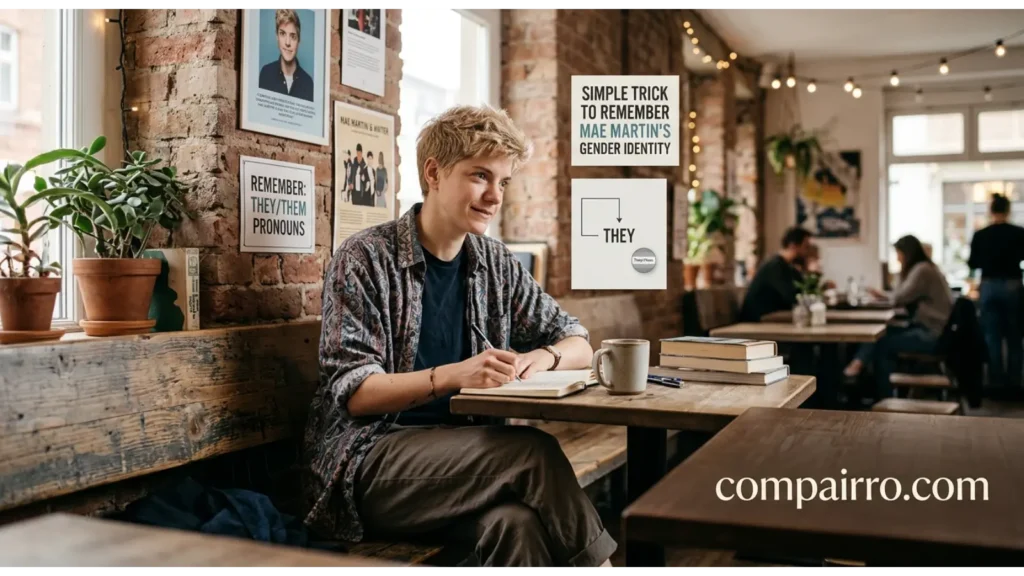
Simple Trick to Remember Mae Martin’s Gender Identity
If you sometimes forget Mae Martin’s gender identity, use this easy memory trick:
Mae Martin = Non-binary = They/Them
Think of it this way:
- Male = Man.
- Female = Woman.
- Non-binary = Not exclusively a man or a woman.
Simple Examples
Example 1: Someone asks, “Is Mae Martin male or female?”
Answer: “Mae Martin identifies as non-binary.”
Example 2: Someone asks, “What pronouns does Mae use?”
Answer: “Mae uses they/them pronouns.”
Example 3: Someone asks, “What does non-binary mean?”
Answer: “It describes a gender identity that is not exclusively male or female.”
The easiest thing to remember is that Mae Martin identifies as non-binary.
FAQs:
1. Is Mae Martin male or female?
Mae Martin identifies as non-binary, meaning Mae does not identify exclusively as male or female.
2. Is Mae Martin a man or a woman?
Mae Martin does not identify exclusively as a man or a woman. Mae publicly identifies as non-binary.
3. What are Mae Martin’s pronouns?
Mae Martin uses they/them pronouns.
4. Is Mae Martin transgender?
Mae Martin identifies as non-binary. Non-binary people may also identify as transgender, but the terms do not automatically mean the same thing.
5. Where is Mae Martin from?
Mae Martin is Canadian and is known for comedy, acting, and writing.
6. What is Mae Martin famous for?
Mae Martin is known for comedy performances and television work, including the comedy series Feel Good.
7. What does non-binary mean?
Non-binary describes a gender identity that does not fit exclusively into the categories of man or woman.
Conclusion
So, is Mae Martin male or female? The correct answer is that Mae Martin identifies as non-binary, rather than exclusively male or female.
Mae is a Canadian comedian, actor, and writer who uses they/them pronouns. Their work in comedy and television has introduced them to audiences around the world.
Understanding gender identity does not need to be difficult. The most important thing is to respect how people describe themselves and use their correct pronouns.
Easy memory rule: Mae Martin = Non-binary = They/Them.
This is the simplest and most accurate way to understand Mae Martin’s gender identity.

Sara Taylor is a passionate English content writer who specializes in word meanings, spelling comparisons, and modern slang explanations. She creates easy-to-understand articles that help readers avoid common English mistakes and improve their writing skills. Her content focuses on simple learning, real-life examples, and clear explanations for everyday readers.