Imagine planting beautiful sunflowers in your garden. They grow tall, produce bright yellow flowers, and make your outdoor space look amazing. However, after the flowers fade, you may notice that the plants begin to dry out and die. This can make you wonder: are sunflowers annuals or perennials?
It is a common question among beginner gardeners and people who love growing flowers. Some sunflowers appear every year, while others need to be planted again. This difference can be confusing, especially when you see new sunflower plants growing in the same garden.
The answer depends on the type of sunflower you grow. Most common garden sunflowers are annuals, which means they complete their life cycle in one growing season. However, some sunflower varieties are perennials and can return year after year.
You may come across this question while researching gardening tips, reading plant guides, shopping for sunflower seeds, or watching gardening videos on social media. Understanding the difference can help you choose the right sunflower for your garden, plan your planting season, and take better care of your flowers.
Whether you are growing sunflowers at home, learning about plants at school, or planning a beautiful flower garden, knowing their life cycle is useful.
In this guide, you’ll learn the meaning, examples, usage, differences, common mistakes, and simple explanations in easy English.
Are Sunflowers Annuals or Perennials? – Quick Answer
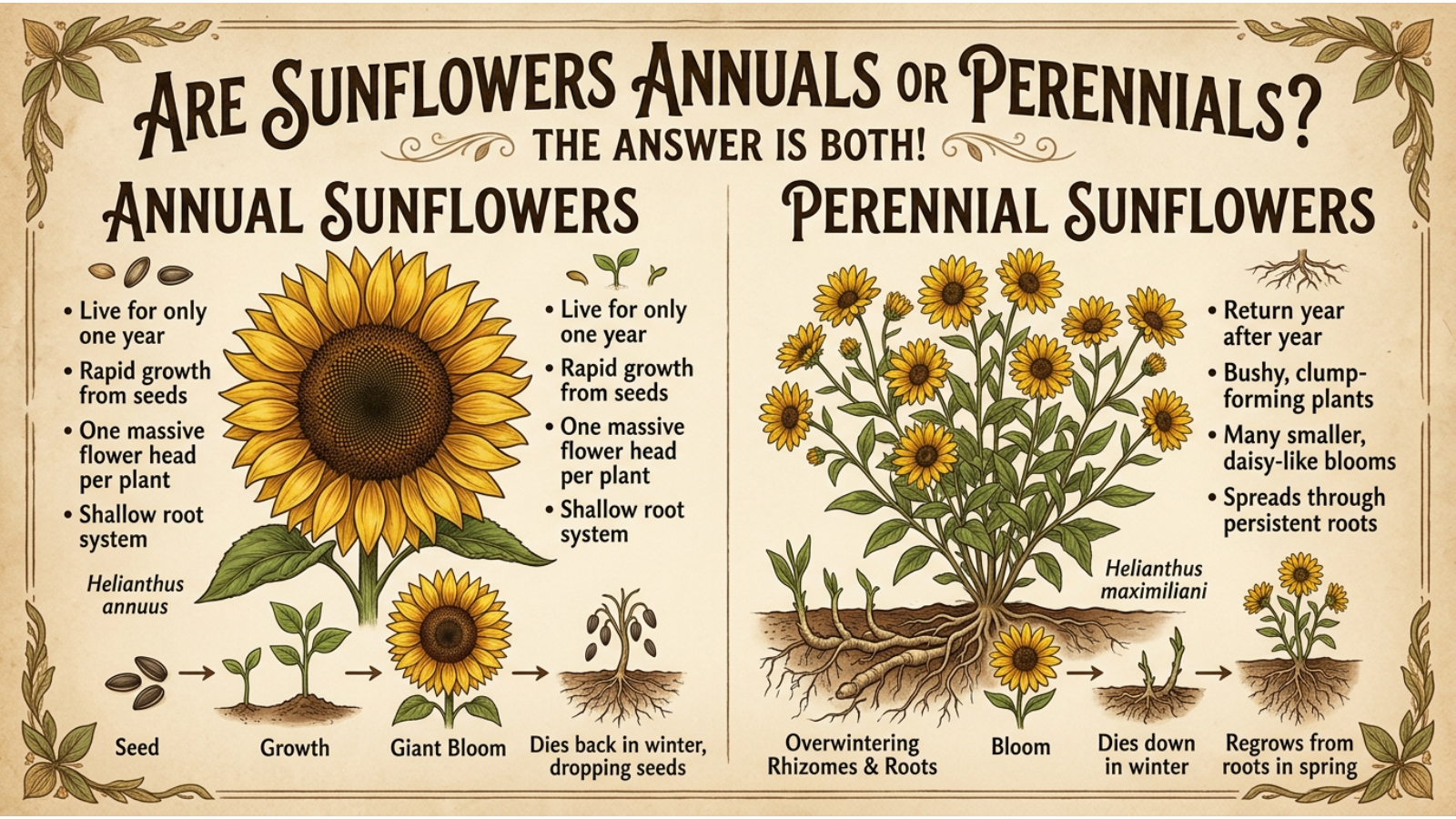
Sunflowers can be both annuals and perennials, depending on their variety. Most common sunflowers (Helianthus annuus) are annual plants. They grow, flower, produce seeds, and die within one growing season.
However, perennial sunflowers can survive underground and grow again the following year.
Here are some simple examples:
- Annual sunflower: Common giant sunflowers that grow from seeds and die after one season.
- Perennial sunflower: Maximilian sunflowers that can return every year.
- Wild sunflower: Some wild varieties are perennial and spread through underground roots.
Simple rule:
👉 Annual = Grows for one season.
👉 Perennial = Returns year after year.
The Origin of Sunflowers
Sunflowers belong to the Helianthus genus, which is part of the daisy family (Asteraceae).
They originally came from North America, where Indigenous communities grew them for food, seeds, and other useful purposes.
The common sunflower, known scientifically as Helianthus annuus, became popular around the world because of its large flower heads, useful seeds, and beautiful appearance.
Over time, gardeners developed many different sunflower varieties. Some were bred for large flowers and seed production, while others became popular as decorative garden plants.
Perennial sunflower species also became popular because they can grow back without needing to be planted every year.
Today, sunflowers are grown in gardens, farms, parks, and flower fields worldwide.
British English vs American English Usage
There is no major difference between British and American English when discussing annual and perennial sunflowers.
Both use the same gardening terms and understand the difference in the same way.
| Feature | British English | American English | Notes |
|---|---|---|---|
| Annual | Annual | Annual | Lives for one growing season |
| Perennial | Perennial | Perennial | Returns year after year |
| Sunflower | Sunflower | Sunflower | Same spelling |
| Gardening | Gardening | Gardening | Same general meaning |
| Growing season | Growing season | Growing season | Refers to the plant’s active growing period |
Example:
- British English: Sunflowers are usually grown as annual plants.
- American English: Sunflowers are usually grown as annual plants.
Both sentences are correct.
Which One Should You Grow?
Choosing between annual and perennial sunflowers depends on your gardening goals, available space, and local climate.
Here is how to decide:
Choose annual sunflowers if:
- You want large, bright yellow flowers.
- You enjoy planting new seeds every spring or suitable growing season.
- You want sunflowers for decoration or seed production.
- You like trying different sunflower varieties each year.
- You want a seasonal flower display.
Choose perennial sunflowers if:
- You want flowers that return every year.
- You prefer plants that do not need replanting annually.
- You have enough garden space for established plants.
- You want a long-term flower garden.
- You enjoy attracting pollinators such as bees and butterflies.
Both types can make your garden beautiful. The best choice depends on what you want from your plants.
Common Mistakes With Sunflowers
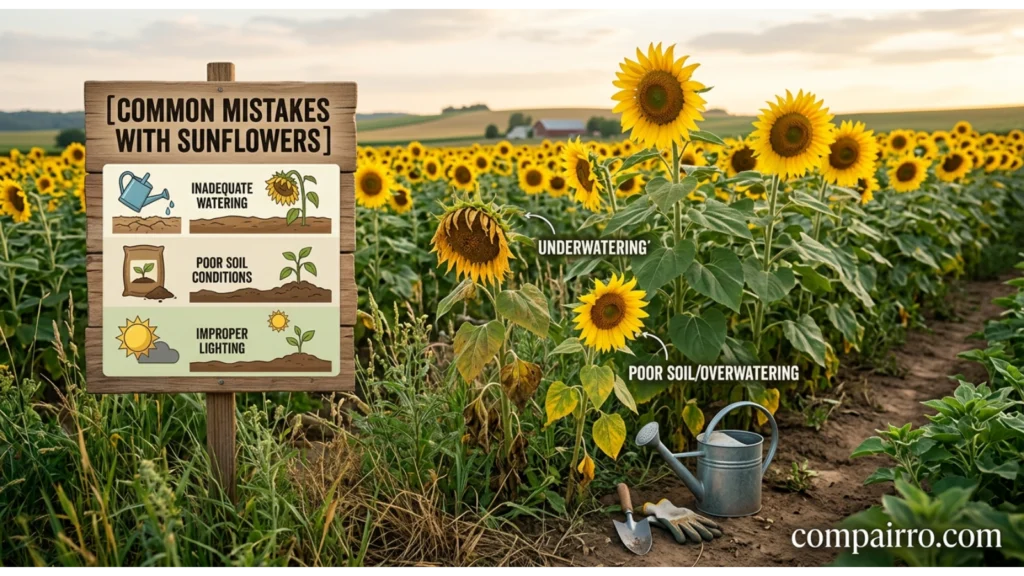
Many beginner gardeners misunderstand how sunflowers grow. Here are four common mistakes to avoid.
Mistake 1: Thinking all sunflowers are annuals
❌ Incorrect: Every sunflower dies permanently after one season.
✔ Correct: Most common sunflowers are annuals, but some species are perennials.
Mistake 2: Thinking new growth always means the same plant returned
❌ Incorrect: A new sunflower growing in the same place must be the old plant.
✔ Correct: It may be a new plant that grew from seeds dropped by the previous sunflower.
Mistake 3: Assuming perennial sunflowers never need care
❌ Incorrect: Perennial sunflowers can grow without water, sunlight, or maintenance.
✔ Correct: They still need suitable soil, sunlight, water, and occasional care.
Mistake 4: Planting every sunflower variety in the same way
❌ Incorrect: All sunflower varieties have identical growing needs.
✔ Correct: Different varieties may have different space, soil, and growing requirements.
Sunflowers in Everyday Examples
Sunflowers are useful plants in many everyday situations. Here are some practical examples.
1. Home Gardening
A homeowner plants annual sunflowers in the backyard during the growing season. After flowering, the plants produce seeds and eventually die.
2. School Projects
A student learns that common sunflowers are annuals while certain wild sunflower species are perennials.
3. Social Media
A gardening creator shares a video showing perennial sunflowers returning to the same garden after winter.
4. Daily Life
Someone notices new sunflowers growing near an old plant. They discover that the seeds dropped by the previous flowers have started growing.
5. Flower Decoration
A person grows annual sunflowers to create fresh flower arrangements for a summer celebration.
These examples show why understanding sunflower varieties is important.
Are Sunflowers Annuals or Perennials? – Google Trends & Usage Data
People search for the question “are sunflowers annuals or perennials” because they want to understand how these flowers grow and whether they need to plant them again every year.
Some common reasons include:
- Choosing sunflower seeds for a home garden.
- Learning whether sunflowers survive winter.
- Finding flowers that return every year.
- Understanding the difference between annual and perennial plants.
- Solving problems with sunflower growth.
Search interest around the world
This gardening question may interest people in different countries:
- United States: Gardeners often research sunflower varieties, planting seasons, and seed production.
- United Kingdom: People may search for sunflower care and flowers suitable for home gardens.
- India: Gardeners may look for sunflower growing tips and suitable varieties.
- Pakistan: People may search for sunflower planting seasons, gardening advice, and flower care.
- Canada: Gardeners may research annual and perennial plants that can handle cold winters.
- Australia: People may look for sunflower varieties suitable for different climates.
Important: These are examples of possible search interests, not verified Google Trends rankings. Exact country rankings and search popularity can change over time.
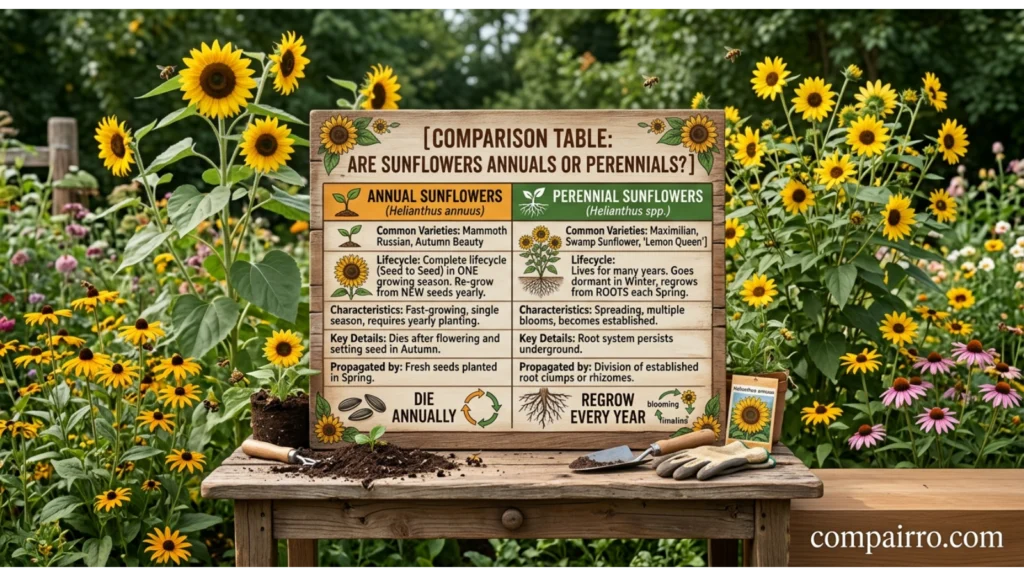
Comparison Table: Are Sunflowers Annuals or Perennials?
The following table explains the main differences between annual and perennial sunflowers.
| Feature | Annual Sunflowers | Perennial Sunflowers |
|---|---|---|
| Life cycle | One growing season | Several years |
| Flowering | Usually once in their life cycle | Can flower in multiple years |
| Growth | Grown from seeds | Often grow from established roots |
| Replanting | Usually needed each year | Usually not needed |
| Winter survival | Parent plant usually dies | Roots may survive winter |
| Maintenance | Seasonal planting and care | Ongoing garden care |
| Examples | Common giant sunflower | Maximilian sunflower |
| Garden use | Seasonal decoration | Long-term planting |
Main difference: Annual sunflowers complete their life cycle in one season, while perennial sunflowers can grow again from surviving roots.
Sunflowers in Professional Life
Sunflowers are not only beautiful garden plants. They also have important uses in agriculture, gardening, and the flower industry.
Here are some professional uses:
1. Agriculture
Farmers grow common sunflowers for seeds and sunflower oil. These crops are usually annual varieties.
2. Landscaping
Garden designers use perennial sunflowers in outdoor spaces because they can return year after year.
3. Flower Businesses
Florists use annual sunflowers for bouquets, decorations, and special events.
4. Gardening Services
Professional gardeners help people choose suitable sunflower varieties based on garden space, soil, and climate.
5. Seed Production
Agricultural businesses grow sunflowers to collect seeds for food, planting, and other products.
Understanding annual and perennial varieties helps professionals select the right plants for different purposes.
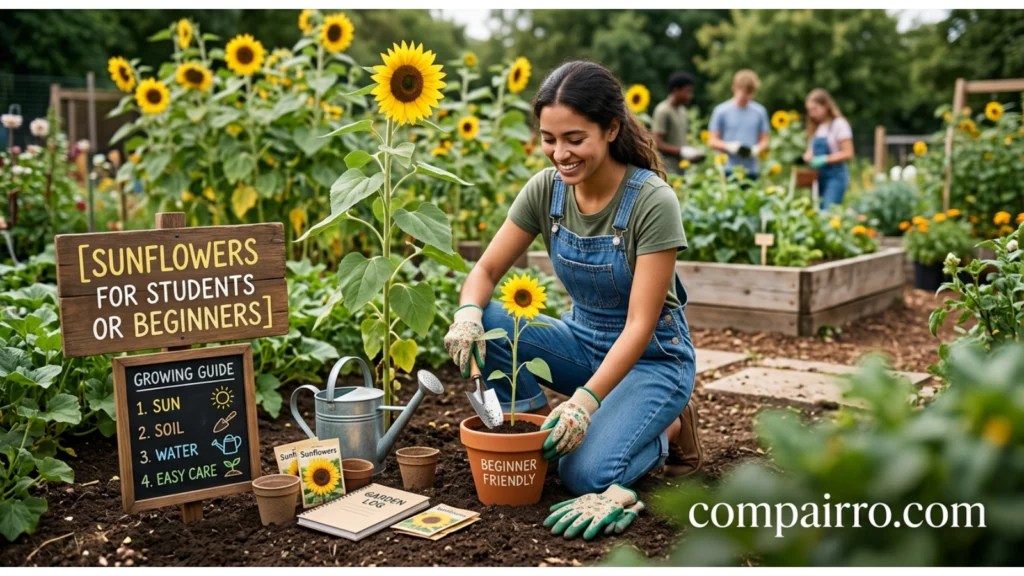
Sunflowers for Students or Beginners
If you are new to gardening, understanding the difference between annual and perennial sunflowers may seem difficult.
However, the idea is very simple.
An annual sunflower grows from a seed, develops leaves and flowers, produces new seeds, and completes its life cycle within one growing season.
A perennial sunflower can survive after its flowering season. Its roots remain alive under suitable conditions, allowing new growth to appear the following year.
Easy tips for beginners:
- Check the scientific name before buying sunflower seeds.
- Look for the words “annual” or “perennial” on the seed packet.
- Choose a sunny location for your plants.
- Use soil that drains water properly.
- Water young plants regularly, depending on weather and soil conditions.
- Give larger sunflower varieties enough space.
- Remember that climate affects how well perennial varieties survive winter.
For beginners, common annual sunflowers are often a simple starting choice.
Signs or Characteristics Related to Sunflowers
Annual and perennial sunflowers have several features that help you understand their growth patterns.
Characteristics of annual sunflowers:
- Complete their life cycle in one growing season.
- Grow from seeds.
- Produce flowers and seeds.
- Usually die after producing mature seeds.
- Commonly include large garden sunflower varieties.
- Need fresh planting for another crop.
Characteristics of perennial sunflowers:
- Can live for several years.
- Grow again from established roots.
- May spread through underground stems or roots.
- Can produce flowers in more than one growing season.
- Often form larger groups over time.
- Need suitable winter conditions to survive.
Common sunflower features:
- Bright yellow petals in many varieties.
- Large flower heads in some types.
- Green leaves and strong stems.
- A central flower head that can produce seeds.
- A preference for sunny growing locations.
Remember that not every sunflower looks the same. Different varieties can have different flower colors, heights, and growth habits.
Simple Trick to Remember Are Sunflowers Annuals or Perennials
Here is an easy way to remember the difference.
👉 Annual = One growing season.
👉 Perennial = Returns for more years.
Think of it this way:
Imagine planting a sunflower seed in spring. The plant grows, produces a beautiful flower, makes seeds, and dies when its life cycle ends.
That is an annual sunflower.
Now imagine planting a perennial sunflower. After its flowers fade, its roots survive suitable winter conditions. When the next growing season arrives, new stems and leaves appear.
That is a perennial sunflower.
Easy memory trick:
- Annual = Plant again.
- Perennial = Grows again.
This simple rule can help you remember the difference whenever you shop for sunflower seeds or plan your garden.
FAQs:
1. Are most sunflowers annuals or perennials?
Most common garden sunflowers are annuals. However, some sunflower species are perennials and can return every year.
2. Do sunflowers come back every year?
Some do, but not all. Perennial sunflowers return from surviving roots, while annual sunflowers usually need to be planted again.
3. Can sunflowers survive winter?
Perennial sunflower roots can survive winter in suitable climates. Most common annual sunflower plants do not survive winter.
4. Are giant sunflowers annuals or perennials?
Most popular giant sunflower varieties are annuals. They grow, flower, produce seeds, and complete their life cycle in one season.
5. What is an example of a perennial sunflower?
Maximilian sunflower (Helianthus maximiliani) is a well-known example of a perennial sunflower.
6. Do perennial sunflowers spread?
Yes. Some perennial varieties spread through underground roots or stems and can form larger groups over time.
7. How can I tell if my sunflower is annual or perennial?
Check the plant label or scientific name. You can also research the variety because appearance alone may not tell you whether it is annual or perennial.
Conclusion
So, are sunflowers annuals or perennials? The answer is that they can be both. Most common garden sunflowers are annuals, meaning they complete their life cycle in one growing season. However, certain varieties, such as Maximilian sunflowers, are perennials that can return year after year.
The main difference is how long the plant lives. Annual sunflowers need fresh planting for another growing season, while perennial sunflowers can grow again from their surviving roots.
Remember this simple rule: Annual means one season, while perennial means returning year after year.
Once you understand this difference, choosing the right sunflower variety and planning your garden becomes much easier.

Sara Taylor is a passionate English content writer who specializes in word meanings, spelling comparisons, and modern slang explanations. She creates easy-to-understand articles that help readers avoid common English mistakes and improve their writing skills. Her content focuses on simple learning, real-life examples, and clear explanations for everyday readers.