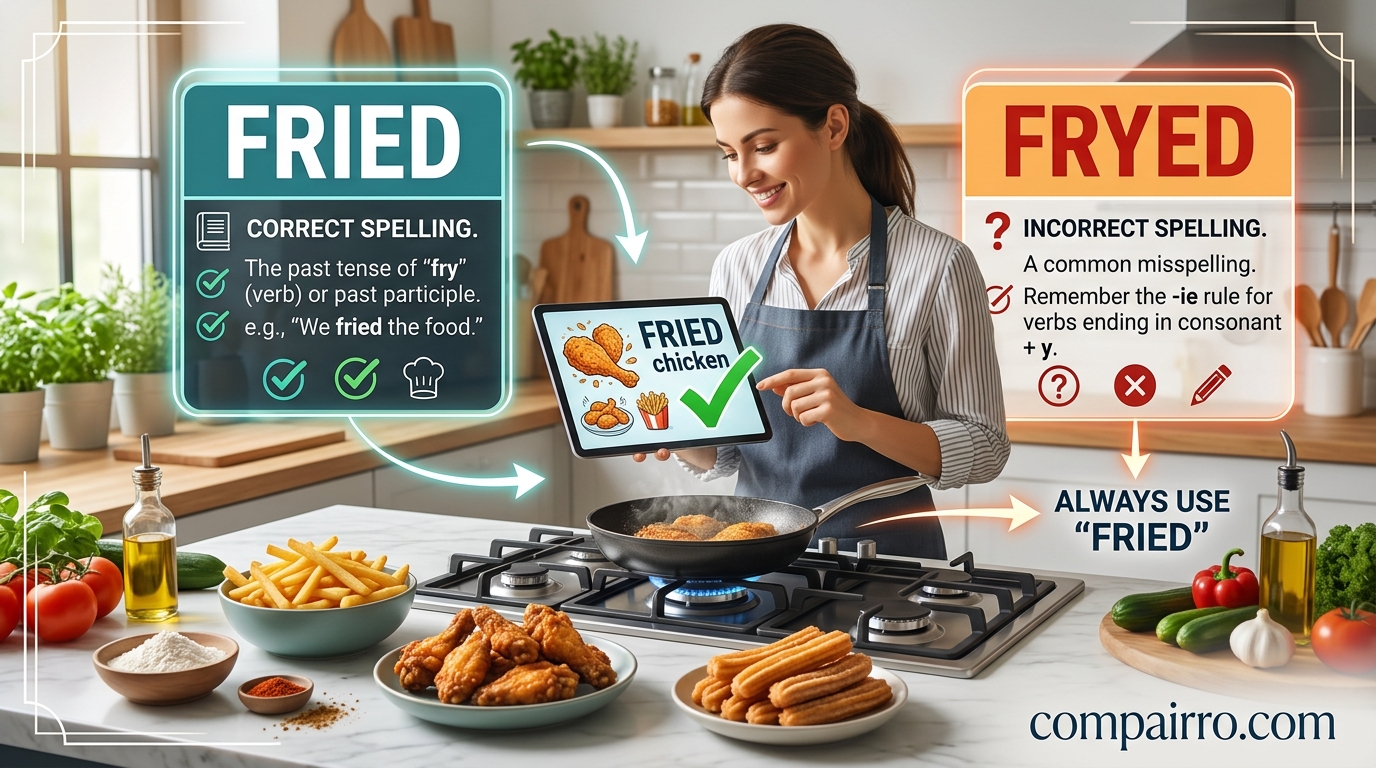
Have you ever been writing a message like “I ate fried chicken” and suddenly thought—wait, is it fried or fryed? Many people get confused with this spelling, especially when texting, writing school homework, or posting on social media.
This confusion happens because English spelling does not always follow simple rules. When we hear the word, both “fried” and “fryed” can sound similar, so people often guess the spelling. You might also see both versions online, which makes it even more confusing.
This word is commonly used in daily life. We see it in food menus, restaurant ads, cooking videos, recipes, and casual conversations. Students also use it in essays, and people often type it in chats or social media captions. That’s why understanding the correct spelling is important.
Using the wrong spelling may not completely stop people from understanding you, but it can make your writing look less correct or unprofessional. That’s why learning the right form matters, especially for schoolwork, blogging, or formal writing.
In this guide, you’ll learn the meaning, examples, usage, differences, common mistakes, and simple explanations in easy English.
FRYED OR FRIED – QUICK ANSWER
👉 Correct spelling = Fried
“Fried” is the correct past form of the verb “fry,” which means cooking food in hot oil.
Examples:
- I ate fried rice yesterday. ✅
- She made fried chicken for dinner. ✅
- We love fried potatoes. ✅
Simple rule:
👉 If the verb ends in “y” like fry, the correct past form is fried, not fryed.
Memory trick:
Think: fry → fried (y changes to i)
THE ORIGIN OF FRIED
The word fry comes from Old French word frire, which means “to cook in hot fat or oil.” Over time, English adopted this word and made it part of everyday cooking language.
The spelling rule changed in English grammar:
- fry → fried (not fryed)
This is because English often changes “y” into “i” when forming past tense words (like try → tried, carry → carried).
On social media and internet chats, people sometimes mistakenly write “fryed,” but it is not standard English.
BRITISH ENGLISH VS AMERICAN ENGLISH USAGE
Good news: there is no difference between British and American English for this word. Both use fried only.
| Feature | British English | American English | Notes |
|---|---|---|---|
| Spelling | Fried | Fried | Same spelling |
| Usage | Common | Common | Used in food & grammar |
| Meaning | Cooked in oil | Cooked in oil | No difference |
So no matter where you are, the correct word stays the same.
WHICH ONE SHOULD YOU USE?
You should always use “fried” in all situations.
Use “fried” when:
- Writing school essays
- Talking about food
- Writing blogs or articles
- Posting on social media
- Sending messages
Avoid “fryed” because:
- It is incorrect spelling
- It looks like a typing error
- It is not used in formal English
COMMON MISTAKES WITH FRIED OR FRYED
Mistake 1
❌ I ate fryed chicken
✔ I ate fried chicken
Mistake 2
❌ She cooked fryed rice
✔ She cooked fried rice
Mistake 3
❌ Fryed potatoes are tasty
✔ Fried potatoes are tasty
Mistake 4
❌ He likes fryed snacks
✔ He likes fried snacks
FRIED IN EVERYDAY EXAMPLES
Work
- The restaurant sells fried food every day.
School
- My essay is about fried snacks and health.
Social Media
- “Craving some fried chicken 🍗”
Daily Life
- We had fried eggs for breakfast.
Text Messages
- “Let’s eat fried rice tonight!”
FRIED – GOOGLE TRENDS & USAGE DATA

People search “fried or fryed” because they are unsure about spelling. It is a very common grammar confusion topic.
Popular countries searching this:
- United States 🇺🇸
- United Kingdom 🇬🇧
- India 🇮🇳
- Pakistan 🇵🇰
- Canada 🇨🇦
- Australia 🇦🇺
Why people search it:
- Confusion in spelling
- School homework doubts
- Writing captions or blogs
- Auto-correct mistakes
This keyword is popular because food words are used daily in conversations and social media.
COMPARISON TABLE: FRIED OR FRYED
| Feature | Fried | Fryed |
|---|---|---|
| Correct spelling | Yes | No |
| Grammar use | Past tense of fry | Incorrect form |
| Usage | Global standard | Rare mistake |
| Meaning | Cooked in oil | No meaning in grammar |
| Acceptance | High | Not accepted |
FRIED IN PROFESSIONAL LIFE
In professional writing, “fried” is very common in:
- Restaurant menus
- Food blogs
- Cooking shows
- Nutrition articles
Using correct spelling is important because it shows:
- Good grammar skills
- Professional writing quality
- Clear communication
Mistakes like “fryed” can make writing look unpolished.
FRIED FOR STUDENTS OR BEGINNERS

Students often get confused because:
- The word “fry” ends with “y”
- English spelling rules feel tricky
- They hear different spellings online
Easy tip for students:
- fry → fried (y changes to i)
Practice helps you remember it better.
SIGNS OR CHARACTERISTICS RELATED TO FRIED
- Food cooked in oil
- Crispy texture
- Golden-brown color
- Common in fast food
- Used in snacks like fries, chicken, fish
- Often oily or crunchy
- Popular worldwide dish style
SIMPLE TRICK TO REMEMBER FRIED
👉 fry = action (present)
👉 fried = done (past)
Think of it this way:
“When cooking is finished, the ‘y’ changes into ‘i’ and becomes fried.”
Example:
- I fry chicken today → I fried chicken yesterday
FAQS:
1. Is fryed a correct word?
No, “fryed” is incorrect. The correct word is “fried.”
2. What is the meaning of fried?
It means food cooked in hot oil or fat.
3. Why is it fried and not fryed?
Because English changes “y” to “i” in past tense forms.
4. Can I use fryed in writing?
No, it is not standard English.
5. Is fried used in British and American English?
Yes, both use “fried” only.
6. What foods are usually fried?
Chicken, potatoes, fish, eggs, and snacks.
7. How can I remember the spelling?
Remember: fry → fried (y becomes i).
CONCLUSION
The correct spelling is very simple: fried, not fryed. It is used in everyday English to talk about food cooked in hot oil. Whether you are writing for school, chatting with friends, or posting online, always use “fried.”
The most important rule to remember is:
👉 fry → fried (change y to i)
Once you learn this, you will never get confused again.

Sara Taylor is a passionate English content writer who specializes in word meanings, spelling comparisons, and modern slang explanations. She creates easy-to-understand articles that help readers avoid common English mistakes and improve their writing skills. Her content focuses on simple learning, real-life examples, and clear explanations for everyday readers.