ima meaning in text is a common question for people who see this abbreviation in text messages, social media comments, or online conversations. If someone sends you “ima call you later” or “ima be there soon,” you might wonder what IMA stands for and if it has a special meaning. Internet slang often uses shortened words to make messages faster and more casual. IMA is one such expression, especially in informal English conversations.
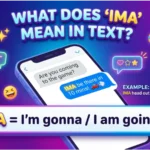
In most texting situations, IMA is a casual spelling of “I’m going to” or “I’m gonna.” People use it when talking about something they plan or intend to do. For example, “ima eat now” means “I’m going to eat now.” Although IMA is easy to understand once you know it, its meaning can depend on the sentence and context.
Quick Answer:
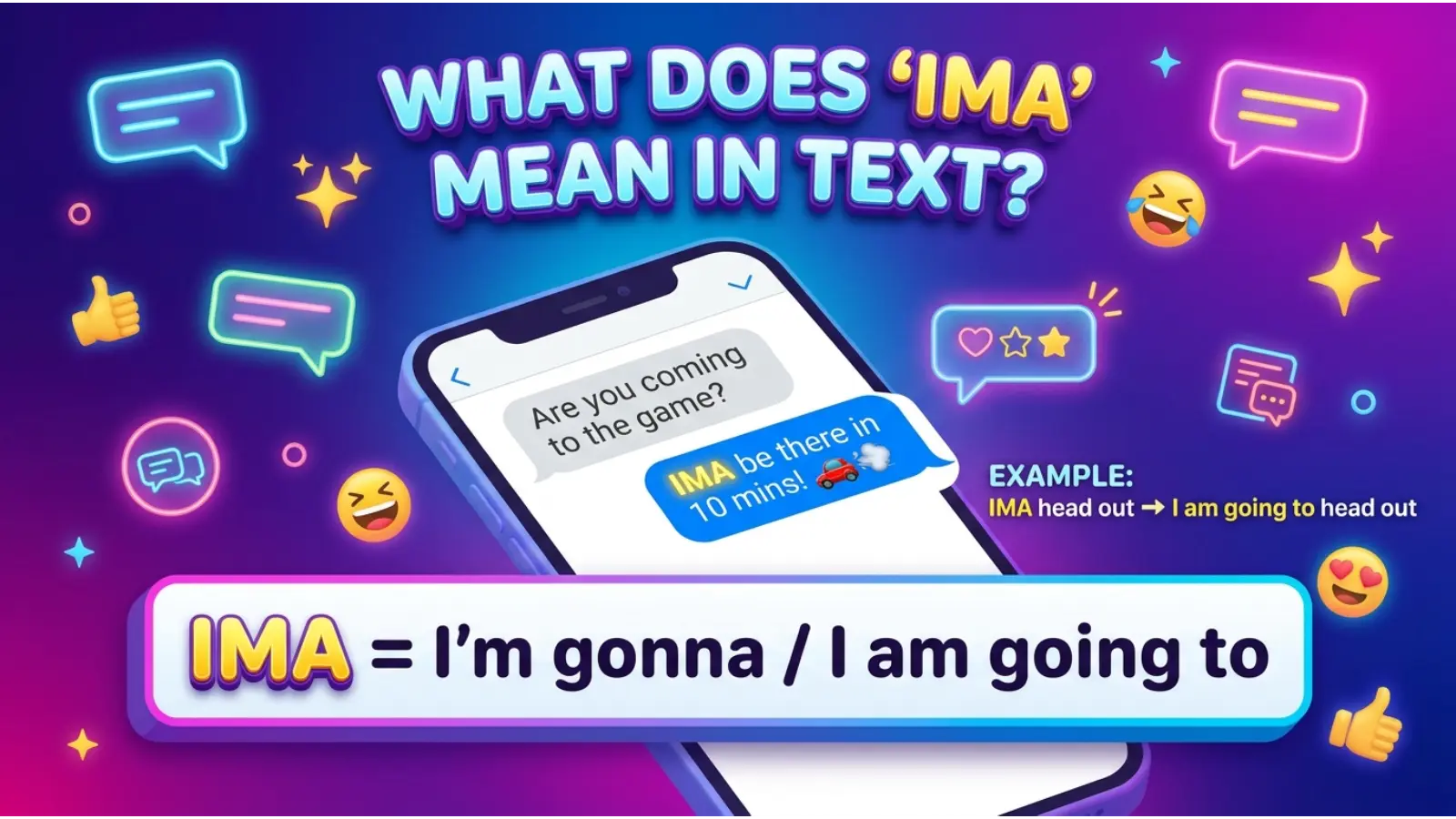
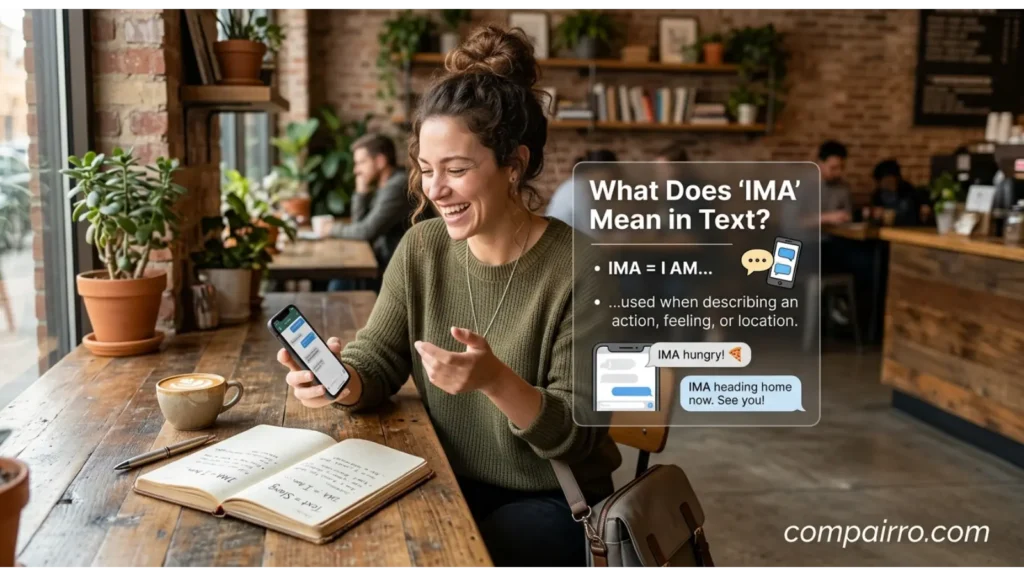
IMA usually means “I’m going to” or “I’m gonna” in texting. It is an informal way to express an intention or a future action, such as “ima call you later.”
What Does IMA Mean in Text?
The most common IMA meaning in text is “I’m going to.” It is a casual, shortened way of saying that you intend to do something.
People often use IMA instead of writing a complete sentence because texting is usually informal and fast.
For example:
- “Ima sleep now.” — I’m going to sleep now.
- “Ima call you later.” — I’m going to call you later.
- “Ima try my best.” — I’m going to try my best.
- “Ima be there soon.” — I’m going to be there soon.
IMA is common in informal online conversations, particularly in casual English and internet slang. It is not generally considered standard formal writing.
IMA Full Form and Definition
In texting slang, IMA is commonly understood as a shortened form of “I’m going to” or “I’m gonna.”
It communicates a plan, intention, or action that someone expects to take.
Here is a simple breakdown:
- IMA: Informal texting expression
- Meaning: I’m going to / I’m gonna
- Purpose: Expressing an intention or future action
- Tone: Casual and conversational
- Best use: Messages with friends and people you know well
For example, “ima finish my homework” means “I’m going to finish my homework.”
The exact wording may vary, but the basic idea is that the person is talking about something they plan to do.
IMA Meaning in Different Contexts
IMA can be used in different situations depending on the message.
1. IMA in Casual Conversations
Friends often use IMA to talk about their plans.
Example:
“ima come over after lunch.”
This means the person plans to visit after lunch.
2. IMA on Social Media
On platforms such as TikTok, Instagram, Snapchat, and X, IMA may appear in captions, comments, and direct messages.
Example:
“ima post the video tonight.”
The person is saying they plan to post a video later.
3. IMA in Emotional Messages
IMA can also appear when someone expresses feelings or makes a promise about what they intend to do.
Example:
“ima always support you.”
This means “I’m going to support you.” Depending on the conversation, it may express care or reassurance.
However, IMA itself does not automatically indicate a particular emotion. The rest of the message provides the emotional meaning.
4. IMA in Gaming Chats
Gamers may use IMA to communicate their next move or plans during a game.
Example:
“ima join your team.”
This means the person plans to join the team.
5. IMA in Other Contexts
IMA can also stand for different things in professional, medical, organizational, or technical settings. Therefore, if it appears in a formal document rather than a casual message, do not automatically assume it means “I’m going to.”

Is IMA Rude, Offensive, or Neutral?
IMA is generally neutral and informal. It does not contain an offensive word or an insult.
Its tone depends on the sentence in which it appears.
For example:
- “ima help you” sounds friendly.
- “ima call you later” sounds casual.
- “ima prove you wrong” may sound argumentative.
- “ima finish this today” sounds determined.
The abbreviation itself is not rude. However, the words surrounding it may communicate anger, frustration, confidence, or another emotion.
Where Is IMA Commonly Used?
IMA is most often seen in informal digital communication, including:
- Text messages
- Instagram DMs and comments
- TikTok captions
- Snapchat conversations
- Discord chats
- Online gaming
- Casual group chats
- Informal social media posts
It is particularly useful when people want to communicate quickly without using formal grammar.
For professional emails, academic assignments, or official documents, writing “I’m going to” is usually a better choice.
Real-Life Conversation Examples
Here are examples of how IMA may appear in everyday conversations.
Friendly Example
Friend A: “Are you coming to the party?”
Friend B: “Yeah, ima be there at 7.”
Meaning: “Yes, I’m going to be there at 7.”
Casual Example
Person A: “What are you doing tonight?”
Person B: “ima watch a movie.”
Meaning: “I’m going to watch a movie.”
Determined Example
Friend A: “Do you think you can finish the project?”
Friend B: “ima give it my best.”
Meaning: “I’m going to give it my best.”
Argumentative Example
Person A: “You can’t finish this on time.”
Person B: “ima prove you wrong.”
Meaning: “I’m going to prove you wrong.”
In this example, IMA expresses determination. The argumentative tone comes from the complete sentence, not from the abbreviation itself.
Emotional and Psychological Meaning of IMA
IMA can help people communicate their intentions in a direct and relaxed way. Depending on the sentence, it may express:
- Confidence: “ima win this game.”
- Determination: “ima keep trying.”
- Excitement: “ima see you tomorrow!”
- Reassurance: “ima help you.”
- Frustration: “ima do it myself.”
These emotional meanings come from the words and situation surrounding IMA. The abbreviation alone does not reveal someone’s feelings or intentions with certainty.
Origin and Background of IMA
IMA developed as part of informal English and online texting culture. It reflects the way people shorten spoken expressions when writing messages quickly.
The phrase “I’m gonna” is a common informal pronunciation of “I’m going to.” In casual writing, people sometimes shorten it further to IMA.
This type of abbreviation fits a broader internet language trend that includes expressions such as GONNA, WANNA, IDK, BTW, and BRB.
IMA is especially suited to relaxed conversations, where speed and a natural speaking style matter more than formal grammar.
IMA vs. Similar Texting Slang
I’m going to is related to several other common informal expressions, but each has a slightly different use.
| Slang | Meaning | Example |
|---|---|---|
| IMA | I’m going to / I’m gonna | IMA call you later. |
| GONNA | Going to | I’m gonna eat now. |
| WANNA | Want to | I wanna go home. |
| FINNA | Informal expression meaning about to or intending to | I’m finna leave. |
| IDK | I don’t know | IDK what to do. |
| BTW | By the way | BTW, call me later. |
| BRB | Be right back | BRB, one minute. |
IMA and GONNA are similar because both can express a future intention. However, their spelling and grammar differ.
When Should You Use IMA?
IMA is suitable when you are chatting casually with friends or people who understand internet slang.
You can use it when:
- Talking about future plans
- Explaining what you intend to do
- Sending quick text messages
- Writing informal social media captions
- Chatting during online games
For example, “ima finish this later” is a natural informal message in a casual conversation.
When Should You Avoid Using IMA?
Although IMA is widely understandable in many casual settings, it is not ideal for every situation.
Avoid it in:
- Formal emails
- School essays
- Job applications
- Business proposals
- Official reports
- Professional messages to unfamiliar people
Instead of writing “ima send the report tomorrow,” write “I’m going to send the report tomorrow.”
The complete version sounds more professional and is easier for all readers to understand.
Polite Alternatives to IMA
IMA is not offensive, so you do not need to replace it for politeness alone. However, you may want a clearer or more formal expression.
Useful alternatives include:
- I’m going to
- I plan to
- I intend to
- I will
- I’m planning to
- I expect to
For example:
Casual: “ima call you tomorrow.”
Clear: “I’m going to call you tomorrow.”
Professional: “I plan to contact you tomorrow.”
Choose the alternative that matches your audience and the level of formality you need.
Why Do People Use IMA?
People use IMA because it makes messages short, quick, and conversational.
Common reasons include:
- Saving time while typing
- Matching the way people speak
- Keeping messages casual
- Expressing plans quickly
- Following internet slang trends
It can also make a message feel more relaxed among friends who regularly use informal English.
Is IMA Safe for Social Media?
Yes. IMA is generally harmless slang and is not inherently offensive.
You can use it in casual social media posts, comments, and private chats. However, clear language is usually better when posting important information or communicating with a broad audience.
For example, “I’m going to upload the video tonight” may be clearer to a wider audience than “ima upload the video tonight.”
Common Misunderstandings About IMA
Some people may confuse IMA with other abbreviations or assume it is a typo.
Here are a few things to remember:
- IMA usually means “I’m going to” in casual texting.
- It does not mean the same thing as IDK or BTW.
- It is informal, not necessarily incorrect in every casual setting.
- In professional contexts, IMA may have a different meaning.
- The full sentence helps confirm the intended interpretation.
Variations and Types of IMA
You may see IMA written in several ways:
- IMA: Capitalized version
- ima: Common lowercase texting style
- I’ma: Informal spelling that makes the intended phrase more visible
- I’m gonna: A more recognizable informal phrase
- I’m going to: The standard, clearer form
These forms can communicate a similar idea, although their suitability depends on the situation.
How to Respond When Someone Uses IMA
Usually, you do not need to ask what IMA means once you understand the context. Simply respond to the person’s plan or statement.
Example 1
Them: “ima call you later.”
You: “Okay, talk to you then!”
Example 2
Them: “ima start studying now.”
You: “Good luck with your studies!”
If you are unsure what the person means, ask them to clarify. This is especially helpful when IMA appears in a technical or professional conversation.
Regional and Cultural Usage
IMA is used in informal English-language communication, but familiarity with it varies across regions and online communities.
Some people regularly use shortened spellings that reflect spoken English, while others prefer standard grammar even in text messages.
Its use may also depend on age group, personal preference, and the platform. There is no need to use IMA just because other people do; choose the writing style that feels natural and clear to you.
FAQs About IMA Meaning in Text
1. What does IMA mean in texting?
IMA usually means “I’m going to” or “I’m gonna.” It is used to describe something a person intends to do.
2. What is the full form of IMA in slang?
In casual texting, IMA is commonly used as a shortened form of “I’m going to.” The exact meaning may differ in professional or technical contexts.
3. Is IMA the same as I’m gonna?
They generally communicate the same idea. IMA is a shorter informal spelling, while “I’m gonna” is a more recognizable spoken-style expression.
4. Is IMA rude or disrespectful?
No. IMA is not inherently rude or disrespectful. It is an informal abbreviation whose tone depends on the rest of the message.
5. What does IMA mean on Instagram or Snapchat?
On Instagram and Snapchat, IMA usually means “I’m going to” or “I’m gonna.” For example, “ima text you later” means “I’m going to text you later.”
6. Should I use IMA in formal writing?
It is better to avoid IMA in formal writing. Use “I’m going to,” “I plan to,” or “I intend to” instead.
Conclusion
The ima meaning in text is usually “I’m going to” or “I’m gonna.” People use this informal expression to communicate plans, intentions, and future actions in everyday chats and social media conversations.
For example, “ima call you later” simply means “I’m going to call you later.” The abbreviation is generally neutral and friendly, but it is best suited to casual communication.
If you want to write professionally or make your message clear to a wider audience, use the complete phrase instead. Understanding the context, audience, and tone will help you use IMA naturally and interpret it correctly when someone sends it to you.

Sara Taylor is a passionate English content writer who specializes in word meanings, spelling comparisons, and modern slang explanations. She creates easy-to-understand articles that help readers avoid common English mistakes and improve their writing skills. Her content focuses on simple learning, real-life examples, and clear explanations for everyday readers.