ihy meaning in text is something people often search for after receiving a short message from a friend, crush, or social media contact. You might see IHY in an Instagram DM, Snapchat message, TikTok comment, or casual text and wonder if the sender is joking, upset, or expressing a strong feeling. Because texting slang often leaves out important details, understanding the abbreviation can help you avoid misunderstandings.
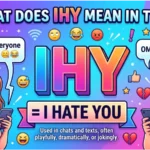
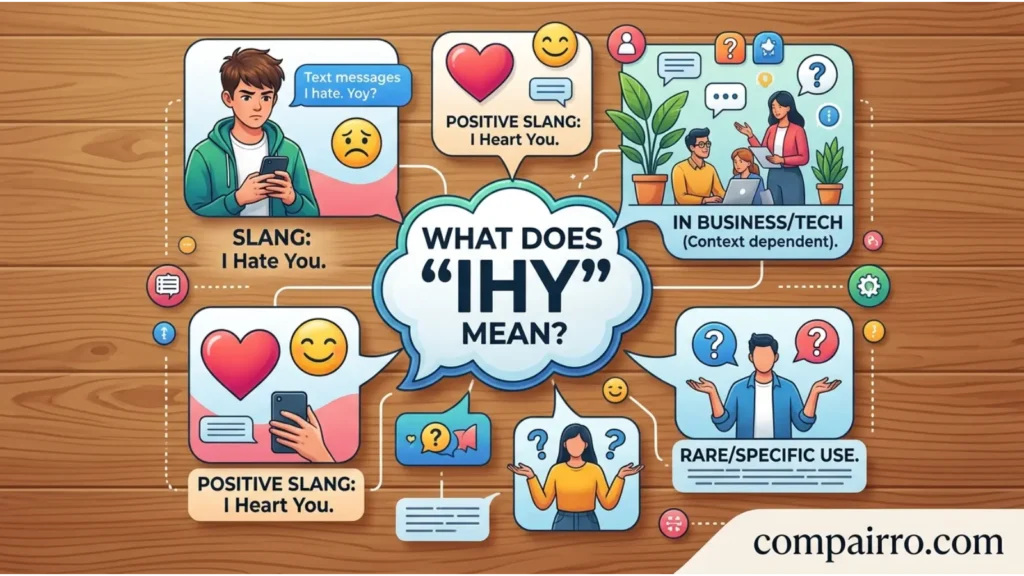
In most casual texting conversations, IHY means “I hate you.” However, it does not always express genuine hatred. Friends may use it jokingly when teasing each other, while someone in an argument may use it to show anger or frustration. The meaning depends on the relationship, the situation, and the tone of the conversation.
Quick Answer:
IHY usually stands for “I hate you” in texting. It can be playful between friends or serious and hurtful during an argument, so context matters.
What Does IHY Mean in Text?
The most common meaning of IHY in text messages is “I hate you.” It is a shortened expression that allows people to communicate strong emotions using just three letters.
Although the phrase sounds negative, its meaning can change depending on the situation. Close friends sometimes use IHY as a joke after teasing each other or playing a game. In a serious disagreement, however, the same abbreviation may express genuine anger or resentment.
For example:
Friend 1: “I beat you again in the game!”
Friend 2: “IHY 😂”
Here, the laughing emoji suggests that the sender is probably joking rather than expressing real hatred.
On the other hand, a message such as “IHY. Don’t talk to me again” sounds much more serious because the surrounding words suggest anger and a desire for distance.
IHY Full Form and Definition
The common IHY full form is “I hate you.”
It is an informal abbreviation used in digital communication. People often shorten familiar phrases to save time, fit their messages into quick replies, or match the casual style of online conversations.
IHY can communicate different feelings, including:
- Playful frustration: When a friend wins a game or plays a harmless prank.
- Annoyance: When someone does something irritating.
- Anger: During a disagreement or conflict.
- Emotional hurt: When someone feels disappointed or upset with another person.
The abbreviation itself does not tell you exactly which emotion the sender feels. You need to consider the complete message and the relationship between the people involved.
IHY Meaning in Different Contexts
1. IHY Between Friends
Friends may use IHY as playful teasing. It can be a dramatic way to react to something annoying but harmless.
Example:
“Bro, you ate the last slice of pizza. IHY 😂”
The sender is probably joking about the missing pizza rather than expressing serious hatred.
2. IHY in Romantic Conversations
In conversations between people who are dating or have a crush on each other, IHY may be used jokingly or sarcastically. For example, someone might send it after losing a playful competition.
However, do not automatically assume it is a sign of affection. The sender’s actual intention depends on the conversation and their behavior.
3. IHY During an Argument
When someone sends IHY during a serious disagreement, it may express genuine anger or hurt.
For example:
“You ignored what I told you. IHY right now.”
In this context, the sender may be expressing frustration. It is better to address the disagreement calmly than to respond with another insult.
4. IHY on Social Media
IHY can appear in comments, memes, gaming chats, and private messages. Online, exaggerated emotional expressions are sometimes used for humor.
Still, not everyone interprets slang in the same way. A joke that seems harmless to one person may feel hurtful to another.
Is IHY Rude, Offensive, or Neutral?
IHY can be playful, but it is not automatically neutral. Since it commonly stands for “I hate you,” it can sound insulting when the context is unclear.
Its tone often depends on three factors:
- Relationship: Close friends may understand each other’s humor better than strangers do.
- Context: A playful game and a serious argument create very different meanings.
- Tone indicators: Emojis, laughter, and other words may suggest whether the sender is joking.
If you are unsure how someone will interpret IHY, it is safer to use a clearer expression.
For example, instead of writing “IHY,” you could say, “You’re so annoying 😂” when you are clearly joking with a friend who is comfortable with that kind of humor.
Where Is IHY Commonly Used?
IHY is most likely to appear in informal digital communication, such as:
- Text messages and group chats
- Instagram DMs and comments
- Snapchat conversations
- TikTok comments
- Discord servers
- Online gaming chats
- Casual conversations between friends
It is generally unsuitable for formal emails, professional messages, or situations where a clear and respectful tone is important.
Real-Life Conversation Examples
The following examples show how IHY can be used in different situations.
Friendly Example
Alex: “I told everyone about your funny mistake!”
Sam: “IHY 😂”
Meaning: Sam is probably teasing Alex in a playful way.
Casual Example
Person A: “You changed the movie before I could finish it.”
Person B: “IHY lol.”
Meaning: The sender is expressing playful annoyance.
Argumentative Example
Person A: “You shared something private without asking me.”
Person B: “IHY for doing that.”
Meaning: The sender may be expressing anger or frustration. The surrounding conversation determines the exact intention.
Gaming Example
Player 1: “I won again!”
Player 2: “IHY bro 😭”
Meaning: The sender is likely joking about repeatedly losing.
Social Media Example
Someone posts a picture of a delicious meal, and a friend comments:
“Now I’m hungry. IHY 😂”
Meaning: The friend is exaggerating their frustration for humor.
Emotional and Psychological Meaning of IHY
IHY can communicate different emotions, but the abbreviation alone cannot reveal someone’s true feelings.
Depending on the situation, it may reflect:
- Playful annoyance
- Temporary frustration
- Anger during a disagreement
- Disappointment
- Exaggerated humor
It is important not to judge a person’s feelings based on three letters alone. Look at the wider conversation and, when necessary, ask what they mean.
If a message feels genuinely hurtful, you can explain how it affects you and ask the sender to communicate more respectfully.
Origin and Background of IHY
There is no single confirmed origin for IHY as a texting abbreviation. It follows the broader internet habit of shortening common phrases into a few letters.
As text messaging, instant messaging, and social media became popular, users began relying on abbreviations to communicate quickly. Terms such as LOL, BRB, IDK, and ILY became familiar in online conversations.
IHY follows the same pattern by shortening “I hate you” to three letters. Its exact meaning can still depend on how different online communities use it.
IHY Compared With Similar Slang Terms
IHY is sometimes confused with other abbreviations that express strong feelings. However, these terms have different meanings.
| Slang | Full Form | Meaning |
|---|---|---|
| IHY | I hate you | Dislike, anger, or playful annoyance |
| ILY | I love you | Affection or love |
| IDK | I don’t know | Uncertainty |
| IDC | I don’t care | Lack of concern or interest |
| TBH | To be honest | Introducing an honest opinion |
| LOL | Laughing out loud | Amusement or laughter |
| SMH | Shaking my head | Disapproval or disbelief |
Important: IHY and ILY have very different meanings. If you receive one of these abbreviations, pay attention to the letters before interpreting the message.

When Should You Use IHY?
IHY is best reserved for informal conversations where the other person understands your humor.
You might see it used:
- Between close friends who enjoy playful teasing
- In gaming chats after a funny loss
- In humorous conversations
- In memes and casual online comments
Even among friends, consider whether the other person is comfortable with this expression.
When Should You Avoid Using IHY?
Avoid IHY when you want to communicate respectfully or when the other person may misunderstand your intention.
It is better to avoid it:
- During a serious disagreement
- In professional conversations
- With people you do not know well
- When someone is already upset
- In messages where emotional clarity is important
Instead of sending IHY during a conflict, explain the actual problem. For example, “I’m upset about what happened” communicates your feelings more clearly without turning the conversation into an insult.
Polite Alternatives to IHY
If you want to express annoyance without sounding harsh, try these alternatives:
- “You’re so annoying 😂” — for playful teasing.
- “I’m frustrated right now.” — for honest communication.
- “That really upset me.” — when something hurt your feelings.
- “I’m not happy about that.” — for a calm disagreement.
- “Please don’t do that again.” — when setting a boundary.
- “I’m joking, don’t worry!” — when clarifying a playful message.
Choose an expression that matches what you genuinely want to communicate.
Why Do People Use IHY?
People use IHY because short messages are quick and easy to type. The abbreviation can also make an emotional reaction sound dramatic or humorous.
Common reasons include:
- Saving time when texting
- Following online slang trends
- Teasing close friends
- Expressing frustration quickly
- Reacting to a surprising or annoying situation
However, short abbreviations leave little room for explanation. A recipient may not know whether the sender is joking or being serious.
Is IHY Safe for Social Media?
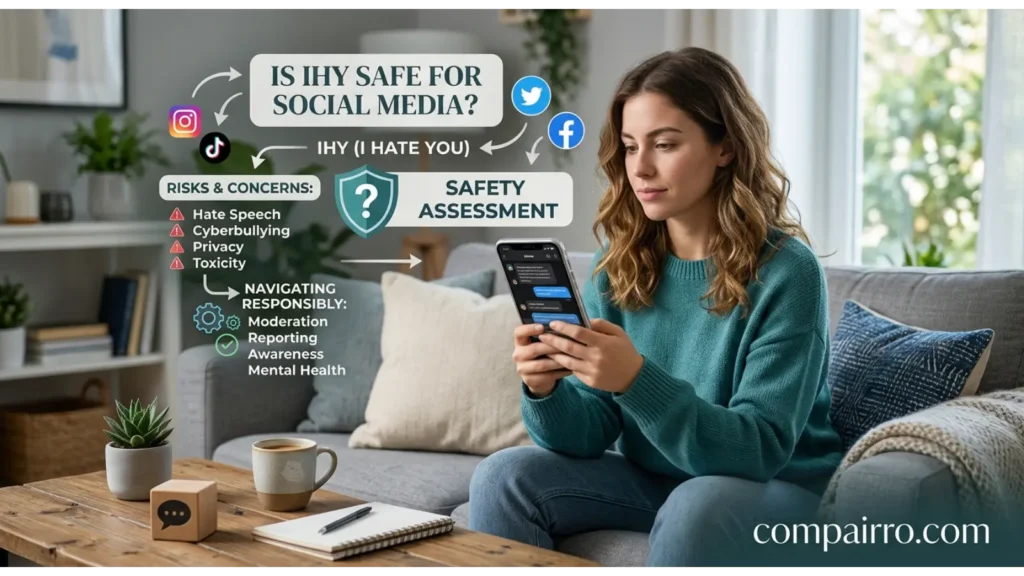
IHY is not inherently dangerous, but its meaning can be hurtful because it commonly represents “I hate you.”
Before using it publicly or in a private message, consider your audience and the situation. A joking message among friends may be understood differently from the same message sent to a stranger.
If you manage a public social media page or communicate with a broad audience, clear and respectful language is usually a better choice.
Common Misunderstandings About IHY
One common mistake is assuming that every IHY message expresses genuine hatred. Friends may use it jokingly, particularly when emojis or humorous context make their intention clearer.
Another mistake is assuming that the sender is definitely joking. If the message appears during a serious conflict, it may communicate real anger.
Finally, do not confuse IHY with ILY. The two abbreviations have opposite meanings, so reading the letters carefully is important.
How to Respond When Someone Uses IHY
Your response should depend on the situation.
If they are joking:
You could reply, “Haha, what did I do? 😂”
If the meaning is unclear:
Ask, “Are you joking or are you upset with me?”
If they seem genuinely angry:
You could say, “I can see you’re upset. Can we talk about what happened?”
If the message hurts you:
Try saying, “That message felt hurtful. Please tell me what is wrong without insulting me.”
You do not have to respond with the same abbreviation. A calm reply can help prevent a misunderstanding from becoming a bigger argument.
Regional and Cultural Usage
IHY is mainly associated with informal English-language texting and internet slang. Its interpretation may differ between age groups, friend groups, and online communities.
In some groups, dramatic expressions are a normal part of joking. In others, the phrase “I hate you” may be taken literally.
People who speak English as an additional language may also be unfamiliar with the abbreviation. Therefore, the safest interpretation comes from the conversation rather than assumptions about someone’s location or culture.
FAQs About IHY Meaning in Text
1. What does IHY mean in texting?
IHY usually means “I hate you.” It can express playful annoyance or genuine anger depending on the context.
2. What is the full form of IHY?
The most common full form of IHY is “I hate you.” It is an informal abbreviation used in text messages and online conversations.
3. Does IHY mean someone actually hates you?
Not necessarily. Friends may use IHY jokingly, but a serious message may indicate anger or hurt. Consider the full conversation before deciding.
4. What is the difference between IHY and ILY?
IHY means “I hate you,” while ILY means “I love you.” They have very different meanings, so do not confuse the two.
5. Is IHY rude?
It can be rude or hurtful, especially when used seriously. Among friends, it may be playful if both people understand and accept the joke.
6. How should I reply to IHY?
If it is a joke, you can respond playfully. If the meaning is unclear or the message feels serious, ask what the sender means and communicate calmly.
Conclusion
The ihy meaning in text is usually “I hate you.” Although the phrase sounds harsh, people sometimes use it jokingly with friends, during gaming, or in humorous social media conversations. In other situations, it may express real anger, frustration, or hurt.
The key is to consider the relationship, surrounding messages, and tone before interpreting IHY. If you are unsure if someone is joking, ask for clarification instead of making assumptions.
Use IHY carefully because not everyone interprets it the same way. When you want to communicate clearly and respectfully, alternatives such as “I’m annoyed,” “That upset me,” or “I’m joking” can help you express your feelings without creating unnecessary confusion.

Sara Taylor is a passionate English content writer who specializes in word meanings, spelling comparisons, and modern slang explanations. She creates easy-to-understand articles that help readers avoid common English mistakes and improve their writing skills. Her content focuses on simple learning, real-life examples, and clear explanations for everyday readers.