Have you ever written a sentence and stopped to wonder whether you should use likable or likeable? Many people face this confusion when writing emails, school assignments, social media posts, blog articles, or workplace documents.
Both spellings appear online, in books, and even in professional writing. This often makes people question which version is correct. Some writers prefer likable, while others use likeable. The difference mainly comes from regional spelling preferences rather than meaning.
You may see this word when describing a friendly person, a popular character in a movie, a trustworthy employee, or a brand that people enjoy. Because both forms are common, understanding when and where to use each one can help you write more confidently.
Whether you are a student, content writer, teacher, business professional, or English learner, knowing the difference between likable and likeable can improve your writing and prevent common spelling mistakes.
In this guide, you’ll learn the meaning, examples, usage, differences, common mistakes, and simple explanations in easy English.
Likable or Likeable – Quick Answer
👉 Likable and likeable have the same meaning.
They both describe someone or something that is easy to like.
Simple Definition
A person, thing, or character that is pleasant, friendly, or enjoyable.
Examples
1 Sarah is very likable because she is kind to everyone.
2 The movie’s main character is highly likeable.
3 A likable brand often attracts loyal customers.
Simple Rule
👉 Likable = American English
👉 Likeable = British English
Both are correct.
The Origin of Likable or Likeable
The word comes from the verb “like.”
Over time, English speakers added endings such as -able and -able/-eable to create adjectives that describe something capable of being liked.
Historically, both spellings have existed for many years. As English evolved, American English began favoring likable, while British English continued using likeable more often.
Today, both versions appear in books, websites, newspapers, and social media.
British English vs American English Usage
The main difference is spelling preference.
| Feature | British English | American English | Notes |
|---|---|---|---|
| Preferred spelling | Likeable | Likable | Both are correct |
| Meaning | Same | Same | No difference in meaning |
| Pronunciation | Same | Same | Sounds identical |
| Formal writing | Common | Common | Use regional style |
| Everyday use | Likeable appears more often | Likable appears more often | Preference varies |
Which One Should You Use?
Choose the spelling based on your audience.
Use Likable When:
- Writing for American readers
- Creating content for US websites
- Following American spelling rules
- Writing academic papers using US English
Use Likeable When:
- Writing for UK readers
- Following British English style guides
- Creating content for British audiences
For International Audiences
- Either spelling works.
- Stay consistent throughout your writing.
- Do not switch between both spellings in the same document.
Common Mistakes With Likable or Likeable
Mistake 1
❌ She is a very like-able person.
✔ Write likable or likeable as one word.
Mistake 2
❌ Likable means different from likeable.
✔ Both words have the same meaning.
Mistake 3
❌ Using both spellings in the same article.
✔ Choose one spelling and use it consistently.
Mistake 4
❌ Thinking one spelling is wrong.
✔ Both spellings are accepted English words.
Mistake 5
❌ Confusing likable with lovable.
✔ Likable means easy to like. Lovable often suggests stronger affection.
Likable or Likeable in Everyday Examples

Work
✅ A likable manager often creates a positive workplace.
School
✅ Students usually enjoy learning from a likeable teacher.
Social Media
✅ Influencers often build audiences by appearing likable.
Daily Life
✅ Being polite and respectful can make you more likable.
Text Messages
✅ “She seems really likeable from our chats.”
✅ “He’s a likable person.”
Likable or Likeable – Google Trends & Usage Data
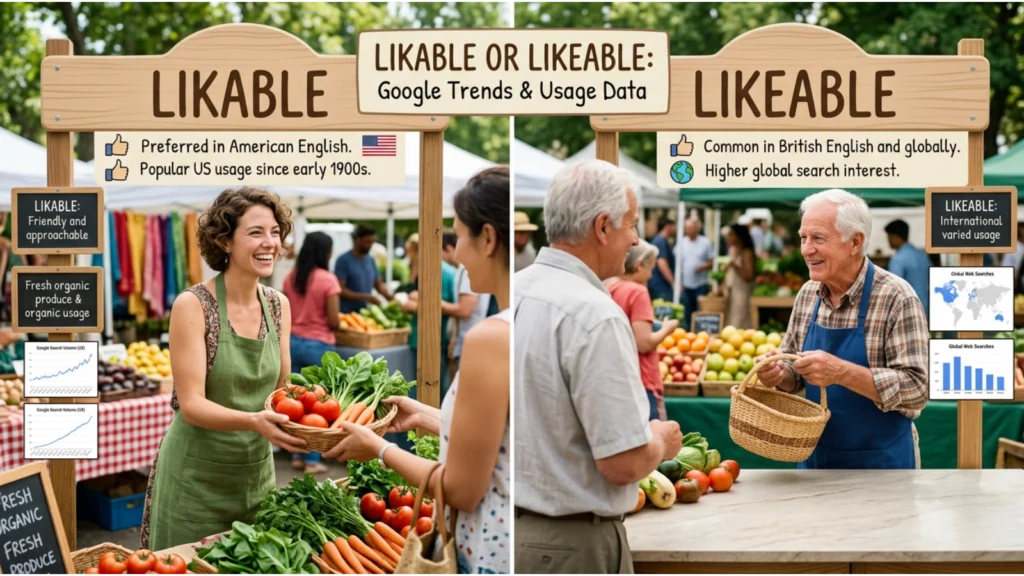
Many people search for likable or likeable because they want to know which spelling is correct.
The question is especially common among:
- Students
- Bloggers
- SEO writers
- English learners
- Business professionals
Popular Countries Searching This Term
- United States
- United Kingdom
- India
- Pakistan
- Canada
- Australia
Search Trend Reasons
- Confusion between American and British spelling
- Academic writing requirements
- Content writing and SEO needs
- Grammar learning
- Professional communication
On social media and online forums, both spellings appear regularly, which increases confusion for beginners.
Comparison Table: Likable vs Likeable
| Feature | Likable | Likeable |
|---|---|---|
| Meaning | Easy to like | Easy to like |
| Correct spelling | Yes | Yes |
| American English | Preferred | Less common |
| British English | Less common | Preferred |
| Pronunciation | Same | Same |
| Formal writing | Accepted | Accepted |
| Informal writing | Accepted | Accepted |
Likable or Likeable in Professional Life
The word is often used in professional communication.
Examples include:
- Describing leadership qualities
- Employee evaluations
- Marketing campaigns
- Customer service reviews
- Brand reputation discussions
A manager might say:
✅ “She is highly likable and works well with the team.”
Marketing teams may also discuss whether a product or brand appears likable to customers.
The key is choosing the spelling style that matches your audience.
Likable or Likeable for Students or Beginners
Many beginners struggle because both spellings are correct.
Common confusion includes:
- Which spelling is standard
- Whether one version is wrong
- When to use each form
Easy Learning Tips
- Remember the audience first.
- Use likable for American English.
- Use likeable for British English.
- Stay consistent throughout your writing.
- Read examples from trusted sources.
The more you read English content, the easier the distinction becomes.
Signs or Characteristics Related to Likable or Likeable
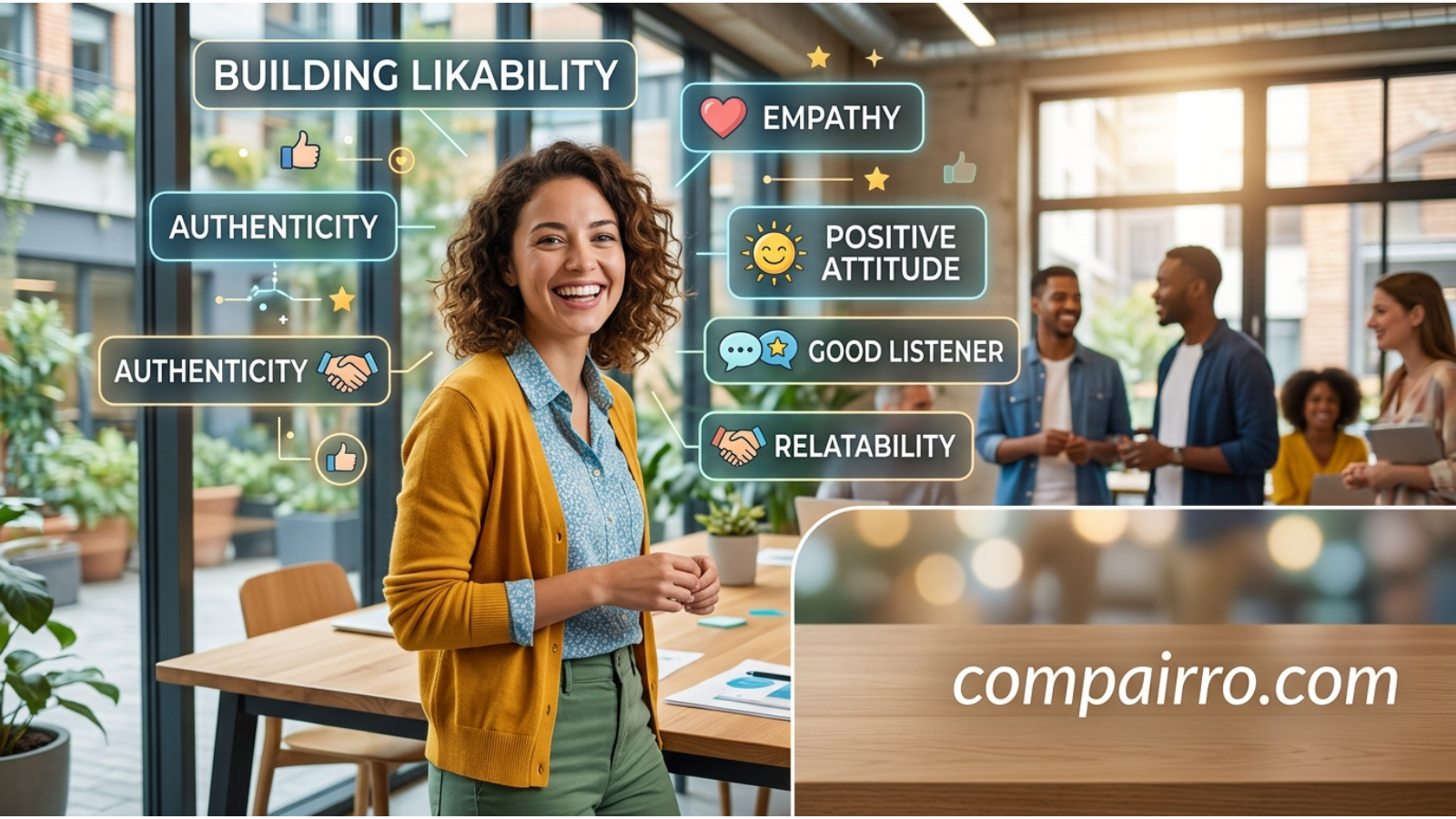
People often describe someone as likable or likeable when they have these qualities:
Friendly Behavior
- Smiles often
- Welcomes others
- Shows kindness
Good Communication
- Listens carefully
- Speaks respectfully
- Shows interest in others
Positive Attitude
- Encourages people
- Stays optimistic
- Handles challenges well
Trustworthiness
- Keeps promises
- Acts honestly
- Treats others fairly
Respect for Others
- Values different opinions
- Shows good manners
- Helps when possible
Simple Trick to Remember Likable or Likeable
👉 Likable = America likes shorter spellings
👉 Likeable = British spelling keeps the extra “e”
Think of it this way:
American style often removes extra letters.
Examples:
- Color (US)
- Color vs Colour (UK)
Similarly:
- Likable (US)
- Likeable (UK)
If you’re writing for Americans, choose likable.
If you’re writing for British readers, choose likeable.
FAQs:
1. Is likable or likeable correct?
Both spellings are correct and have the same meaning.
2. Which spelling is more common in the US?
Likable is more common in American English.
3. Which spelling is preferred in the UK?
Likeable is generally preferred in British English.
4. Do they have different meanings?
No. They mean exactly the same thing.
5. Can I use either spelling in professional writing?
Yes, but stay consistent and follow your chosen style guide.
6. How do you pronounce likable and likeable?
Both are pronounced the same way.
7. Which spelling is better for SEO?
Either can work. Use the version your target audience is most likely to search for.
Conclusion
The difference between likable and likeable is mainly a spelling preference. Both words mean “easy to like” and are accepted in modern English.
The most important thing is choosing the spelling that matches your audience and using it consistently throughout your writing.
A simple rule to remember is:
👉 Likable = American English
👉 Likeable = British English
Once you know your audience, choosing the correct spelling becomes easy.

Sara Taylor is a passionate English content writer who specializes in word meanings, spelling comparisons, and modern slang explanations. She creates easy-to-understand articles that help readers avoid common English mistakes and improve their writing skills. Her content focuses on simple learning, real-life examples, and clear explanations for everyday readers.