Waisted vs Wasted: Differences, and Correct Usage (2026)Turkies or turkeys is a common spelling question that many people search online. You may have seen both words in writing and wondered which one is correct. This confusion often happens because English plurals do not always follow the same pattern.
People come across this question in school assignments, workplace documents, social media posts, online articles, and everyday conversations. If you are writing about the large bird often eaten during Thanksgiving or discussing multiple turkeys, choosing the correct spelling matters.
Many English learners and even native speakers sometimes type turkies by mistake because words ending in y can have different plural rules. Understanding the correct form can help you write more clearly and avoid common spelling errors.
Whether you are a student, content writer, teacher, blogger, or simply someone trying to improve your English, learning the difference between turkies or turkeys is useful. The good news is that the rule is simple once you understand it.
In this guide, you’ll learn the meaning, examples, usage, differences, common mistakes, and simple explanations in easy English.
Turkies or Turkeys – Quick Answer
👉 Turkeys is the correct plural form of turkey.
👉 Turkies is considered a spelling mistake in standard English.
Examples
1 We saw three turkeys on the farm.
2 Wild turkeys live in many parts of North America.
3 The family cooked two turkeys for the holiday meal.
Simple Rule
👉 When a word ends with a vowel + y, simply add s.
Turkey → Turkeys
Not:
❌ Turkey → Turkies
The Origin of Turkies or Turkeys
The word turkey has an interesting history. It was first used in English several centuries ago. Early Europeans believed the bird came through trade routes linked to Turkey, which is how the name became popular.
Over time, turkey became the standard name for the bird. When people needed the plural form, English grammar rules naturally created turkeys.
The spelling turkies sometimes appears because many learners apply the wrong plural rule. However, dictionaries and grammar guides recognize turkeys as the correct form.
Today, the word is widely used in books, schools, news articles, websites, and social media.
British English vs American English Usage
There is no spelling difference between British English and American English for this word.
| Feature | British English | American English | Notes |
|---|---|---|---|
| Singular | Turkey | Turkey | Same spelling |
| Plural | Turkeys | Turkeys | Same spelling |
| Formal Usage | Turkeys | Turkeys | Same worldwide |
| Informal Usage | Turkeys | Turkeys | No difference |
Conclusion: Both British and American English use turkeys as the correct plural form.
Which One Should You Use?
You should always use turkeys when referring to more than one turkey.
Use “Turkeys” In:
- School essays
- Academic writing
- Business documents
- Blog posts
- Social media content
- News articles
- Everyday conversations
Avoid:
- ❌ Turkies
Formal and Informal Writing
- Formal writing: ✅ Turkeys
- Informal writing: ✅ Turkeys
- Text messages: ✅ Turkeys
There is no situation where turkies is preferred in standard English.
Common Mistakes With Turkies or Turkeys
Mistake 1
❌ We bought two turkies for dinner.
✔ The correct plural is turkeys.
Mistake 2
❌ There are many wild turkies in the forest.
✔ Write turkeys because turkey ends with a vowel + y.
Mistake 3
❌ The farm raises hundreds of turkies.
✔ The farm raises hundreds of turkeys.
Mistake 4
❌ My teacher corrected the word turkies.
✔ The correct spelling is turkeys.
Turkies or Turkeys in Everyday Examples
Work
✅ The company ordered several turkeys for the holiday event.
School
✅ Students learned about wild turkeys during science class.
Social Media
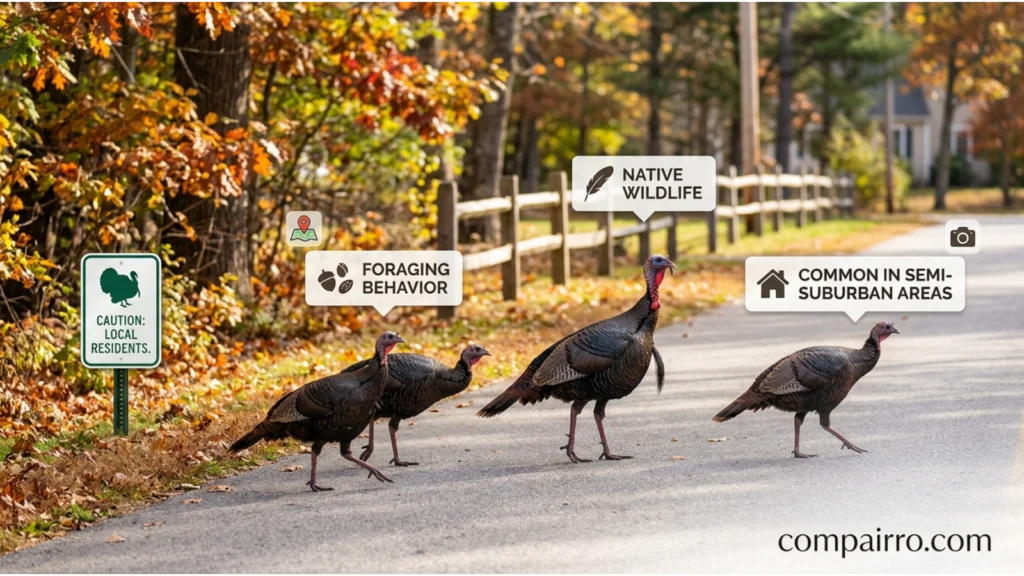
✅ Look at these beautiful turkeys in my backyard!
Daily Life
✅ We saw a group of turkeys while driving through the countryside.
Text Messages
✅ Did you see the turkeys near the park today?
Turkies or Turkeys – Google Trends & Usage Data
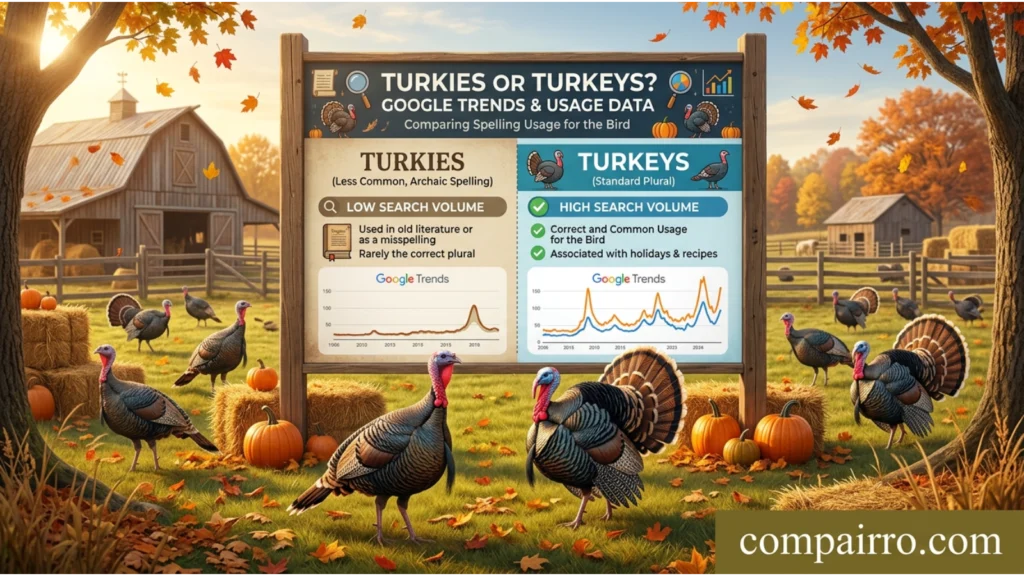
Many people search for turkies or turkeys because they are unsure which spelling is correct.
Why People Search It
- Confusion about plural rules
- School homework
- English learning
- Content writing
- Grammar checking
Popular Countries
The search term is commonly looked up in:
- United States
- United Kingdom
- India
- Pakistan
- Canada
- Australia
Search Trends
Interest often increases during:
- Thanksgiving season
- Holiday periods
- School semesters
- Grammar-related searches
Online Popularity
The question appears frequently in:
- Google searches
- Grammar forums
- Educational websites
- Social media discussions
Most searches come from beginners who want to avoid spelling mistakes.
Comparison Table: Turkies or Turkeys
| Feature | Turkies | Turkeys |
|---|---|---|
| Correct Spelling | ❌ No | ✅ Yes |
| Standard English | ❌ No | ✅ Yes |
| Dictionary Approved | ❌ No | ✅ Yes |
| Used in Schools | ❌ No | ✅ Yes |
| Used in Professional Writing | ❌ No | ✅ Yes |
| Recommended Usage | ❌ Avoid | ✅ Always Use |
Turkies or Turkeys in Professional Life
Correct spelling is important in professional communication.
Writers, teachers, editors, marketers, and students are expected to use proper grammar. Using turkeys instead of turkies helps your writing appear more professional and trustworthy.
Examples include:
- Reports
- Educational materials
- Blog content
- Emails
- Business presentations
Even a small spelling mistake can affect how readers view your work.
Turkies or Turkeys for Students or Beginners
Students often struggle with this word because English plural rules can be confusing.
For example:
- Baby → Babies
- City → Cities
Because of these examples, learners sometimes think:
- Turkey → Turkies
However, that rule does not apply here.
Easy Learning Tips
- Look at the letter before y.
- Turkey has the vowel e before y.
- Add only s.
- Remember: Turkey → Turkeys.
Practice writing the word several times until it feels natural.
Signs or Characteristics Related to Turkies or Turkeys
Characteristics of the Correct Form “Turkeys”
- Standard English spelling
- Accepted by dictionaries
- Used worldwide
- Suitable for formal writing
- Suitable for casual writing
- Common in education
Characteristics of the Incorrect Form “Turkies”
- Common spelling error
- Often made by beginners
- Not accepted in standard grammar
- Should be corrected in writing
Learning Pattern
- Consonant + y → often changes to ies
- Vowel + y → usually adds s
Turkey follows the second pattern.
Simple Trick to Remember Turkies or Turkeys
1 Turkey ends with “ey”
2 Words ending in vowel + y usually add s
3 Therefore:
Turkey → Turkeys
Not:
Turkey → Turkies
Think of it this way:
- Boy → Boys
- Key → Keys
- Monkey → Monkeys
- Turkey → Turkeys
All of these words simply add s.
This makes the rule much easier to remember.
FAQs:
1. Is turkies a real word?
No. In standard English, turkies is considered an incorrect spelling.
2. What is the correct plural of turkey?
The correct plural form is turkeys.
3. Why is it turkeys and not turkies?
Because turkey ends with a vowel (e) followed by y, so you only add s.
4. Is turkeys used in British English?
Yes. British English and American English both use turkeys.
5. Can I use turkies in formal writing?
No. You should always use turkeys.
6. Do dictionaries recognize turkies?
Standard dictionaries list turkeys as the correct plural form.
7. How can I remember the correct spelling?
Remember that key becomes keys, and turkey becomes turkeys.
Conclusion
The answer to turkies or turkeys is simple: turkeys is the correct spelling, while turkies is a common mistake. The word turkey ends with a vowel plus y, so the plural form is made by adding s.
Understanding this rule can improve your writing at school, work, and online. It also helps you avoid a very common spelling error.
A final memory rule:
👉 Turkey ends in “ey” → just add “s” → Turkeys.
Whenever you are unsure, remember: Turkeys is correct, Turkies is not.

Sara Taylor is a passionate English content writer who specializes in word meanings, spelling comparisons, and modern slang explanations. She creates easy-to-understand articles that help readers avoid common English mistakes and improve their writing skills. Her content focuses on simple learning, real-life examples, and clear explanations for everyday readers.