Mom or mum is a common question for English learners and even native speakers. You may see mom in American movies, while mum appears in British TV shows, books, and conversations. Because both words refer to a mother, many people wonder which one is correct.
This confusion often happens at school, in the workplace, on social media, in text messages, and during everyday conversations. If you are writing an email, a blog post, a greeting card, or simply chatting online, choosing the right word can help your writing sound natural.
The good news is that both words are correct. The main difference is where they are used. People in different countries prefer different spellings and pronunciations. Understanding this difference can help you communicate more clearly and avoid simple language mistakes.
Many internet users search for this topic because they want to know which word is more common, whether one is formal, and how each is used around the world.
In this guide, you’ll learn the meaning, examples, usage, differences, common mistakes, and simple explanations in easy English.
Mom or Mum – Quick Answer
👉 Mom and mum both mean mother.
The difference is mainly regional:
- Mom is commonly used in American English.
- Mum is commonly used in British English and many other English-speaking countries.
Examples
1 My mom is making dinner. (American English)
2 My mum is making dinner. (British English)
3 I called my mom/mum yesterday.
Simple Rule
👉 America = Mom
👉 Britain = Mum
This simple memory trick helps most learners remember the difference.
The Origin of Mom or Mum
The words mom and mum developed from early child speech. Babies often make sounds like “ma,” “mama,” and similar sounds when learning to speak.
Over time, different English-speaking regions developed their own preferred versions. In the United States, mom became the standard everyday term. In the United Kingdom, mum became more common.
As English spread around the world, different countries adopted one version or the other. Today, both words are widely understood.
Social media, movies, TV shows, and international communication have made people more familiar with both spellings.
British English vs American English Usage
The biggest difference between mom or mum is regional usage.
| Feature | British English | American English | Notes |
|---|---|---|---|
| Common word | Mum | Mom | Both mean mother |
| Pronunciation | Mum | Mom | Slight sound difference |
| Everyday conversations | Very common | Very common | Informal and natural |
| Formal writing | Mother | Mother | Usually preferred |
| Greeting cards | Mum | Mom | Depends on country |
Which One Should You Use?
The best choice depends on your audience.
Choose Mom When:
- You are writing for Americans.
- Your audience is mainly in the United States.
- You want American English spelling.
Use Mum if:
- You are writing for people in the UK.
- Your audience is in Australia or New Zealand.
- You prefer British English spelling.
Use Mother if:
- Writing formal documents.
- Academic writing.
- Official records.
- Professional situations.
Common Mistakes With Mom or Mum
Mistake 1
❌ My mum lives in Texas and everyone there says mum.
✔ If writing in American English, mom is usually more natural.
Mistake 2
❌ Mom is the only correct English word.
✔ Both mom and mum are correct.
Mistake 3
❌ Mum is wrong because it is not American.
✔ Different countries use different forms of English.
Mistake 4
❌ Using mom and mum randomly in the same article.
✔ Stay consistent with one style unless discussing both forms.
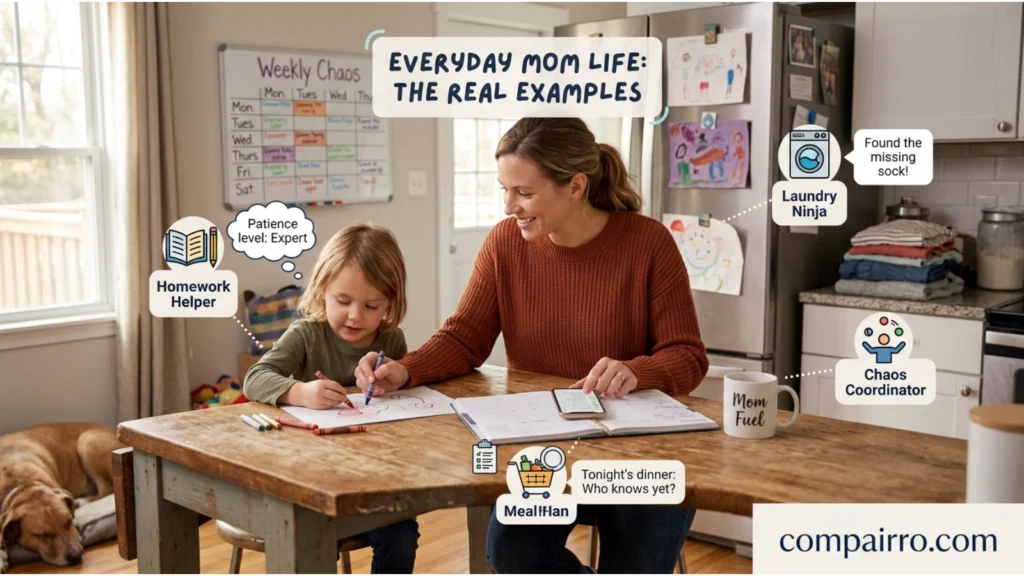
Mom or Mum in Everyday Examples
Work
- My mom helped me prepare for the interview.
- My mum encouraged me to apply for the job.
School
- My mom attended the parent meeting.
- My mum signed my school form.
Social Media
- Happy Birthday, Mom! ❤️
- Love you, Mum! Thanks for everything.
Daily Life
- I visited my mom yesterday.
- I called my mum after work.
Text Messages
- Mom, I’ll be home soon.
- Mum, can you pick me up?
Mom or Mum – Google Trends & Usage Data
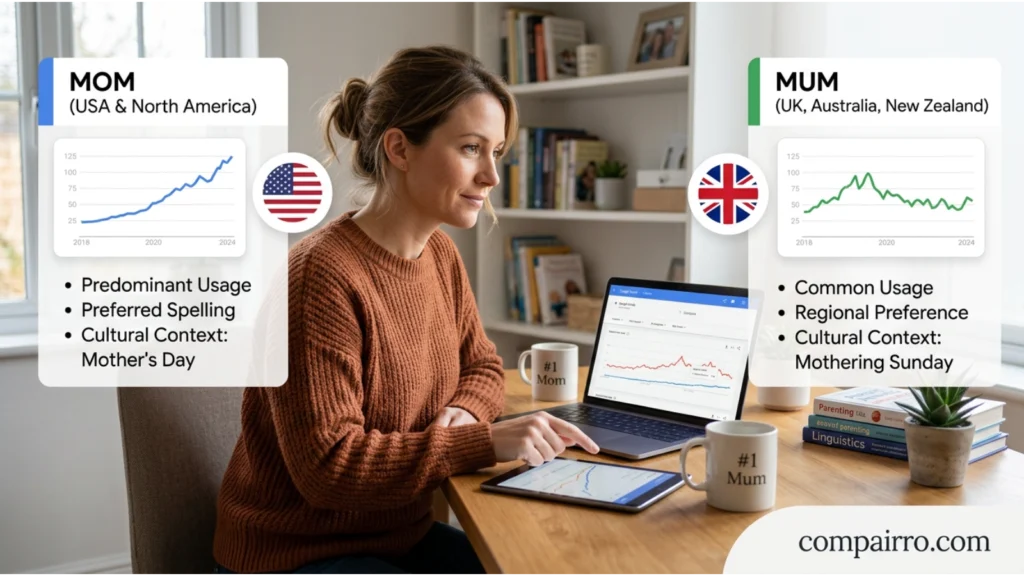
People frequently search for mom or mum because they see both words online and want to know which one is correct.
Popular Countries
Mom is especially popular in:
- United States
- Parts of Canada
Mum is especially popular in:
- United Kingdom
- Australia
- New Zealand
- India
- Pakistan
Search Trends
Searches often increase when:
- Students study English.
- People write greeting cards.
- Mother’s Day approaches.
- Users watch foreign movies and TV shows.
Why Beginners Get Confused
- Both words mean the same thing.
- Movies use different versions.
- Social media mixes English styles.
- International websites use both forms.
Comparison Table: Mom or Mum
| Feature | Mom | Mum |
|---|---|---|
| Meaning | Mother | Mother |
| English Type | American English | British English |
| Common Country | USA | UK |
| Informal Use | Yes | Yes |
| Formal Alternative | Mother | Mother |
| Social Media Usage | Common | Common |
| Correct English? | Yes | Yes |
Mom or Mum in Professional Life
In most professional settings, people usually use mother rather than mom or mum.
Examples:
- Mother’s name
- Mother’s occupation
- Mother’s contact information
However, in casual workplace conversations, employees may naturally say:
- My mom helped me.
- My mum is visiting this week.
The choice depends on the country and workplace culture.
Mom or Mum for Students or Beginners
Many students struggle with this topic because they learn English from different sources.
For example:
- American movies use mom.
- British teachers may use mum.
- Social media contains both forms.
Easy Learning Tips
- Learn who your audience is.
- Use American spelling for American readers.
- Use British spelling for British readers.
- Remember that both are correct.
Consistency is more important than choosing one over the other.
Signs or Characteristics Related to Mom or Mum
Key Characteristics
- Both words mean mother.
- Both are commonly used.
- Both are informal family terms.
- Both are accepted English words.
Usage Patterns
- Mom appears more in American content.
- Mum appears more in British content.
- Mother is often used formally.
Common Situations
- Family conversations
- Text messages
- Greeting cards
- Social media posts
- Everyday speech
Learning Features
- Easy to remember
- Frequently searched online
- Important for English learners
- Common in global communication
Simple Trick to Remember Mom or Mum
👉 Mom = America
👉 Mum = Britain
Think of it this way:
Imagine watching a Hollywood movie.
The character says:
👉 “I love my mom.”
Now imagine watching a British TV show.
The character says:
👉 “I love my mum.”
The meaning stays exactly the same. Only the regional English changes.
FAQs:
1. Is mom or mum correct?
Both are correct. The choice depends on the type of English being used.
2. Which countries use mom?
The United States mainly uses mom.
3. Which countries use mum?
The UK, Australia, New Zealand, India, and Pakistan commonly use mum.
4. Is mum more formal than mom?
No. Both are informal family words.
5. What is the formal word for mom or mum?
The formal word is mother.
6. Can I use mom in British English?
People will understand it, but mum sounds more natural in British English.
7. Why do English learners confuse mom and mum?
Because both words mean the same thing and appear in different English-speaking countries.
Conclusion
The difference between mom or mum is simple. Both words mean mother, and both are correct English. The main difference is location. Americans usually say mom, while people in the UK and several other countries usually say mum.
When writing or speaking, choose the version that matches your audience and stay consistent throughout your content.
Final Memory Rule
👉 Mom = American English
👉 Mum = British English
Remember this simple rule, and you’ll always know which word to use.

Sara Taylor is a passionate English content writer who specializes in word meanings, spelling comparisons, and modern slang explanations. She creates easy-to-understand articles that help readers avoid common English mistakes and improve their writing skills. Her content focuses on simple learning, real-life examples, and clear explanations for everyday readers.