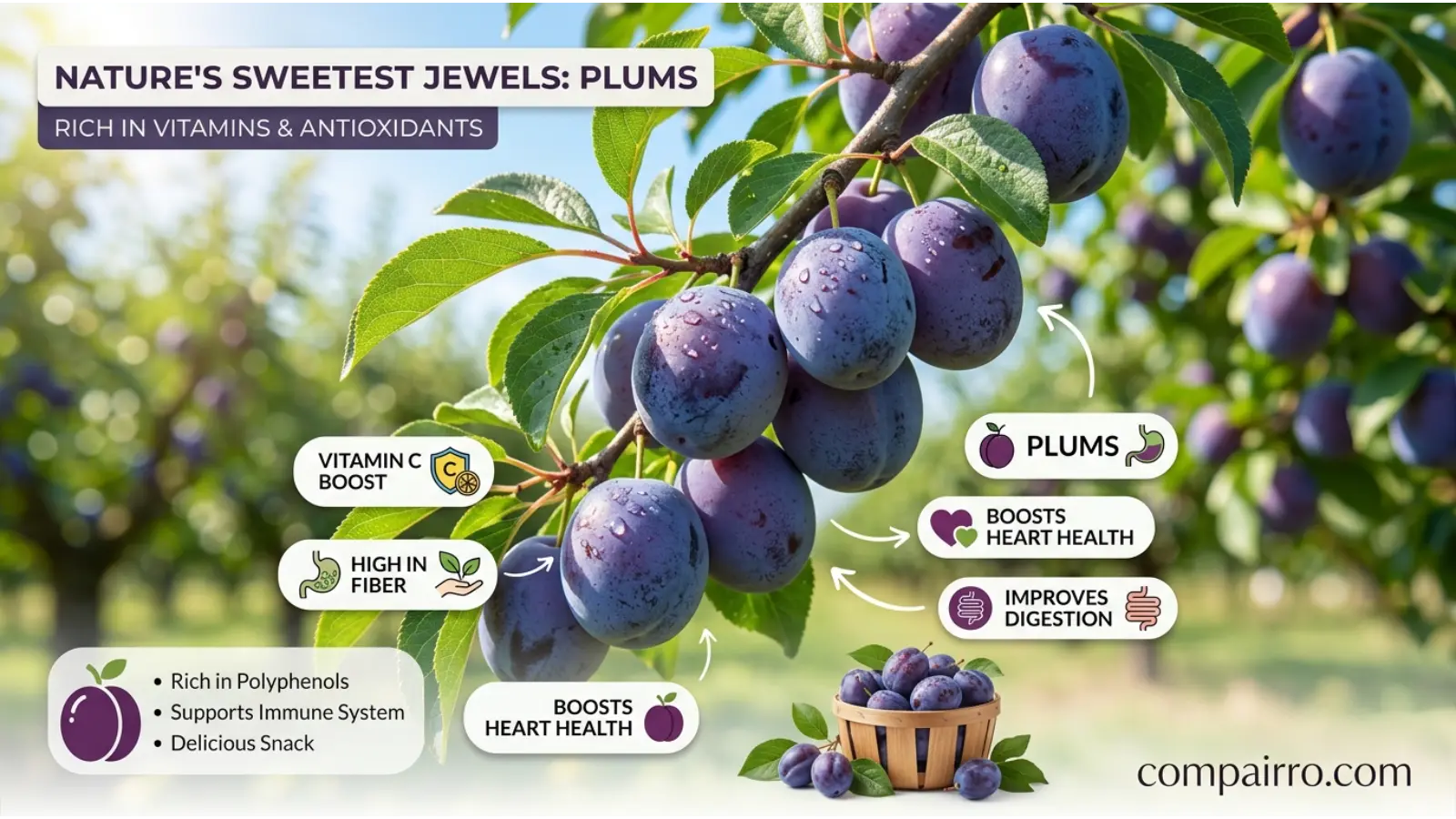
Have you ever seen the words plum and plumb and wondered which one is correct? You are not alone. Many people get confused because these two words sound very similar when spoken. However, they have completely different meanings.
This confusion often happens in school assignments, workplace documents, online articles, social media posts, and everyday conversations. Some people use plum when talking about fruit, while others come across plumb in construction, building work, or expressions like “plumb crazy.”
Understanding the difference is important because using the wrong word can change the meaning of a sentence. For example, asking for a “plumb pie” instead of a “plum pie” would sound strange to most English speakers.
Whether you are a student, writer, blogger, English learner, or professional, knowing when to use each word can improve your communication and writing skills.
In this guide, you’ll learn the meaning, examples, usage, differences, common mistakes, and simple explanations in easy English.
Plum or Plumb – Quick Answer
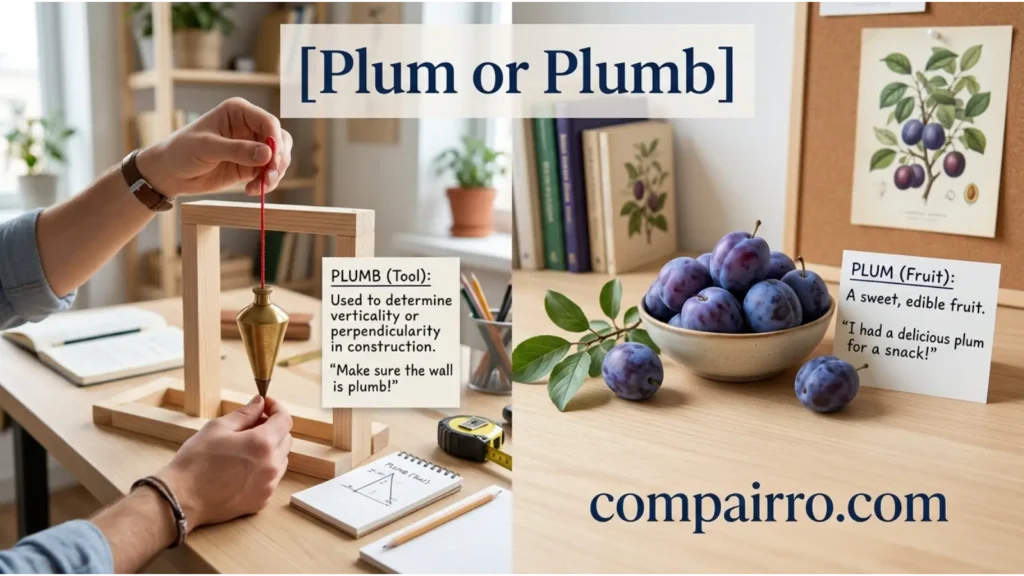
👉 Plum is a type of sweet fruit.
👉 Plumb means perfectly vertical (straight up and down) or can be used in some expressions.
Examples
1 I ate a fresh plum after lunch.
2 The wall is perfectly plumb.
3 The carpenter checked whether the door frame was plumb.
Simple Rule
👉 Plum = Fruit
👉 Plumb = Straight line in construction
The letter “b” in plumb is usually silent, which is why the words sound alike.
The Origin of Plum or Plumb
The word plum comes from the Latin word prunum, which referred to the fruit. It has been used in English for hundreds of years.
The word plumb comes from the Latin word plumbum, meaning “lead.” Builders once used a lead weight on a string, called a plumb line, to check whether a surface was perfectly vertical.
Over time, both words remained in English, even though they developed very different meanings.
British English vs American English Usage
The meanings of plum and plumb are generally the same in both British and American English.
| Feature | British English | American English | Notes |
|---|---|---|---|
| Plum (fruit) | Same | Same | No difference |
| Plumb (vertical) | Same | Same | Common in construction |
| Pronunciation | Similar | Similar | Silent “b” in plumb |
| Meaning | Same | Same | Used worldwide |
Which One Should You Use?
How Context Helps You Choose Between Plum and Plumb
Use plumb when talking about alignment, measurements, or certain expressions.
Use Plum When:
- Talking about fruit
- Discussing recipes
- Describing a plum-colored object
- Mentioning trees or gardening
When to Use Plumb:
- Talking about construction
- Measuring vertical alignment
- Writing technical documents
- Using expressions like “plumb wrong”
Formal vs Informal
- Plum works in both formal and informal writing.
- Plumb is common in professional construction and engineering settings.
Common Mistakes With Plum or Plumb
Mistake 1
❌ The builder checked if the wall was plum.
✔ Use plumb because it refers to vertical alignment.
Mistake 2
❌ I bought fresh plumbs from the market.
✔ The fruit is called plums, not plumbs.
Mistake 3
❌ The cake contains dried plumb pieces.
✔ Use plum when referring to the fruit.
Mistake 4
❌ The pole is perfectly plum.
✔ The correct word for straight vertical positioning is plumb.
Plum or Plumb in Everyday Examples

Work
✅ The engineer confirmed the support beam was plumb.
✅ The office cafeteria served plum dessert.
School
✅ Students learned how a plumb line works in construction.
✅ We studied different fruits, including the plum.
Social Media
✅ “Just made homemade plum jam!”
✅ “The new fence is finally plumb and secure.”
Daily Life
✅ She bought several ripe plums.
✅ The contractor made sure every wall was plumb.
Text Messages
✅ “Can you bring some plums from the store?”
✅ “The shelf isn’t plumb. It leans a little.”
Plum or Plumb – Google Trends & Usage Data
Many people search for plum or plumb because the words sound almost identical. This creates confusion in writing and spelling.
Search interest is common in:
- United States
- United Kingdom
- India
- Pakistan
- Canada
- Australia
People often look up this topic because:
- They hear the words spoken aloud.
- They are learning English.
- They work in construction or engineering.
- They want correct spelling for school or work.
- They see the words online and wonder about the difference.
The confusion remains popular because pronunciation does not clearly show the silent “b” in plumb.
Comparison Table: Plum or Plumb
| Feature | Plum | Plumb |
|---|---|---|
| Part of Speech | Noun, adjective | Adjective, adverb, verb |
| Main Meaning | A fruit | Perfectly vertical |
| Common Use | Food and gardening | Construction and measurement |
| Pronunciation | Plum | Sounds like plum |
| Silent Letter | No | Yes, silent “b” |
| Example | I ate a plum. | The wall is plumb. |
Plum or Plumb in Professional Life
In professional settings, plumb is much more important than plum.
Construction workers, architects, engineers, and surveyors regularly use the word plumb when checking alignment.
Examples:
- Ensuring walls are plumb.
- Checking door frames.
- Measuring vertical structures.
- Following building standards.
Meanwhile, plum may appear in industries related to food, agriculture, farming, and retail.
Plum or Plumb for Students or Beginners
Many beginners struggle because both words sound nearly identical.
Common Confusion
- Similar pronunciation
- Silent “b” in plumb
- Limited exposure to construction terms
- Seeing the words without context
Easy Learning Tips
- Connect plum with fruit.
- Connect plumb with building work.
- Read example sentences regularly.
- Practice writing both words.
The more you see them in context, the easier they become to remember.
Signs or Characteristics Related to Plum or Plumb
Characteristics of Plum
- Sweet fruit
- Usually round or oval
- Grows on trees
- Comes in different colors
- Used in desserts and jams
Characteristics of Plumb
- Related to vertical alignment
- Used in construction
- Helps ensure accuracy
- Important for building safety
- Often checked with tools
Simple Trick to Remember Plum or Plumb
👉 Plum = Fruit
👉 Plumb = Building
Think of it this way:
- If you can eat it, it’s plum.
- If you measure a wall with it, it’s plumb.
Easy Example
🍑 Plum → Fruit basket
🏗️ Plumb → Straight wall
This simple connection helps many learners remember the difference instantly.
FAQS:
1. What is the difference between plum and plumb?
Plum is a fruit, while plumb means perfectly vertical or straight up and down.
2. Why do plum and plumb sound the same?
The letter “b” in plumb is silent, making both words sound similar.
3. Is plumb used in construction?
Yes. Builders and engineers use plumb to describe vertical alignment.
4. Can plum be used as a color?
Yes. Plum is also the name of a dark purple color.
5. Is plumb a noun?
It can be used as an adjective, adverb, verb, and noun depending on the context.
6. Which word refers to a fruit?
Plum refers to the fruit.
7. Are plum and plumb interchangeable?
No. They have different meanings and should not be swapped.
Conclusion
The difference between plum or plumb is simple once you know their meanings. Plum refers to a sweet fruit and sometimes a color, while plumb refers to something that is perfectly vertical, especially in construction and engineering.
Many people confuse these words because they sound alike, but their uses are completely different.
A simple memory rule is:
👉 Plum = Fruit
👉 Plumb = Straight Wall
Remember this rule, and you’ll be able to use both words correctly in everyday writing and conversation.

Sara Taylor is a passionate English content writer who specializes in word meanings, spelling comparisons, and modern slang explanations. She creates easy-to-understand articles that help readers avoid common English mistakes and improve their writing skills. Her content focuses on simple learning, real-life examples, and clear explanations for everyday readers.