Math or maths is a common question that confuses many English learners, students, teachers, and even native speakers. You may have seen math in American books and websites, while maths appears in British school materials and conversations.
Many people search for this topic because they are unsure which spelling is correct. Should you write math or maths in school assignments? Which version is used in the workplace? What if you are writing for an international audience?
This confusion happens because English is spoken in many countries. Different regions sometimes use different spellings and abbreviations. You may see math on social media, in online courses, textbooks, educational videos, and everyday conversations.
Understanding the difference matters because using the correct version can make your writing look more natural for your audience. It can also help students, writers, and professionals communicate more clearly.
The good news is that both terms refer to the same subject: mathematics. The difference mainly depends on the country and style of English being used.
In this guide, you’ll learn the meaning, examples, usage, differences, common mistakes, and simple explanations in easy English.
Math or Maths – Quick Answer
👉 Math and maths are both short forms of mathematics.
- Math is used mainly in American English.
- Maths is used mainly in British English and many other English-speaking countries.
Examples
1 I have a math test tomorrow. (American English)
2 I have a maths test tomorrow. (British English)
3 Mathematics is an important school subject.
Simple Rule
👉 America = Math
👉 Britain and many other countries = Maths
The Origin of Math or Maths
The word mathematics comes from the Greek word mathema, which means learning or knowledge.
As the word mathematics became common, people started using shorter forms in everyday speech.
In the United States, the abbreviation math became popular.
In the United Kingdom, people preferred maths, keeping the final “s” from the word mathematics.
Over time, both versions became accepted in their respective regions. Today, schools, universities, books, and websites use the spelling that matches their country’s English style.
British English vs American English Usage
The main difference between math and maths is regional usage.
| Feature | British English | American English | Notes |
|---|---|---|---|
| Short form of mathematics | Maths | Math | Most common difference |
| School usage | Maths class | Math class | Both mean the same thing |
| Textbooks | Maths | Math | Depends on country |
| Formal writing | Maths | Math | Follow audience preference |
| Meaning | Same | Same | No difference in meaning |
Which One Should You Use?
The correct choice depends on your audience.
Use Math if:
- Writing for Americans
- Studying in the United States
- Creating content for a US audience
- Following American English style guides
Use Maths if:
- Writing for British readers
- Studying in the UK
- Writing for Australia, New Zealand, or many Commonwealth countries
- Following British English rules
Formal and Informal Usage
- Both are acceptable in formal writing.
- Both are common in casual conversations.
- Neither is considered incorrect when used in the right region.
Common Mistakes With Math or Maths
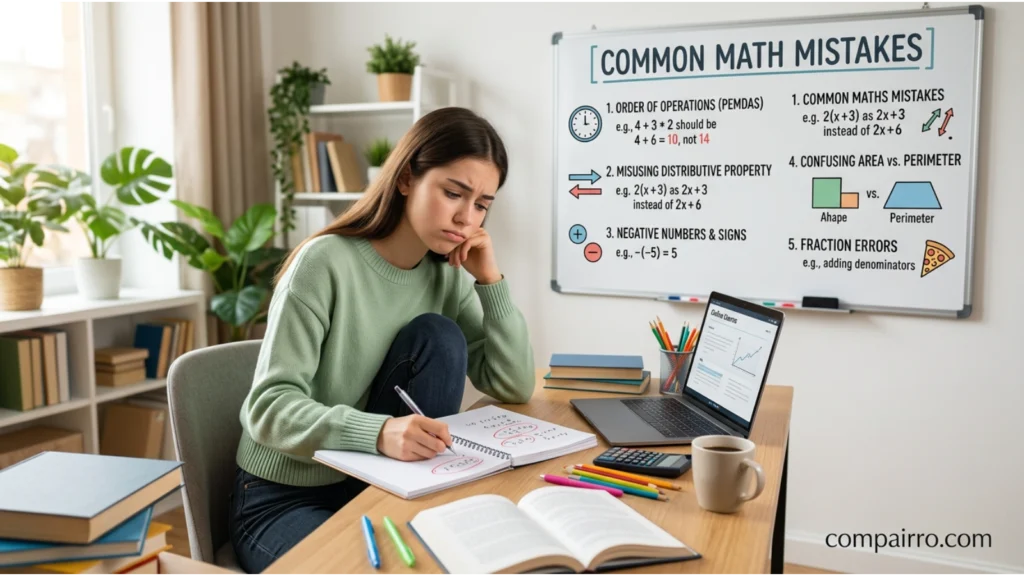
Mistake 1
❌ Maths is wrong.
✔ Maths is correct in British English.
Mistake 2
❌ Math is wrong.
✔ Math is correct in American English.
Mistake 3
❌ Math and maths have different meanings.
✔ Both mean mathematics.
Mistake 4
❌ Switching between math and maths in the same article.
✔ Choose one spelling and stay consistent.
Mistake 5
❌ Correcting someone else’s spelling without considering their country.
✔ Check whether they are using British or American English.
Math or Maths in Everyday Examples
Work
✅ The company needs employees with strong math skills.
✅ The company needs employees with strong maths skills.
School
✅ Math is my favorite subject.
✅ Maths is my favorite subject.
Social Media
✅ Need help with my math homework!
✅ Need help with my maths homework!
Daily Life
✅ Good math skills help with budgeting.
✅ Good maths skills help with budgeting.
Text Messages
✅ I am studying for my math exam.
✅ I’m revising for my maths exam.
Math or Maths – Google Trends & Usage Data

Many people search for math or maths because they notice different spellings online and want to know which one is correct.
Searches are especially common among:
- Students
- Teachers
- English learners
- Content writers
- Bloggers
Popular Countries
- United States → Mostly uses math
- United Kingdom → Mostly uses maths
- India → Often uses maths
- Pakistan → Commonly uses maths
- Canada → Both forms appear
- Australia → Mostly uses maths
Why the Topic Is Popular
- School assignments
- Academic writing
- SEO content creation
- Social media discussions
- International communication
Most confusion comes from seeing both spellings online.
Comparison Table: Math or Maths
| Feature | Math | Maths |
|---|---|---|
| Full word | Mathematics | Mathematics |
| Region | United States | UK and many Commonwealth countries |
| Meaning | Mathematics | Mathematics |
| School usage | Very common | Very common |
| Professional use | Common in US | Common in UK |
| Correctness | Correct | Correct |
Math or Maths in Professional Life
Math skills are important in many careers.
Examples include:
- Engineering
- Finance
- Accounting
- Data analysis
- Computer science
- Architecture
- Business management
In professional communication, people generally use the spelling preferred in their country.
For example:
- American companies usually write math.
- British companies usually write maths.
The meaning remains exactly the same.
Math or Maths for Students or Beginners
Students often struggle with this topic because they think one spelling must be wrong.
Common confusion includes:
- Seeing different spellings in textbooks
- Watching videos from different countries
- Reading international websites
Easy Learning Tips
- Learn your country’s preferred version.
- Remember that both mean mathematics.
- Stay consistent in essays and assignments.
- Check your school’s language style.
With practice, choosing the correct version becomes easy.
Signs or Characteristics Related to Math or Maths
Key Characteristics
- Related to numbers
- Uses logic and problem-solving
- Helps develop critical thinking
- Used in science and technology
- Important in daily life
Common Uses
- Calculating money
- Measuring distances
- Managing budgets
- Analyzing data
- Solving real-world problems
Learning Patterns
- Practice improves skills
- Understanding concepts matters
- Problem-solving builds confidence
- Regular study helps retention
Simple Trick to Remember Math or Maths
👉 Math = America
👉 Maths = Britain and many Commonwealth countries
Think of it this way:
You are writing for New York, use math.
If you are writing for London, use maths.
If you are writing for an international audience, choose one style and use it consistently throughout your content.
That simple rule helps most people remember the difference.
FAQs:
1. Is math or maths correct?
Both are correct. The choice depends on the type of English being used.
2. Why do Americans say math?
American English shortened mathematics to math.
3. Why do British people say maths?
British English kept the final “s” from mathematics and uses maths.
4. Do math and maths mean different things?
No. Both words mean mathematics.
5. Which spelling is used in Pakistan?
Maths is more commonly used in Pakistan.
6. Can I use math in academic writing?
Yes, if you are following American English conventions.
7. Which spelling should international writers choose?
Choose the version that matches your audience and use it consistently.
Conclusion
The debate between math or maths is not about right versus wrong. Both words are correct abbreviations of mathematics. The main difference is regional usage.
American English prefers math, while British English and many other countries prefer maths. The meaning never changes.
The most important thing is consistency. Use the spelling that matches your audience and stick with it throughout your writing.
Final Memory Rule
👉 America = Math
👉 Britain and many Commonwealth countries = Maths
Remember this simple rule, and you’ll never be confused about math or maths again.

Sara Taylor is a passionate English content writer who specializes in word meanings, spelling comparisons, and modern slang explanations. She creates easy-to-understand articles that help readers avoid common English mistakes and improve their writing skills. Her content focuses on simple learning, real-life examples, and clear explanations for everyday readers.