Imagine you are following a recipe online. It says, “Add 2 cups of stock.” But when you open your kitchen cabinet, you only have broth. Now you may wonder: stock or broth—are they the same thing?
Many people get confused by these two cooking terms. They often appear in recipes, cooking videos, grocery stores, food blogs, and social media posts. Some people use the words interchangeably, while others believe there is a big difference between them.
Understanding the difference matters because stock and broth can affect the flavor, texture, and richness of a dish. Whether you are making soup, gravy, sauce, or rice, choosing the right option can improve your cooking results.
Students learning cooking, home cooks, restaurant workers, and food lovers frequently search for the meaning of stock or broth. The terms are common in both professional kitchens and everyday cooking.
The good news is that the difference is easy to understand once you know the basics.
In this guide, you’ll learn the meaning, examples, usage, differences, common mistakes, and simple explanations in easy English.
Stock or Broth – Quick Answer
👉 Stock and broth are both flavorful cooking liquids, but they are made differently.
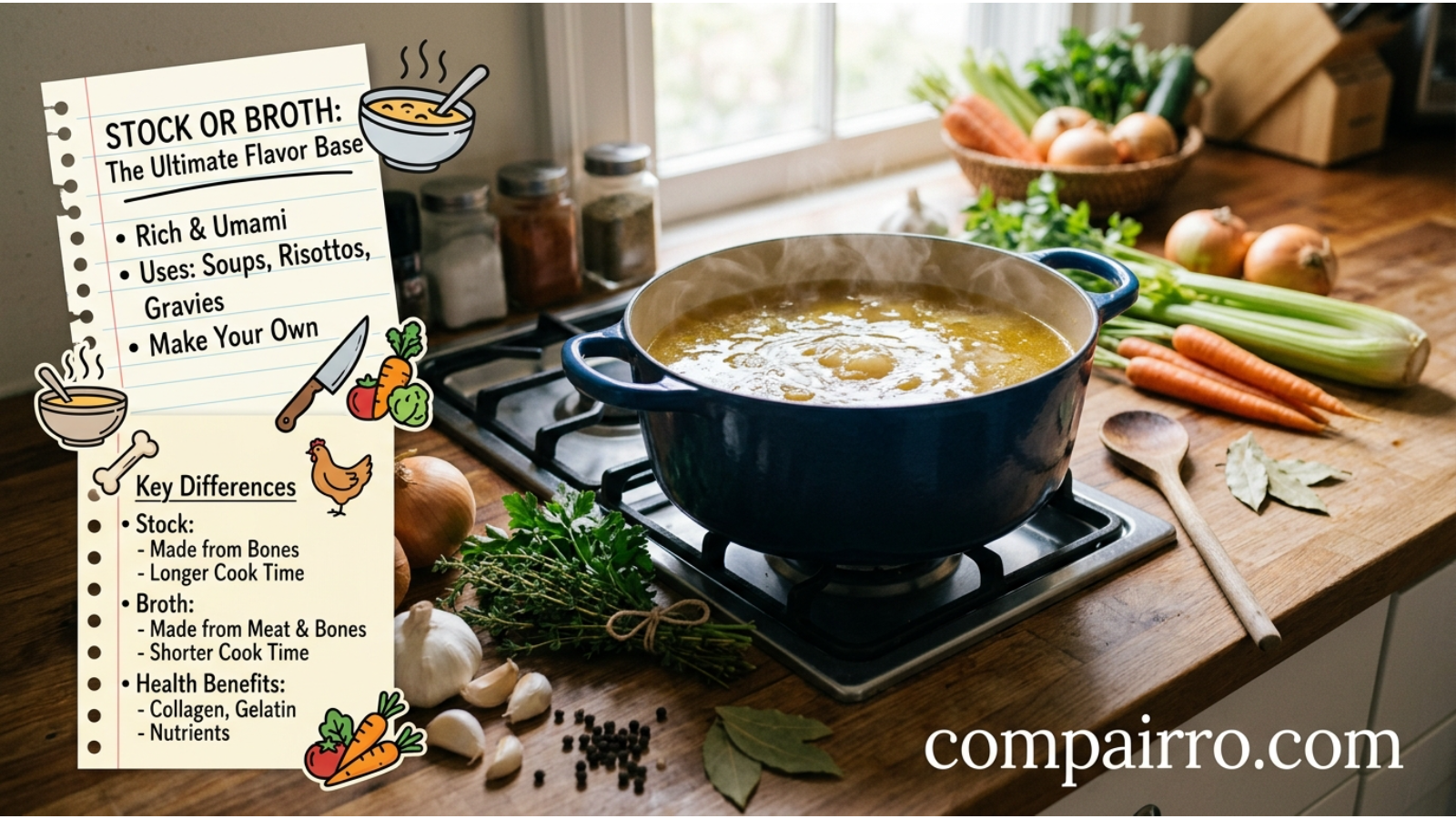
- Stock is usually made by simmering bones, vegetables, and herbs.
- Broth is usually made by simmering meat, vegetables, and seasonings.
Examples
1 Chicken stock can be used to make sauces.
2 Chicken broth can be enjoyed as a light soup.
3 Beef stock is often used for rich gravies.
Simple Rule
👉 Bones = Stock
👉 Meat = Broth
This easy rule helps beginners remember the difference.
The Origin of Stock or Broth
The use of stock and broth goes back hundreds of years. People discovered that simmering bones, meat, and vegetables in water created a flavorful liquid.
The word broth comes from old Germanic languages and has been used for centuries to describe a soup-like liquid.
The word stock became popular in professional cooking because it acts as a “base” or “foundation” for many recipes.
Today, both terms are common around the world. They appear in cookbooks, cooking shows, restaurant menus, and social media food content.
British English vs American English Usage
The meanings of stock and broth are generally the same in British and American English.
However, some recipes may use the terms more loosely, especially in home cooking.
| Feature | British English | American English | Notes |
|---|---|---|---|
| Stock | Common | Common | Usually made with bones |
| Broth | Common | Common | Usually made with meat |
| Everyday Usage | Sometimes interchangeable | Sometimes interchangeable | Depends on the cook |
| Professional Kitchens | Clear distinction | Clear distinction | Same basic definitions |
Which One Should You Use?
The best choice depends on what you are cooking.
Use Stock When:
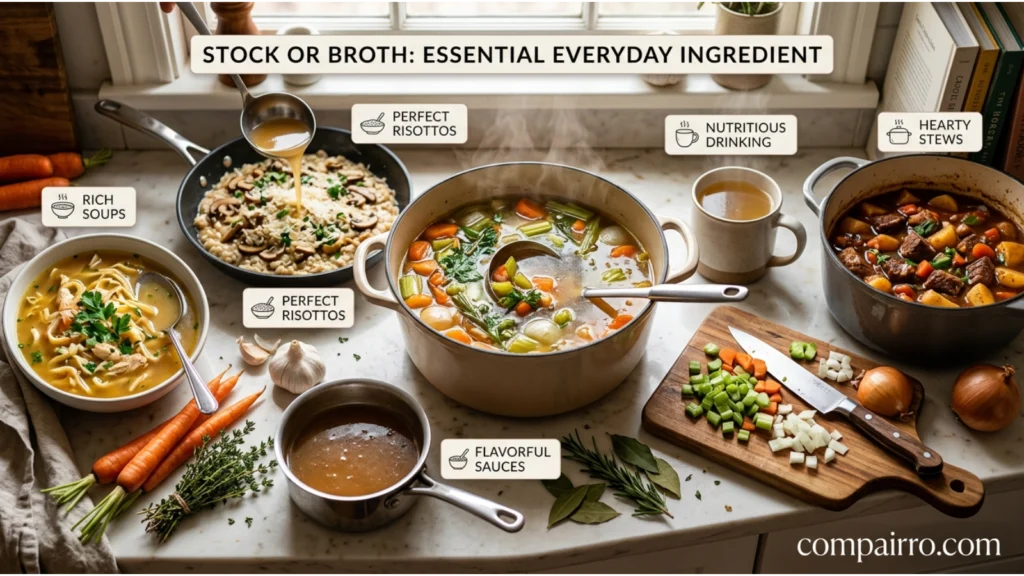
- Making sauces
- Preparing gravies
- Cooking risotto
- Creating rich flavors
- Needing extra body in a dish
Use Broth When:
- Making soup
- Drinking it alone
- Preparing light meals
- Wanting a ready-to-eat flavorful liquid
Formal vs Informal Usage
- Professional chefs often distinguish between stock and broth.
- Home cooks may use the words interchangeably.
- Recipes usually specify which one works best.
Common Mistakes With Stock or Broth
Mistake 1
❌ Using stock and broth as exactly the same thing in every recipe.
✔ They are similar but have different cooking purposes.
Mistake 2
❌ Thinking stock contains no flavor.
✔ Stock has flavor, but it is usually less seasoned than broth.
Mistake 3
❌ Believing broth must always be soup.
✔ Broth can be used in cooking or served by itself.
Mistake 4
❌ Assuming store-bought products always follow strict definitions.
✔ Some brands label products differently, so read the package carefully.
Mistake 5
❌ Adding extra salt without tasting first.
✔ Many broths already contain seasoning.
Stock or Broth in Everyday Examples
Work
A restaurant chef uses beef stock to prepare a rich sauce for steak.
School
A culinary student learns that stock is often made with bones.
Social Media
A food creator shares a video showing homemade chicken broth.
Daily Life
A parent uses vegetable stock while cooking rice for dinner.
Text Messages
Friend: What should I buy for soup?
You: Chicken broth works great for soup.
Stock or Broth – Google Trends & Usage Data

Many people search for stock or broth because recipes often mention both terms without explaining the difference.
Why People Search It
- Cooking beginners need guidance.
- Recipes use different terms.
- People want healthier meal options.
- Home cooking has become more popular.
Popular Countries
Search interest commonly comes from:
- United States
- United Kingdom
- India
- Pakistan
- Canada
- Australia
Search Trends
Interest increases during:
- Winter months
- Holiday cooking seasons
- Soup-making season
- Healthy eating trends
Social Media Popularity
Food influencers often discuss:
- Homemade stock
- Bone broth
- Soup recipes
- Healthy cooking
This creates curiosity among beginners.
Comparison Table: Stock or Broth
| Feature | Stock | Broth |
|---|---|---|
| Main Ingredient | Bones | Meat |
| Flavor | Mild | Richer |
| Seasoning | Usually less | Usually more |
| Texture | Slightly thicker | Lighter |
| Used For | Sauces, gravies | Soups, drinking |
| Cooking Time | Often longer | Often shorter |
| Professional Use | Base ingredient | Finished food |
Stock or Broth in Professional Life
Professional chefs rely heavily on both stock and broth.
Stock is often considered a building block in restaurant kitchens. It forms the base for many sauces, soups, and gourmet dishes.
Broth is commonly served as part of soups and other prepared meals.
Food companies also produce packaged versions for consumers. Understanding the difference helps kitchen workers, culinary students, and restaurant staff follow recipes accurately.
Stock or Broth for Students or Beginners
Many beginners struggle because the liquids look very similar.
Common Confusion
- Both are made with water.
- Both contain vegetables.
- Both are used in cooking.
- Grocery stores place them together.
Easy Learning Tips
- Remember: bones usually mean stock.
- Remember: meat usually means broth.
- Read recipe instructions carefully.
- Taste both to notice differences.
The more you cook, the easier it becomes to recognize them.
Signs or Characteristics Related to Stock or Broth
Characteristics of Stock
- Often made with bones
- Less heavily seasoned
- Used as a cooking base
- Rich texture
- Longer cooking time
Characteristics of Broth
- Often made with meat
- More seasoned
- Ready to eat
- Lighter texture
- Common in soups
Shared Features
- Made with water
- Can include vegetables
- Used in cooking
- Available homemade or packaged
- Popular worldwide
Simple Trick to Remember Stock or Broth
Easy Memory Trick
👉 Stock = Skeleton (Bones)
👉 Broth = Bite of Meat
Think of it this way:
If you imagine a pot full of bones creating a cooking base, think stock.
If you imagine a flavorful liquid from cooked meat that can be enjoyed as soup, think broth.
This simple image helps many beginners remember the difference quickly.
FAQs:
1. Is stock the same as broth?
No. They are very similar, but stock is usually made with bones while broth is usually made with meat.
2. Can I substitute broth for stock?
Yes. In many recipes, they can replace each other.
3. Which is healthier, stock or broth?
Both can be healthy. The answer depends on ingredients and salt content.
4. Can you drink stock by itself?
Yes, but broth is more commonly consumed on its own.
5. Why do chefs prefer stock?
Stock provides a rich base for sauces and professional recipes.
6. Is bone broth the same as stock?
Bone broth is similar to stock but is often cooked longer and marketed differently.
7. Which is better for soup?
Broth is often preferred because it is usually more seasoned and ready to serve.
Conclusion
Understanding stock or broth is easier than many people think. Both are Cooks make flavorful cooking liquids in different ways, and they often use them for different purposes in the kitchen.
Cooks make stock from bones, and it serves as a strong cooking base. They make broth from meat, and people commonly enjoy it in soups and other finished dishes.
The easiest rule to remember is:
👉 Bones = Stock
👉 Meat = Broth
Once you know this simple difference, reading recipes and cooking meals becomes much easier and more enjoyable.

Sara Taylor is a passionate English content writer who specializes in word meanings, spelling comparisons, and modern slang explanations. She creates easy-to-understand articles that help readers avoid common English mistakes and improve their writing skills. Her content focuses on simple learning, real-life examples, and clear explanations for everyday readers.