Imagine you are sitting in a biology class and your teacher asks, “Is bacteria biotic or abiotic?” At first, the question can feel confusing. You may remember that bacteria are tiny and cannot usually be seen without a microscope. Because of their small size, some students wonder whether they should be treated like non-living things.
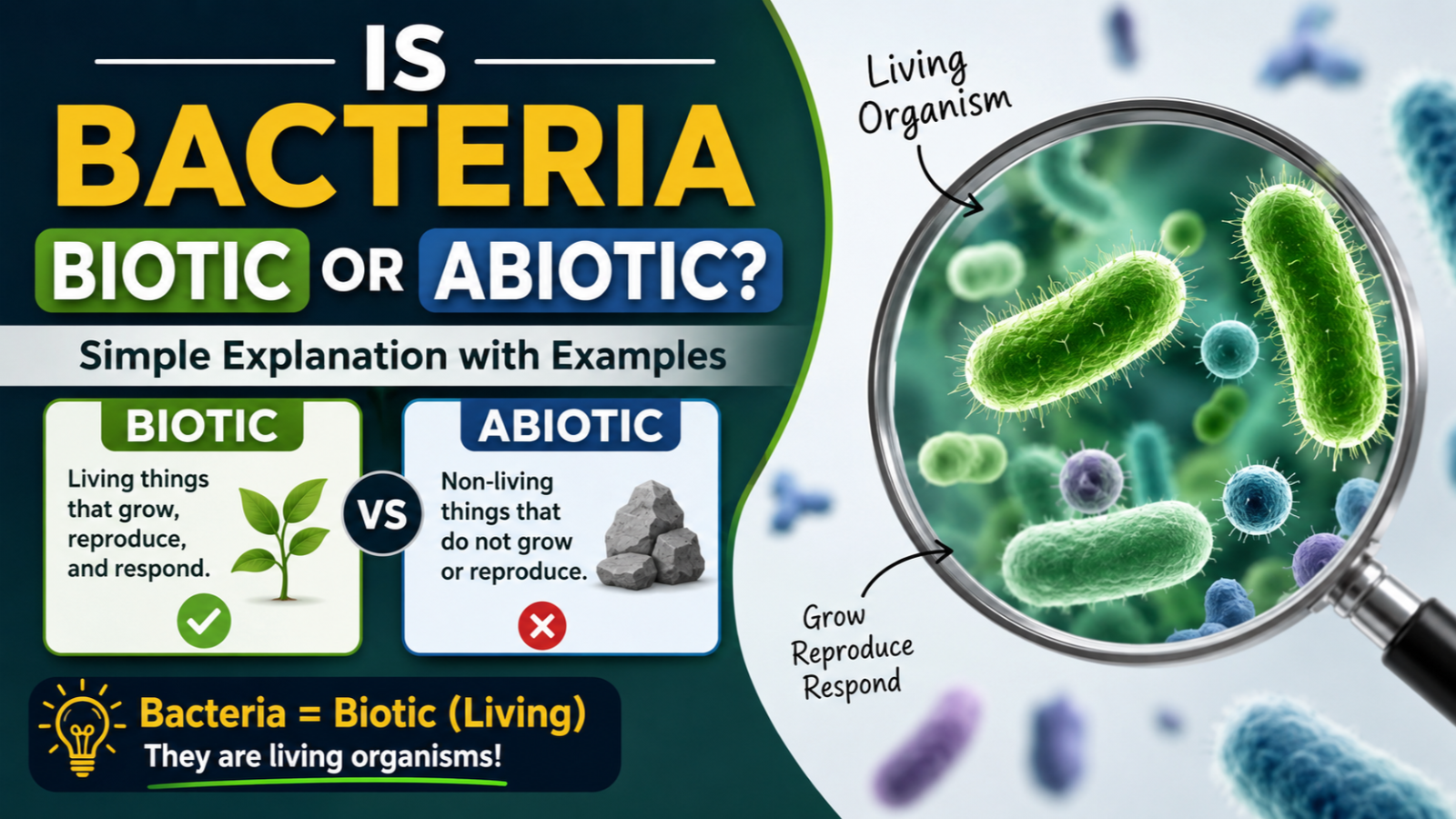
The answer is simple: bacteria are biotic because they are living organisms. They are made of cells and can carry out important life processes. However, bacteria are different from plants and animals because they are usually single-celled organisms.
People often search “is bacteria biotic or abiotic” when studying ecosystems, food chains, environmental science, or basic biology. The question commonly appears in school assignments, online quizzes, science notes, and classroom discussions.
You may also see the terms biotic factors and abiotic factors when learning about ecosystems. Biotic factors include living things such as bacteria, plants, animals, fungi, and other organisms. Abiotic factors include non-living parts of the environment, such as water, sunlight, temperature, air, soil, and minerals.
Understanding the difference is important because living and non-living factors work together in every ecosystem. Bacteria, for example, can help break down dead material and return nutrients to the soil.
In this guide, you’ll learn the meaning, examples, usage, differences, common mistakes, and simple explanations in easy English.
IS BACTERIA BIOTIC OR ABIOTIC – QUICK ANSWER
👉 Bacteria are biotic because bacteria are living organisms.
Bacteria are usually single-celled microorganisms. They can grow, reproduce, use energy, respond to their surroundings, and perform other life processes.
Examples
- Bacteria in soil are biotic because they are living organisms.
- Bacteria that help break down dead material are biotic.
- Helpful bacteria in the human digestive system are also biotic.
Simple rule:
👉 Biotic = living. Abiotic = non-living.
Think of it this way: if something is a living organism, it belongs to the biotic part of an ecosystem. Since bacteria are alive, they are biotic.
THE ORIGIN OF IS BACTERIA BIOTIC OR ABIOTIC
The question itself is not a scientific term with one specific historical origin. Instead, it combines two biology terms: biotic and abiotic.
The word biotic comes from a Greek root related to life. In biology, it describes things connected with living organisms.
The prefix a- in abiotic means “without” or “not.” Therefore, abiotic refers to something that is not living.
Scientists use these terms when describing ecosystems. An ecosystem contains both living organisms and non-living environmental conditions.
For example, bacteria are biotic, while the temperature around them is abiotic. Both can affect how an ecosystem works.
BRITISH ENGLISH VS AMERICAN ENGLISH USAGE
There is no important British English vs American English difference in the scientific meaning of biotic and abiotic.
Students in the UK, US, Canada, Australia, India, Pakistan, and other English-speaking education systems use these terms in the same basic way.
| Feature | British English | American English | Notes |
|---|---|---|---|
| Biotic | Biotic | Biotic | Same meaning |
| Abiotic | Abiotic | Abiotic | Same meaning |
| Bacteria | Bacteria | Bacteria | Same scientific term |
| Scientific meaning | Living factors | Living factors | No major difference |
| Spelling | Biotic | Biotic | Same spelling |
The main difference students may notice is not British or American English. It is the difference between biotic and abiotic.
WHICH ONE SHOULD YOU USE?
If you are answering the question “Is bacteria biotic or abiotic?”, use biotic.
You can write:
Bacteria are biotic factors because they are living organisms.
For school or academic work, keep the explanation clear and direct.
Use these points as a guide:
- School biology: Say that bacteria are living organisms and therefore biotic.
- Ecology: Describe bacteria as biotic components or biotic factors.
- Environmental science: Explain how bacteria interact with plants, animals, soil, and nutrients.
- Casual conversation: You can simply say, “Bacteria are living microorganisms.”
- Academic writing: Use “biotic” when discussing living parts of an ecosystem.
One small language point is also useful. Bacteria is the plural form of bacterium. So it is natural to say “bacteria are,” not “bacteria is,” when talking about bacteria in general.

COMMON MISTAKES WITH IS BACTERIA BIOTIC OR ABIOTIC
Mistake 1: Thinking tiny things are abiotic
❌ “Bacteria are abiotic because they are too small to see.”
✔ Size does not decide whether something is biotic. Bacteria are living organisms, even though most are microscopic.
Mistake 2: Confusing bacteria with minerals
❌ “Bacteria are like minerals because both can be found in soil.”
✔ Soil contains both living and non-living components. Bacteria are biotic, while minerals are abiotic.
Mistake 3: Saying all things in soil are abiotic
❌ “Soil is abiotic, so everything in soil is abiotic.”
✔ Soil contains non-living materials, but it can also contain living organisms such as bacteria, fungi, insects, and plant roots.
Mistake 4: Thinking only plants and animals are biotic
❌ “Only plants and animals are biotic.”
✔ Many types of living organisms are biotic, including bacteria, fungi, algae, plants, and animals.
Mistake 5: Confusing bacteria with viruses
❌ “Bacteria and viruses are both exactly the same type of living organism.”
✔ Bacteria are cellular living organisms. Viruses are much simpler infectious particles and are generally not classified as living organisms in the same way bacteria are.
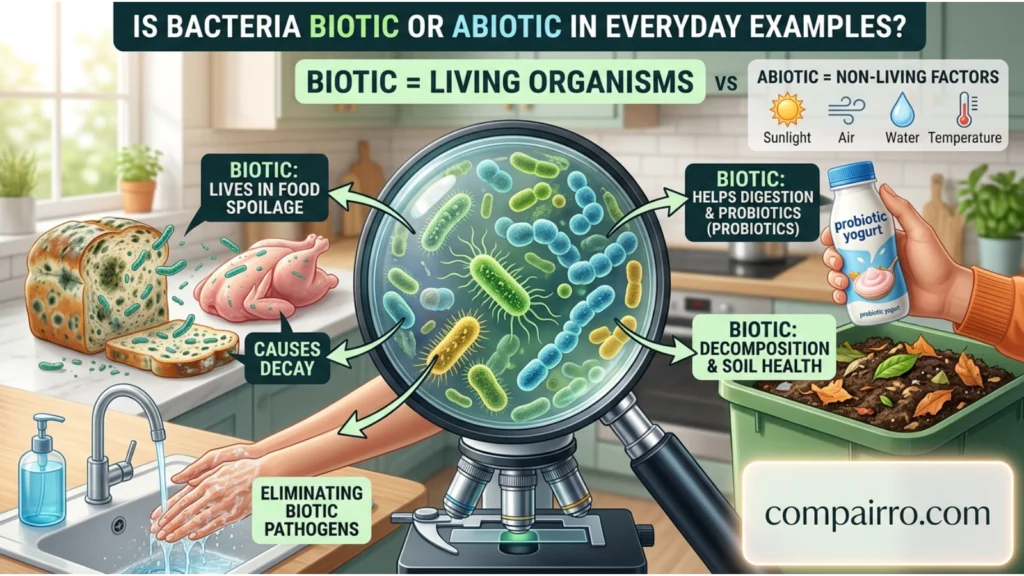
IS BACTERIA BIOTIC OR ABIOTIC IN EVERYDAY EXAMPLES?
Work
In a laboratory, scientists may study bacteria to understand disease, food production, environmental processes, or other biological activities.
Because bacteria are living organisms, they are considered biotic.
School
A student may be asked:
Question: Is bacteria a biotic or abiotic factor?
Answer: Bacteria are a biotic factor because they are living organisms.
Social Media
Science pages may use terms such as “biotic factors” and “abiotic factors” when explaining ecosystems.
For example:
“Plants, animals, and bacteria are biotic parts of an ecosystem.”
Daily Life
Bacteria can live in many environments, including soil, water, and on or inside living organisms.
Some bacteria are useful. Others can cause disease. Their effect depends on the type of bacterium and its environment.
Text Messages
This topic is more common in schoolwork than texting. A student might simply message:
“Are bacteria biotic?”
A short answer would be:
“Yes. Bacteria are biotic because they are living organisms.”
IS BACTERIA BIOTIC OR ABIOTIC – GOOGLE TRENDS & USAGE DATA
The search “is bacteria biotic or abiotic” is mainly an educational question. Students often search it while studying ecology, biology, environmental science, or ecosystem components.
It is especially useful for beginners because the words biotic and abiotic sound similar. The small difference in spelling can easily cause confusion.
Search interest can appear in countries where biology is taught in English, including:
- United States
- United Kingdom
- India
- Pakistan
- Canada
- Australia
The exact popularity of this query can change over time and around school and exam periods. Search interest may also vary by country and academic calendar.
Rather than relying on a fixed search-volume number, it is better to check current Google Trends or keyword tools for live data. The educational intent behind the query, however, is clear: people mainly want to know whether bacteria count as living or non-living components of an ecosystem.
Related searches may include:
- Are bacteria biotic factors?
- Is bacteria a living thing?
- Is bacteria an abiotic factor?
- What are biotic factors?
- What are abiotic factors?
- Are microorganisms biotic?
- Examples of biotic and abiotic factors
COMPARISON TABLE: IS BACTERIA BIOTIC OR ABIOTIC
| Feature | Bacteria | Abiotic Factors |
|---|---|---|
| Living? | Yes | No |
| Category | Biotic | Abiotic |
| Made of cells? | Yes, bacteria are cellular organisms | No |
| Can reproduce? | Yes, bacteria can reproduce | No |
| Uses energy? | Yes | No |
| Responds to surroundings? | Yes | No |
| Example | Bacteria in soil | Temperature |
| Ecosystem role | Living component | Non-living condition or resource |
Another easy comparison is:
| Biotic | Abiotic |
|---|---|
| Bacteria | Water |
| Plants | Sunlight |
| Animals | Temperature |
| Fungi | Minerals |
| Algae | Air |
This table shows why bacteria belong to the biotic side.
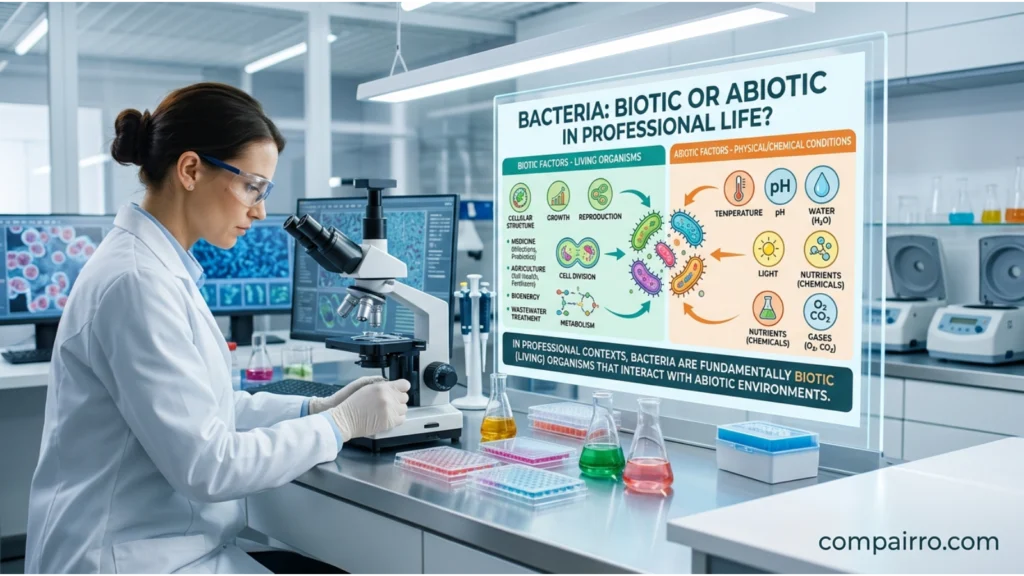
IS BACTERIA BIOTIC OR ABIOTIC IN PROFESSIONAL LIFE?
The distinction is important in several professional fields.
Biology
Biologists study bacteria as living organisms. They may investigate their growth, reproduction, genetics, and interactions with other organisms.
Environmental Science
Environmental scientists study how bacteria affect soil, water, nutrient cycles, and ecosystems.
Medicine
Medical researchers study bacteria because some species can cause infections, while others can be useful in health and biotechnology.
Agriculture
Bacteria can affect soil health and nutrient availability. Some bacteria help plants obtain nutrients, while others may harm crops.
Food Science
Some bacteria are used in food production. For example, certain bacteria are important in making fermented foods.
So, understanding whether bacteria are biotic or abiotic is not only useful for exams. It also helps explain real scientific processes.
IS BACTERIA BIOTIC OR ABIOTIC FOR STUDENTS OR BEGINNERS?
Beginners often struggle because biotic and abiotic look almost identical.
The easiest way to learn them is to focus on the first part of each word.
Easy learning tips
- Learn “biotic” as living.
- Learn “abiotic” as non-living.
- Make two columns in your notes.
- Put bacteria, plants, animals, and fungi under biotic.
- Put water, sunlight, temperature, and minerals under abiotic.
- Practice with simple ecosystem examples.
For example:
Forest ecosystem
- Trees → biotic
- Birds → biotic
- Bacteria → biotic
- Fungi → biotic
- Sunlight → abiotic
- Water → abiotic
- Temperature → abiotic
This simple exercise makes the difference much easier to remember.
SIGNS OR CHARACTERISTICS RELATED TO IS BACTERIA BIOTIC OR ABIOTIC
Characteristics of bacteria as biotic organisms
- Bacteria are living organisms.
- Most bacteria consist of one cell.
- They can grow under suitable conditions.
- They can reproduce.
- They use energy and carry out life processes.
- They can respond to changes in their environment.
- They contain genetic material.
- They interact with other living organisms.
- They can play important roles in ecosystems.
Characteristics of abiotic factors
- They are non-living.
- They do not reproduce.
- They do not grow as living organisms do.
- They include physical and chemical conditions.
- Examples include sunlight, temperature, water, air, and minerals.
The key difference is simple: bacteria have the characteristics of living organisms, while abiotic factors do not.
SIMPLE TRICK TO REMEMBER IS BACTERIA BIOTIC OR ABIOTIC
Here is an easy memory trick:
👉 BIO = LIFE
The word biotic contains bio, which is connected with life.
So:
👉 Biotic = Living
And:
👉 Abiotic = Not living
Think of it this way:
If you see bio, think life.
- Bacteria → living → biotic
- Plants → living → biotic
- Animals → living → biotic
- Water → non-living → abiotic
- Sunlight → non-living → abiotic
- Temperature → non-living → abiotic
One-line memory rule
“Bio means life, so bacteria are biotic.”
That is enough to answer most basic questions about whether bacteria are biotic or abiotic.
FAQs:
1. Are bacteria biotic or abiotic?
Bacteria are biotic because they are living organisms.
2. Why are bacteria considered biotic?
Bacteria are considered biotic because they are cellular living organisms that carry out life processes.
3. Are bacteria a biotic factor?
Yes. In an ecosystem, bacteria can be considered a biotic factor because they are living organisms.
4. Is bacteria a living thing?
Yes. Bacteria are living microorganisms. They can grow, reproduce, use energy, and respond to their surroundings.
5. What is an example of an abiotic factor?
Sunlight, water, temperature, air, and minerals are common examples of abiotic factors.
6. Are microorganisms biotic?
Living microorganisms, such as bacteria and many fungi and algae, are biotic because they are living organisms.
7. What is the easiest way to remember biotic and abiotic?
Remember BIO = life. Therefore, biotic means living, while abiotic means non-living.
CONCLUSION
So, is bacteria biotic or abiotic? The clear answer is biotic. Bacteria are living organisms, so they belong to the biotic part of an ecosystem.
They may be microscopic, but being tiny does not make something non-living. Bacteria can grow, reproduce, use energy, and interact with their surroundings.
On the other hand, things such as sunlight, water, temperature, and minerals are abiotic because they are non-living parts of the environment.
The easiest rule to remember is:
👉 Biotic = living
👉 Abiotic = non-living
👉 Bacteria = biotic
Once you remember that BIO means life, the question “is bacteria biotic or abiotic” becomes very easy to answer.

Sara Taylor is a passionate English content writer who specializes in word meanings, spelling comparisons, and modern slang explanations. She creates easy-to-understand articles that help readers avoid common English mistakes and improve their writing skills. Her content focuses on simple learning, real-life examples, and clear explanations for everyday readers.