If you are new to U.S. politics, you may hear people say that Democrats are “left-wing” or “on the left.” At the same time, you may see Democrats disagree with one another on taxes, healthcare, immigration, climate policy, and other major issues. This can make the simple question “are Democrats left or right?” harder than it first appears.
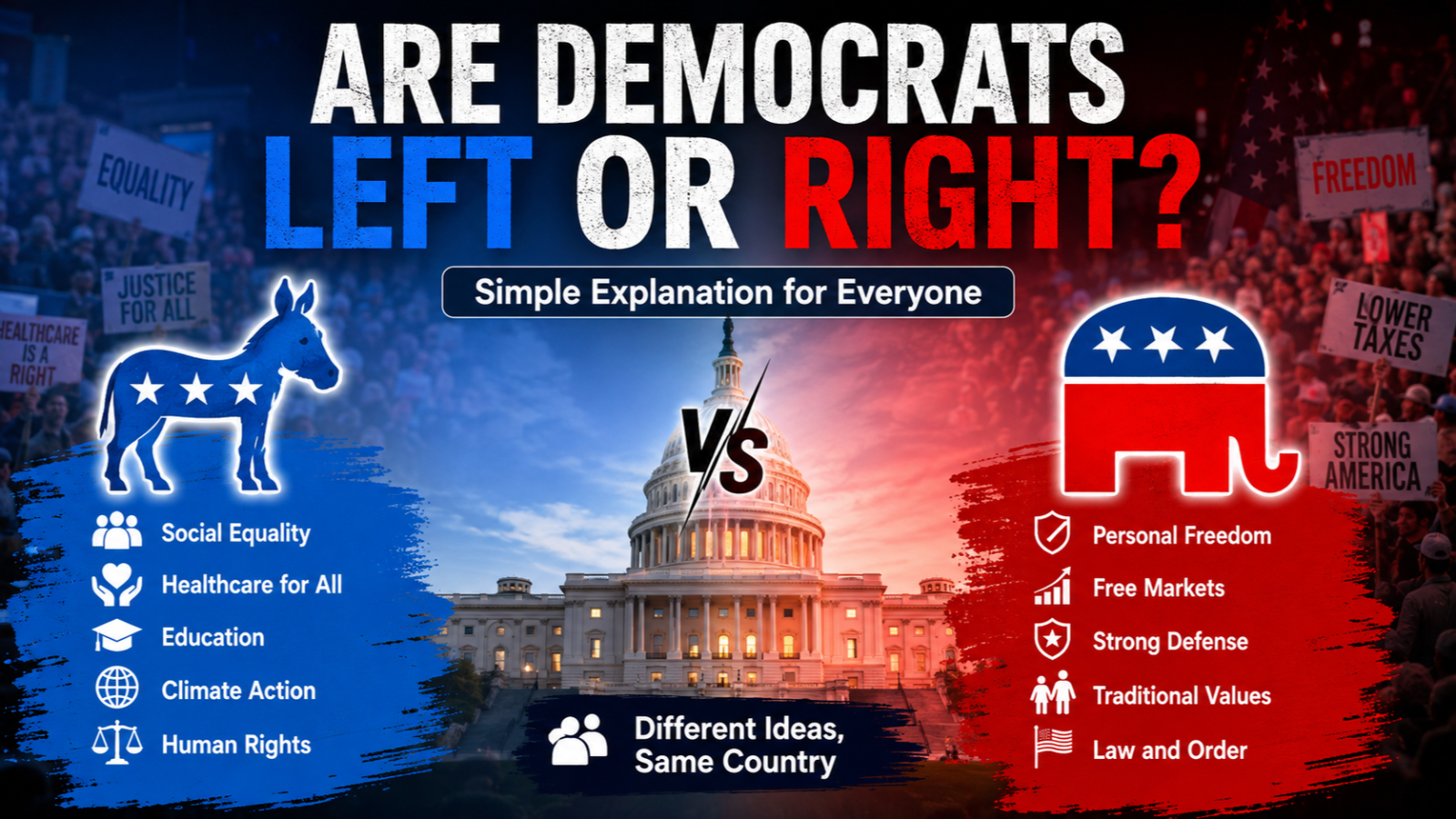
The answer is generally straightforward: the Democratic Party is considered a center-left or left-leaning political party in the United States. However, Democrats are not all the same. The party includes people with different views, from moderate Democrats to more progressive Democrats.
People often search this question because political labels such as left, right, liberal, conservative, Democrat, and Republican can be confusing. These terms appear in school discussions, workplace conversations, news reports, social media posts, political debates, and internet searches.
It is also important to remember that political labels can change depending on the country. A position considered “left” in the United States may not fit exactly into the political system of another country.
Understanding these labels can make political news much easier to follow. Instead of judging someone only by a label, you can look at the specific policies and ideas they support.
In this guide, you’ll learn the meaning, examples, usage, differences, common mistakes, and simple explanations in easy English.
Are Democrats Left or Right – Quick Answer
👉 Democrats = Generally center-left or left-leaning in U.S. politics.
The Democratic Party is one of the two major political parties in the United States. In broad terms, Democrats tend to support policies associated with the political left, although individual Democrats can have moderate or conservative views on some issues.
Examples
- A Democrat may support expanding access to healthcare.
- A Democrat may support stronger environmental protections.
- A Democrat may support government programs that provide social and economic assistance.
These examples describe broad tendencies, not every Democrat.
Simple rule:
👉 Democrats are generally on the left; Republicans are generally on the right.
However, the political spectrum is not simply black and white. There are many different views within both parties.
The Origin of “Are Democrats Left or Right?”
The question comes from the broader political idea of a left-right spectrum.
The terms “left” and “right” have historical roots in the French Revolution. Political groups with different views sat on different sides of the French legislative assembly. Over time, “left” and “right” became common ways to describe political positions.
In the United States, the Democratic Party developed over a long period and has changed significantly throughout its history. The party’s positions today are not identical to those of Democrats many decades ago.
Modern U.S. politics commonly places Democrats on the center-left and Republicans on the center-right or right. Still, this is a broad description rather than a strict rule.
The internet has also made these labels more common. People frequently use terms such as “left-wing,” “right-wing,” “liberal,” “conservative,” “progressive,” and “moderate” when discussing politics online.
British English vs American English Usage
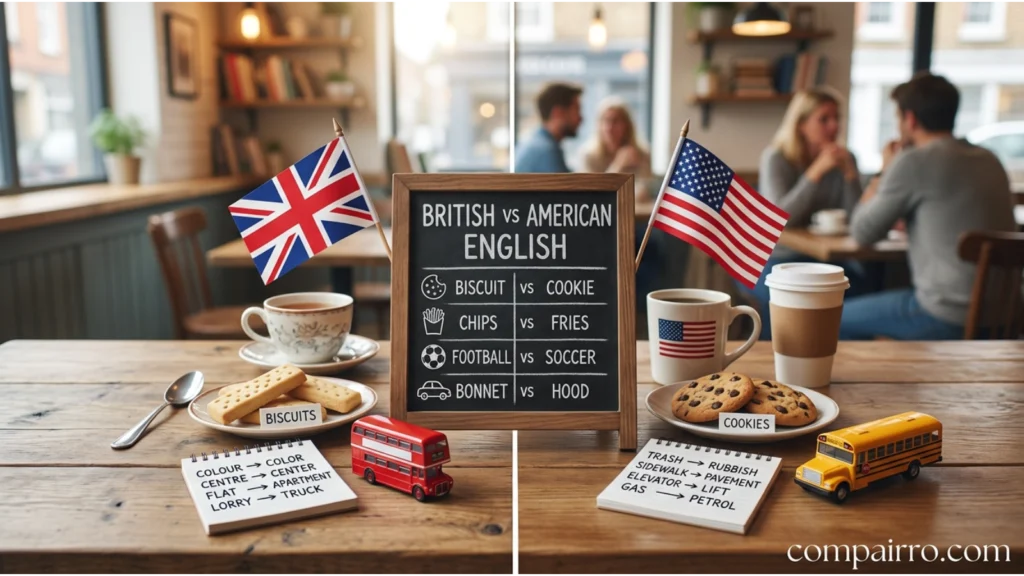
There is no major British-versus-American spelling difference in the phrase “are Democrats left or right?” The important difference is political context.
The word Democrat usually refers specifically to a member or supporter of the Democratic Party in the United States.
| Feature | British English | American English | Notes |
|---|---|---|---|
| Democrat | Used when discussing U.S. politics | Common | Refers to the U.S. Democratic Party |
| Left | Political term | Political term | Often means left-leaning politics |
| Right | Political term | Political term | Often means right-leaning politics |
| Liberal | Can have different meanings | Common political label | Meaning depends on context |
| Democratic Party | Refers to U.S. party | Refers to U.S. party | Same party |
So, the phrase can be understood in both British and American English. However, political labels may have different meanings in different countries.
Which One Should You Use?
If you are describing the Democratic Party in modern U.S. politics, “left-leaning” or “center-left” is usually more precise than simply saying every Democrat is “far left.”
Use these terms carefully:
- Democrat: A member or supporter of the Democratic Party.
- Left-leaning: Generally supports ideas associated with the political left.
- Center-left: Positioned between the political center and the left.
- Progressive: Usually describes someone who supports stronger or more progressive policy changes.
- Liberal: A broad political term that often describes Democrats, but not every Democrat has exactly the same liberal views.
- Moderate Democrat: A Democrat whose views are closer to the political center on some issues.
For formal writing, it is better to discuss a person’s specific policy position instead of assuming that a party label tells you everything.

Common Mistakes With “Are Democrats Left or Right?”
Mistake 1: Saying every Democrat is far left
❌ “Every Democrat is far left.”
✔ The Democratic Party is generally center-left or left-leaning, but it contains people with different political views.
Mistake 2: Treating left and right as exact labels
❌ “If someone is a Democrat, they must agree with every left-wing idea.”
✔ Political parties contain different groups and opinions.
Mistake 3: Confusing Democrats with democratic government
❌ “A country is Democratic, so it supports the Democratic Party.”
✔ Democratic can describe a form of government, while Democratic Party is the name of a U.S. political party.
Mistake 4: Assuming the same label works everywhere
❌ “Left means exactly the same thing in every country.”
✔ Political labels can vary by country and political system.
Mistake 5: Ignoring individual differences
❌ “The party’s position automatically tells me what every Democrat believes.”
✔ Individual Democrats can disagree with their party or with one another.
Are Democrats Left or Right in Everyday Examples?
The phrase usually appears in political discussions rather than normal daily conversation. Here are some realistic examples.
Work
Example:
“People at work were discussing whether Democrats are left or right.”
This simply means they were discussing where the Democratic Party fits on the U.S. political spectrum.
School
Example:
“Our teacher explained why Democrats are usually described as center-left.”
This is a normal way to introduce students to political terms.
Social Media
Example:
“Someone on social media asked, ‘Are Democrats left or right?’”
Social media often uses political labels quickly, so it is useful to check what someone means by “left” or “right.”
Daily Life
Example:
“My friend wanted to understand the difference between Democrats and Republicans.”
A simple explanation is that Democrats are generally associated with the U.S. political left, while Republicans are generally associated with the U.S. political right.
Text Messages
Example:
“Are Democrats left or right?”
A short answer could be:
“Generally left or center-left in U.S. politics.”

Are Democrats Left or Right – Google Trends & Usage Data
People search “are Democrats left or right” because political labels are not always easy to understand. Many people know the names of the Democratic and Republican parties but are less familiar with the left-right political spectrum.
Search interest can also rise around:
- U.S. presidential elections
- Congressional elections
- Major political debates
- Presidential campaigns
- New laws and policies
- Major news events
- Viral political discussions
The United States naturally has strong interest in this topic because the Democratic and Republican parties dominate national elections.
People in the US, UK, India, Pakistan, Canada, and Australia may also search the phrase when learning about American politics. However, the meaning of “left” and “right” can vary between countries.
Social media has made these questions even more common. Short political labels are often used in posts and videos, but a label does not always explain someone’s full political position.
Comparison Table: Are Democrats Left or Right?
| Political Group | General U.S. Position | Simple Description |
|---|---|---|
| Progressive Democrats | Further left | Support more progressive policy changes |
| Democrats | Center-left to left | Generally associated with the political left |
| Moderate Democrats | Center to center-left | Often take more moderate positions |
| Independents | Varies | May support different parties or positions |
| Moderate Republicans | Center to center-right | Often hold more moderate conservative views |
| Republicans | Center-right to right | Generally associated with the political right |
| Conservative Republicans | Further right | Usually support more conservative policies |
This table is a broad guide. It should not be used to describe every individual voter.
Are Democrats Left or Right in Professional Life?
Politics can come up in workplaces, universities, newsrooms, research, and public discussions. However, professional settings usually require neutral and clear language.
For example, instead of saying:
“All Democrats believe the same thing.”
A more accurate statement is:
“The Democratic Party is generally considered center-left in U.S. politics, although its members hold different views.”
This approach is useful in academic writing and professional communication because it separates a broad political trend from the beliefs of individual people.
When discussing politics professionally, focus on policies and evidence rather than using labels as insults or assumptions.
Are Democrats Left or Right for Students or Beginners?
Political terms can be confusing for beginners because several words are used at the same time.
Here is an easy way to learn them:
- Democrat → A U.S. political party.
- Republican → Another major U.S. political party.
- Left → A broad political direction.
- Right → Another broad political direction.
- Center → Positions between the left and right.
- Progressive → Often refers to people who favor stronger progressive changes.
- Conservative → Usually refers to people who favor conservative ideas.
Easy learning tip
Do not try to memorize every political issue at once.
Start with the basic map:
Left ← Center → Right
Then remember that political parties and individuals can fall at different points on that spectrum.
Signs or Characteristics Related to Democrats Being Left or Right
Because this topic is about political classification, it is better to discuss general policy tendencies rather than personal characteristics.
Democratic positions are often associated with:
- Support for expanded access to healthcare.
- Support for environmental and climate policies.
- Support for social programs.
- Support for stronger worker protections.
- Support for civil rights protections.
- Support for government action in some areas of the economy.
- A range of positions on taxes, immigration, education, and other issues.
However, these are broad tendencies. Democrats can disagree strongly about how these goals should be achieved.
Important point
Being a Democrat does not automatically mean someone agrees with every policy commonly associated with the political left.
Political parties are large groups, and individual members can have different priorities.
Simple Trick to Remember “Are Democrats Left or Right?”
Here is the easiest memory trick:
👉 Democrats = generally Left
👉 Republicans = generally Right
Think of it this way:
Left ← Democrats | Center | Republicans → Right
But add one important reminder:
👉 Party label ≠ every individual belief
For example, one Democrat might have a more progressive position, while another Democrat might have a more moderate position.
So remember:
Democrats are generally left-leaning, but Democrats are not all identical.
FAQs:
1. Are Democrats left or right?
Democrats are generally considered center-left or left-leaning in modern U.S. politics.
2. Are Democrats liberal or conservative?
Democrats are generally associated with liberal or center-left politics, although individual Democrats can hold moderate or different views.
3. Are Republicans left or right?
Republicans are generally considered right-leaning or center-right in U.S. politics.
4. Is Democrat the same as liberal?
No. “Democrat” identifies a political party, while “liberal” describes a political viewpoint. They often overlap, but they are not identical.
5. Are all Democrats progressive?
No. The Democratic Party includes progressives, moderates, and people with different views on specific issues.
6. What does left-wing mean?
Left-wing generally refers to political ideas that favor greater social or economic change and, in many contexts, a stronger government role in certain areas.
7. Can someone be a Democrat and disagree with the Democratic Party?
Yes. Party members and voters can disagree with their party on particular policies or political issues.
Conclusion
So, are Democrats left or right? The simplest answer is that Democrats are generally considered center-left or left-leaning in U.S. politics.
However, the Democratic Party is a large group with different opinions. Some Democrats are more progressive, while others are more moderate. Therefore, it is not accurate to assume that every Democrat supports exactly the same ideas.
The easiest memory rule is:
👉 Democrats = generally left or center-left
👉 Republicans = generally right or center-right
Most importantly, political labels are only a starting point. To understand someone’s position, look at the specific policies and ideas they support.
Meta Description: Are Democrats left or right? Learn where Democrats fit on the U.S. political spectrum, with simple examples and clear explanations.

Sara Taylor is a passionate English content writer who specializes in word meanings, spelling comparisons, and modern slang explanations. She creates easy-to-understand articles that help readers avoid common English mistakes and improve their writing skills. Her content focuses on simple learning, real-life examples, and clear explanations for everyday readers.