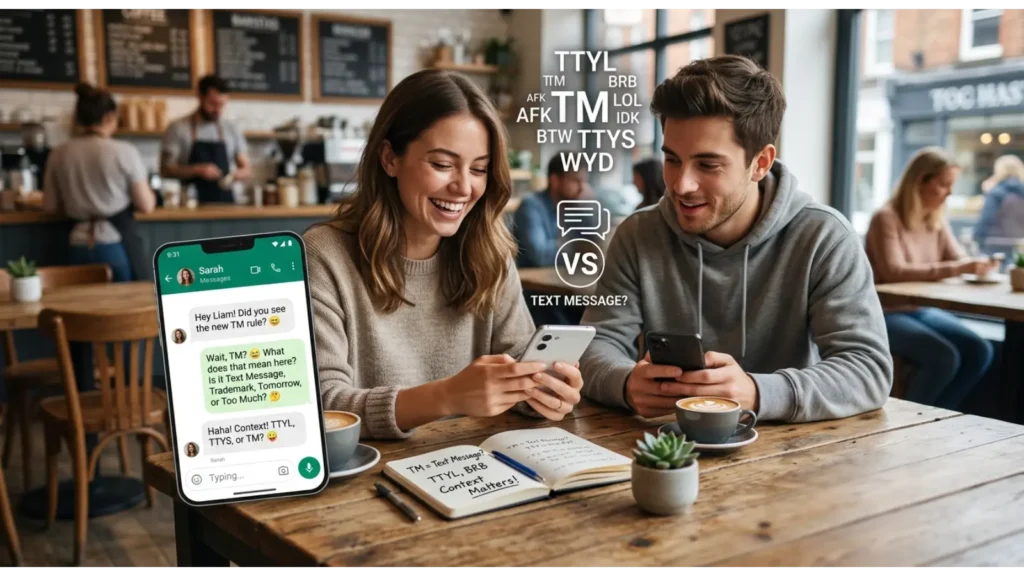
tm meaning in text can be confusing because the abbreviation may have different meanings depending on the conversation. You may see “tm” in a text message, social media comment, gaming chat, or casual online conversation and wonder what the person actually means.
In texting, abbreviations are often used to make messages shorter and faster. However, the same two letters can sometimes stand for different phrases. This is why context is important when understanding “tm.”
For example, someone might use “tm” to mean “tomorrow,” while in another context, TM can mean “trademark.” In some conversations, people may also use it as part of another abbreviation or expression.
If you received a message containing “tm,” look at the words around it before deciding what it means. The sentence and topic usually make the intended meaning clear.
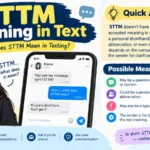
Quick Answer: In text messages, TM most commonly means “tomorrow” in casual chatting, but it can also mean “trademark.” The exact meaning depends on context.
What Does TM Mean in Text?
The most common meaning of tm in text is “tomorrow.” People use it as a quick abbreviation when talking about plans, appointments, school, work, or other future activities.
For example:
- “See you tm” = “See you tomorrow.”
- “Are you free tm?” = “Are you free tomorrow?”
- “I’ll call you tm” = “I’ll call you tomorrow.”
However, TM can also stand for “trademark.” This meaning is common in business, branding, advertising, and legal contexts.
For example:
- “This is our brand name™.”
- “The company registered its TM.”
- “You can use the TM symbol for a trademark.”
Therefore, you should not assume that “tm” always has one meaning. The surrounding conversation is the best clue.

TM Full Form in Text
When someone searches for the tm full form, they may be looking for different possibilities.
| TM | Meaning | Common Context |
|---|---|---|
| TM | Tomorrow | Texting and casual chats |
| TM | Trademark | Business and branding |
| TM | Text message | Some informal contexts |
| TM | Too much | Less common, depending on the conversation |
Among these meanings, “tomorrow” is particularly common in casual texting.
TM Meaning as “Tomorrow”
When used to mean tomorrow, “tm” is simply a shortened form of the word.
Example:
“Let’s meet tm.”
This means:
“Let’s meet tomorrow.”
People usually use this form because it saves time when typing.
TM Meaning as “Trademark”
In professional or business-related content, TM usually means trademark.
The symbol ™ indicates that a word, phrase, logo, or design is being claimed as a trademark. It is different from the registered trademark symbol, ®.
For example:
“Our new product name is protected as a trademark™.”
This meaning is more likely when the conversation is about companies, products, logos, or brands.
Meaning of TM in Different Contexts
The meaning of “tm” changes according to where it appears.
1. Texting and Chatting
In everyday messaging, “tm” often means tomorrow.
“I have class tm.”
Meaning: “I have class tomorrow.”
2. Social Media
On social platforms, users may use “tm” as a quick abbreviation.
“Posting the photos tm.”
Meaning: “Posting the photos tomorrow.”
3. Business
In business conversations, TM commonly refers to trademark.
“The name has a TM next to it.”
Here, “TM” is not referring to tomorrow.
4. School or Student Chats
Students may use “tm” when discussing upcoming activities.
“Assignment due tm.”
Meaning: “The assignment is due tomorrow.”
5. Work Conversations
Coworkers might use “tm” in informal messages.
“Can we discuss this tm?”
Meaning: “Can we discuss this tomorrow?”
In formal emails, however, writing “tomorrow” is usually clearer.
Is TM Rude, Offensive, or Neutral?
TM is generally neutral. It is not normally a rude or offensive slang term.
When “tm” means tomorrow, it is simply a texting abbreviation.
When “TM” means trademark, it is also neutral and commonly used in business and branding.
The tone comes more from the surrounding sentence than from the abbreviation itself.
For example:
“See you tm 😊”
sounds friendly.
But:
“Deal with it tm.”
could sound impatient depending on the conversation.
So, tm itself is not offensive, but the complete message can still have a positive, neutral, or negative tone.

Where Is TM Commonly Used?
You may see “tm” in:
- Text messages
- WhatsApp chats
- Instagram messages
- Facebook Messenger
- Snapchat
- Discord
- Gaming chats
- Student group chats
- Casual work messages
- Online comments
The “tomorrow” meaning is especially useful in fast, informal conversations.
Real-Life Conversation Examples
Friendly Example
Person A: Are you coming to the party?
Person B: Yeah, I’ll be there tm!
Here, tm = tomorrow.
Casual Example
Person A: When should I send the file?
Person B: You can send it tm.
Meaning: “You can send it tomorrow.”
Question Example
Person A: Are you free tm?
Person B: Yes, after 5 PM.
Here again, “tm” means tomorrow.
Work Example
Person A: Can we talk about the project?
Person B: Sure, let’s discuss it tm.
This is understandable in casual workplace messaging, although “tomorrow” may be better in formal communication.
Trademark Example
Person A: What does the ™ symbol mean?
Person B: It means trademark.
In this context, TM has nothing to do with tomorrow.
Emotional and Psychological Meaning of TM
There is no special emotional or psychological meaning attached to “tm” itself.
When someone writes:
“Talk tm.”
they are usually just shortening “talk tomorrow.”
However, the emotional tone can depend on the rest of the message. For example, “See you tm!” may feel warm and friendly, while “We’ll discuss this tm” could sound serious.
Do not try to interpret someone’s feelings based only on the abbreviation.
Origin and Background of TM
The texting use of “tm” for tomorrow developed from the broader habit of shortening words in digital communication.
As texting and online messaging became popular, users began creating abbreviations to type messages more quickly. Similar examples include:
- brb = be right back
- idk = I don’t know
- rn = right now
- btw = by the way
- ttyl = talk to you later
The trademark meaning has a completely different background. TM is associated with trademark identification and is widely recognized in branding and commercial contexts.
TM vs Similar Texting Abbreviations
Some abbreviations can be confused with “tm.”
| Abbreviation | Meaning | Example |
|---|---|---|
| TM | Tomorrow | “See you tm.” |
| TMR | Tomorrow | “I’ll do it tmr.” |
| TMW | Tomorrow | “Let’s meet tmw.” |
| RN | Right now | “I’m busy rn.” |
| BTW | By the way | “BTW, I called him.” |
| TY | Thank you | “TY for helping.” |
TM, TMR, and TMW can all be used to refer to tomorrow, although their popularity can vary between people and platforms.
When Should You Use TM?
Using “tm” is usually fine in informal conversations.
You can use it when:
- Messaging friends
- Chatting with classmates
- Sending casual WhatsApp messages
- Talking in gaming chats
- Making informal plans
- Posting casual social media messages
For example:
“I’ll finish it tm.”
is perfectly understandable in a casual chat.
When Should You Avoid TM?
It is better to write the complete word “tomorrow” when communication needs to be formal or especially clear.
Avoid abbreviations like “tm” in:
- Formal business emails
- Official documents
- Academic assignments
- Job applications
- Professional reports
- Important instructions
Instead of:
“I’ll send it tm.”
write:
“I’ll send it tomorrow.”
This sounds clearer and more professional.
Polite Alternatives to TM
If you want to avoid abbreviations, simply use:
- Tomorrow
- The next day
- By tomorrow
- Tomorrow morning
- Tomorrow afternoon
- Tomorrow evening
For example:
Casual: “Can you call me tm?”
Polite: “Could you call me tomorrow?”
The second version is better when speaking to a teacher, manager, client, or someone you do not know well.
Why Do People Use TM?
People use “tm” mainly because it is short and convenient.
Common reasons include:
- Faster typing
- Saving space
- Casual communication
- Familiarity with texting slang
- Keeping messages short
- Following common online habits
Texting abbreviations are especially common when people are having quick conversations.
Impact of Using TM in Communication
Using “tm” can make a message feel informal and relaxed. For friends, this is usually not a problem.
However, too many abbreviations can make professional communication look less formal. They can also cause confusion when the reader does not know what an abbreviation means.
For this reason, consider your audience before using “tm.”
Is TM Safe for Social Media?
Yes. TM is generally safe for social media because it is not normally offensive or harmful.
If you use it to mean “tomorrow,” it is simply a casual abbreviation.
Still, remember that social media audiences can be diverse. If you want your message to be understood by everyone, writing the complete word may be clearer.
TM Examples in Different Tones
Friendly
“See you tm! 😊”
Meaning: See you tomorrow.
Casual
“I’ll send it tm.”
Meaning: I’ll send it tomorrow.
Argumentative
“We can talk about this tm, not now.”
Here, “tm” still means tomorrow, but the sentence has a more serious tone.
Professional-Casual
“Can we finish this tm?”
Meaning: Can we finish this tomorrow?
Business
“The company is using TM after its brand name.”
Here, TM means trademark rather than tomorrow.
Common Misunderstandings About TM
One common mistake is assuming that every “TM” means trademark.
For example:
“See you tm.”
Clearly refers to tomorrow, not trademark.
Another misunderstanding happens when people assume “tm” always means tomorrow. If the conversation is about branding, logos, or products, TM probably means trademark.
Always check the surrounding words and topic.
Variations and Types of TM
For the texting meaning “tomorrow,” you may also see:
- tm
- tmr
- tmrw
- tmw
These abbreviations can have the same basic meaning.
For example:
“See you tmr.”
“See you tmrw.”
“See you tmw.”
All can mean:
“See you tomorrow.”
The exact abbreviation someone chooses is usually a matter of personal texting style.
How to Respond When Someone Uses TM
If “tm” clearly means tomorrow, you can respond normally.
Message: “Are you free tm?”
Response: “Yes, I’m free.”
If you are unsure about the meaning, ask:
“Do you mean tomorrow?”
This is better than guessing.
Regional and Cultural Usage
Texting abbreviations can vary between countries, age groups, and online communities. People who frequently use English-language social media may recognize “tm” quickly, while others may prefer complete words.
In multilingual communities, abbreviations can also be mixed with local languages. The meaning usually becomes clear from the sentence and conversation.
Because texting language changes over time, not every abbreviation has one universal meaning.
TM Meaning in Text: Quick Comparison
| Context | Likely Meaning of TM |
|---|---|
| “See you tm” | Tomorrow |
| “Are you free tm?” | Tomorrow |
| “Send it tm” | Tomorrow |
| “TM symbol” | Trademark |
| “Brand™” | Trademark |
| Business/branding discussion | Trademark |
| Casual chat about plans | Tomorrow |
FAQs About TM Meaning in Text
1. What does TM mean in texting?
In casual texting, TM usually means “tomorrow.” For example, “See you tm” means “See you tomorrow.”
2. What is the TM full form?
The full form depends on context. In texting, it can mean tomorrow. In business and branding, TM means trademark.
3. Is TM a slang word?
TM is better described as an abbreviation rather than a traditional slang word. It is commonly used in informal digital communication.
4. Is TM rude?
No. TM is generally neutral and is not normally considered rude or offensive.
5. What does TM mean on social media?
On social media, TM can mean tomorrow in casual messages. In branding-related posts, it can mean trademark.
6. What does TM stand for in a brand name?
When TM appears with a brand name, it generally stands for trademark. It indicates that the name or mark is being claimed as a trademark.
Conclusion
The meaning of tm meaning in text depends on the context in which it appears. In casual texting, tm most commonly means “tomorrow,” making it a quick way to discuss plans or future events.
In business, branding, and product-related conversations, TM usually means “trademark.” This is why looking at the complete message is important before interpreting the abbreviation.
For friendly chats, using “tm” is generally fine. For formal emails, academic writing, or professional communication, writing “tomorrow” is clearer.
In short, context, audience, and tone matter. When you understand these factors, it becomes much easier to know what someone means when they use TM in a text message.

Sara Taylor is a passionate English content writer who specializes in word meanings, spelling comparisons, and modern slang explanations. She creates easy-to-understand articles that help readers avoid common English mistakes and improve their writing skills. Her content focuses on simple learning, real-life examples, and clear explanations for everyday readers.