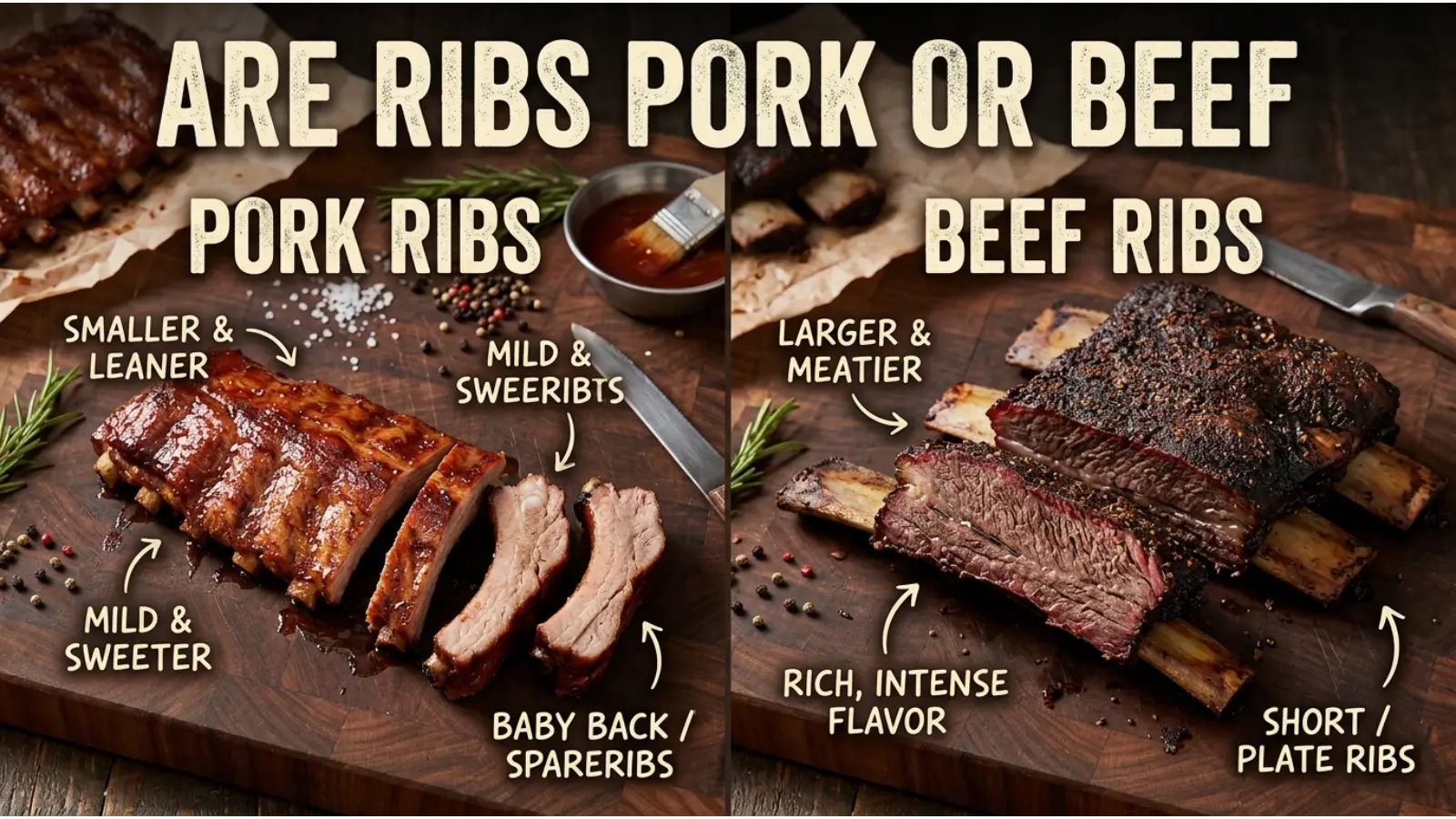
Imagine sitting at a barbecue restaurant and looking at a plate of juicy, smoky ribs. The meat looks delicious, but one question comes to mind: are ribs pork or beef? If you have ever wondered about this, you are not alone. Many people find it confusing because ribs can look similar when they are cooked with barbecue sauce.
The simple answer is that ribs can come from both pigs and cows. Pork ribs come from pigs, while beef ribs come from cows. The type depends on the animal and the specific cut of meat. Restaurants may serve either kind, so you should not assume that all ribs are made from the same meat.
People often search for this question when reading a restaurant menu, buying meat from a butcher, watching cooking videos, or planning a barbecue. It can also matter to people who follow religious dietary rules, avoid certain meats, or have personal food preferences.
Understanding the difference helps you choose the right dish and avoid confusion. Pork ribs and beef ribs differ in size, taste, texture, and cooking time. Their names can also tell you something about where the meat comes from.
In this guide, you’ll learn the meaning, examples, usage, differences, common mistakes, and simple explanations in easy English.
Are Ribs Pork or Beef? – Quick Answer
Ribs can be pork or beef. Pork ribs come from pigs, while beef ribs come from cows. The name on a menu or meat package usually tells you which type you are buying.
Here are three simple examples:
- Pork ribs: Baby back ribs and St. Louis-style ribs usually come from pigs.
- Beef ribs: Short ribs and beef back ribs come from cows.
- Barbecue ribs: These can be pork or beef, depending on the recipe and restaurant.
Simple rule: Pork ribs = pig. Beef ribs = cow.
If you need to avoid pork for religious or personal reasons, ask the restaurant or butcher to confirm the meat type. Barbecue sauce and seasoning do not tell you which animal the ribs came from.
The Origin of Pork and Beef Ribs
Ribs have been part of cooking traditions for a long time. People around the world have cooked animal ribs over open fires, roasted them, or slowly cooked them until the meat became tender.
The word pork refers to meat from a pig, while beef refers to meat from cattle, including cows. The word ribs describes the bones and the meat around them.
Over time, different regions developed their own ways of preparing ribs. In the United States, barbecue traditions made pork and beef ribs popular dishes. Different sauces, spices, smoking methods, and cooking styles helped create many regional recipes.
Today, ribs are served in restaurants, at family gatherings, and at outdoor barbecues. Social media cooking videos have also made smoked ribs and barbecue recipes more popular.
However, the cooking style does not determine the animal. Smoked ribs can be pork or beef, just as grilled ribs can be either type.

British English vs. American English Usage
The words pork ribs and beef ribs have the same basic meaning in British and American English. The main differences are in cooking traditions, restaurant menus, and the names used for certain cuts.
| Feature | British English | American English | Notes |
|---|---|---|---|
| Pork ribs | Pork ribs | Pork ribs | Same basic meaning |
| Beef ribs | Beef ribs | Beef ribs | Same basic meaning |
| Baby back ribs | May be described as pork loin ribs | Common menu term | Usually pork |
| Short ribs | Beef short ribs are common | Beef short ribs are common | Usually cut from beef |
| Barbecue | Often written as barbecue or BBQ | Often written as barbecue or BBQ | Can refer to different cooking styles |
| Spare ribs | Common term | Common term | Usually pork when the menu says spare ribs |
Although the words are similar, restaurants may use different names for specific cuts. If the meat type matters to you, check the full menu description rather than relying only on the cooking style or sauce.
Which One Should You Choose?
The best choice depends on your taste, cooking plans, budget, and dietary needs.
Choose pork ribs if:
- You want traditional pork barbecue.
- You prefer baby back ribs or St. Louis-style ribs.
- You want to try ribs with a sweet or tangy barbecue sauce.
- You enjoy meat that can become tender when cooked slowly.
Choose beef ribs if:
- You prefer the flavor of beef.
- You want larger ribs with a rich, meaty taste.
- You are preparing a slow-cooked beef barbecue.
- You enjoy cuts such as beef short ribs or beef back ribs.
Consider your dietary needs
If you do not eat pork, ask for confirmed beef ribs rather than simply ordering barbecue ribs. If you follow halal dietary rules, check that the beef is halal-certified and that the food has been prepared according to your requirements.
Important: Appearance alone cannot always confirm whether cooked ribs are pork or beef. Ask the seller or restaurant if you are unsure.
Common Mistakes About Pork and Beef Ribs
People often misunderstand rib types because the cuts can look similar after cooking. Here are five common mistakes to avoid.
Mistake 1: Thinking all ribs are pork
❌ Incorrect: All ribs served at barbecue restaurants come from pigs.
✔ Correct: Ribs can come from pigs or cows. Always check the menu or ask the restaurant.
Mistake 2: Thinking all ribs are beef
❌ Incorrect: Large barbecue ribs must be beef ribs.
✔ Correct: Some pork ribs are large, too. Size alone is not a reliable way to identify the meat.
Mistake 3: Assuming barbecue ribs are always pork
❌ Incorrect: Barbecue ribs always mean pork ribs.
✔ Correct: Barbecue describes a cooking style or dish. Barbecue ribs can be pork or beef.
Mistake 4: Believing sauce identifies the meat
❌ Incorrect: Sweet barbecue sauce means the ribs are pork.
✔ Correct: Both pork and beef ribs can be cooked with sweet, spicy, smoky, or tangy sauces.
Mistake 5: Assuming the menu name guarantees halal status
❌ Incorrect: All beef ribs are automatically halal.
✔ Correct: Beef is an animal that can be halal to eat, but the meat must meet the relevant halal requirements. Ask about certification and preparation when needed.
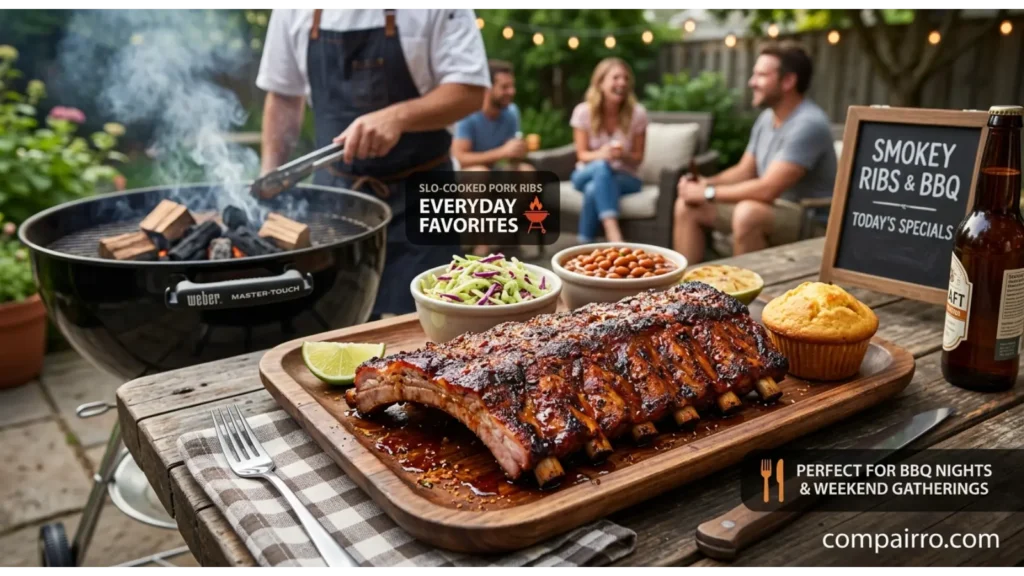
Pork or Beef Ribs in Everyday Examples
Here is how the difference appears in common situations.
1. At a restaurant
Example: “Are these ribs made from pork or beef?”
This is a useful question when the menu only says “barbecue ribs.”
2. At a grocery store
Example: “I need beef short ribs for my dinner recipe.”
The word beef tells the seller that you want ribs from cattle rather than pigs.
3. At a barbecue party
Example: “We are serving pork spare ribs and smoked beef ribs.”
This makes it clear that two different types of ribs are available.
4. On social media
Example: A cooking video shows someone preparing large, smoked beef ribs.
The video may include words such as beef ribs, short ribs, or barbecue ribs. Read the caption to understand which meat is being used.
5. While shopping for halal food
Example: “Are these ribs halal-certified beef?”
This question helps you check both the animal type and whether the meat meets your dietary requirements.
Are Ribs Pork or Beef? – Google Trends and Usage Data
People search for “are ribs pork or beef” because they want a quick, clear answer before ordering food, shopping, or trying a recipe.
Common reasons for this search include:
- Food identification: People want to know which animal the meat comes from.
- Restaurant menus: Customers may see “ribs” without a clear description.
- Cooking: Home cooks want to choose the correct meat for a recipe.
- Religious diets: Some people need to avoid pork or confirm halal status.
- Food curiosity: Viewers may see large ribs in barbecue videos and wonder what type they are.
Interest can arise in the United States, the United Kingdom, India, Pakistan, Canada, and Australia. Barbecue traditions, restaurant menus, and dietary preferences can all influence what people want to know.
However, this does not mean that these countries have equal search interest. Exact rankings and changes over time require current Google Trends data. Without checking that data, it would be misleading to claim which country searches for this phrase the most.
The main confusion is simple: people often use the general word ribs without specifying the animal. Checking the menu description or asking the seller is the easiest solution.
Comparison Table: Pork Ribs vs. Beef Ribs
| Feature | Pork Ribs | Beef Ribs |
|---|---|---|
| Animal source | Pig | Cow or cattle |
| Common types | Baby back, spare, St. Louis-style | Short ribs, back ribs |
| Typical flavor | Mild to rich, depending on the cut | Rich, beefy flavor |
| Size | Often smaller, but varies | Some cuts are much larger |
| Meat texture | Depends on the cut and cooking method | Depends on the cut and cooking method |
| Cooking methods | Grilling, smoking, roasting | Grilling, smoking, braising |
| Common seasonings | Dry rubs, barbecue sauces | Dry rubs, barbecue sauces |
| Dietary consideration | Contains pork | Can meet halal requirements if sourced and prepared correctly |
| Identification | Check the label or ask | Check the label or ask |
Neither type is always better. The flavor, tenderness, and quality depend on the cut, the animal, and how the ribs are prepared.
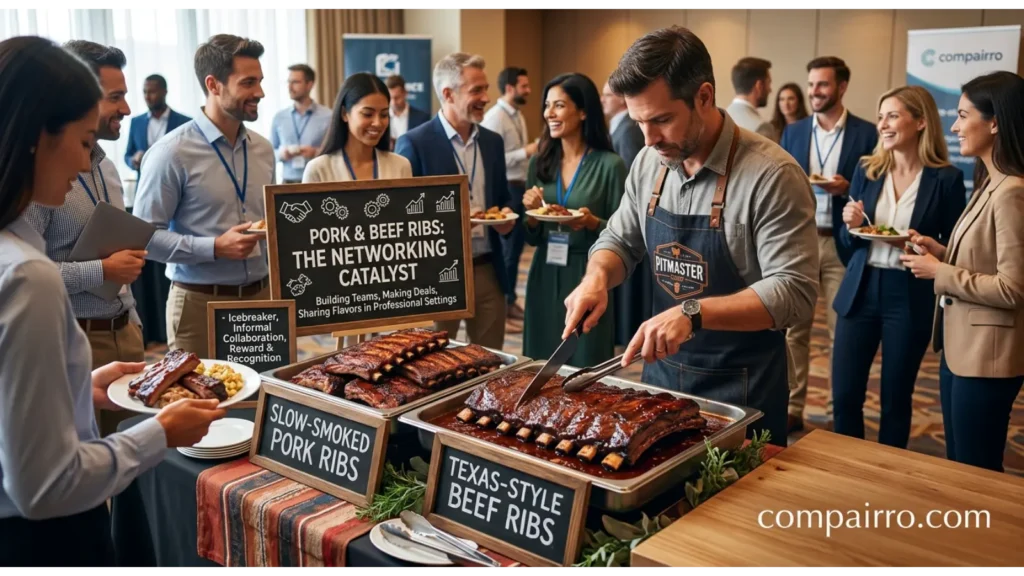
Pork and Beef Ribs in Professional Life
Ribs are relevant to chefs, restaurant workers, butchers, food suppliers, and people working in the meat industry.
These professionals need to identify the correct meat to prepare dishes, label products, and answer customer questions.
For example:
- Chefs select the right ribs for a recipe.
- Butchers label pork and beef cuts correctly.
- Restaurant staff explain menu ingredients to customers.
- Food suppliers keep different meat products properly identified.
Clear labeling is especially important when customers have allergies, religious dietary requirements, or other food restrictions. Pork and beef should never be treated as interchangeable when the customer has asked for a specific type.
Pork or Beef Ribs for Students and Beginners
If you are new to cooking or learning about food, the difference is easy to remember. Start by learning the two main words: pork and beef.
Here are a few useful tips:
- Remember that pork comes from pigs.
- Remember that beef comes from cattle.
- Learn common pork cuts, such as baby back ribs.
- Learn common beef cuts, such as beef short ribs.
- Read food labels before buying meat.
- Ask questions when a menu does not clearly name the animal.
Beginners sometimes believe that the color or size of the meat is enough to identify it. However, cooking changes the color and appearance, so these features are not always reliable.
When in doubt, use the product label or ask the person who prepared the food.
Signs and Characteristics of Pork and Beef Ribs
Although some differences are noticeable, no single visual feature can reliably identify every cooked rib.
Pork ribs
- Come from pigs.
- Include baby back ribs and spare ribs.
- Are often served with barbecue seasoning.
- Can be grilled, roasted, or smoked.
- Vary in size and tenderness depending on the cut.
Beef ribs
- Come from cattle.
- Include beef short ribs and beef back ribs.
- Often have a strong beef flavor.
- Can be braised, grilled, roasted, or smoked.
- May have large bones and thick sections of meat, depending on the cut.
What should you check?
- The label on the package.
- The full name on the restaurant menu.
- Information from the butcher or food supplier.
- Halal certification and preparation details if relevant.
Remember that the appearance of ribs can change significantly during cooking. A reliable label or direct confirmation is more useful than guessing from a photograph.
Simple Trick to Remember Pork or Beef Ribs
Here is an easy memory trick:
Pork = Pig
Beef = Cow
Ribs = The cut of meat
Think of it this way: ribs describe the part of the animal, while pork and beef tell you which animal the meat comes from.
For example, pork ribs are ribs from a pig. Beef ribs are ribs from a cow.
If a restaurant menu only says “ribs,” ask which type it serves. If you need halal meat, confirm the source and halal status instead of guessing.
FAQs:
1. Are ribs usually pork or beef?
Ribs can be either pork or beef. Baby back ribs are usually pork, while beef short ribs come from cattle.
2. Are baby back ribs pork or beef?
Baby back ribs are pork ribs. They come from the upper part of a pig’s rib cage near the backbone.
3. Are short ribs pork or beef?
Short ribs usually refer to beef short ribs on restaurant menus, especially in American cooking. However, pork short ribs also exist, so check the label.
4. Are barbecue ribs made from pork?
Not always. Barbecue ribs can be made from pork or beef, depending on the recipe and restaurant.
5. Are ribs halal?
It depends on the animal and how the meat is sourced and prepared. Pork is not halal, while beef ribs can be halal if the relevant requirements are met.
6. How can you tell if ribs are pork or beef?
Check the package label or restaurant menu, or ask the butcher or server. Appearance alone may not provide a reliable answer.
7. Which tastes better, pork ribs or beef ribs?
Taste is a personal choice. Pork ribs often have a milder flavor, while beef ribs usually have a richer beef taste. Cooking methods and seasonings also affect the result.
Conclusion
So, are ribs pork or beef? The answer is both. Pork ribs come from pigs, while beef ribs come from cattle. Common pork cuts include baby back ribs and spare ribs, while popular beef cuts include short ribs and beef back ribs.
The easiest way to tell the difference is to check the meat’s name on the menu or package. Do not rely only on its size, color, or barbecue sauce.
Final memory rule: Pork means pig, beef means cow, and ribs describe the cut. If your dietary needs require a specific type of meat, always confirm its source before eating.

Sara Taylor is a passionate English content writer who specializes in word meanings, spelling comparisons, and modern slang explanations. She creates easy-to-understand articles that help readers avoid common English mistakes and improve their writing skills. Her content focuses on simple learning, real-life examples, and clear explanations for everyday readers.