wyn meaning in text is a common question for people who come across this abbreviation in text messages, social media comments, or online chats. If someone sends you “WYN?” you might wonder if they are asking a question, starting a conversation, or using a new slang term. Internet slang can sometimes be confusing because the same letters may have different meanings in different situations.
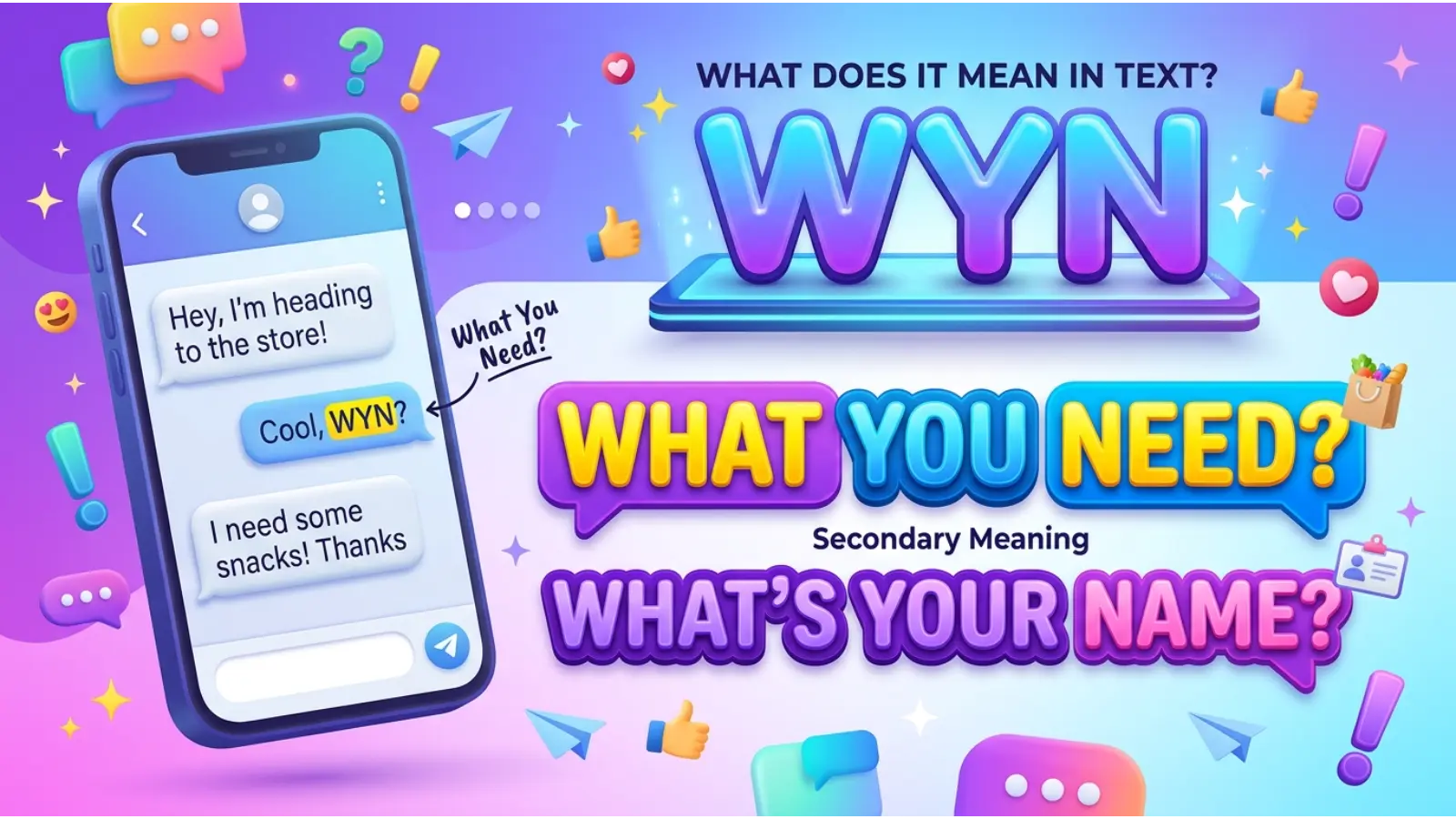
In casual texting, WYN commonly means “What’s Your Name?” It can be used when someone wants to know your name, especially during a new conversation. However, abbreviations can vary between online communities, so the surrounding message still matters. WYN should not automatically be confused with WYA, which usually means “Where You At?”
Quick Answer:
WYN commonly stands for “What’s Your Name?” in texting. It is an informal way to ask someone their name, although the exact meaning can depend on the conversation.
What Does WYN Mean in Text?
The most common interpretation of WYN in casual texting is “What’s Your Name?” People use it to ask for someone’s name without typing the entire question.
For example:
Person A: “Hey, WYN?”
Person B: “I’m Alex. What’s yours?”
In this conversation, WYN is a short way to ask someone to introduce themselves.
You may see this abbreviation in private messages, online communities, or conversations with people you have just met. It is especially useful when people want to keep their messages short and casual.
However, WYN is not as universally recognized as abbreviations such as LOL or BRB. If the conversation does not involve introductions, the sender may mean something else.
WYN Full Form and Definition
The commonly intended full form of WYN is “What’s Your Name?”
Here is a simple breakdown:
- W = What’s
- Y = Your
- N = Name
Together, these letters form a short question asking someone to share their name.
For example:
“Hi! WYN? I don’t think we’ve met before.”
This means:
“Hi! What’s your name? I don’t think we’ve met before.”
The abbreviation is informal, so it is more suitable for casual chats than formal introductions.
WYN Meaning in Different Contexts
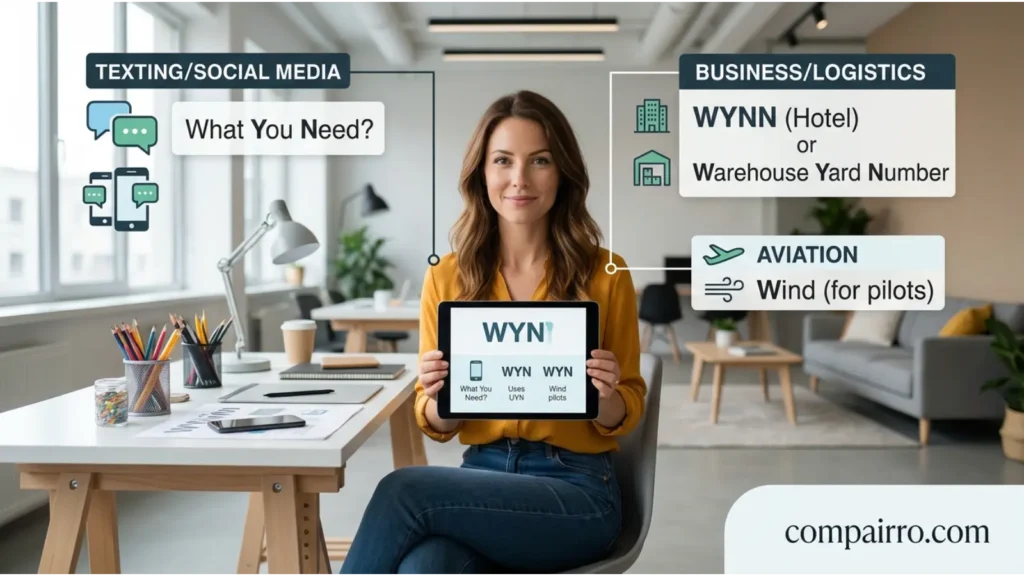
WYN can be interpreted differently depending on where and how it appears.
1. WYN in Text Messages
In a private text conversation, WYN commonly asks for someone’s name.
Example:
“Hey, I’m new here. WYN?”
The sender wants to know what to call the other person.
2. WYN on Instagram and Snapchat
On social media, people sometimes use short abbreviations when starting conversations with new contacts.
Example:
“Hi, WYN? I saw your comment.”
The likely intention is to ask for the person’s name. However, you should consider the complete message rather than assuming the meaning from the abbreviation alone.
3. WYN in Online Communities
In group chats, gaming communities, or online forums, abbreviations may develop their own meanings.
WYN may be used to ask someone’s name, but it is not a standard abbreviation in every community. If the conversation is about something unrelated to introductions, ask the sender what they mean.
4. WYN in Professional Communication
WYN is generally too informal for professional introductions.
Instead of writing “WYN?” to a colleague or client, use a complete and polite question, such as “May I know your name?”
Clear wording makes professional communication easier to understand.
Is WYN Rude, Offensive, or Neutral?
WYN is generally neutral and informal when it means “What’s Your Name?”
It is not inherently rude or offensive. However, the way someone asks for your name can affect how the message feels.
For example:
- Friendly: “Hey! WYN? Nice to meet you!”
- Casual: “Hi, WYN?”
- Polite: “Hello, may I ask your name?”
- Potentially uncomfortable: A stranger repeatedly asking for personal details after you have declined to share them.
You are not required to share personal information with someone online. If you feel uncomfortable, you can choose not to answer.
Where Is WYN Commonly Used?
You may encounter WYN in informal digital conversations, including:
- Text messages
- Instagram DMs
- Snapchat chats
- TikTok comments or messages
- Discord servers
- Online gaming chats
- Group messaging apps
Its use may differ across communities and age groups. Some people recognize the abbreviation immediately, while others may not have seen it before.
Real-Life Conversation Examples
Here are some examples showing how WYN might appear in different conversations.
Friendly Example
Person A: “Hey, nice to meet you!”
Person B: “You too! WYN?”
Meaning: Person B is asking for the other person’s name.
Casual Example
Person A: “Hi, I saw your comment on that post.”
Person B: “Oh, cool! WYN?”
Meaning: Person B wants to know the person’s name.
New Online Friend
Person A: “We should talk more often.”
Person B: “Sure! First, WYN?”
Meaning: Person B is asking for the person’s name before continuing the conversation.
Confusing Example
Person A: “WYN?”
Person B: “Do you mean what’s my name?”
This is a helpful response if you are unsure about the abbreviation.
Formal Alternative
Instead of writing “WYN?” in a professional conversation, you could say:
“Hello, may I know your name, please?”
This sounds clearer and more respectful.
Emotional and Psychological Meaning of WYN
WYN does not have a special emotional meaning by itself. When someone uses it to ask your name, it may simply show that they want to introduce themselves or begin a conversation.
Depending on the situation, the sender may be:
- Starting a conversation with a new person
- Trying to remember someone’s name
- Getting to know someone in an online group
- Asking for a basic introduction
However, you cannot determine someone’s feelings or intentions from WYN alone. The full conversation provides better clues about the person’s purpose.

Origin and Background of WYN
There is no single confirmed origin for WYN as a texting abbreviation. It fits a common pattern in internet communication: people shorten everyday questions to make typing faster.
Other examples include WYA, meaning “Where You At?”, and WBU, meaning “What About You?”
Although WYN can be interpreted as “What’s Your Name?”, its usage is not universal. It is best to treat the expansion as a common possible meaning rather than assuming that everyone uses it identically.
WYN vs. Similar Texting Abbreviations
WYN can be confused with other short forms because they contain similar letters or appear in similar conversations.
| Abbreviation | Full Form | Meaning |
|---|---|---|
| WYN | What’s Your Name? | Asking someone’s name |
| WYA | Where You At? | Asking where someone is |
| WBU | What About You? | Asking about the other person |
| WYD | What You Doing? | Asking what someone is doing |
| WYM | What You Mean? | Asking for clarification |
| HBU | How About You? | Returning a question |
| WDYT | What Do You Think? | Asking for an opinion |
Remember: WYN asks about a name when used in this sense, while WYA asks about a location. They are not interchangeable.
When Should You Use WYN?
WYN may be suitable when you are chatting casually with someone and want to know their name.
You can use it when:
- Meeting someone in an online group
- Starting an informal conversation
- Chatting with a new contact
- Introducing yourself in a casual setting
For example:
“Hey, I’m Sam. WYN?”
This is short and understandable if the other person recognizes the abbreviation.
When Should You Avoid Using WYN?
Avoid using WYN when the situation calls for clear or formal language.
For example, it may be unsuitable in:
- Business emails
- Job interviews
- Formal school assignments
- Official applications
- Professional introductions
Instead, write “What’s your name?” or “May I ask your name?” These phrases are easier for everyone to understand.
Polite Alternatives to WYN
If you want to ask someone’s name without using slang, try these alternatives:
- “What’s your name?”
- “May I know your name?”
- “Could you tell me your name?”
- “How should I address you?”
- “It’s nice to meet you. What should I call you?”
Choose the wording that matches the situation and how well you know the person.
Why Do People Use WYN?
People use abbreviations like WYN because they make casual messages shorter.
Common reasons include:
- Saving time while typing
- Keeping conversations informal
- Starting a conversation quickly
- Following online texting habits
- Avoiding long sentences in chats
However, shorter messages are not always clearer. If the recipient does not recognize WYN, spelling out the question is usually the better option.
Is WYN Safe for Social Media?
WYN is not inherently harmful or offensive. If it means “What’s Your Name?”, it is simply a question asking for someone’s name.
Still, remember that you do not have to share personal details with strangers online. If someone makes you uncomfortable, you can ignore the message or decline to answer.
When communicating publicly, clear wording can also help prevent confusion.
Common Misunderstandings About WYN
People may misunderstand WYN for several reasons.
Confusing it with WYA: WYA commonly asks where someone is, while WYN may ask for a name.
Assuming everyone knows it: Not every person uses the same texting abbreviations.
Treating it as offensive: WYN is not inherently offensive when used as a question about someone’s name.
Ignoring context: A message’s surrounding words can help reveal the intended meaning.
If you are unsure, ask the sender to clarify rather than guessing.
How to Respond When Someone Uses WYN
If someone sends you WYN and you understand that they are asking your name, you can respond naturally.
Example 1:
Them: “Hey, WYN?”
You: “I’m Ali. What’s your name?”
Example 2:
Them: “WYN?”
You: “My name is Sara. Nice to meet you!”
Example 3:
Them: “WYN?”
You: “Do you mean, what’s my name?”
If you do not want to share your name, you can politely say, “I’d prefer not to share that right now.”
Regional and Cultural Usage
Texting slang can vary across countries, languages, and online communities. Some people use WYN to mean “What’s Your Name?”, while others may not recognize it or may use it differently.
In multilingual conversations, including chats where English is mixed with Urdu or other languages, abbreviations may be interpreted according to local habits.
For example, someone might ask “WYN?” and expect a simple name in reply. Another person may find the abbreviation unfamiliar.
This is why context and clear communication are important.
FAQs About WYN Meaning in Text
1. What does WYN mean in texting?
WYN commonly means “What’s Your Name?” in casual texting. It is used to ask someone their name, although its meaning can depend on context.
2. What is the full form of WYN?
The commonly intended full form is “What’s Your Name?” It is an informal abbreviation used in some online conversations.
3. Is WYN the same as WYA?
No. WYN may mean “What’s Your Name?”, while WYA commonly means “Where You At?” One asks about a name; the other asks about a location.
4. Is WYN rude?
No, WYN is not inherently rude or offensive. When used to ask someone’s name, it is generally neutral and informal.
5. How should I reply to WYN?
If someone is asking your name, you can introduce yourself. If you are unsure what they mean, ask, “What do you mean by WYN?”
6. Can I use WYN on Instagram or Snapchat?
Yes, you can use WYN in casual chats if the other person understands it. For clearer communication, writing “What’s your name?” is often better.
Conclusion
The wyn meaning in text commonly refers to “What’s Your Name?”, an informal way to ask someone their name during a conversation. You may see it in text messages, social media DMs, and online communities.
However, WYN is not universally understood, and its meaning can vary depending on the sender and context. Do not confuse it with WYA, which commonly means “Where You At?”
Use WYN only when casual shorthand is appropriate. In formal situations, choose a complete and polite question instead. Most importantly, consider the full conversation before interpreting an unfamiliar abbreviation, and ask for clarification whenever necessary.

Sara Taylor is a passionate English content writer who specializes in word meanings, spelling comparisons, and modern slang explanations. She creates easy-to-understand articles that help readers avoid common English mistakes and improve their writing skills. Her content focuses on simple learning, real-life examples, and clear explanations for everyday readers.