Imagine walking into a coffee shop and looking at the menu. You see a latte, but you are not sure if it comes hot or cold. Maybe you want a warm drink on a chilly morning, or perhaps you prefer something cool on a hot summer day. So, are lattes hot or cold?
The good news is that lattes can be both hot and cold. A traditional latte is usually served hot, but many coffee shops also offer iced lattes. Both drinks contain espresso and milk, but the way they are prepared and served is different.
You may see hot and iced lattes at popular coffee shops, restaurants, and on social media. They are also common choices for people who enjoy coffee at home. However, beginners sometimes confuse lattes with cappuccinos, iced coffees, and other milk-based coffee drinks.
Understanding the difference helps you order the drink you actually want. It can also help you choose the right ingredients if you plan to make a latte yourself.
If you are a student, a coffee lover, or someone trying a latte for the first time, learning about these drinks is simple. You do not need to be a coffee expert to understand them.
In this guide, you’ll learn the meaning, examples, usage, differences, common mistakes, and simple explanations in easy English.
Are Lattes Hot or Cold? – Quick Answer
Lattes can be hot or cold. A traditional latte is generally made with espresso and steamed milk and served hot. An iced latte contains espresso, cold milk, and ice.
A latte is a coffee drink made mainly from espresso and milk. Its temperature depends on the type you order.
Examples:
- Hot latte: Espresso mixed with steamed milk and usually topped with a thin layer of milk foam.
- Iced latte: Espresso poured over ice and combined with cold milk.
- Vanilla latte: A latte flavored with vanilla syrup, which can be served hot or iced.
Simple rule: If you want a warm drink, order a hot latte. If you want a cold drink, order an iced latte.
The Origin of Lattes
The word latte comes from the Italian word caffè latte, which means “milk coffee.”
In Italy, caffè latte traditionally refers to coffee served with milk. Over time, espresso-based lattes became popular in coffee shops around the world.
The modern café latte, usually made with espresso and steamed milk, became especially popular as espresso culture spread through Europe and North America.
As coffee shops began offering more choices, iced lattes also became common. Today, customers can choose different temperatures, milk types, flavors, and toppings.
Social media has helped make colorful iced lattes, such as iced vanilla and iced caramel lattes, popular among younger coffee drinkers.
British English vs American English Usage
The word latte is used in both British and American English. There is no major difference in the basic meaning of the drink.
However, coffee shop menus may use slightly different names or offer different styles depending on the country and café.
| Feature | British English | American English | Notes |
|---|---|---|---|
| Hot latte | Common | Common | Espresso with steamed milk |
| Iced latte | Common | Common | Espresso, cold milk, and ice |
| Latte | Common | Common | Usually means a milk-based espresso drink |
| Flavored latte | Common | Common | May include vanilla, caramel, or other flavors |
| Milk alternatives | Common | Common | Options may include oat, soy, or almond milk |
In both countries, you can simply ask for a hot latte or an iced latte.
Which One Should You Choose?
Choosing between a hot and cold latte depends on your taste, the weather, and what you feel like drinking.
Choose a hot latte if:
- You want a warm drink on a cold day.
- You enjoy smooth coffee with steamed milk.
- You like the creamy texture of warm milk.
- You want a drink that may include simple latte art.
Choose an iced latte if:
- You prefer cold drinks.
- The weather is hot.
- You enjoy coffee with ice and cold milk.
- You want a refreshing alternative to hot coffee.
What about flavored lattes?
You can usually order flavors such as vanilla, caramel, hazelnut, or mocha in either hot or iced form, depending on the café.
If you are unsure, ask the barista whether the flavor is available in both versions.

Common Mistakes About Lattes
Here are five common misunderstandings about hot and cold lattes.
Mistake 1: Thinking all lattes are hot
❌ “A latte is always a hot drink.”
✔ A latte can be hot or cold. You can choose the temperature when ordering.
Mistake 2: Thinking an iced latte contains no espresso
❌ “An iced latte is just cold milk and ice.”
✔ An iced latte normally contains espresso, cold milk, and ice.
Mistake 3: Confusing an iced latte with an iced coffee
❌ “An iced latte and iced coffee are exactly the same.”
✔ An iced latte uses espresso and milk. Iced coffee is usually brewed coffee served cold or over ice, although recipes vary.
Mistake 4: Thinking cold lattes have no caffeine
❌ “Cold coffee drinks do not contain caffeine.”
✔ Both hot and iced lattes usually contain caffeine because they are made with espresso.
Mistake 5: Assuming every latte tastes the same
❌ “All lattes have the same flavor.”
✔ Their taste can change based on the espresso, milk, syrup, number of espresso shots, and preparation method.

Are Lattes Hot or Cold in Everyday Examples?
Here are some everyday situations that show how people choose between the two types.
At work
You arrive at the office early and want a warm drink before starting your tasks.
Example: “I will have a hot latte before my morning meeting.”
If you prefer something cold, you could order an iced latte instead.
At school or college
You meet a friend at a café after class.
Example: “Let’s get iced lattes and talk for a while.”
This is a simple way to ask for cold coffee drinks.
On social media
You see a picture of a coffee cup covered with ice and milk.
Example: “My iced latte is perfect for this sunny afternoon!”
People often share pictures of their favorite coffee drinks on Instagram, TikTok, and other platforms.
In daily life
You visit a coffee shop on a cold winter morning.
Example: “Can I get a hot vanilla latte, please?”
On a warm afternoon, you might say:
“Can I have an iced vanilla latte instead?”
In a text message
Your friend asks what you want to drink.
Example:
Friend: “Hot or iced?”
You: “Iced latte, please!”
These short phrases make ordering easy.
Are Lattes Hot or Cold? – Google Trends and Usage Data
People search for “are lattes hot or cold” because they want a quick answer before ordering coffee or making it at home.
The question is especially useful for beginners who are unfamiliar with café menus. Someone who has never ordered a latte may assume that the name refers to only one type of drink.
Coffee-related searches can also change with the seasons. Hot drinks may appeal more during cold weather, while iced drinks are often popular during warmer months.
Here is how this question may matter to coffee drinkers in different countries:
- US: Customers can commonly find both hot and iced lattes at coffee shops.
- UK: Hot lattes are a familiar café choice, and iced versions are also widely available.
- India: Both options are available in many urban cafés, with iced drinks appealing to customers who enjoy cold refreshments.
- Pakistan: Coffee shops in larger cities often offer hot and iced lattes, although menus vary by location.
- Canada: Customers can choose hot lattes in colder weather and iced versions when they prefer a cold drink.
- Australia: Both hot and iced espresso-based drinks are common café options.
These are general observations about coffee culture, not verified search rankings. Exact popularity by country or month would require current Google Trends data.
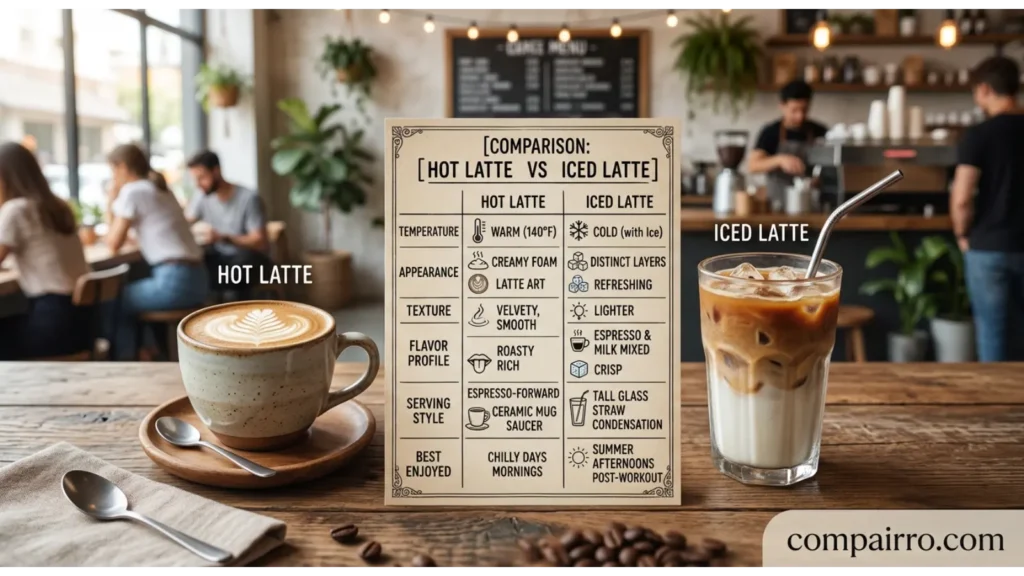
Comparison Table: Hot Latte vs Iced Latte
The main difference between hot and iced lattes is their temperature and preparation.
| Feature | Hot Latte | Iced Latte |
|---|---|---|
| Temperature | Warm or hot | Cold |
| Main ingredients | Espresso and steamed milk | Espresso, cold milk, and ice |
| Milk | Usually steamed | Usually cold |
| Ice | Normally none | Usually included |
| Texture | Warm and creamy | Cool and smooth |
| Best suited for | Cold weather or warm-drink lovers | Warm weather or cold-drink lovers |
| Caffeine | Depends on espresso quantity | Depends on espresso quantity |
| Common flavors | Vanilla, caramel, mocha | Vanilla, caramel, mocha |
| Serving style | Usually a cup or mug | Usually a glass or takeaway cup |
Neither type is automatically better. The best choice depends on your personal taste.
Lattes in Professional Life
Coffee is a common part of many people’s work routines. Some enjoy a hot latte while reading emails, preparing for meetings, or starting their day.
Others prefer an iced latte during an afternoon break, especially in warm weather.
Coffee shops also offer different latte options to meet customer needs. These may include dairy-free milk, flavored syrups, decaffeinated espresso, and different drink sizes.
If you work in a café, knowing the difference between hot and iced lattes helps you understand customer orders.
For example, when a customer says, “One iced latte with oat milk,” they are asking for a cold latte made with oat milk instead of regular dairy milk.
Lattes for Students or Beginners
If you are new to coffee, ordering a latte can feel confusing because café menus often contain many similar drinks.
The easiest way to learn is to start with the basic ingredients.
- Espresso: A concentrated coffee made by forcing hot water through finely ground coffee.
- Steamed milk: Milk heated with steam, commonly used in hot lattes.
- Cold milk: Milk added to iced lattes.
- Milk foam: Tiny bubbles formed when milk is aerated.
- Ice: Used to chill an iced latte.
You do not need to remember every coffee term. Start by learning the difference between hot and iced drinks.
A simple way to practice is to order each type on different occasions and notice which taste and texture you prefer.
If you do not want caffeine, ask about decaffeinated espresso. Remember that decaf usually contains a small amount of caffeine rather than being completely caffeine-free.
Signs or Characteristics of Hot and Cold Lattes
You can often identify the type of latte by looking at how it is prepared and served.
Characteristics of a hot latte
- Served warm in a cup or mug.
- Made with espresso and steamed milk.
- Usually has a smooth, creamy texture.
- Often has a thin layer of milk foam.
- May include latte art on top.
Characteristics of an iced latte
- Served cold, usually in a glass or takeaway cup.
- Normally contains ice.
- Made with espresso and cold milk.
- Often looks layered when first prepared.
- Can include flavored syrup or alternative milk.
Keep in mind that appearance alone does not always tell you everything about a drink. Ingredients and serving methods can vary between coffee shops.
Simple Trick to Remember Are Lattes Hot or Cold
Think of it this way:
- Hot latte = Espresso + steamed milk.
- Iced latte = Espresso + cold milk + ice.
The word latte does not automatically mean hot or cold. It describes the general type of milk-based coffee drink.
For example, if you order a latte without mentioning the temperature, the café may serve its standard hot version. However, this depends on the shop and its menu.
To avoid confusion, simply say “hot latte” or “iced latte” when placing your order.
That one small detail makes your preference clear.
FAQs:
1. Are lattes usually hot or cold?
Traditional lattes are usually served hot, but iced lattes are also widely available at coffee shops.
2. Can you get a latte cold?
Yes. Ask for an iced latte, which is generally made with espresso, cold milk, and ice.
3. Is an iced latte just a cold latte?
An iced latte is a type of cold latte. It is normally prepared with ice and cold milk rather than steamed milk.
4. Do hot and iced lattes taste different?
Yes. A hot latte has warm, steamed milk, while an iced latte is cooler and may taste different because of the temperature and melting ice.
5. Which is stronger, a hot latte or an iced latte?
Neither is always stronger. Caffeine depends mainly on the amount and type of espresso used, not simply on whether the drink is hot or cold.
6. Are iced lattes healthier than hot lattes?
Neither is automatically healthier. The nutritional value depends on the milk, serving size, added sugar, syrups, and other ingredients.
7. Can you make a latte at home?
Yes. You can make a hot latte with espresso or strong coffee and steamed milk. For an iced latte, combine espresso, cold milk, and ice.
Conclusion
So, are lattes hot or cold? The simple answer is that lattes can be both hot and cold.
A traditional hot latte contains espresso and steamed milk, while an iced latte combines espresso, cold milk, and ice. Both can also include flavors such as vanilla, caramel, and mocha.
Your choice depends on your taste, the if, and whether you prefer a warm or refreshing drink.
Remember this easy rule: Hot latte means steamed milk; iced latte means cold milk and ice. The next time you visit a coffee shop, you can order the latte that suits you best.

Sara Taylor is a passionate English content writer who specializes in word meanings, spelling comparisons, and modern slang explanations. She creates easy-to-understand articles that help readers avoid common English mistakes and improve their writing skills. Her content focuses on simple learning, real-life examples, and clear explanations for everyday readers.