Have you ever bought beautiful mums in autumn, placed them near your front door, and wondered if they would bloom again next year? You are not alone. Many gardeners love mums because their bright flowers make gardens, porches, and patios look colorful. However, one common question often comes up: are mums annuals or perennials?
The answer depends on the type of mum you grow. Some mums are perennials, which means they can grow back year after year. Others are treated as annuals because they may not survive the winter or are grown mainly for one season of flowers.
You may see mums in garden centers, flower shops, and home improvement stores during fall. They are especially popular in the United States, where people use them to decorate their homes for autumn. Gardeners in the UK, Canada, Australia, India, and other countries may also grow chrysanthemums, although growing conditions can vary.
Understanding the difference between annual and perennial mums can help you choose the right plants, save money, and enjoy flowers for more than one season. It can also help you avoid a common mistake: throwing away a healthy plant that might have grown again in spring.
In this guide, you’ll learn the meaning, examples, usage, differences, common mistakes, and simple explanations in easy English.
Are Mums Annuals or Perennials? – Quick Answer
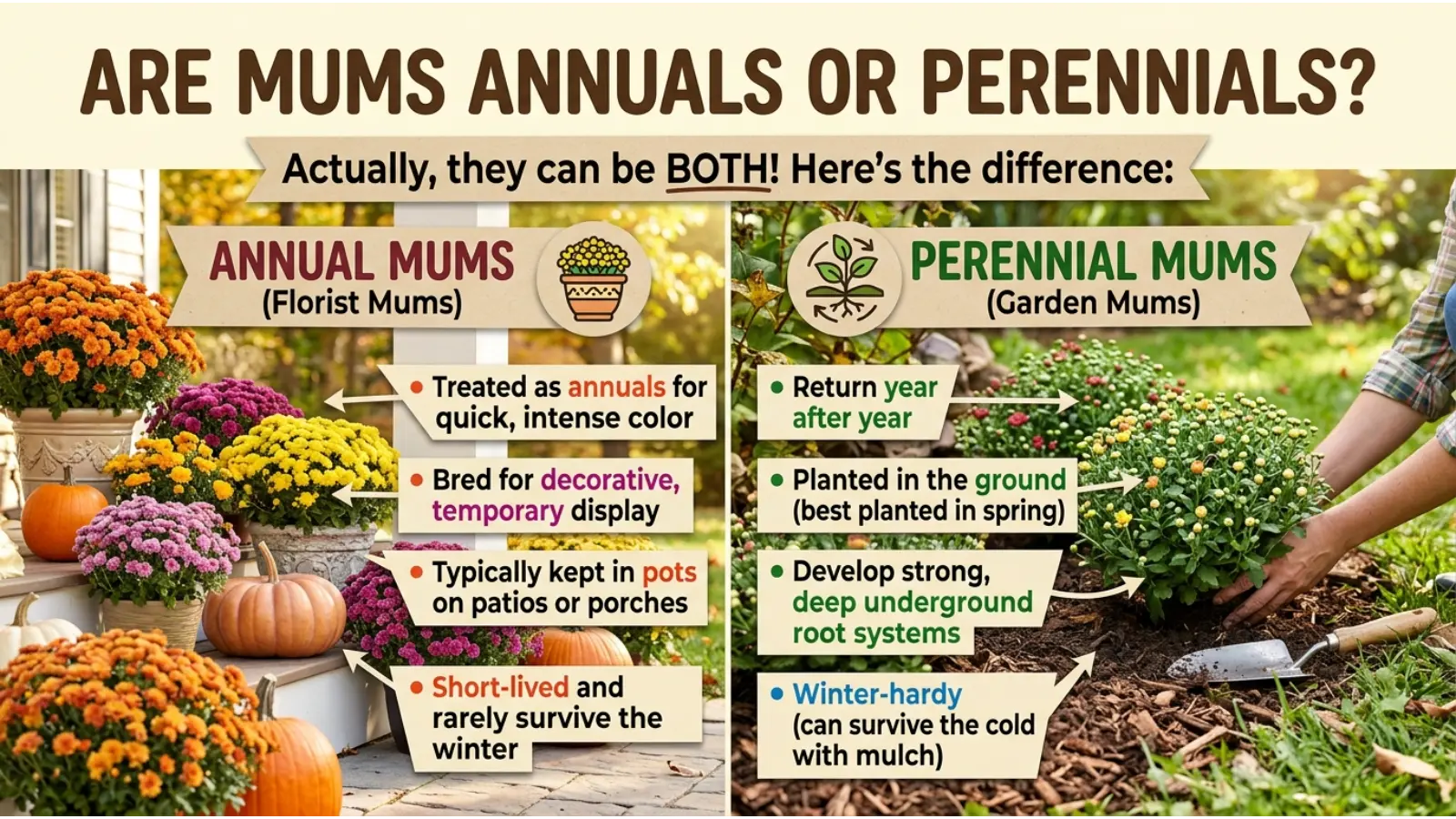
Mums can be annuals or perennials, but many garden mums are perennials. Hardy garden mums can return each year when planted in suitable conditions and given proper care. However, some florist mums are less likely to survive outdoors through winter.
An annual completes its life cycle in one growing season. A perennial can live for several years.
Here are three simple examples:
- Hardy garden mum: Often returns each spring and blooms again in autumn.
- Florist mum: Usually sold in pots for seasonal indoor or outdoor decoration and may struggle to survive winter outside.
- Potted fall mum: May return next year if it is a hardy variety and its roots survive the winter.
Simple rule: Hardy mums can return; tender mums may need protection or may be best enjoyed for one season.
The Origin of Mums
Mums are short for chrysanthemums, a group of flowering plants in the daisy family. They originally come from Asia and parts of northeastern Europe.
Chrysanthemums have a long history of cultivation, especially in China and Japan. Over time, gardeners developed many varieties with different flower shapes, colors, and growing habits.
Today, mums are popular around the world because they produce attractive flowers in shades of yellow, white, pink, red, purple, and bronze.
Their popularity increases in autumn because many varieties bloom when other garden flowers begin to fade. This seasonal popularity is one reason people often wonder whether mums will survive until the next year.
British English vs American English Usage
The words mums and mums are used in both British and American English, but the word can have different meanings depending on the context.
In gardening, mums is a common short form of chrysanthemums, especially in American English. In British English, gardeners often use chrysanthemums or chrysanths.
The main difference is the common name, not the plant itself.
| Feature | British English | American English | Notes |
|---|---|---|---|
| Common name | Chrysanthemums or chrysanths | Mums | Both refer to chrysanthemums |
| Plant type | Hardy and tender varieties | Hardy and florist varieties | Depends on the variety |
| Flowering season | Often late summer and autumn | Often autumn | Climate affects flowering |
| Growing conditions | Vary by region | Vary by region | Winter protection may be needed |
There is no major difference in the plant’s life cycle between British and American usage. Whether a mum returns next year depends on its variety and growing conditions.
Which One Should You Grow?
If you want mums that return every year, choose a hardy garden variety. If you mainly want colorful flowers for a seasonal display, a potted florist mum may be suitable.
Consider these points before buying:
- For a permanent garden: Choose hardy perennial garden mums.
- For autumn decoration: Potted mums can brighten steps, balconies, and porches.
- For cold winters: Select varieties suited to your local climate and protect the roots.
- For containers: Choose a suitable pot with drainage holes and protect it during winter.
- For beginners: Start with hardy garden mums recommended by a local nursery.
Hardy mums are often best planted in spring. This gives their roots more time to grow before winter arrives.
However, planting time can vary by climate. Follow advice from a local garden center if your winters are especially cold or your summers are very hot.
Common Mistakes With Mums
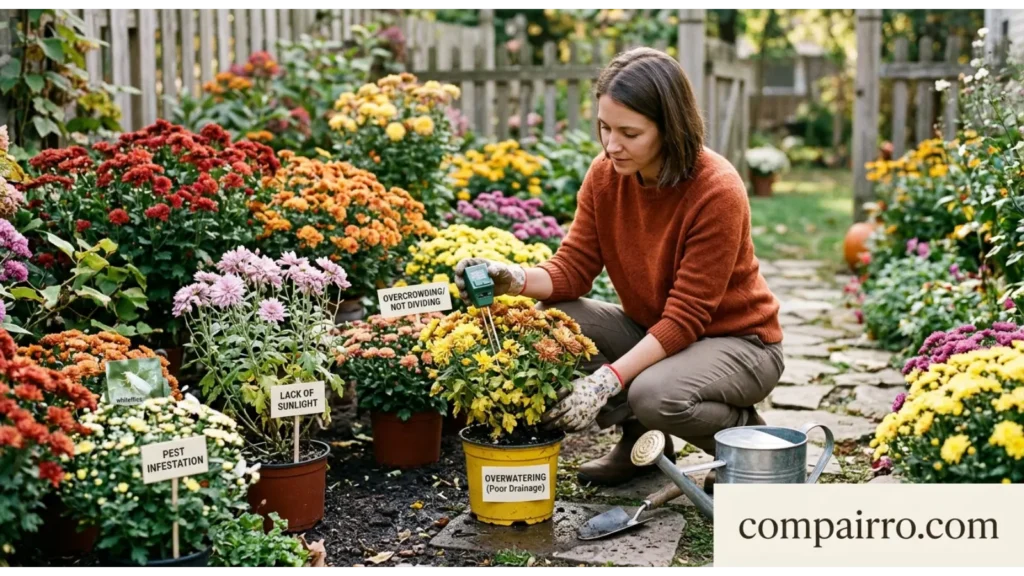
Gardeners sometimes assume that every mum behaves the same way. Here are four common mistakes to avoid.
Mistake 1: Thinking all mums are annuals
❌ Incorrect: Every mum dies after autumn.
✔ Correct: Many hardy garden mums are perennials and can return in spring.
Mistake 2: Assuming every potted mum will survive winter
❌ Incorrect: Every mum sold in a pot is winter-hardy.
✔ Correct: Some potted mums are florist varieties that may not survive cold outdoor conditions.
Mistake 3: Planting mums too late in autumn
❌ Incorrect: Planting a mum just before winter gives it enough time to establish strong roots.
✔ Correct: Spring planting usually gives hardy mums more time to settle into the soil before winter.
Mistake 4: Watering without checking the soil
❌ Incorrect: All mums need water every day.
✔ Correct: Mums need regular moisture, but the soil should not remain waterlogged. Check the soil before watering.
Mums in Everyday Examples
Mums are used in gardens, seasonal displays, and home decorations. Here are some practical examples.
Daily life
“I bought yellow mums to decorate the front porch for autumn.”
This describes mums used as seasonal decorations.
Gardening
“I planted hardy mums in spring so they could establish their roots before winter.”
This explains how gardeners prepare perennial mums to return next year.
Social media
“These purple mums make my fall garden look beautiful!”
People often share photos of mums in autumn garden posts.
At a garden center
“Are these mums hardy perennials or florist varieties?”
This is a useful question to ask before buying a plant.
For beginners
“My mums stopped flowering, but I want them to bloom again next year.”
The next step is to identify the variety and provide suitable care.
Are Mums Annuals or Perennials? – Google Trends and Usage Data
People search for “are mums annuals or perennials” because they want to know whether their plants will return after winter. Many also want to understand how to care for potted mums, when to plant them, and how to protect them from cold weather.
This topic is especially relevant in autumn, when garden centers sell large numbers of chrysanthemums.
Why people search for this question
Common reasons include:
- They want to know whether mums will grow back next year.
- They want to avoid buying new plants every autumn.
- Their potted mums have stopped flowering.
- They want to know whether mums can survive frost.
- They need advice on planting and winter care.
Country and seasonal differences
- United States: Mums are popular autumn flowers, and gardeners often look for hardy varieties.
- United Kingdom: Gardeners commonly search for chrysanthemum care and winter protection.
- Canada: Cold winters make hardiness and root protection important.
- Australia: Growing advice depends on the region and local climate.
- India: Growing conditions vary widely, so local planting times and temperatures matter.
- Pakistan: Gardeners may grow chrysanthemums during cooler months, depending on the local climate and variety.
Search interest may rise during local planting and flowering seasons. However, exact search volumes, country rankings, and current Google Trends figures should be checked directly in Google Trends rather than guessed.
Comparison Table: Annual Mums vs Perennial Mums
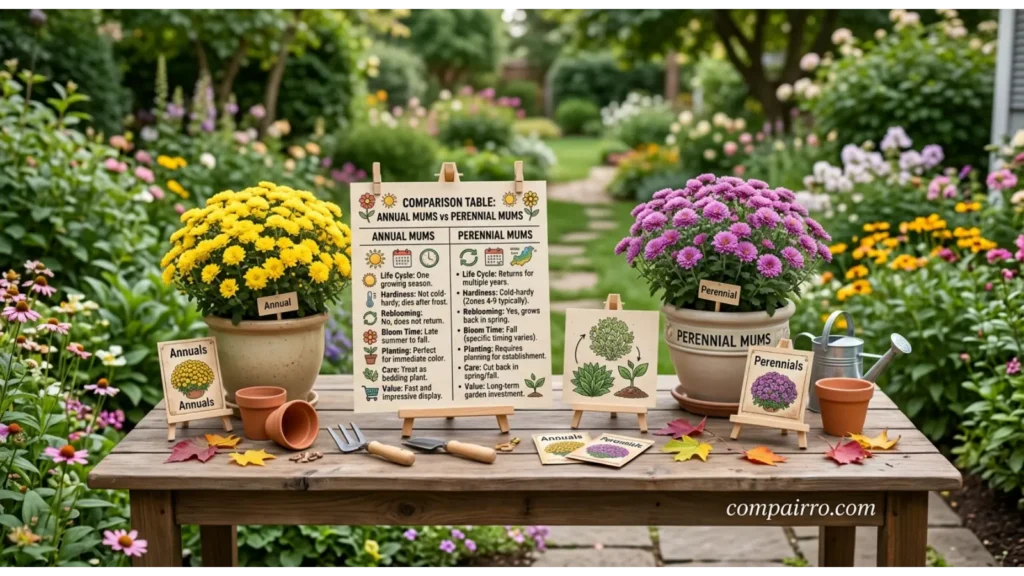
Although mums are often described as annuals or perennials, the main difference is how long the plants can live under suitable conditions.
| Feature | Annuals | Perennials |
|---|---|---|
| Lifespan | Usually one growing season | Several years |
| Growth | Complete their life cycle in one season | Can regrow after winter or a resting period |
| Flowering | Usually bloom during one season | May bloom in several growing seasons |
| Winter survival | Usually not expected to return | Depends on hardiness and growing conditions |
| Examples | Some seasonal flowering plants | Hardy garden mums |
| Best use | Temporary seasonal displays | Long-term garden planting |
Important: A plant sold as a mum is not automatically an annual. Check the label to find out whether it is a hardy garden variety.
Mums in Professional Life and Gardening
Gardeners, landscapers, and nursery workers need to understand the difference between annual and perennial plants.
For example, a landscaper designing a garden for several years may choose hardy perennial mums. These plants can return each year and help create a lasting display.
A shop or event decorator may choose potted mums instead. These plants provide quick color for autumn displays, even when long-term survival is not the main goal.
Knowing the variety also helps professionals give better advice about planting, watering, and winter care.
Mums for Students and Beginners
If you are new to gardening, learning about annuals and perennials can seem confusing. The good news is that the difference is simple.
An annual generally completes its life cycle in one growing season. A perennial can live for several years and grow again when conditions are right.
To choose the right mums:
- Read the plant label before buying.
- Look for words such as “hardy garden mum.”
- Ask whether the variety can survive your local winter.
- Plant hardy mums early enough to establish their roots.
- Water regularly without keeping the soil too wet.
- Add suitable winter protection when needed.
Do not worry if your first potted mum does not return. Some varieties are grown mainly for seasonal color, and not every plant will survive winter.

Signs or Characteristics of Mums
You can learn more about mums by looking at their growth and care needs.
- Colorful flowers: Mums come in many colors and flower shapes.
- Seasonal blooms: Many garden varieties flower in late summer or autumn.
- Different growth habits: Some varieties grow in compact mounds, while others grow taller.
- Perennial growth: Hardy varieties may produce new shoots from their roots in spring.
- Need for sunlight: Most mums grow best with plenty of sunlight.
- Moisture needs: They prefer evenly moist, well-drained soil.
- Winter sensitivity: Their ability to survive cold weather depends on the variety and local conditions.
These characteristics can help you care for your plants, but the plant label is still the best starting point for identifying the variety.
Simple Trick to Remember: Are Mums Annuals or Perennials?
Here is an easy way to remember the difference:
Annual = one growing season.
Perennial = returns for more growing seasons.
Think of it this way: if you plant a hardy mum and it survives winter, it may send up new growth in spring and bloom again in autumn.
However, a perennial does not return automatically. It still needs suitable soil, sunlight, water, and winter conditions.
Remember this simple phrase: Hardy mums can return; tender mums may not.
FAQs:
1. Do mums come back every year?
Many hardy garden mums return every year when planted in suitable conditions. Some florist mums may not survive winter outdoors.
2. Are mums annuals or perennials?
Mums can be either, depending on the variety and how they are grown. Many hardy garden mums are perennials.
3. Can potted mums survive winter?
Yes, some can. Hardy varieties have a better chance when their roots receive suitable winter protection, but survival is not guaranteed.
4. Should I plant mums in the ground or keep them in pots?
Both options can work. Planting hardy mums in the ground in spring often gives their roots more time to establish before winter.
5. Do mums need full sun?
Most mums grow and flower best with plenty of sunlight, often around six hours or more daily. Their exact needs can vary by variety and climate.
6. When should I plant mums?
Spring is generally a good time to plant hardy garden mums because it gives them time to develop strong roots before winter.
7. How can I tell if my mums will return next year?
Check the plant label for terms such as “hardy garden mum” or ask your local nursery. The variety, winter temperatures, soil drainage, and care all affect survival.
Conclusion
So, are mums annuals or perennials? The answer depends on the type of chrysanthemum you buy. Many hardy garden mums are perennials and can return year after year, while some florist mums are grown mainly for seasonal displays and may not survive winter.
If you want mums in your garden for several years, choose a hardy variety that suits your local climate. Plant it at the right time, provide enough sunlight, water it properly, and protect its roots when needed.
The easiest rule to remember is this: hardy mums can return next year, but not every mum is guaranteed to survive winter. With the right variety and care, you can enjoy their colorful flowers for more than one season.

Sara Taylor is a passionate English content writer who specializes in word meanings, spelling comparisons, and modern slang explanations. She creates easy-to-understand articles that help readers avoid common English mistakes and improve their writing skills. Her content focuses on simple learning, real-life examples, and clear explanations for everyday readers.