Imagine ordering a delicious pizza with melted cheese, tomato sauce, and round, spicy slices on top. You take a bite and enjoy the flavor. But then, you wonder: Is pepperoni beef or pork?
This is a common question, especially for people who follow halal food rules, avoid pork for religious reasons, or simply want to know what they are eating. Pepperoni is a popular pizza topping in the United States and many other countries. However, its ingredients can be confusing because different brands use different types of meat.
Some pepperoni is made from pork, while other varieties contain beef. You can also find pepperoni made from a mixture of beef and pork. In some stores, chicken or turkey versions are available, too.
The important thing to remember is that the word pepperoni does not automatically tell you which meat a product contains. You need to check the ingredients on the package or ask the restaurant about its recipe.
This matters when buying pizza at a restaurant, ordering food at work or school, shopping at a supermarket, or checking food information online and on social media. It is especially important for Muslim consumers who want to choose halal food.
In this guide, you’ll learn the meaning, examples, usage, differences, common mistakes, and simple explanations in easy English.
Is Pepperoni Beef or Pork? – Quick Answer
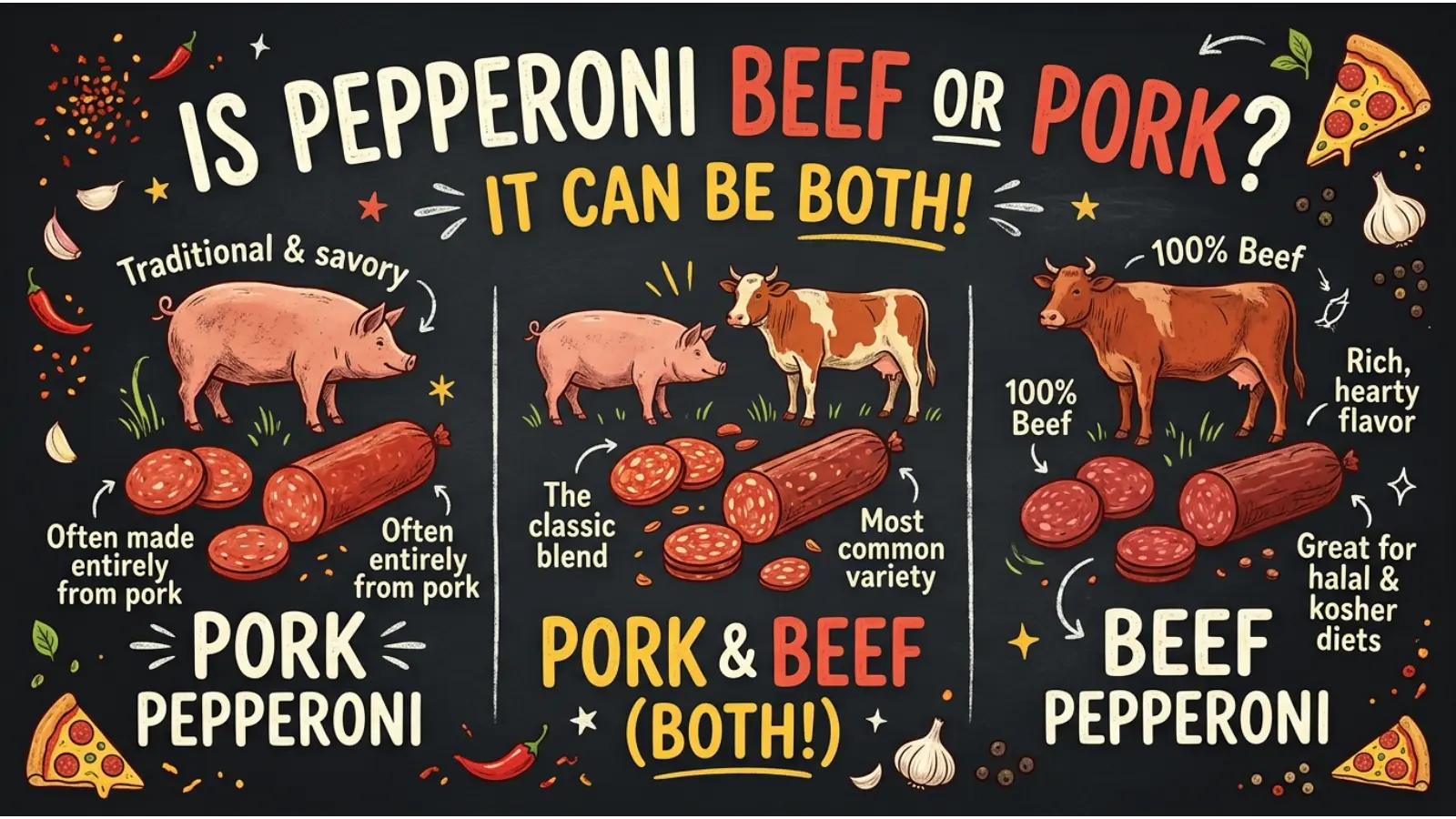
Pepperoni is traditionally made from pork or a mixture of pork and beef. However, beef-only pepperoni is also widely available. Some products use other meats, such as turkey or chicken.
Pepperoni is a seasoned sausage that is usually cured and dried. It is often flavored with paprika, chili, garlic, and other spices, which give it a reddish color and a slightly spicy taste.
Here are three simple examples:
- Pork pepperoni: Made using pork meat.
- Beef pepperoni: Made using beef instead of pork.
- Beef and pork pepperoni: Made using a combination of both meats.
Simple rule: Never assume all pepperoni is beef or pork. Always check the ingredients.
If you follow halal dietary rules, look for a reliable halal certification and confirm that the product contains no pork or other prohibited ingredients.
The Origin of Pepperoni
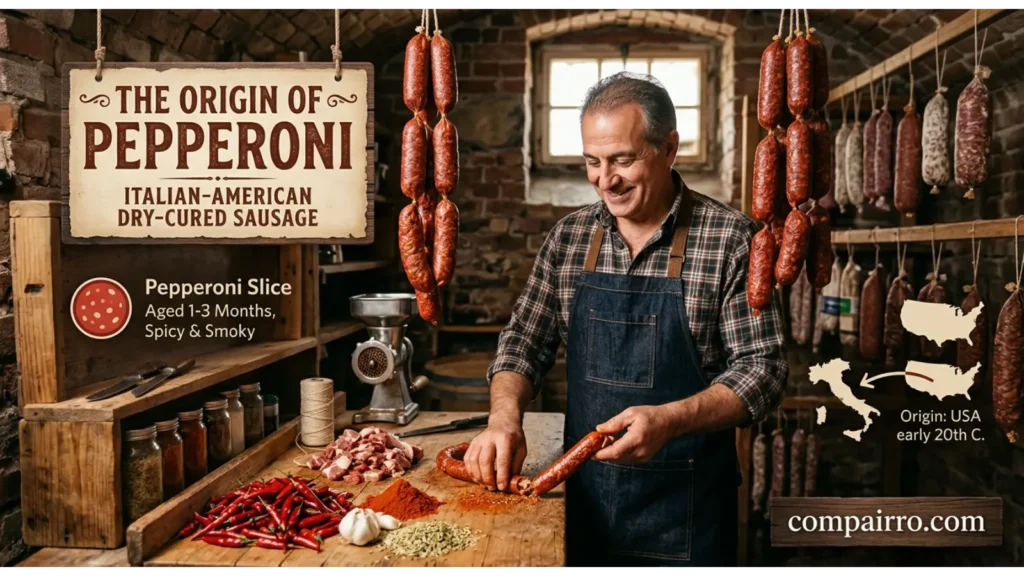
Pepperoni became popular as a pizza topping in the United States. Its name is linked to the Italian word peperoni, which means peppers. However, the American food called pepperoni is a spicy sausage, not simply a type of pepper.
Italian cured sausages helped inspire the American version. Over time, pepperoni became a favorite topping because of its spicy flavor, bright red color, and ability to cook well on pizza.
Traditional American pepperoni commonly contains pork, beef, or both. Today, food makers produce different versions to meet the needs of people with different tastes and dietary requirements.
As pizza spread around the world, beef pepperoni and other alternatives became easier to find in markets where pork is less commonly eaten.
British English vs. American English Usage
The word pepperoni is used in both British and American English. However, the ingredients can vary by brand, product, and country.
In the United States, pork-and-beef pepperoni is common. In the United Kingdom, you may find similar products, but you should check the packaging to confirm the meat used.
| Feature | British English | American English | Notes |
|---|---|---|---|
| Word | Pepperoni | Pepperoni | Same spelling |
| Common use | Pizza topping | Pizza topping | Popular in both countries |
| Meat | Depends on the product | Often pork, beef, or both | Check the label |
| Beef-only options | Available | Available | Varies by brand |
| Halal options | Available from some sellers | Available from some sellers | Check certification |
The main difference is not the English language. It is the ingredients used by different food makers.
Which One Should You Choose?
The best pepperoni depends on your diet, beliefs, taste, and personal preferences.
- Choose beef pepperoni if you want to avoid pork and prefer beef.
- Choose halal-certified pepperoni if you follow halal dietary rules. Check the certification and ingredients.
- Choose turkey or chicken pepperoni if you prefer poultry-based products.
- Choose traditional pepperoni if you enjoy its familiar spicy flavor and are comfortable with the listed ingredients.
- Choose vegetarian pepperoni if you do not eat meat.
Remember that beef pepperoni is not automatically halal. The meat source, slaughter method, ingredients, and production process may also matter.
When ordering pizza, ask the restaurant: “Is your pepperoni made from beef, pork, or a mixture of both?”
This simple question can help you make the right choice.
Common Mistakes About Pepperoni
People often misunderstand what pepperoni contains. Here are five common mistakes to avoid.
Mistake 1: Assuming all pepperoni is pork
❌ “Every pepperoni pizza contains pork.”
✔ Some pepperoni contains only beef, while other varieties use a mixture of beef and pork.
Mistake 2: Assuming all beef pepperoni is halal
❌ “If it says beef, it must be halal.”
✔ Beef pepperoni must meet the relevant halal requirements to be considered halal. Check for trusted certification.
Mistake 3: Thinking pepperoni is always made from one type of meat
❌ “Pepperoni can only contain pork.”
✔ Manufacturers can use pork, beef, a mixture of both, or other meats, depending on the product.
Mistake 4: Trusting the pizza’s appearance
❌ “The red color means the pepperoni is beef.”
✔ Both beef and pork pepperoni can have a reddish color because of spices and curing ingredients.
Mistake 5: Forgetting to check restaurant ingredients
❌ “The restaurant serves beef pizza, so its pepperoni must be beef.”
✔ The main meat on a pizza and the pepperoni topping may be different. Ask about the exact ingredients.

Pepperoni in Everyday Examples
Pepperoni comes up in many everyday situations. These examples show how to ask about it clearly.
At a restaurant
You are ordering a pizza with friends.
You: “Is your pepperoni made from beef or pork?”
Restaurant worker: “We have beef pepperoni. Would you like that on your pizza?”
At school
A student brings pizza for lunch and wants to know what is on it.
Student: “Does this pepperoni contain pork?”
Friend: “Let’s check the package before eating it.”
On social media
Someone posts a picture of a pepperoni pizza.
Comment: “Does anyone know if this brand uses beef or pork?”
In daily life
You are shopping for pizza toppings.
You: “I’m looking for halal beef pepperoni. Can you show me the ingredients and certification?”
In a text message
You want to order pizza for a family gathering.
Message: “Please check whether the pepperoni is halal before ordering.”
These examples show why checking ingredients is more useful than guessing from a product’s name or appearance.
Is Pepperoni Beef or Pork? – Google Trends and Usage Data
People search for “is pepperoni beef or pork” because they want a clear answer about the meat used in their food. Some are checking dietary requirements, while others are simply curious about a popular pizza topping.
Search interest can also increase when people compare pizza brands, explore new foods, or look for halal alternatives.
Here are some reasons people in different countries may search for this question:
- United States: Consumers may want to know whether a pizza contains pork, beef, or both.
- United Kingdom: Shoppers may compare ingredients or look for suitable dietary options.
- India: Some consumers may check meat ingredients because of religious or personal food choices.
- Pakistan: People may look for halal-certified beef pepperoni or ask whether imported pizza products contain pork.
- Canada: Shoppers may compare packaged meat products and restaurant toppings.
- Australia: Consumers may check product labels and look for alternatives that suit their dietary needs.
These are general reasons for searching, not verified country rankings. Exact search volumes and popularity rankings require current Google Trends or keyword research data.
The main point is simple: people want to know what is inside their food before buying or eating it.
Comparison Table: Beef Pepperoni vs. Pork Pepperoni
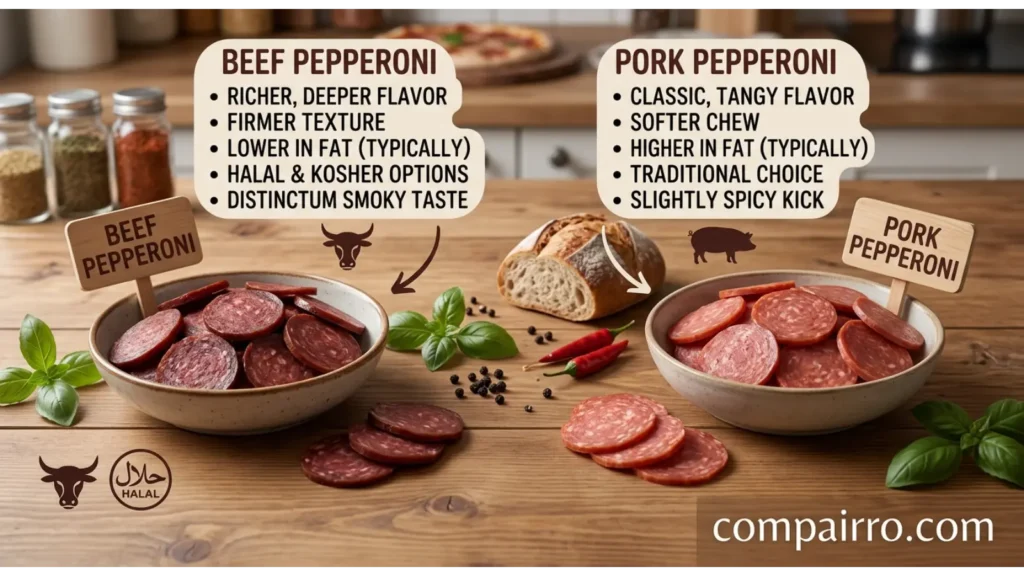
Beef and pork pepperoni may look similar, but their ingredients are different.
| Feature | Beef Pepperoni | Pork Pepperoni |
|---|---|---|
| Main meat | Beef | Pork |
| Color | Usually reddish | Usually reddish |
| Flavor | Spicy and savory | Spicy and savory |
| Texture | Depends on the recipe | Depends on the recipe |
| Halal suitability | Only if halal requirements are met | Not halal |
| Availability | Depends on the market | Common in many Western markets |
| Best way to identify it | Read the label | Read the label |
Important: Flavor, color, and texture cannot reliably tell you which meat was used. The ingredient list is the best starting point.
Pepperoni in Professional Life
Knowing what pepperoni contains can be useful for restaurant workers, food sellers, chefs, and people who manage food businesses.
Restaurants should provide accurate information about their pizza toppings. This helps customers make informed choices and reduces confusion about allergens, meat sources, and dietary requirements.
For example, a pizza shop may sell regular pepperoni pizza and a separate halal beef pepperoni pizza. The staff should clearly identify each option and avoid mixing up the ingredients.
Food businesses should also keep ingredient information up to date and follow local food-labeling rules.
If you work in a restaurant, never guess whether a product contains beef or pork. Check the packaging, supplier information, or official recipe.
Pepperoni for Students or Beginners
If you are learning about food ingredients, pepperoni is a good example of why product names do not always explain everything.
Here are three easy tips:
- Read the label: Look for words such as beef, pork, chicken, or turkey.
- Check the certification: If halal status matters to you, look for reliable halal certification.
- Ask questions: If the ingredients are unclear, contact the seller or manufacturer.
You may also see terms such as cured sausage, spices, and preservatives on the label. These describe how the product is made or what it contains, but they do not always tell you the complete meat source.
Learning to read food labels helps you make better choices at supermarkets and restaurants.
Signs or Characteristics of Pepperoni
You can recognize pepperoni by several common features, but these features do not prove which animal the meat came from.
- Color: Usually red or reddish-orange.
- Shape: Often sold as thin, round slices.
- Flavor: Commonly spicy, savory, and slightly smoky.
- Texture: Usually firm before cooking and softer when heated.
- Common use: Pizza, sandwiches, snacks, and some baked dishes.
- Ingredients: May include meat, spices, salt, and curing ingredients.
- Meat type: Can be pork, beef, a mixture of meats, or another listed meat depending on the product.
The most important characteristic to check is the ingredient list, not the color or shape.
Simple Trick to Remember: Is Pepperoni Beef or Pork?
Think of it this way:
- Pepperoni = seasoned sausage.
- Beef pepperoni = made from beef.
- Pork pepperoni = made from pork.
- Halal pepperoni = must meet halal requirements.
A simple memory trick is to remember that pepperoni describes the style of sausage, not one guaranteed type of meat.
For example, if a packet says “beef pepperoni,” you know the stated meat source is beef. If it only says “pepperoni,” read the full ingredients to find out more.
And if you are ordering pizza, ask about the meat instead of relying on its appearance.
FAQs:
1. Is pepperoni made from beef or pork?
Traditional American pepperoni often contains pork or a mixture of pork and beef. Beef-only pepperoni is also available.
2. Is pepperoni pork only?
No. Pepperoni can be made from beef, pork, or a mixture of both. Some products use other meats, such as turkey.
3. Is pepperoni halal?
Pepperoni made with pork is not halal. Beef pepperoni may be halal if its ingredients, meat processing, and production meet halal requirements.
4. Can Muslims eat beef pepperoni?
Muslims can eat beef pepperoni if it meets halal requirements. Check for trusted halal certification and review the ingredients.
5. Is pepperoni on pizza usually pork?
In the United States, pepperoni commonly contains pork or a combination of pork and beef. However, ingredients vary by restaurant and brand.
6. How can I tell if pepperoni is beef or pork?
Read the ingredient list or ask the restaurant or manufacturer. Color and taste alone cannot reliably identify the meat source.
7. Is beef pepperoni healthier than pork pepperoni?
Neither is automatically healthier. Both may contain high amounts of salt and saturated fat. Compare nutrition labels and serving sizes to make an informed choice.
Conclusion
So, is pepperoni beef or pork? The answer is that it can be either. Traditional pepperoni often contains pork or a mixture of pork and beef, while beef-only options are also available.
The key is to check the ingredients instead of making assumptions based on the product’s name, color, or taste. If you follow halal dietary rules, choose a product with reliable halal certification and confirm that its ingredients meet your requirements.
Final memory rule: Pepperoni is a type of seasoned sausage, not a guarantee of a particular meat. Always check the label before you buy or eat it.

Sara Taylor is a passionate English content writer who specializes in word meanings, spelling comparisons, and modern slang explanations. She creates easy-to-understand articles that help readers avoid common English mistakes and improve their writing skills. Her content focuses on simple learning, real-life examples, and clear explanations for everyday readers.