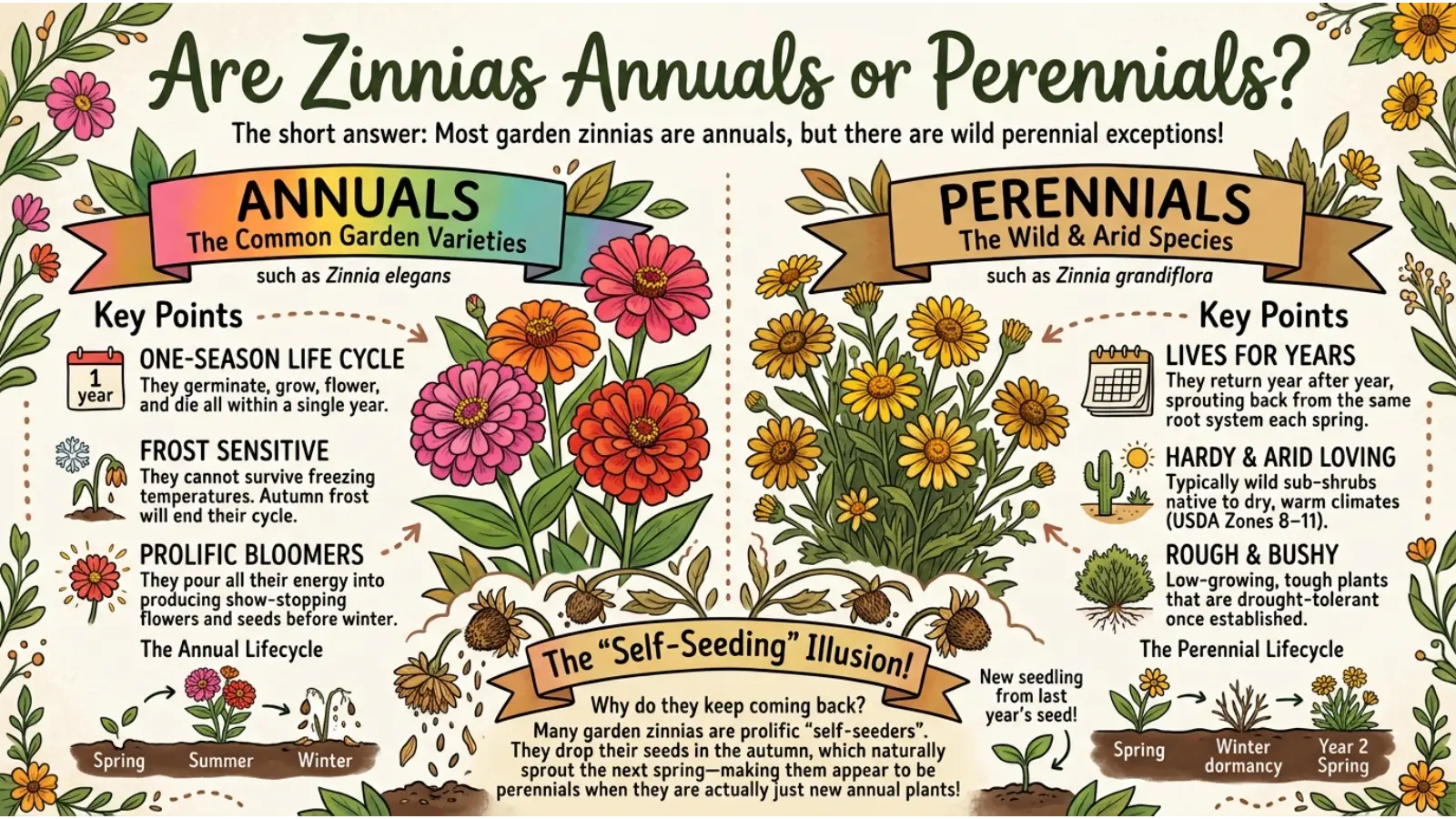
Are Zinnias Annuals or Perennials? This is a trending gardening question for anyone who wants colorful flowers that brighten their garden. Zinnias are popular for their vibrant blooms, easy care, and ability to attract butterflies. However, many gardeners wonder if these beautiful flowers return every year or need replanting each season.
So, are zinnias annuals or perennials? This is a common question among new gardeners and people who want to keep their gardens colorful without spending money on new plants every year.
Zinnias are popular because they are easy to grow, bloom for a long time, and come in many beautiful colors. You can grow them in garden beds, pots, containers, and flower borders. They also attract butterflies and other helpful pollinators.
Understanding if zinnias are annuals or perennials helps you plan your garden, choose the right planting time, and care for your flowers properly. The answer also depends on your local climate, especially if you live somewhere with cold winters.
Whether you are a beginner or an experienced gardener, learning about the life cycle of zinnias can help you enjoy their beauty for as long as possible. With the right care, these flowers can produce blooms throughout the warm growing season.
Are Zinnias Annuals or Perennials? – Quick Answer
Zinnias are annual flowers, not perennials. They usually grow, flower, produce seeds, and complete their life cycle within one growing season. Most garden zinnias do not survive cold weather well enough to return as the same plants the following year.
An annual is a plant that completes its life cycle in one growing season. A perennial is a plant that can live for several years and grow again after its resting period.
Examples
- Annual zinnia: You plant seeds in spring, enjoy flowers in summer, and the plant dies after the growing season.
- Self-seeding zinnia: Seeds fall into the soil, and new plants may grow the following spring.
- Perennial flower: A suitable perennial plant can survive from year to year and produce new growth.
Simple rule: Zinnias are annuals, but their seeds may produce new plants next year.
The Origin of Zinnias
Zinnias belong to the genus Zinnia in the daisy family, known as Asteraceae. They are native mainly to Mexico and parts of Central America and North America.
These flowers became popular in gardens because they grow quickly, produce colorful blooms, and are relatively easy to care for. Gardeners have developed many varieties with different flower sizes, shapes, and colors.
The name Zinnia honors Johann Gottfried Zinn, a German botanist who lived in the eighteenth century.
Today, zinnias are grown around the world. Gardeners often choose them for summer flower beds, cutting gardens, containers, and pollinator-friendly spaces.
Their popularity also comes from their long flowering season. With enough sunlight, suitable soil, and regular care, many varieties continue producing flowers from summer until the first frost.
British English vs American English Usage
The word zinnia has the same spelling and meaning in British and American English. There is no important regional difference in how gardeners classify this flower.
However, planting times may differ because the climates of the United Kingdom and the United States are not the same.
| Feature | British English | American English | Notes |
|---|---|---|---|
| Flower name | Zinnia | Zinnia | Same spelling |
| Plant type | Annual | Annual | Same classification |
| Planting time | Usually after frost risk passes | Usually after frost risk passes | Depends on local climate |
| Growing season | Mainly spring and summer planting for summer blooms | Mainly spring and summer planting for summer blooms | Regional conditions matter |
| Winter survival | Usually does not survive cold winters outdoors | Usually does not survive cold winters outdoors | Zinnias are frost-sensitive |
In both countries, gardeners usually grow zinnias as annual flowers. The exact planting date depends on local weather and the last expected frost.
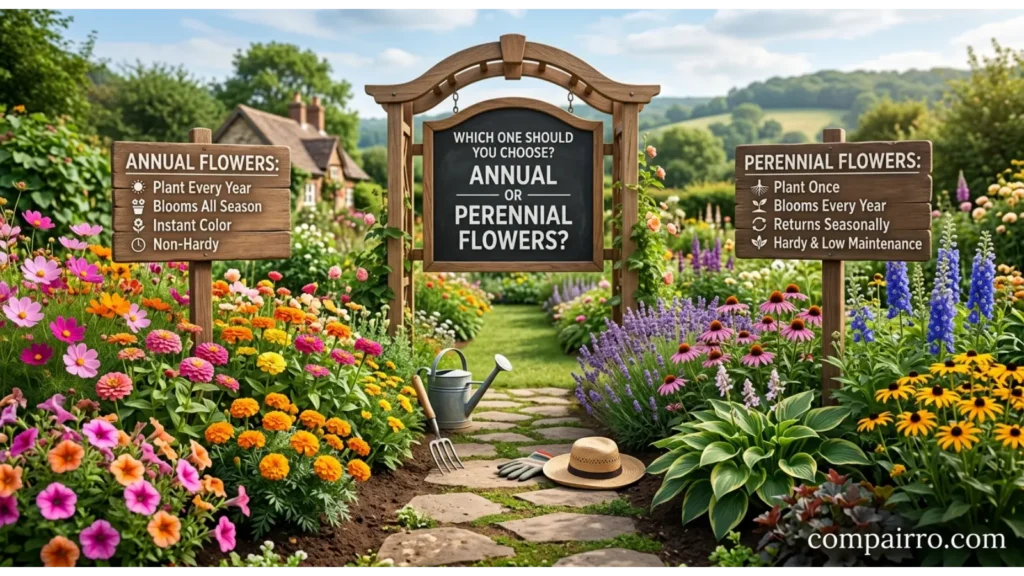
Which One Should You Choose? Annual or Perennial Flowers?
If you want to grow zinnias, you do not need to choose between annual and perennial zinnias. Common garden zinnias are annuals.
However, you can decide whether to grow zinnias alone or combine them with perennial flowers.
Consider these points:
- Choose zinnias for seasonal color: They grow quickly and can produce flowers throughout the summer.
- Choose perennials for long-term gardens: Many perennial flowers return for several years when grown in suitable conditions.
- Combine both types: Plant zinnias alongside suitable perennials to enjoy both seasonal color and long-lasting garden structure.
- Save seeds: Collect seeds from mature, dry flower heads if you want to grow zinnias again next year.
- Check your climate: Zinnias are sensitive to frost, so wait until frost danger has passed before planting them outdoors.
Zinnias are suitable for beginners because they usually grow well in sunny locations with well-drained soil.
Common Mistakes With Zinnias
Even though zinnias are easy to grow, gardeners sometimes make mistakes when planting and caring for them.
Mistake 1: Thinking Zinnias Are Perennials
❌ Incorrect: Zinnias will return from the same roots every spring.
✔ Correct: Zinnias are annuals. You generally need new seeds or plants each growing season.
Mistake 2: Planting Seeds Too Early
❌ Incorrect: Planting zinnia seeds outdoors while frost is still possible.
✔ Correct: Wait until the danger of frost has passed and the soil has warmed.
Mistake 3: Expecting Flowers Without Enough Sunlight
❌ Incorrect: Growing zinnias in deep shade and expecting many blooms.
✔ Correct: Choose a sunny location. Most zinnias grow best with around six or more hours of direct sunlight daily.
Mistake 4: Watering Too Often
❌ Incorrect: Keeping the soil constantly wet.
✔ Correct: Water when needed, preferably near the base of the plant. Use well-drained soil to reduce the risk of root problems.
Mistake 5: Assuming Dead Flowers Mean the Plant Is Perennial
❌ Incorrect: Thinking a zinnia that produces seeds will grow back from its roots.
✔ Correct: The original plant usually completes its life cycle. However, seeds that fall into suitable soil may grow into new plants.
Mistake 6: Removing Every Flower Before Seeds Mature
❌ Incorrect: Removing all flower heads when you want to save seeds.
✔ Correct: Deadhead faded flowers to encourage more blooms, but leave a few healthy flower heads to mature and dry if you want to collect seeds.
Zinnias in Everyday Gardening Examples
Here are some simple examples of how gardeners grow and care for zinnias.
1. Home Gardening
You plant zinnia seeds in a sunny garden bed in spring. By summer, the plants begin producing colorful flowers.
Because zinnias are annuals, you plan to sow seeds again next growing season.
2. School Gardening Projects
A student plants zinnias to learn about plant life cycles. The student observes how seeds grow into plants, produce flowers, and form new seeds.
This is a useful way to understand the difference between annual and perennial plants.
3. Social Media Gardening Posts
A gardener shares a photo of bright zinnias with the caption, “My summer garden is full of color!”
The flowers may look fresh for weeks, but the plants will eventually complete their life cycle.
4. Daily Garden Care
You notice that your zinnias have faded flowers. You remove the old blooms to encourage more flowering.
Later, you leave a few flower heads to dry so you can collect seeds for the next growing season.
5. Container Gardening
You grow zinnias in pots on a sunny balcony. You use containers with drainage holes and water the plants when the soil needs moisture.
When the season ends, you can save seeds and grow a new batch next year.
Are Zinnias Annuals or Perennials? – Google Trends and Usage Data
People search for “are zinnias annuals or perennials” because they want to understand the plant’s life cycle before spending time and money on gardening.
The question is especially useful for people who want flowers that return each year without replanting.
Common reasons for searching include:
- Finding out whether zinnias survive winter.
- Learning when to plant zinnia seeds.
- Understanding whether zinnias grow back every year.
- Discovering how to save zinnia seeds.
- Choosing between annual and perennial flowers.
Search Interest Around the World
Gardeners in different countries may search for this question at different times of the year.
- United States: Interest may increase in spring as people prepare their summer gardens.
- United Kingdom: Gardeners may search before planting summer flowers outdoors.
- India: Interest may depend on regional temperatures and local growing seasons.
- Pakistan: Gardeners may look for planting advice based on local weather and seasonal heat.
- Canada: Questions about frost and the short outdoor growing season can be important.
- Australia: Search interest may follow the local seasons, which are opposite to those in the Northern Hemisphere.
These are general seasonal patterns, not verified Google Trends rankings. Exact popularity, search volume, and country rankings require current Google Trends data.
Zinnias are also popular on gardening websites and social media because their bright flowers look attractive in garden photographs and short videos.
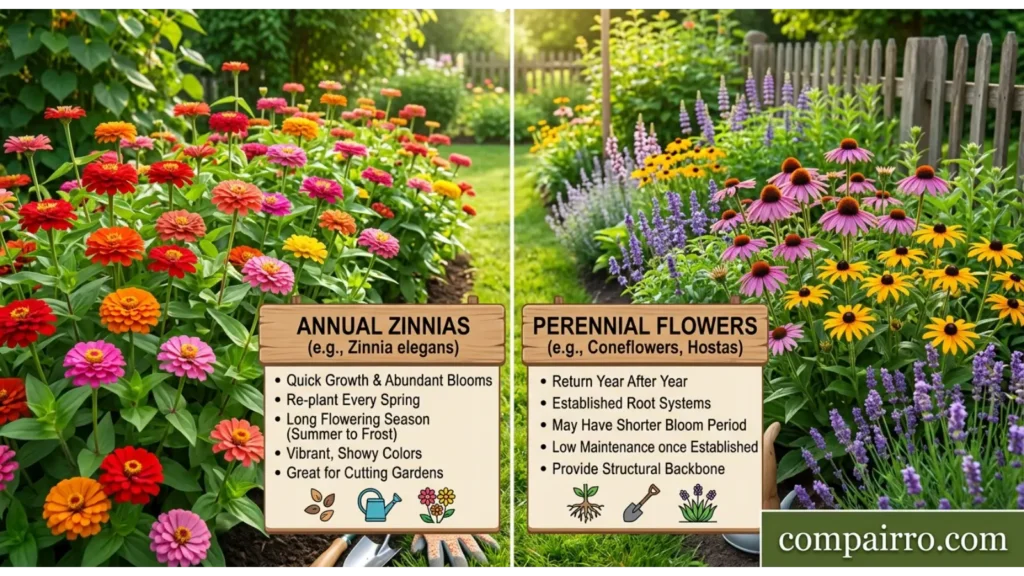
Comparison Table: Annual Zinnias vs Perennial Flowers
Since common garden zinnias are annuals, the most useful comparison is between zinnias and flowers that naturally return for several years.
| Feature | Zinnias | Perennial Flowers |
|---|---|---|
| Life cycle | One growing season | Several years |
| Return next year | Usually through new seeds or new plants | Often from established roots or crowns |
| Flowering period | Usually summer until frost | Depends on the plant species |
| Frost tolerance | Generally frost-sensitive | Varies by species |
| Planting | Commonly grown from seed | Grown from seeds, divisions, or nursery plants |
| Maintenance | Watering, deadheading, and seasonal replanting | Varies by species and growing conditions |
| Best use | Bright seasonal color and cutting gardens | Long-term garden structure and recurring blooms |
Important: Some annuals can self-seed, but this does not make them perennials. The new plants grow from seeds rather than surviving as the original plants.
Zinnias in Professional Gardening
Zinnias are useful in home landscaping, public gardens, flower production, and seasonal garden displays.
Gardeners and landscaping professionals may choose zinnias for several reasons:
- Seasonal color: They provide bright flowers during warm weather.
- Cut flowers: Many varieties are suitable for bouquets and flower arrangements.
- Pollinator gardens: Their flowers can attract butterflies and other pollinators.
- Garden borders: Different heights and colors can create attractive borders.
- Seed production: Mature flower heads can provide seeds for future planting.
However, professional gardeners must plan for seasonal replacement because zinnias do not usually return from year to year as established plants.
They may combine zinnias with perennial plants to reduce the need to redesign an entire garden each season.
Zinnias for Students and Beginners
If you are new to gardening, zinnias are a helpful plant to grow because their life cycle is easy to observe.
Beginners sometimes confuse annuals with perennials because both types can produce beautiful flowers.
Here are a few easy tips:
- Start with healthy seeds: Choose seeds suited to your local growing conditions.
- Wait for warm weather: Zinnia seeds need suitable soil temperatures to germinate well.
- Choose a sunny spot: Give the plants plenty of direct sunlight.
- Avoid waterlogged soil: Make sure extra water can drain away.
- Observe the life cycle: Watch the plants grow, flower, and produce seeds.
- Save seeds carefully: Allow selected flower heads to mature and dry before collecting seeds.
- Plant again next year: Sow saved seeds when the weather is suitable.
Growing zinnias can help students understand annual plants, seed formation, pollination, and the basic needs of flowering plants.
Signs and Characteristics of Zinnias
Zinnias have several features that make them easy to recognize and popular with gardeners.
- Bright flowers: Common colors include pink, red, orange, yellow, white, and purple.
- Different flower shapes: Some varieties have single rows of petals, while others have fuller, double flowers.
- Warm-weather growth: Zinnias generally grow best during warm, sunny weather.
- Seasonal life cycle: Common garden zinnias complete their life cycle within one growing season.
- Seed production: Mature flower heads can produce seeds for future planting.
- Pollinator value: Their flowers can attract butterflies and other visiting insects.
- Easy care: Most garden varieties need sunlight, suitable soil, and sensible watering.
- Frost sensitivity: Cold weather and frost can damage or kill the plants.
- Long flowering season: Many varieties continue blooming when faded flowers are removed and growing conditions remain suitable.
The exact height, flower size, and growth habits depend on the zinnia variety you choose.
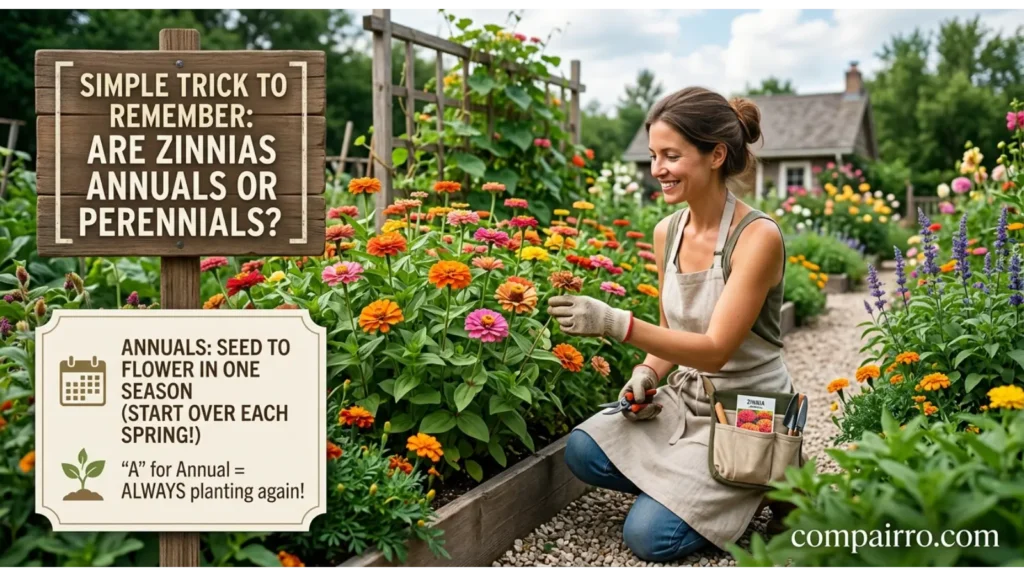
Simple Trick to Remember: Are Zinnias Annuals or Perennials?
Here is an easy way to remember the difference:
Annual = One growing season.
Perennial = Returns for several years.
Think of it this way: You plant zinnias in spring, enjoy their flowers in summer, and collect their seeds before the season ends. Next year, you plant those seeds to grow a new generation of flowers.
For example, if your zinnias die after the first frost, that is normal. You can save their seeds and grow more plants when warm weather returns.
Remember that a new zinnia growing from a fallen seed is not the same plant returning from its roots. It is a new plant beginning its own life cycle.
This simple rule helps you understand why zinnias are annuals even when they appear in the same garden year after year.
FAQs:
1. Do zinnias come back every year?
Zinnias usually do not return from the same roots because they are annuals. However, fallen seeds may germinate and produce new plants the following growing season.
2. Can zinnias survive winter?
Common garden zinnias are sensitive to frost and usually do not survive freezing winter conditions outdoors. Their seeds may be saved for planting when warm weather returns.
3. Should I remove zinnias in the fall?
You can remove dead or frost-damaged plants after the growing season. If you want to save seeds, leave a few flower heads until they mature and dry.
4. Do zinnias reseed themselves?
Yes, zinnias can self-seed when mature seeds fall onto suitable soil. However, successful growth depends on weather, moisture, and other local conditions.
5. How long do zinnias live?
Zinnias generally live for one growing season. Their exact lifespan depends on the variety, planting date, weather, and growing conditions.
6. Do zinnias need full sun?
Most zinnias grow and flower best in full sun, usually with at least six hours of direct sunlight daily. They also need well-drained soil.
7. Can I grow zinnias in pots?
Yes, many zinnia varieties grow well in containers. Choose a pot with drainage holes, provide plenty of sunlight, and select a variety that fits the container size.
Conclusion
So, are zinnias annuals or perennials? Zinnias are annuals that usually complete their life cycle in one growing season. They grow, bloom, produce seeds, and eventually die when their growing season ends or frost arrives.
The good news is that you can save seeds from mature flower heads and plant them again next year. Zinnias may also self-seed naturally when conditions are suitable.
To grow healthy zinnias, choose a sunny location, use well-drained soil, water sensibly, and plant after the danger of frost has passed.
Easy memory rule: Zinnias last one growing season, but their seeds can help you enjoy new flowers next year.

Sara Taylor is a passionate English content writer who specializes in word meanings, spelling comparisons, and modern slang explanations. She creates easy-to-understand articles that help readers avoid common English mistakes and improve their writing skills. Her content focuses on simple learning, real-life examples, and clear explanations for everyday readers.