Is It Anyway or Anyways is a common English usage question that confuses many writers and everyday speakers. Both words appear in conversations, emails, and online messages, but are they equally correct? The answer depends on grammar, context, and writing style. Understanding the difference can help you choose the right word and communicate more clearly.
Both words appear in everyday conversations, text messages, social media posts, and online discussions. For example, someone might write, “I was tired, but I went anyway.” Another person might say, “Anyways, let’s talk about something else.”
So, is it anyway or anyways? Are both correct, or is one a spelling mistake? The answer depends on how you use the word and the type of English you are writing.
This small difference matters, especially when writing school assignments, professional emails, blog posts, or other formal content. Using the right word can make your sentences clearer and more natural.
The good news is that learning the difference is simple. You do not need to remember difficult grammar rules. You only need to understand where each word fits best.
In this guide, you’ll learn the meaning, examples, usage, differences, common mistakes, and simple explanations in easy English.
Is It Anyway or Anyways? – Quick Answer
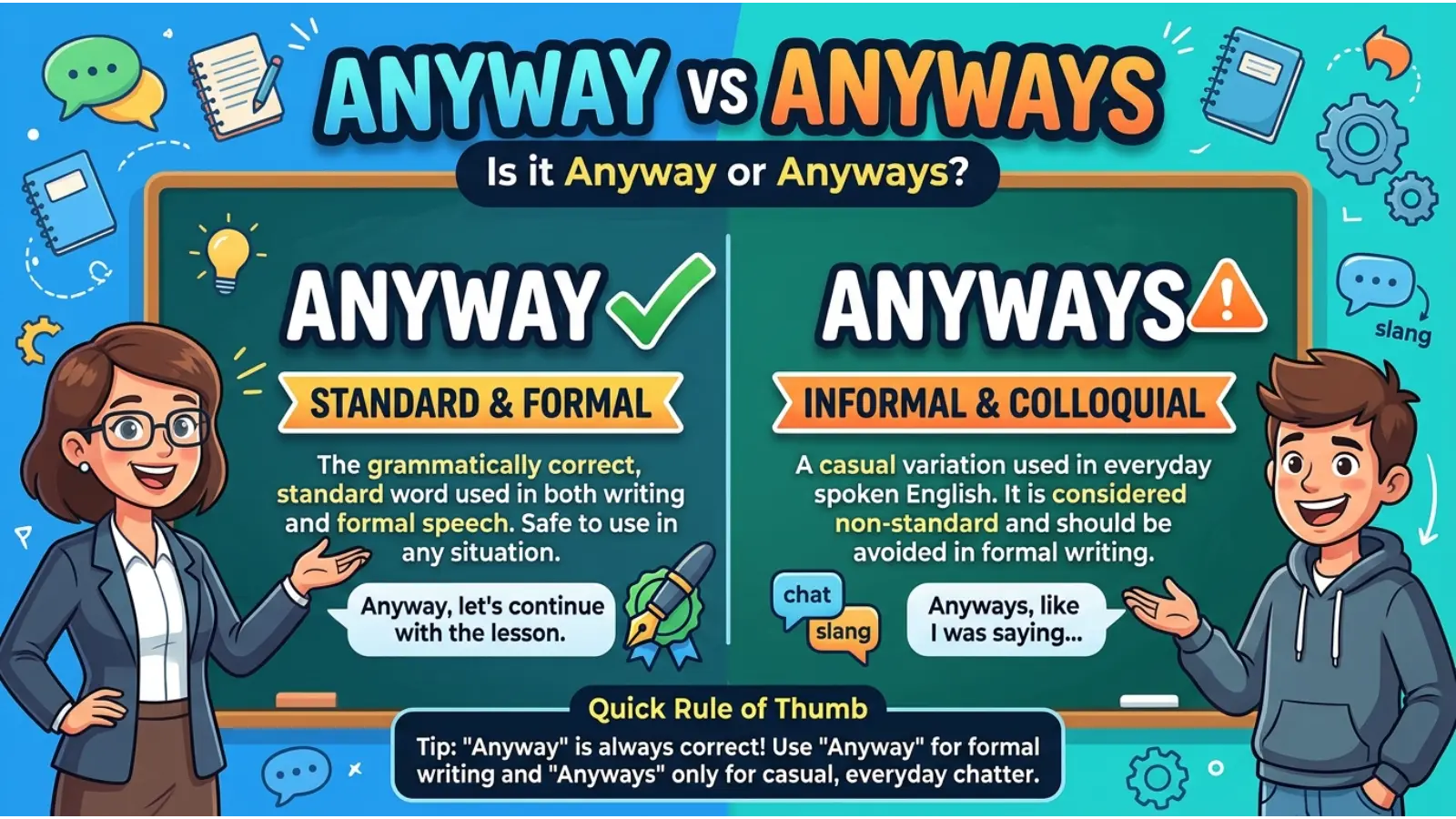
Anyway is the standard and preferred form in formal English. Anyways is also used, mainly in informal conversations, but it is less suitable for formal writing.
Both words can mean “in any case,” “regardless,” or “despite that.”
Examples:
- I was feeling tired, but I went anyway. ✅
- Anyways, what are you doing today? (Informal)
- Anyway, let’s continue our discussion. ✅
Simple rule:
Use anyway for formal writing, schoolwork, and professional communication. Use anyways only when you want a casual conversational tone.

The Origin of Anyway and Anyways
The word anyway comes from the combination of two English words: “any” and “way.”
It has been used in English for centuries to express ideas such as:
- In any case
- Regardless
- Despite something
- Without considering other things
The word anyways developed as an informal variation of anyway. The extra “s” became common in everyday speech and casual conversations.
Over time, people started using anyways in informal writing, text messages, and online discussions.
Today, both forms are widely understood. However, anyway remains the standard choice in edited and formal English.
British English vs American English Usage
The difference between anyway and anyways is not limited to British or American spelling.
Both forms can be understood in the UK and the US. However, their use and popularity can vary depending on the speaker and situation.
| Feature | British English | American English | Notes |
|---|---|---|---|
| Anyway | Common | Common | Standard form |
| Anyways | Informal | Informal | Used in casual speech |
| Formal writing | Anyway | Anyway | Preferred choice |
| Text messages | Both | Both | Depends on personal style |
| Academic writing | Anyway | Anyway | More appropriate |
Important: There is no major spelling difference between British and American English here. Anyway is the standard choice in both varieties.
Which One Should You Use?
Choosing between anyway and anyways becomes easy when you understand the situation.
Here is when to use each word.
Use Anyway When:
- Writing school assignments or essays.
- Sending professional emails.
- Creating website content or blog posts.
- Speaking in formal situations.
- You want your English to sound clear and correct.
Examples:
- I will finish the project anyway.
- Anyway, we should focus on our work.
- She was busy, but she attended the meeting anyway.
Use Anyways When:
- Chatting with friends.
- Sending casual text messages.
- Speaking in relaxed conversations.
- Changing the subject informally.
Examples:
- Anyways, how was your weekend?
- I don’t know anyways.
- Anyways, let’s go home.
Remember, anyways is not usually considered a spelling error in casual English, but anyway is the safer choice in almost every situation.
Common Mistakes With Anyway and Anyways
Many English learners make small mistakes when using these words. Here are four common examples to help you avoid confusion.
Mistake 1: Thinking Anyways Is Always Incorrect
❌ Anyways is not a real English word.
✔ Anyways is a recognized informal variant of anyway. However, it is less suitable for formal writing.
Mistake 2: Using Anyways in Formal Emails
❌ Anyways, I would like to discuss the business proposal.
✔ Anyway, I would like to discuss the business proposal.
Explanation: Anyway sounds more appropriate in professional communication.
Mistake 3: Adding Both Words Together
❌ Anyway and anyways, I will finish my homework.
✔ Anyway, I will finish my homework.
Explanation: You only need one of these words in the sentence.
Mistake 4: Confusing Anyway With Any Way
❌ Is there anyways to solve this problem?
✔ Is there any way to solve this problem?
Explanation: “Any way” means any possible method or manner. It is different from “anyway.”

Anyway or Anyways in Everyday Examples
Understanding these words through everyday examples makes learning easier.
Here are some practical situations.
1. At Work
- Anyway, let’s start the meeting.
- I will complete the task anyway.
- Anyways, we can discuss this tomorrow. (Casual)
2. At School
- I forgot my notebook, but I completed the assignment anyway.
- Anyway, let’s prepare for the exam.
- She was absent, but she submitted her homework anyway.
3. On Social Media
- Anyways, that was a great day!
- I enjoyed the trip anyway.
- Anyway, follow me for more updates.
4. In Daily Life
- It was raining, but we went outside anyway.
- Anyway, what should we eat tonight?
- Anyways, I need to leave now.
5. In Text Messages
Here are some examples of how people use these words while chatting:
| Text Message | Meaning |
|---|---|
| Anyway, what’s up? | Changing the topic |
| Anyways, talk later. | Ending a casual conversation |
| I will come anyway. | Coming regardless |
| Anyway, forget about it. | Moving on from something |
Anyway or Anyways – Google Trends and Usage Data
People search for “is it anyway or anyways” because they want to know which form is grammatically correct.
The confusion is common among English learners, students, writers, and people who use English on social media.
Some common reasons behind these searches include:
- Understanding English grammar.
- Improving spelling and writing skills.
- Preparing school assignments.
- Writing professional emails.
- Learning natural English expressions.
- Understanding informal texting language.
Countries Where People May Search for This Topic
- US: People want to understand standard and informal English usage.
- UK: Learners often search for differences in everyday English.
- India: Students and English learners want simple grammar explanations.
- Pakistan: English learners often search for the correct form for writing and speaking.
- Canada: People use both forms but often prefer anyway in formal writing.
- Australia: Both forms are understood in everyday communication.
These are examples of likely search audiences, not verified Google Trends rankings.
Why Is This Topic Popular Online?
Social media and messaging apps have made informal English more common. People often see anyways in comments, captions, and conversations.
As a result, they wonder whether it is correct or simply a typing mistake.
Comparison Table: Anyway vs Anyways
Here is a simple comparison to help you understand the difference.
| Feature | Anyway | Anyways |
|---|---|---|
| Grammar status | Standard adverb | Informal variant |
| Meaning | In any case | In any case |
| Formal writing | Preferred | Usually avoided |
| Casual texting | Common | Common |
| Professional emails | Recommended | Less suitable |
| Academic writing | Preferred | Usually avoided |
| Everyday speech | Common | Common |
| Extra letter | No | Ends in S |
Main Difference: Anyway is the standard form, while anyways is an informal alternative.
Anyway or Anyways in Professional Life
In professional life, choosing the right words helps you communicate clearly.
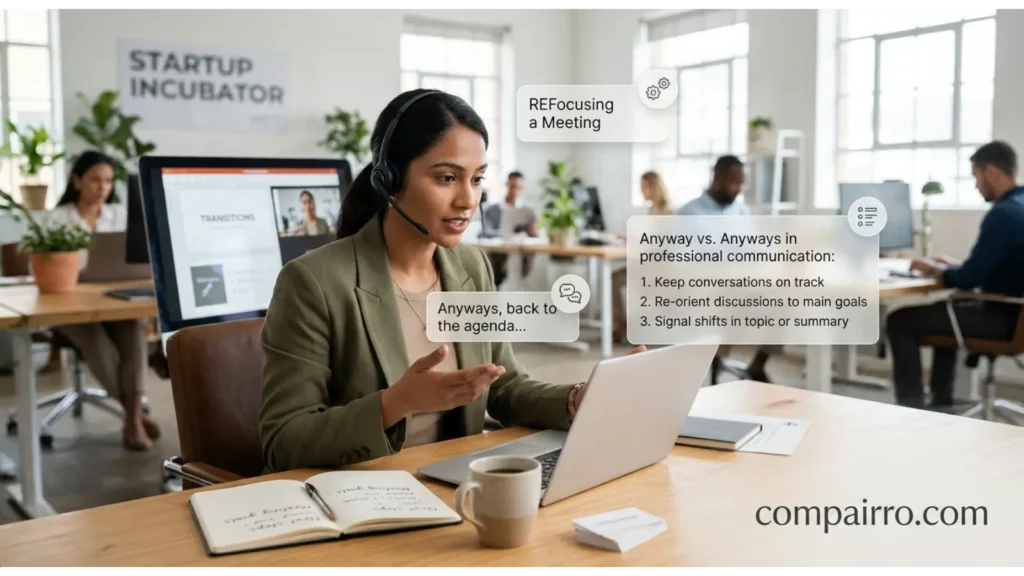
Whether you are writing an email, preparing a report, or talking to a customer, anyway is generally the better option.
For example:
Professional Email:
“Anyway, I would like to follow up on our previous discussion.”
Business Meeting:
“Anyway, let’s move to the next point on the agenda.”
Workplace Conversation:
“I was unable to attend yesterday, but I completed the work anyway.”
Avoid using anyways in formal reports, business proposals, academic documents, and official communication unless you are deliberately quoting someone’s informal speech.
Anyway or Anyways for Students or Beginners
English learners sometimes struggle with these words because they sound almost identical and have similar meanings.
However, learning one simple rule can solve most of the confusion.
Why Beginners Get Confused
- Both words have almost the same meaning.
- Both appear in everyday conversations.
- People use both in text messages.
- Informal English does not always follow formal writing habits.
Easy Learning Tips
- Remember that anyway is the standard form.
- Use anyway in exams and assignments.
- Learn that anyways is informal.
- Read English articles and books.
- Practice writing simple sentences.
For example:
- I was hungry, but I studied anyway.
- Anyway, let’s learn another English word.
These small exercises can help you improve your English naturally.
Signs or Characteristics Related to Anyway and Anyways
Although both words have similar meanings, they have different usage patterns.
Here are their main characteristics.
Characteristics of Anyway:
- It is a standard English adverb.
- It can mean “in any case.”
- It can show that something happens despite a problem.
- It can help change the subject.
- It works well in formal and informal writing.
Characteristics of Anyways:
- It is an informal variation of anyway.
- It is common in casual conversations.
- It appears in text messages and social media posts.
- It is often used when changing topics.
- It is less suitable for formal documents.
Common Usage Patterns
Both words can appear:
- At the beginning of a sentence.
- In the middle of a sentence.
- At the end of a sentence.
Example:
“Anyway, I enjoyed the event.”
“I enjoyed the event anyway.”
Simple Trick to Remember Anyway or Anyways
Here is an easy trick that can help you remember the difference.
👉 Anyway = Standard English
👉 Anyways = Casual English
Think of it this way:
If you are writing an email to your teacher, use anyway.
If you are chatting casually with a friend, anyways may sound natural.
Remember These Examples:
- I will try anyway. (Standard)
- Anyways, what happened next? (Informal)
- Anyway, let’s begin. (Standard)
The easiest rule is to choose anyway whenever you are unsure.
FAQs:
1. Is it anyway or anyways?
Anyway is the standard form in English. Anyways is also used, but it is more informal.
2. Is anyways grammatically correct?
Yes. Anyways is a recognized informal variant, but anyway is preferred in formal and edited writing.
3. Should I use anyway or anyways in an essay?
Use anyway in essays, school assignments, and academic writing because it is the standard form.
4. Is anyways a real word?
Yes. Anyways is a real English word used mainly in informal speech and writing.
5. What is the difference between anyway and anyways?
Both have similar meanings. However, anyway is standard, while anyways is more casual.
6. Is anyway more professional than anyways?
Yes. Anyway is generally more suitable for business emails, reports, and professional conversations.
7. Can I use anyways in text messages?
Yes. You can use anyways in casual text messages with friends and family. However, anyway also works perfectly.
Conclusion
So, is it anyway or anyways? Both forms are understood in English, but they are not equally suitable for every situation.
Anyway is the standard and preferred form. It works well in formal writing, school assignments, professional emails, and everyday conversations.
Anyways is an informal variation that people commonly use while chatting or speaking casually.
You do not need to worry about this grammar rule anymore. Just remember one simple thing:
Anyway = Standard English.
Anyways = Informal English.
When in doubt, choose anyway. It is the safest option for clear and correct English.

Sara Taylor is a passionate English content writer who specializes in word meanings, spelling comparisons, and modern slang explanations. She creates easy-to-understand articles that help readers avoid common English mistakes and improve their writing skills. Her content focuses on simple learning, real-life examples, and clear explanations for everyday readers.