Have you ever seen the words repellant and repellent and wondered which one is correct? Many people get confused when writing about insect sprays, mosquito products, or anything that keeps pests away. Since both words look very similar, it is easy to mix them up.
This confusion often appears in school assignments, workplace documents, product descriptions, online articles, social media posts, and everyday conversations. People frequently search for repellant or repellent because they want to use the correct spelling and avoid writing mistakes.
The word is commonly used when talking about mosquito repellents, bug sprays, animal repellents, and products designed to keep unwanted insects or animals away. If you use the wrong spelling, your writing may look less professional, especially in business, marketing, or academic settings.
Understanding the difference is important because one spelling is widely accepted in standard English, while the other is usually considered a spelling mistake.
In this guide, you’ll learn the meaning, examples, usage, differences, common mistakes, and simple explanations in easy English.
Repellant or Repellent – Quick Answer
👉 Repellent is the correct and standard spelling in English.
A repellent is something that keeps insects, animals, or unwanted things away.
Examples
1 Mosquito repellent helps prevent mosquito bites.
2 We bought an insect repellent for our camping trip.
3 The garden repellent keeps rabbits away from plants.
Simple Rule
👉 Repellent = Correct spelling
👉 Repellant = Usually a misspelling of repellent
Easy memory tip:
Repellent ends with “-ent,” just like many common English words such as different and excellent.
The Origin of Repellant or Repellent
The word repellent comes from the Latin word repellere, which means “to drive back” or “push away.”
Over time, English adopted the word repellent to describe anything that keeps something away. It became especially common when talking about insects, pests, and animals.
Today, the word appears on product labels worldwide, including mosquito repellents, tick repellents, and animal repellents.
The spelling repellant occasionally appears online, but dictionaries and language experts generally recognize repellent as the standard spelling.
British English vs American English Usage
In this case, there is very little difference between British and American English.
Both countries mainly use repellent as the correct spelling.
| Feature | British English | American English | Notes |
|---|---|---|---|
| Standard spelling | Repellent | Repellent | Same spelling |
| Product labels | Repellent | Repellent | Same usage |
| Formal writing | Repellent | Repellent | Preferred form |
| Repellant usage | Rare | Rare | Usually considered incorrect |
Quick Summary
👉 Both British and American English prefer repellent.
Which One Should You Use?
You should use repellent in almost all situations.
Use “Repellent” For:
- School assignments
- Workplace writing
- Product descriptions
- Marketing content
- Academic papers
- Blog articles
- Social media posts
- Everyday conversations
Formal Writing
✅ Repellent
Informal Writing
✅ Repellent
Product Branding
✅ Repellent
Using repellent ensures your writing looks professional and correct.
Common Mistakes With Repellant or Repellent
Mistake 1
❌ I bought mosquito repellant yesterday.
✔ The correct spelling is repellent.
✅ I bought mosquito repellent yesterday.
Mistake 2
❌ This repellant works against flies.
✔ Use repellent in standard English.
✅ This repellent works against flies.
Mistake 3
❌ Animal repellant protects gardens.
✔ The accepted spelling is animal repellent.
✅ Animal repellent protects gardens.
Mistake 4
❌ Tick repellant is important during hiking.
✔ Use tick repellent.
✅ Tick repellent is important during hiking.
Repellant or Repellent in Everyday Examples
Work
✅ The company launched a new insect repellent product.
✅ The marketing team updated the repellent packaging.
School
✅ Students learned how mosquito repellent helps prevent bites.
✅ The science project tested different repellents.
Social Media
✅ This mosquito repellent worked great during my trip.
✅ Can anyone recommend a good insect repellent?
Daily Life
✅ We applied repellent before walking in the park.
✅ The garden repellent helped protect the flowers.
Text Messages
✅ Don’t forget to bring mosquito repellent.
✅ I bought a new insect repellent today.
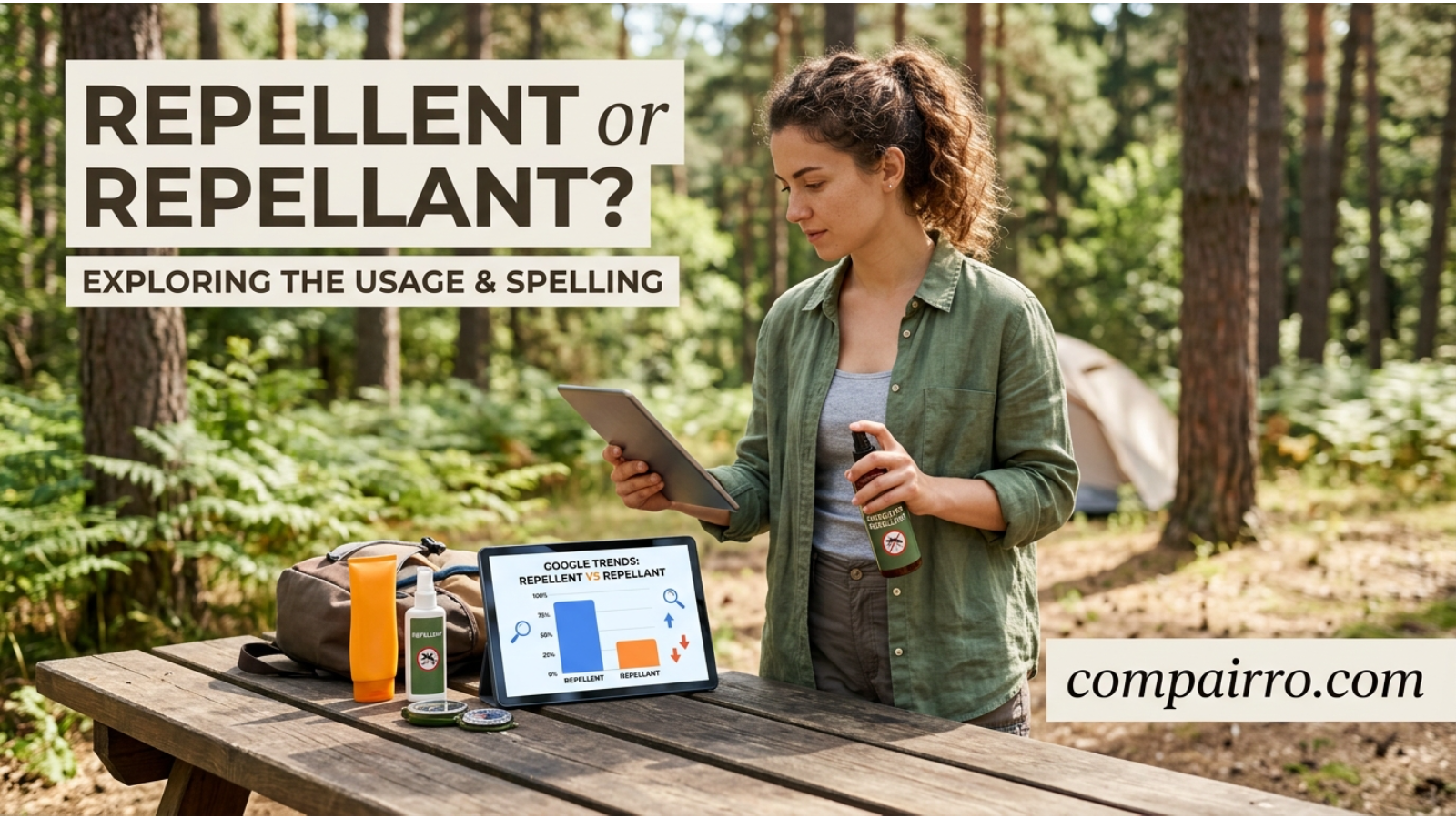
Repellant or Repellent – Google Trends & Usage Data
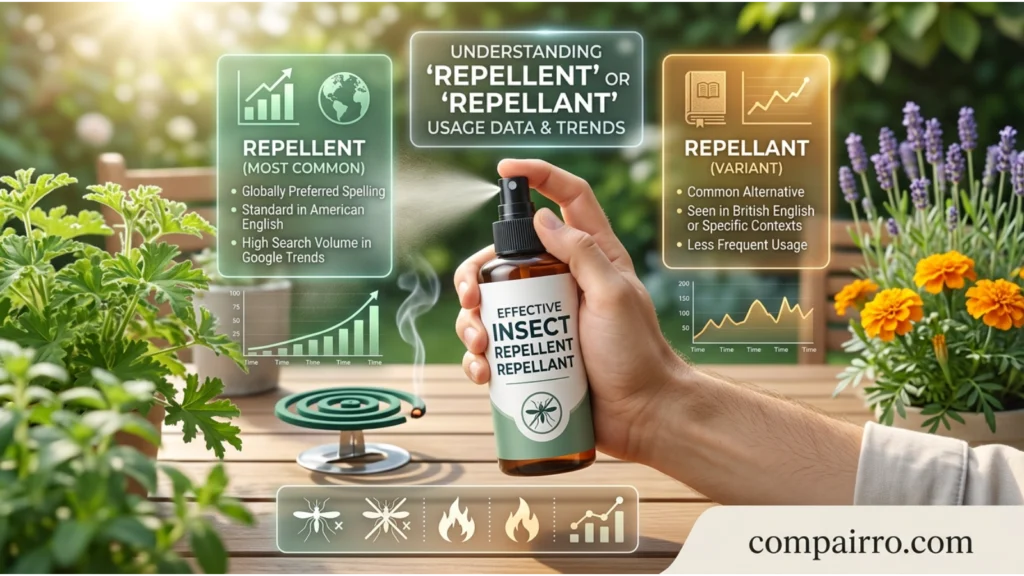
Many people search for repellant or repellent because they are unsure which spelling is correct.
Search interest increases during:
- Summer seasons
- Camping periods
- Travel planning
- Mosquito outbreaks
- Outdoor activities
Countries where searches commonly appear include:
- United States
- United Kingdom
- India
- Pakistan
- Canada
- Australia
People often discover both spellings online and become confused. Since repellent is the standard form, search engines frequently show correction suggestions when users type repellant.
The topic remains popular because insect repellents are widely used around the world.
Comparison Table: Repellant or Repellent
| Feature | Repellent | Repellant |
|---|---|---|
| Standard English spelling | Yes | No |
| Dictionary acceptance | Yes | Limited |
| Used on product labels | Yes | Rare |
| Recommended for writing | Yes | No |
| Common in professional content | Yes | Rare |
| Best choice | ✅ Yes | ❌ No |
Repellant or Repellent in Professional Life

The correct spelling matters in professional environments.
Businesses that sell insect-control products use repellent on:
- Product packaging
- Advertising materials
- Websites
- Safety instructions
- Educational content
Using the wrong spelling can make content appear less trustworthy.
For marketers, writers, teachers, and product manufacturers, using repellent helps maintain professionalism and credibility.
Repellant or Repellent for Students or Beginners
Many beginners struggle because the two words look almost identical.
Common Confusion
- Both spellings sound similar.
- People see incorrect spellings online.
- Typing mistakes happen easily.
Easy Learning Tips
- Remember that dictionaries prefer repellent.
- Check product labels for examples.
- Practice writing the word several times.
- Use spelling-check tools when writing.
The more you see the correct form, the easier it becomes to remember.
Signs or Characteristics Related to Repellent
Features of a Repellent
- Keeps insects away
- Helps reduce bites
- Used outdoors and indoors
- Available as sprays, creams, and lotions
- Often used during travel
Common Uses
- Mosquito protection
- Tick prevention
- Garden pest control
- Camping trips
- Hiking activities
Common Types
- Insect repellents
- Mosquito repellents
- Animal repellents
- Natural repellents
- Chemical repellents
Simple Trick to Remember Repellant or Repellent
👉 Repellent = Correct
👉 Repellant = Usually Incorrect
Think of it this way:
- Excellent ends with -ent
- Different ends with -ent
- Repellent also ends with -ent
Easy Example
If you can remember:
Different → Repellent
Then you can avoid writing repellant by mistake.
FAQs:
1. Is repellent the correct spelling?
Yes. Repellent is the standard and widely accepted spelling in English.
2. Is repellant a real word?
It may appear occasionally, but repellent is the preferred spelling in modern English.
3. Which spelling should I use in school assignments?
Use repellent because it is the correct standard form.
4. What is a repellent?
A repellent is something that keeps insects, animals, or pests away.
5. Do product labels use repellent or repellant?
Most product labels use repellent.
6. Is there a British and American spelling difference?
No. Both British and American English mainly use repellent.
7. Why do people search for repellant or repellent?
People often see both spellings online and want to know which one is correct.
Conclusion
The answer to repellant or repellent is simple: repellent is the correct and recommended spelling. It is the version used in dictionaries, product labels, professional writing, schools, and workplaces.
Although repellant sometimes appears online, it is generally treated as a spelling mistake or nonstandard form. Using repellent will help your writing look accurate and professional.
Final memory rule:
👉 If it keeps bugs away, spell it “repellent” with “-ent.”

Sara Taylor is a passionate English content writer who specializes in word meanings, spelling comparisons, and modern slang explanations. She creates easy-to-understand articles that help readers avoid common English mistakes and improve their writing skills. Her content focuses on simple learning, real-life examples, and clear explanations for everyday readers.