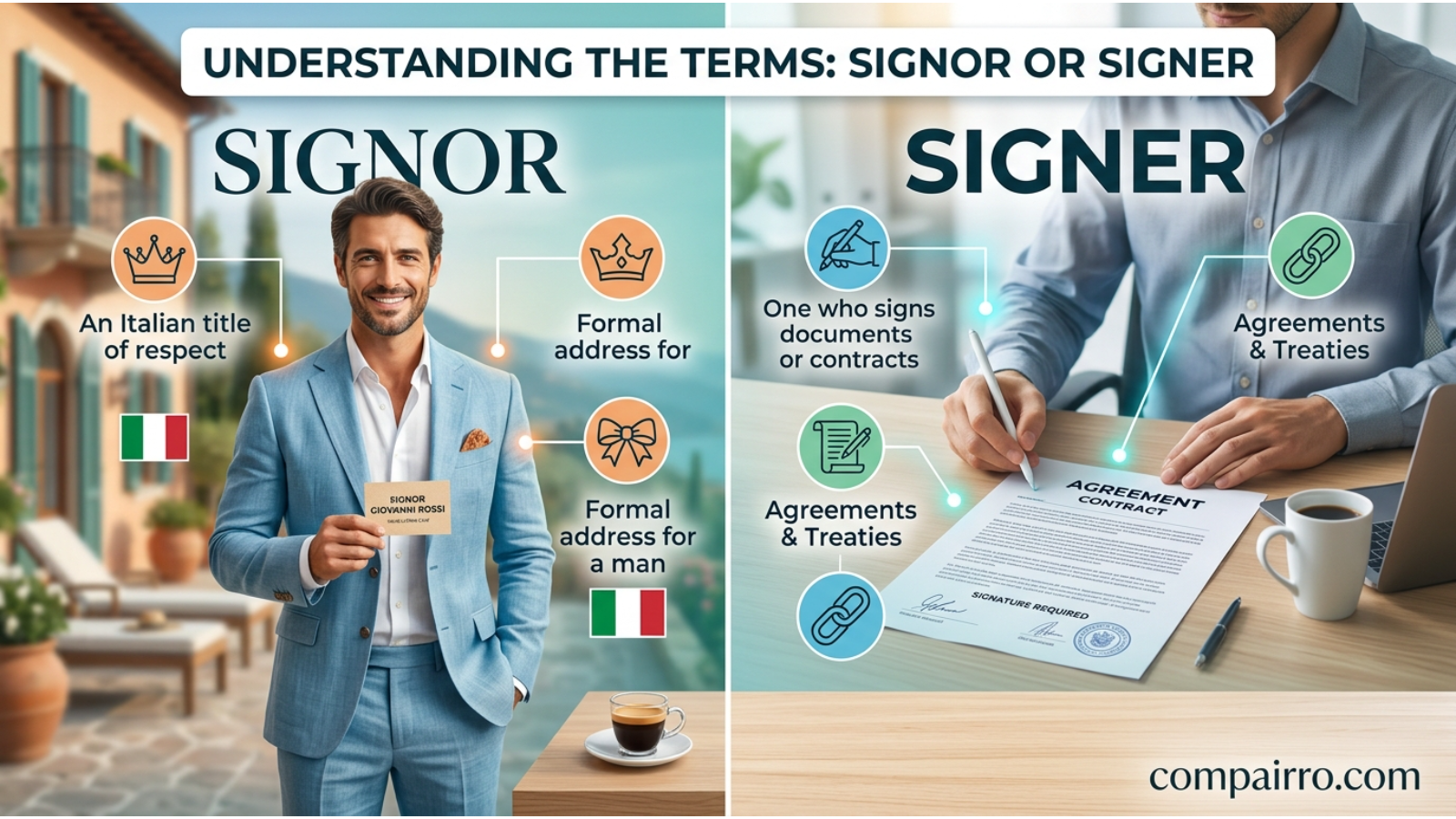
Signor or signer is a common word pair that confuses many people. At first glance, these two words look very similar. However, they have completely different meanings and are used in different situations.
You may see these words in school assignments, workplace documents, legal papers, online articles, social media posts, or everyday conversations. Because their spelling is so close, many people accidentally use one when they actually mean the other.
For example, someone reading an Italian article may come across the word signor, while a person signing a contract may hear the word signer. Since both words sound somewhat alike, the confusion is understandable.
Knowing the difference can help you write more clearly and avoid mistakes in professional, academic, and personal communication. It can also improve your English vocabulary and make reading easier when you encounter these terms online.
In this guide, you’ll learn the meaning, examples, usage, differences, common mistakes, and simple explanations in easy English.
Signor or Signer – Quick Answer
👉 Signor is an Italian title that means Mr. or Sir.
👉 Signer is a person who signs a document, agreement, letter, or contract.
Examples
1 Signor Rossi is our new neighbor.
2 The signer agreed to the terms of the contract.
3 Please ask the signer to provide identification.
Simple Rule
👉 Signor = Italian title for a man
👉 Signer = Person who signs something
A quick memory trick:
Signor = Sir
Signer = Signature
The Origin of Signor or Signer
Signor
The word signor comes from the Italian language. It is similar to the English title Mr. and is used before a man’s name as a respectful form of address.
Example:
- Signor Bianchi
- Signor Marco
Signer
The word signer comes from the English verb sign, which means to write your name on a document. Adding -er creates a noun meaning “a person who signs.”
Example:
- Contract signer
- Document signer
Today, both words are used worldwide, but in very different contexts.
British English vs American English Usage
There is no major spelling difference between British English and American English for these words.
| Feature | British English | American English | Notes |
|---|---|---|---|
| Signor | Signor | Signor | Same spelling |
| Signer | Signer | Signer | Same spelling |
| Meaning of Signor | Italian title | Italian title | Same meaning |
| Meaning of Signer | Person who signs | Person who signs | Same meaning |
Both forms are understood internationally.
Which One Should You Use?
Choose the word based on what you want to say.
Use Signor when:
- Referring to an Italian man respectfully
- Writing about Italian culture
- Addressing someone in Italian
- Discussing Italian names or titles
Use Signer when:
- Talking about contracts
- Referring to legal documents
- Discussing agreements
- Mentioning a person who signs paperwork
Formal vs Informal
- Signor is formal and respectful.
- Signer can be used in both formal and professional settings.
Common Mistakes With Signor or Signer
Mistake 1
❌ The signer Rossi owns the restaurant.
✔ If referring to an Italian title, use Signor Rossi.
Mistake 2
❌ The signor signed the contract yesterday.
✔ If talking about the person who signed, use signer.
Mistake 3
❌ Please ask Signor to complete this legal form.
✔ Use signer if you mean the person signing the form.
Mistake 4
❌ The signer Bianchi welcomed us to Italy.
✔ Use Signor Bianchi because it is a title before a name.
Mistake 5
❌ Every signor must provide identification before signing.
✔ Every signer must provide identification before signing.
Signor or Signer in Everyday Examples

Work
- The signer reviewed the contract carefully.
- The signer submitted the completed agreement.
School
- Students learned that Signor means “Mr.” in Italian.
- The signer of the permission form was the student’s parent.
Social Media
- I saw a travel post mentioning Signor Giuseppe.
- The document signer completed the online process.
Daily Life
- Signor Luca owns the local café.
- The signer approved the lease agreement.
Text Messages
- “Who is the signer on this document?”
- “We met Signor Marco during our trip.”
Signor or Signer – Google Trends & Usage Data
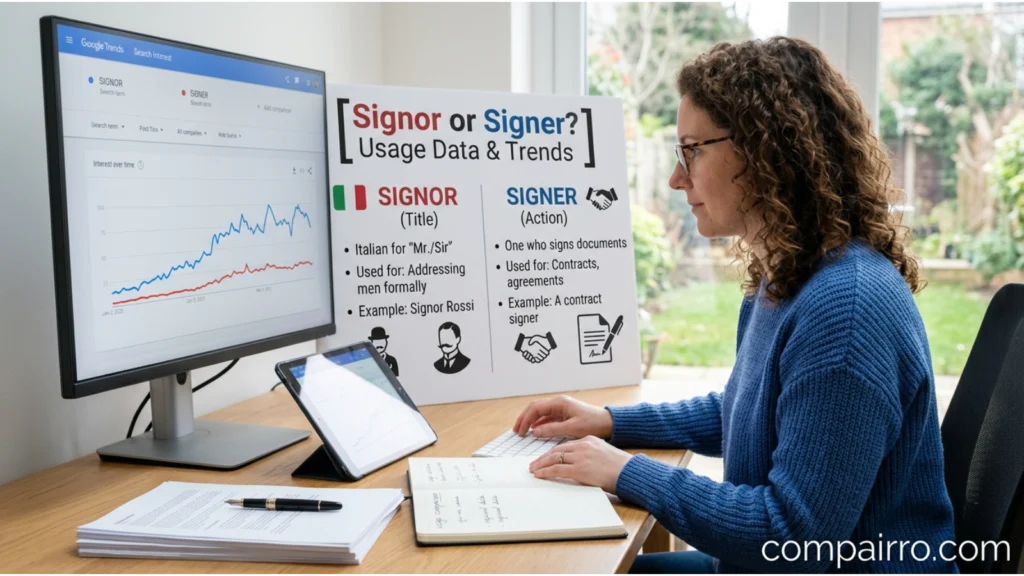
Many people search for signor or signer because the words look similar but have different meanings.
Common reasons for searches include:
- Grammar questions
- Vocabulary learning
- Writing improvement
- Legal document understanding
- Italian language studies
Popular Countries
Interest in these words often comes from:
- United States
- United Kingdom
- India
- Pakistan
- Canada
- Australia
Search Trends
People often search:
- Signor meaning
- Signer meaning
- Signor vs signer
- Is signor the same as signer?
- Signor pronunciation
- Signer definition
The confusion mainly comes from their similar spelling and pronunciation.
Comparison Table: Signor or Signer
| Feature | Signor | Signer |
|---|---|---|
| Word Type | Title | Noun |
| Meaning | Mr. or Sir in Italian | Person who signs |
| Language Origin | Italian | English |
| Used Before Names | Yes | No |
| Used in Contracts | No | Yes |
| Formal Usage | Yes | Yes |
| Example | Signor Rossi | Contract signer |
| Related To | Italian culture | Documents and signatures |
Signor or Signer in Professional Life
Both words can appear in professional situations.
Signor
You may see signor when communicating with Italian clients, customers, or business partners.
Example:
- Dear Signor Ricci,
Signer
The word signer is common in business, banking, legal work, and administration.
Examples:
- Authorized signer
- Primary signer
- Document signer
- Contract signer
Many professional documents require a signer before they become valid.
Signor or Signer for Students or Beginners
Many learners struggle because these words look almost identical.
Common Confusion
- Similar spelling
- Similar pronunciation
- Different meanings
Easy Learning Tips
- Connect Signor with Italy.
- Connect Signer with signatures.
- Practice writing example sentences.
- Remember the context of the sentence.
Beginner Tip
If the sentence talks about a person signing paperwork, use signer.
If it refers to an Italian title before a man’s name, use signor.
Signs or Characteristics Related to Signor or Signer
Characteristics of Signor
- Italian title of respect
- Used before a man’s name
- Similar to Mr.
- Common in Italy
- Formal and polite
Characteristics of Signer
- Person who signs documents
- Used in legal situations
- Important in contracts
- Can authorize agreements
- Common in business settings
Easy Identification Patterns
- Name follows Signor
- Signature-related words often accompany signer
- Signor appears in Italian contexts
- Signer appears in document contexts
Simple Trick to Remember Signor or Signer
Easy Memory Trick
👉 Signor = Sir
👉 Signer = Signature
Think of it this way:
If you see an Italian gentleman named Marco, you would say:
✅ Signor Marco
If Marco signs a contract, he becomes:
✅ The signer of the contract
One word is a title.
The other word is a role.
That simple difference makes remembering easy.
FAQs:
1. What does Signor mean?
Signor is an Italian title that means Mr. or Sir.
2. What does signer mean?
A signer is a person who signs a document or agreement.
3. Is signor an English word?
It is originally an Italian word but is commonly used in English writing.
4. Can signor and signer be used interchangeably?
No. They have completely different meanings.
5. Is signer used in legal documents?
Yes. Legal and business documents often refer to the signer.
6. How do I remember the difference?
Think of Signor as Sir and signer as signature.
7. Which word is more common?
Signer is more common in everyday English, while signor is mainly used in Italian-related contexts.
Conclusion
Understanding signor or signer is easier once you know their meanings. Signor is an Italian title used like Mr. or Sir, while signer refers to a person who signs a document or agreement.
The biggest mistake people make is confusing these two similar-looking words. Paying attention to the context will help you choose the correct one every time.
A final memory rule:
👉 Signor = Italian Sir
👉 Signer = Signature Person
Remember this simple trick, and you’ll never mix up signor or signer again.

Sara Taylor is a passionate English content writer who specializes in word meanings, spelling comparisons, and modern slang explanations. She creates easy-to-understand articles that help readers avoid common English mistakes and improve their writing skills. Her content focuses on simple learning, real-life examples, and clear explanations for everyday readers.