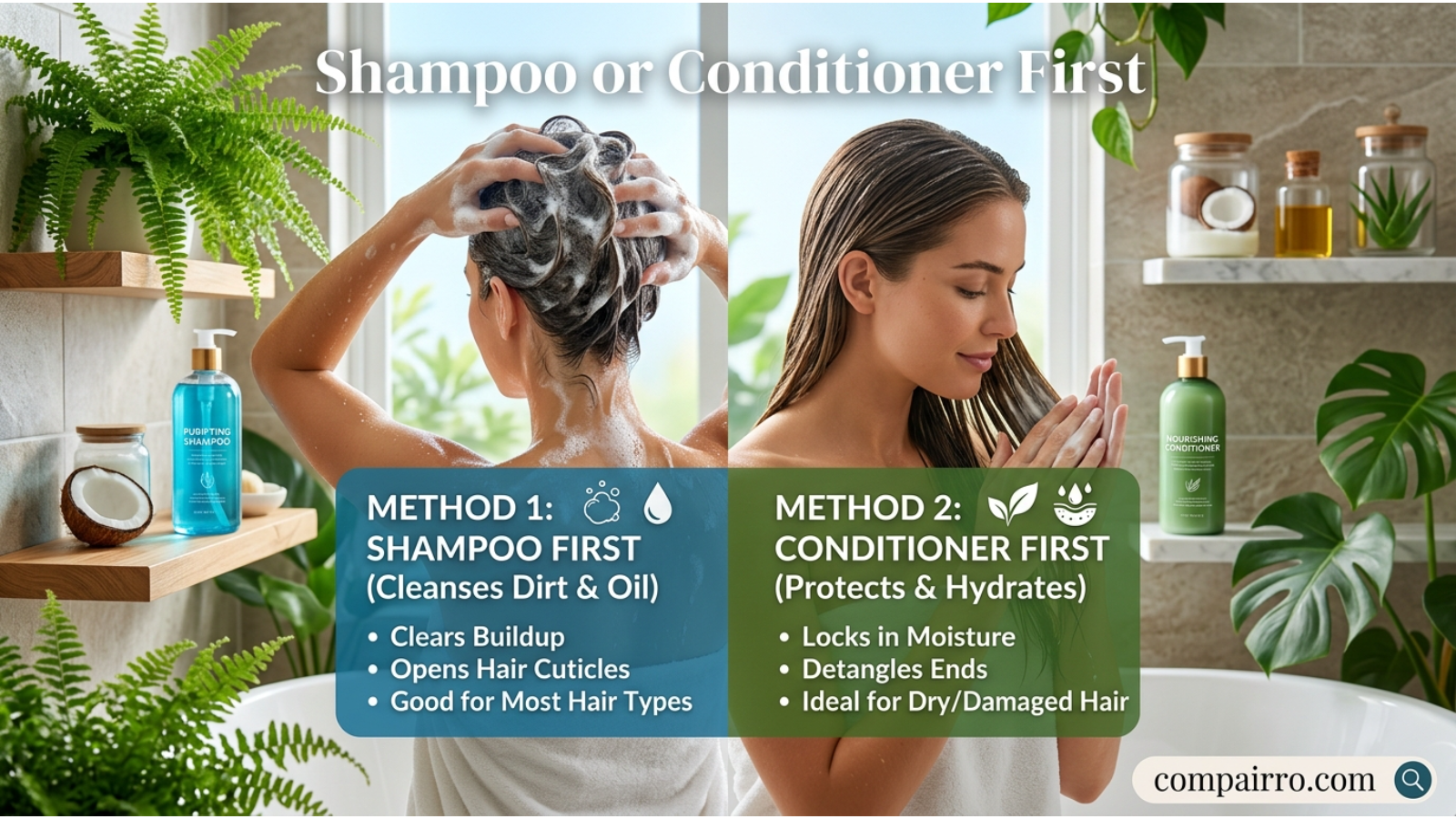
Shampoo or conditioner first is a common question that many people ask when washing their hair. You may have seen different advice online, heard different opinions from friends, or noticed various instructions on hair care products.
Most people know they need both shampoo and conditioner, but they are often unsure about the correct order. Should shampoo come first? Or should conditioner be applied before shampoo? The answer can affect how clean, soft, and healthy your hair feels.
This topic is discussed everywhere. People search for it on Google, watch videos about it on social media, talk about it with hairstylists, and ask friends for advice. Students, workers, and busy parents all want an easy hair care routine that works.
Understanding the right order matters because it can help remove dirt, improve hair texture, and make your hair easier to manage. It can also help you avoid common mistakes that leave hair greasy, dry, or heavy.
In this guide, you’ll learn the meaning, examples, usage, differences, common mistakes, and simple explanations in easy English.
Shampoo or Conditioner First – Quick Answer
👉 The correct order for most people is shampoo first, then conditioner.
Simple definition:
Shampoo cleans your scalp and hair by removing dirt, oil, and product buildup. Conditioner is used afterward to add moisture, softness, and protection.
Examples
1 Wash hair with shampoo, rinse, then apply conditioner.
2 Use shampoo to remove oil before conditioning dry hair.
3 After swimming, shampoo first and then use conditioner to restore moisture.
Simple Rule
👉 Clean first, condition second.
Think of shampoo as the cleaner and conditioner as the moisturizer.
The Origin of Shampoo or Conditioner First
The idea of using shampoo before conditioner has been part of modern hair care for many decades.
The word shampoo comes from the Hindi word “champo,” which means to massage. During British rule in India, the word entered English and later became associated with hair washing.
Conditioners became popular during the 20th century as people looked for ways to make hair softer and easier to manage. Hair care experts recommended shampooing first because clean hair absorbs conditioner better.
Today, this method is used worldwide and is commonly recommended by hair professionals.
British English vs American English Usage
There is no major difference between British English and American English when discussing shampoo and conditioner order.
| Feature | British English | American English | Notes |
|---|---|---|---|
| Shampoo | Shampoo | Shampoo | Same usage |
| Conditioner | Conditioner | Conditioner | Same usage |
| Recommended order | Shampoo then conditioner | Shampoo then conditioner | Same worldwide |
| Hair care advice | Similar | Similar | No major difference |
Which One Should You Use?
For most hair types, use:
- Shampoo first
- Rinse thoroughly
- Apply conditioner afterward
- Leave conditioner for a few minutes
- Rinse again
Best Situations
Formal hair care routine
- Shampoo first
- Conditioner second
Daily use
- Follow the standard order
Dry or damaged hair
- Use conditioner after shampoo for extra moisture
Fine or oily hair
- Shampoo first helps remove excess oil
Reverse washing
- Some people use conditioner before shampoo, but this is a special method and not the standard approach.
Common Mistakes With Shampoo or Conditioner First
Mistake 1
❌ Applying conditioner before shampoo without understanding why.
✔ Most people get better results by shampooing first.
Mistake 2
❌ Using too much conditioner.
✔ A small amount is usually enough.
Mistake 3
❌ Applying conditioner directly to the scalp.
✔ Focus mainly on the middle and ends of your hair.
Mistake 4
❌ Not rinsing shampoo completely.
✔ Leftover shampoo can make hair feel dull.
Mistake 5
❌ Skipping conditioner completely.
✔ Conditioner helps keep hair soft and manageable.
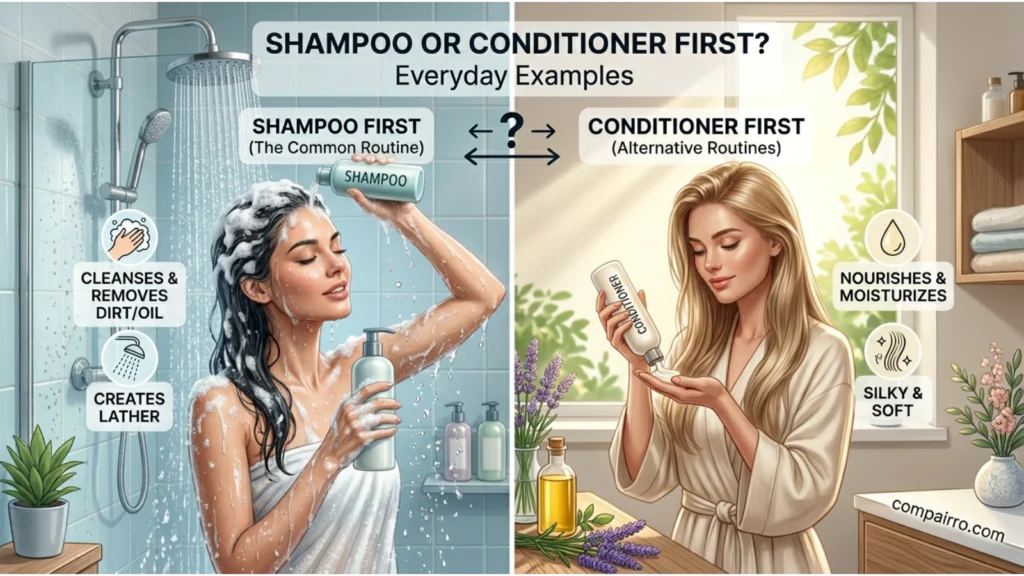
Shampoo or Conditioner First in Everyday Examples
Work
Sarah washes her hair before work. She shampoos first and then conditions to keep her hair neat all day.
School
A student uses shampoo after sports practice and applies conditioner afterward to reduce dryness.
Social Media
Many beauty influencers recommend shampoo first and conditioner second for healthier-looking hair.
Daily Life
After a long day outside, shampoo removes dirt while conditioner restores softness.
Text Messages
Friend: “Do you use shampoo or conditioner first?”
Reply: “Shampoo first, then conditioner. That’s the usual method.”
Shampoo or Conditioner First – Google Trends & Usage Data
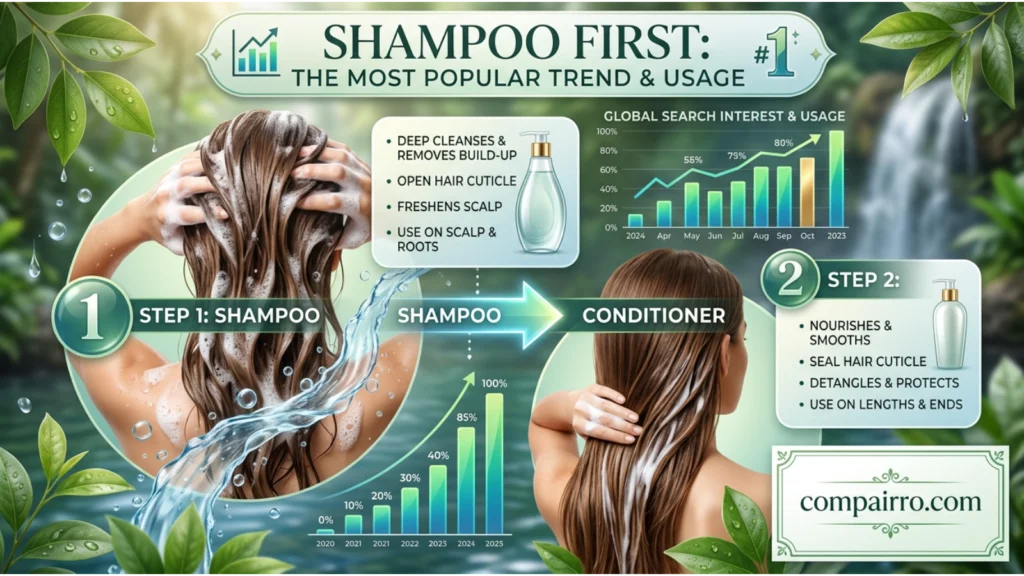
Many people search this question because hair care advice can be confusing.
Why People Search It
- Different advice online
- Hair care product marketing
- Hair type concerns
- Recommendations from influencers
- Curiosity about healthier hair
Popular Countries
The topic is commonly searched in:
- United States
- United Kingdom
- India
- Pakistan
- Canada
- Australia
Search Trends
Searches often increase when people:
- Start new hair care routines
- Buy new products
- Follow beauty trends
- Experience hair problems
Online Popularity
Beauty blogs, YouTube videos, TikTok creators, and hair professionals frequently discuss this topic.
Comparison Table: Shampoo or Conditioner First
| Method | First Step | Second Step | Main Benefit | Best For |
|---|---|---|---|---|
| Standard Method | Shampoo | Conditioner | Clean and soft hair | Most people |
| Reverse Washing | Conditioner | Shampoo | Less heavy feeling | Fine hair |
| Shampoo Only | Shampoo | None | Quick cleaning | Short-term use |
| Conditioner Only | Conditioner | None | Moisture | Specific hair routines |
Shampoo or Conditioner First in Professional Life
Hairdressers and salon professionals generally recommend shampooing before conditioning.
This method helps:
- Remove dirt and oil
- Prepare hair for conditioning
- Improve hair texture
- Make styling easier
Professional salons usually follow this order unless a specific treatment requires something different.
Shampoo or Conditioner First for Students or Beginners
Many beginners struggle because they see different advice online.
Common Confusion
- Which product comes first?
- Can conditioner clean hair?
- Is reverse washing better?
- Do all hair types need conditioner?
Easy Learning Tips
- Remember that shampoo cleans.
- Conditioner softens.
- Follow the product instructions.
- Start with the standard method.
Most beginners get the best results by shampooing first and conditioning afterward.
Signs or Characteristics Related to Shampoo or Conditioner First
Characteristics of Shampoo
- Cleans hair
- Removes oil
- Removes dirt
- Refreshes scalp
- Helps prepare hair for conditioning
Characteristics of Conditioner
- Adds moisture
- Softens hair
- Reduces tangles
- Improves smoothness
- Helps protect hair
Signs of a Good Hair Care Routine
- Hair feels clean
- Hair feels soft
- Less tangling
- Better shine
- Easier styling
Simple Trick to Remember Shampoo or Conditioner First
👉 Shampoo = Clean
👉 Conditioner = Care
Think of it this way:
When you wash your hands, you clean them before applying lotion.
Hair works in a similar way.
First, use shampoo to clean your hair.
Then, use conditioner to care for and soften it.
Easy memory phrase:
👉 Clean first, care second.
FAQs:
1. Do you use shampoo or conditioner first?
Most people should use shampoo first and conditioner second.
2. Why is shampoo used before conditioner?
This removes dirt and oil so conditioner can work better.
3. Can I use conditioner before shampoo?
Yes, but this is called reverse washing and is not the standard method.
4. Is conditioner necessary?
For most people, conditioner helps keep hair soft and manageable.
5. How long should conditioner stay in hair?
Usually one to three minutes is enough.
6. Can shampoo damage hair?
Using harsh products too often may cause dryness, but proper use is generally safe.
7. Does hair type affect the order?
Most hair types follow shampoo first and conditioner second, although some people may prefer reverse washing.
Conclusion
The answer to shampoo or conditioner first is simple for most people: use shampoo first and conditioner second. This cleans the scalp and hair, while conditioner adds moisture and softness.
Although reverse washing exists, the traditional method works best for most hair types and is widely recommended by hair professionals.
The easiest rule to remember is:
👉 Clean first, care second.
Follow this simple approach, and your hair will usually feel cleaner, softer, and easier to manage.

Sara Taylor is a passionate English content writer who specializes in word meanings, spelling comparisons, and modern slang explanations. She creates easy-to-understand articles that help readers avoid common English mistakes and improve their writing skills. Her content focuses on simple learning, real-life examples, and clear explanations for everyday readers.