When people hear the words “red positive” or “red negative,” they may wonder what they mean. You might see these terms while learning about blood types in school, reading a medical report, or talking about blood donation.
Sometimes, people simply search “is red positive or negative” because they are confused about the difference between positive and negative blood types.
The important point is that red blood cells themselves are not simply called positive or negative. The “positive” or “negative” part usually refers to the Rh factor, a protein found on the surface of red blood cells.
For example, blood types can be A positive (A+), A negative (A−), B positive (B+), B negative (B−), AB positive (AB+), AB negative (AB−), O positive (O+), or O negative (O−).
You may come across these terms in hospitals, blood banks, school science classes, medical forms, and conversations about blood donation. Knowing your blood type can also be useful when healthcare professionals need to match blood for a transfusion.
So, is red positive or negative? The answer depends on the Rh factor of the person’s blood type, not simply on the fact that blood is red.
In this guide, you’ll learn the meaning, examples, usage, differences, common mistakes, and simple explanations in easy English.
Is Red Positive or Negative – Quick Answer
👉 Red is not automatically positive or negative. If you mean a blood type, positive (+) or negative (−) refers to the Rh factor on red blood cells.
- A+ = Type A blood with the Rh factor.
- A− = Type A blood without the Rh factor.
- O+ = Type O blood with the Rh factor.
Simple rule:
👉 Positive = Rh factor is present.
👉 Negative = Rh factor is absent.
For example, if someone has B+ blood, the “+” means the Rh factor is present on their red blood cells. If they have B− blood, the Rh factor is absent.
So, you cannot decide whether blood is positive or negative just by looking at its red color.
The Origin of Is Red Positive or Negative
The idea of positive and negative blood types comes from the Rh blood group system.
Scientists discovered that some people’s red blood cells had a certain surface protein, while others did not. This protein became known as the Rh factor.
The term “Rh” is connected to research involving rhesus monkeys, which helped scientists understand this blood group system. Today, the Rh system is an important part of blood typing.
When the Rh factor is present, the blood type is called Rh-positive. When it is absent, the blood type is Rh-negative.
This is why you see symbols such as + and − after letters in blood types.
British English vs American English Usage
There is no major British vs American difference in the meaning of positive and negative blood types.
Both forms use the same basic system.
| Feature | British English | American English | Notes |
|---|---|---|---|
| Positive blood | A+ | A+ | Same meaning |
| Negative blood | A− | A− | Same meaning |
| Rh-positive | Rh-positive | Rh-positive | Same medical meaning |
| Rh-negative | Rh-negative | Rh-negative | Same medical meaning |
| Blood type | Blood group/type | Blood type | Wording can vary |
For example, a person may say “I am O positive” in both the UK and the US.
Which One Should You Use?
If you are talking about blood, use the exact blood type shown by a reliable medical test.
- Use A+, B+, AB+, or O+ when the Rh factor is present.
- Use A−, B−, AB−, or O− when the Rh factor is absent.
- In medical situations, do not guess your blood type.
- Use the blood type recorded by a healthcare professional or laboratory.
- In schoolwork, explain that + means Rh-positive and − means Rh-negative.
It is also important to remember that positive does not mean “better,” and negative does not mean “bad.” These symbols describe a blood-group characteristic.
Common Mistakes With Is Red Positive or Negative
Mistake 1: Thinking all red blood is positive
❌ “Blood is red, so it must be positive.”
✔ The red color of blood does not tell you whether it is Rh-positive or Rh-negative.
Mistake 2: Thinking negative blood is unhealthy
❌ “Negative blood means something is wrong.”
✔ Rh-negative is a normal blood type. It does not mean a person is unhealthy.
Mistake 3: Confusing A+ with just “positive blood”
❌ “A+ means the blood is only positive.”
✔ A+ contains two parts: A is the ABO blood group, while + means Rh-positive.
Mistake 4: Guessing blood type by appearance
❌ “I can tell my blood type because my blood looks bright red.”
✔ Blood type cannot be identified by its normal color. Proper blood typing requires testing.
Mistake 5: Assuming positive and negative mean good and bad
❌ “Positive blood is better than negative blood.”
✔ Neither is automatically better. They are simply different blood-group characteristics.
Is Red Positive or Negative in Everyday Examples?
Work
A workplace medical form may ask for your blood type.
Example:
“My medical record says I am O positive.”
School
Students may learn about blood groups in biology.
Example:
“Rh-positive blood has the Rh factor on the red blood cells.”
Social Media
People sometimes discuss blood types when talking about donation or medical topics.
Example:
“Do you know whether you are A+ or A−?”
Daily Life
A person may learn their blood type during a medical test.
Example:
“I recently found out that my blood type is B positive.”
Text Messages
In a text, someone might simply write:
“My blood type is O+.”
The plus sign means Rh-positive.
Is Red Positive or Negative – Google Trends & Usage Data
People search “is red positive or negative” because the wording can be confusing. The question often comes from people trying to understand blood typing, Rh factors, or medical information.
Search interest can also appear around blood donation, pregnancy-related Rh information, biology lessons, and blood transfusions.
People in countries such as the US, UK, India, Pakistan, Canada, and Australia commonly use online searches to learn about blood groups and their meanings.
However, exact Google Trends interest can change over time and by location. It is better not to assume that one country always has the highest search volume without checking current Google Trends data.
A common beginner question is:
“Does positive or negative describe the blood itself?”
The answer is no. It describes whether a specific Rh factor is present or absent.
Comparison Table: Is Red Positive or Negative?
| Blood Type | ABO Group | Rh Factor | Meaning |
|---|---|---|---|
| A+ | A | Present | A blood with Rh factor |
| A− | A | Absent | A blood without Rh factor |
| B+ | B | Present | B blood with Rh factor |
| B− | B | Absent | B blood without Rh factor |
| AB+ | AB | Present | AB blood with Rh factor |
| AB− | AB | Absent | AB blood without Rh factor |
| O+ | O | Present | O blood with Rh factor |
| O− | O | Absent | O blood without Rh factor |
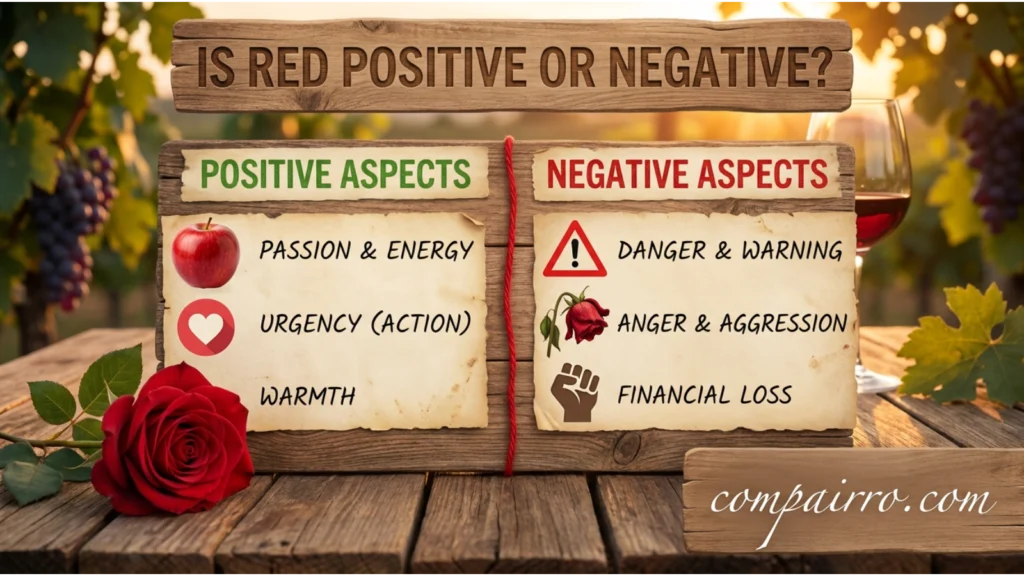
The table shows why “red” is not itself positive or negative. The result depends on the person’s blood-group test.

Is Red Positive or Negative in Professional Life?
In healthcare settings, blood type can be important for blood transfusions and other medical decisions.
Healthcare professionals use blood typing and compatibility testing rather than guessing from blood color.
For example, a medical record might list:
Blood type: O positive
This means the person’s ABO group is O and their red blood cells have the Rh factor.
Blood banks also carefully test and label donated blood so that it can be matched safely when needed.
Is Red Positive or Negative for Students or Beginners?
Beginners often struggle because blood typing has two systems working together.
The first part is the ABO group:
- A
- B
- AB
- O
The second part is the Rh status:
- Positive (+)
- Negative (−)
Easy learning tips
- Remember that + means Rh factor present.
- Remember that − means Rh factor absent.
- Do not use blood color to identify blood type.
- Learn examples such as A+, B−, and O+.
- Remember that positive does not mean healthier.
A simple example is:
O+ = O group + Rh-positive
Signs or Characteristics Related to Is Red Positive or Negative
Blood type does not usually give you a visible sign that you can identify yourself.
Instead, the important characteristics are related to the blood-group classification:
- A+ has the A blood-group marker and Rh factor.
- A− has the A blood-group marker without the Rh factor.
- B+ has the B blood-group marker and Rh factor.
- B− has the B blood-group marker without the Rh factor.
- AB+ has both A and B markers and the Rh factor.
- AB− has both A and B markers without the Rh factor.
- O+ has neither A nor B markers but has the Rh factor.
- O− has neither A nor B markers and does not have the Rh factor.
These characteristics cannot be reliably identified just by looking at a person’s blood.
Simple Trick to Remember Is Red Positive or Negative
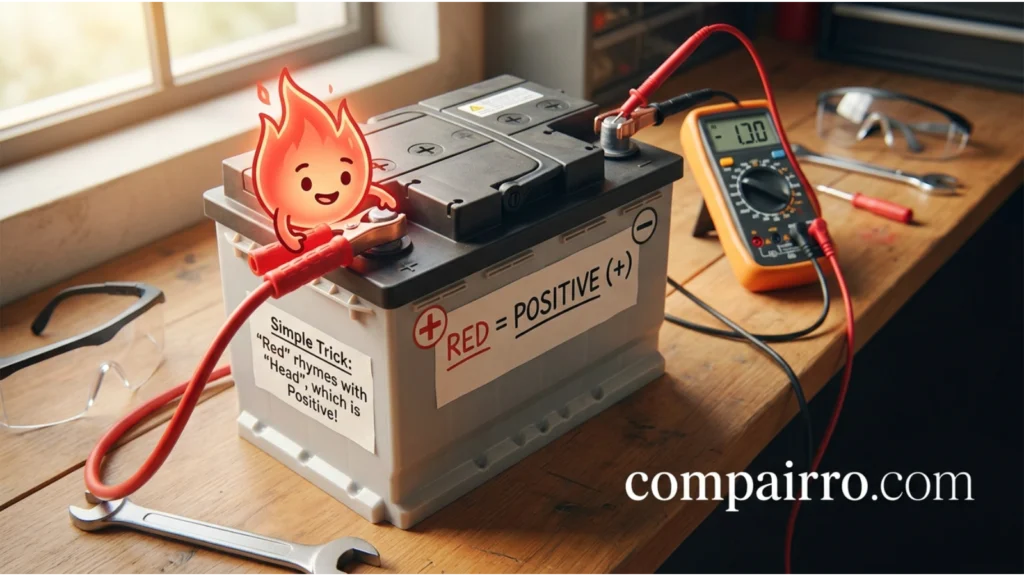
Here is an easy memory trick:
👉 + = Rh factor Present
👉 − = Rh factor Not present
Believe of the plus sign as “present.”
Think of the minus sign as “missing.”
Think of it this way:
If someone says:
“I am O+.”
Think:
O group + Rh factor present.
If someone says:
“I am O−.”
Think:
O group + Rh factor absent.
This makes it easier to remember what the symbols mean.
FAQs:
1. Is red blood positive or negative?
Red blood itself is not simply positive or negative. The positive or negative label usually refers to the Rh factor in a person’s blood type.
2. What does positive mean in blood type?
Positive means the Rh factor is present on the red blood cells.
3. What does negative mean in blood type?
Negative means the Rh factor is absent from the red blood cells.
4. Is O positive better than O negative?
No. Neither is simply better. They are different blood types with different compatibility characteristics.
5. Can you tell blood type by blood color?
No. Normal blood color does not tell you whether a blood type is positive or negative.
6. What does A+ mean?
A+ means the person has type A blood and is Rh-positive.
7. How can I know my blood type?
You need a reliable blood-type test. A healthcare provider or laboratory can determine it.
Conclusion
So, is red positive or negative? Red blood itself is not positive or negative. In blood typing, the + or − symbol refers to the Rh factor.
A positive (+) blood type has the Rh factor, while a negative (−) blood type does not. For example, O+ is Rh-positive, while O− is Rh-negative.
The easiest rule to remember is:
👉 Plus (+) = Rh factor present
👉 Minus (−) = Rh factor absent
Most importantly, never judge a blood type by its color. If you need to know your own blood type, use a proper medical test.

Sara Taylor is a passionate English content writer who specializes in word meanings, spelling comparisons, and modern slang explanations. She creates easy-to-understand articles that help readers avoid common English mistakes and improve their writing skills. Her content focuses on simple learning, real-life examples, and clear explanations for everyday readers.