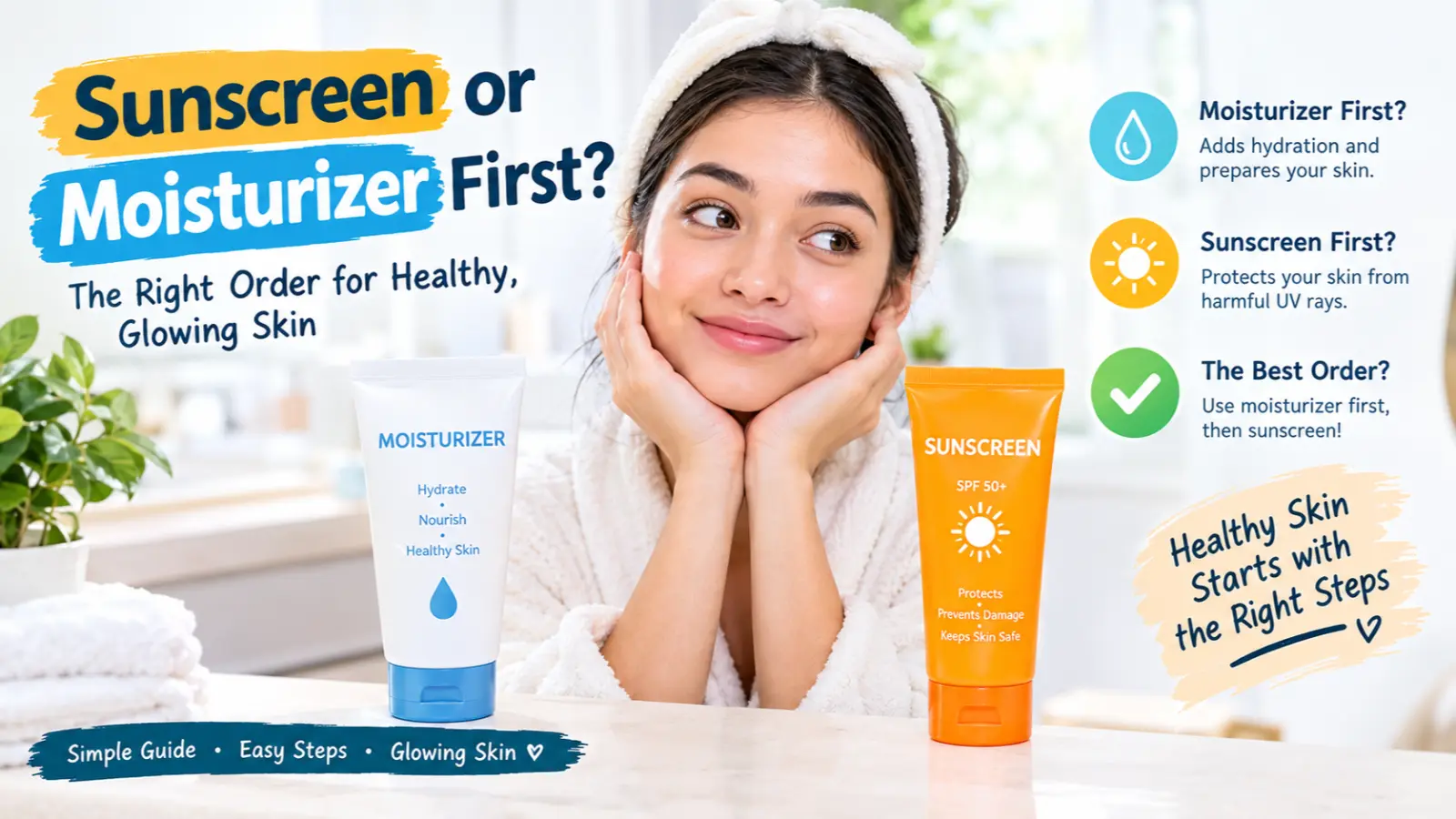
Imagine getting ready in the morning. You wash your face, reach for your moisturizer, and then stop. You also have sunscreen sitting on the shelf. Which one should go first? If you have ever searched for sunscreen or moisturizer first, you are not alone.
This is a common skincare question because both products are important, but they do different jobs. Moisturizer helps add and hold moisture in the skin, while sunscreen helps protect skin from the sun’s ultraviolet (UV) radiation. Using them in the wrong order can make your routine feel confusing, especially if you are new to skincare.
People often ask this question while building a morning routine, watching skincare videos on social media, reading beauty blogs, or shopping for skincare products. You may also see different advice from friends, influencers, and product labels.
The good news is that the basic rule is simple. In most morning routines, moisturizer comes first and sunscreen comes last among your skincare products. However, the exact routine can change depending on the type of product you use.
Understanding the correct order can help you create a simple routine without using too many products. It can also help sunscreen sit properly on the skin and make your routine easier to follow every day.
In this guide, you’ll learn the meaning, examples, usage, differences, common mistakes, and simple explanations in easy English.
Sunscreen or Moisturizer First – Quick Answer
👉 Moisturizer first, sunscreen second.
Moisturizer is generally applied before sunscreen in a morning skincare routine. After cleansing, apply moisturizer if your skin needs it. Then apply a broad-spectrum sunscreen as the final skincare step before makeup.
Examples:
- Cleanser → Moisturizer → Sunscreen
- Cleanser → Treatment → Moisturizer → Sunscreen
- Cleanser → Moisturizer → Sunscreen → Makeup
Simple rule:
👉 Moisturize first, protect second.
Sunscreen is usually the final step because it creates a protective layer on the skin.
The Origin of Sunscreen or Moisturizer First
The question sunscreen or moisturizer first comes from the basic idea of skincare layering. People have used creams and lotions for many years to keep skin comfortable and protected.
Modern sunscreen products became more common as scientists learned more about UV radiation and its effects on skin. Moisturizers also developed into many different forms, including creams, lotions, gels, and lightweight fluids.
As skincare routines became popular online, people started combining several products. This created questions about which product should be applied first.
Today, skincare routines are widely discussed on websites, YouTube, TikTok, Instagram, and other social platforms. The simple layering rule remains useful: lighter skincare products generally go before heavier ones, with sunscreen commonly used as the final morning skincare step.
British English vs American English Usage
There is no meaningful British-versus-American difference in the phrase sunscreen or moisturizer first.
The main spelling difference is the word moisturizer:
| Feature | British English | American English | Notes |
|---|---|---|---|
| Moisturizer | Moisturiser | Moisturizer | Both are correct |
| Sunscreen | Sunscreen | Sunscreen | Same spelling |
| Skincare | Skincare | Skincare | Common in both |
| Question | Sunscreen or moisturiser first? | Sunscreen or moisturizer first? | Same meaning |
In Pakistan, India, the UK, and many other countries, moisturiser is common. American websites usually use moisturizer.
Which One Should You Use?
For a basic morning skincare routine, use moisturizer before sunscreen.
A simple order is:
- Step 1: Clean your face with a gentle cleanser.
- Step 2: Apply any suitable skincare treatment or serum.
- Step 3: Apply moisturizer if needed.
- Step 4: Apply broad-spectrum sunscreen.
- Step 5: Apply makeup, if you use it.
Keep these points in mind:
- Choose a moisturizer that suits your skin.
- Use sunscreen with broad-spectrum protection.
- Apply enough sunscreen to properly cover exposed skin.
- Reapply sunscreen as directed, especially after sweating or swimming.
- Follow the instructions on your specific products.
Some sunscreens are moisturizing enough that you may not need a separate moisturizer. This depends on the product and how your skin feels.
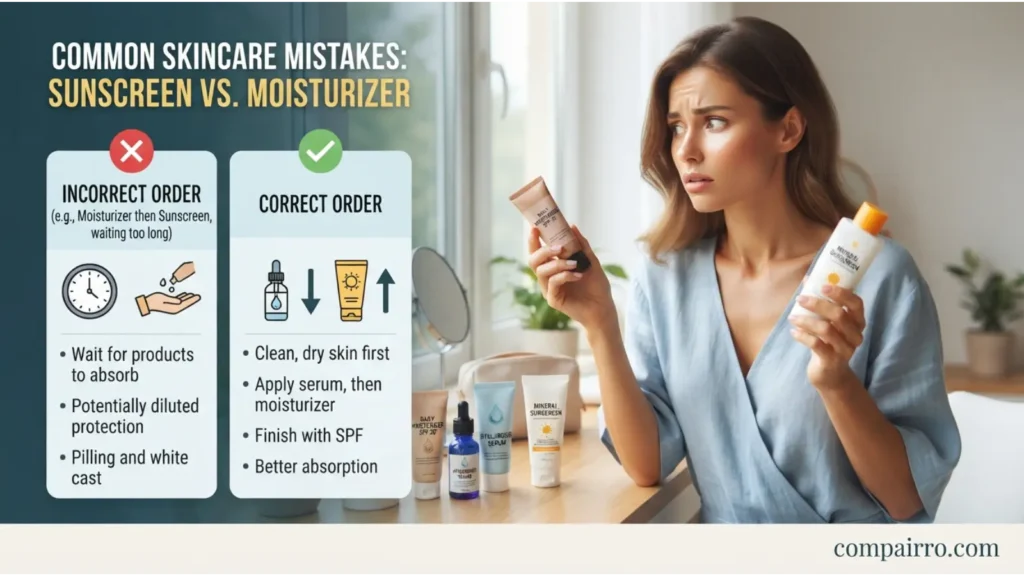
Common Mistakes With Sunscreen or Moisturizer First
Mistake 1: Applying sunscreen before moisturizer
❌ Incorrect: Moisturizer is applied over sunscreen as part of a normal morning routine.
✔ Correct: Apply moisturizer first, then sunscreen.
Putting another skincare product over sunscreen can disturb the sunscreen layer.
Mistake 2: Skipping sunscreen because moisturizer has SPF
❌ Incorrect: “My moisturizer has SPF, so I never need to think about sun protection.”
✔ Correct: Check the product’s label and directions. If you need sun protection, use a sunscreen that provides suitable broad-spectrum protection.
Mistake 3: Using too little sunscreen
❌ Incorrect: Applying only a tiny amount to exposed skin.
✔ Correct: Use the amount recommended by your sunscreen’s directions and cover exposed areas well.
Mistake 4: Applying makeup before sunscreen
❌ Incorrect: Foundation → sunscreen.
✔ Correct: Sunscreen generally goes before makeup in a morning routine.
Mistake 5: Forgetting to reapply
❌ Incorrect: Applying sunscreen once in the morning and assuming it lasts all day in every situation.
✔ Correct: Follow the product directions for reapplication, particularly during extended outdoor activity.
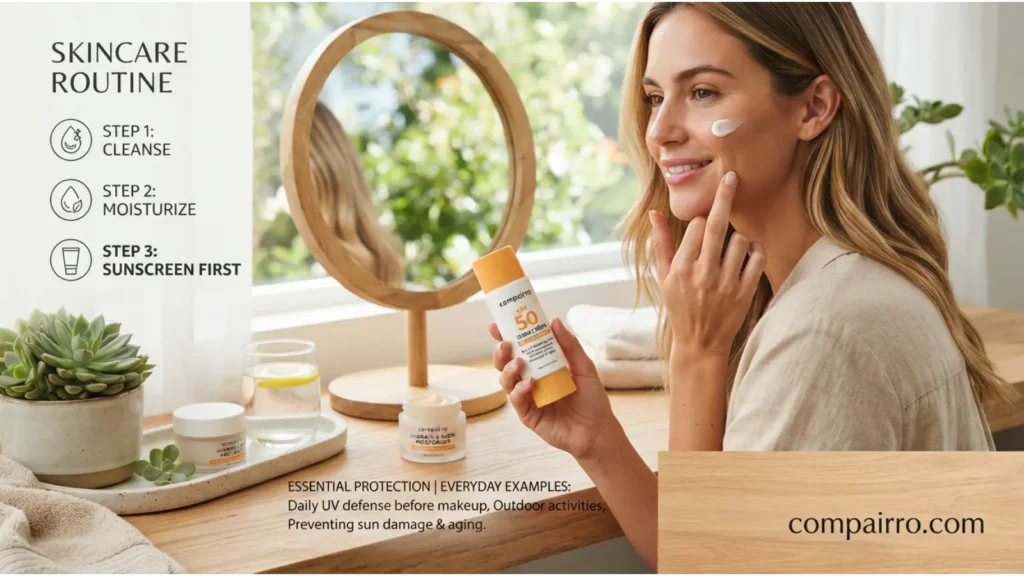
Sunscreen or Moisturizer First in Everyday Examples
Work
If you are getting ready for work, a simple routine can be:
Cleanser → Moisturizer → Sunscreen → Makeup
Even if you work indoors, sunscreen may still be useful when you are exposed to daylight, especially when spending time outside.
School
A simple morning routine for students can be:
Cleanser → Moisturizer → Sunscreen
You do not need a long routine with many products. Keeping it simple can make it easier to follow consistently.
Social Media
Skincare videos often show many products being layered. However, more products do not automatically mean a better routine.
If you are unsure, start with basic steps and follow the instructions for each product.
Daily Life
Before going outside, apply your morning skincare in the correct order. Give products a moment to settle before applying the next layer when needed.
Text Messages
You might ask a friend:
“Sunscreen or moisturizer first?”
A simple answer is:
“Moisturizer first, then sunscreen.”
Sunscreen or Moisturizer First – Google Trends & Usage Data
People search sunscreen or Hydrating Cream first because skincare routines can contain several products, and product order can affect how comfortable the routine feels.
Search interest can also increase when skincare routines become popular on social media. Beginners may especially search questions such as:
- Should I apply moisturizer before sunscreen?
- Can I skip Hydrating Cream before sunscreen?
- Can sunscreen replace moisturizer?
- Do I put sunscreen on before makeup?
- How long should I wait between Hydrating Cream and sunscreen?
The topic can appear in searches across the US, UK, India, Pakistan, Canada, and Australia. English-language skincare content is widely shared across these countries.
However, exact Google search volume changes over time and depends on location, season, and search tool. Therefore, it is better not to treat one search trend as a permanent measure of popularity.
Comparison Table: Sunscreen or Moisturizer First
| Product | Main Purpose | Usual Morning Position | Main Benefit |
|---|---|---|---|
| Cleanser | Cleans the skin | First | Removes dirt and excess oil |
| Serum/Treatment | Targets a specific skincare need | Before moisturizer | Depends on product |
| Moisturizer | Adds and helps retain moisture | Before sunscreen | Supports skin hydration |
| Sunscreen | Helps protect from UV radiation | Usually last | Sun protection |
| Makeup | Adds cosmetic coverage | After sunscreen | Cosmetic purpose |
The key difference is their purpose. Moisturizer focuses on hydration, while sunscreen focuses on sun protection.
Sunscreen or Moisturizer First in Professional Life
Your professional routine does not need to be complicated.
If you are going to an office, workplace, meeting, or outdoor job, a basic morning routine can save time:
Cleanser → Moisturizer → Sunscreen
If you wear makeup, sunscreen normally comes before makeup.
People who spend a lot of time outdoors should pay particular attention to sun protection and follow the sunscreen label’s directions for application and reapplication.
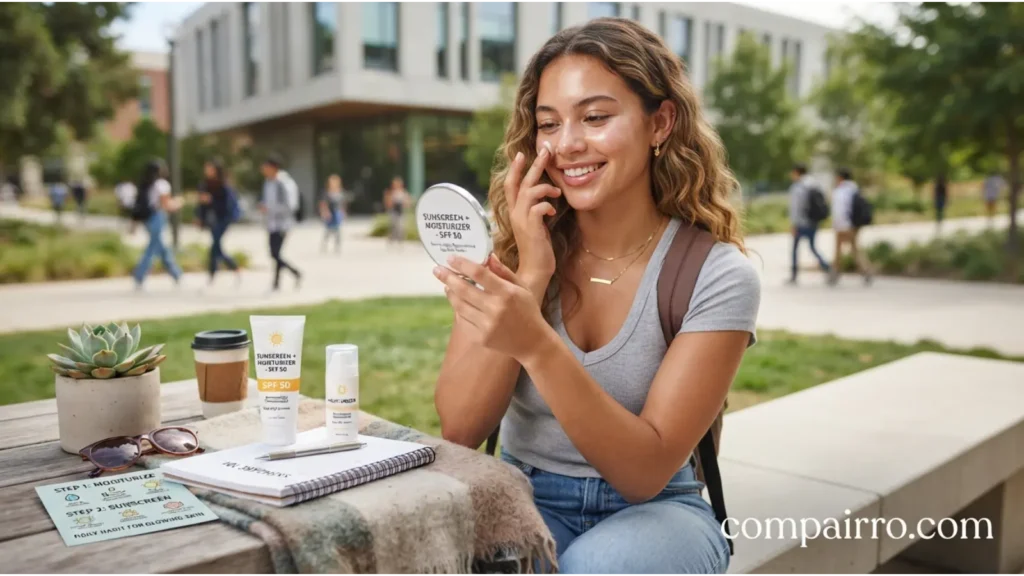
Sunscreen or Moisturizer First for Students or Beginners
Beginners often struggle because skincare advice online can seem complicated. One video may show five products, while another recommends a completely different routine.
Start with the basics:
- Clean your face.
- Apply moisturizer if needed.
- Apply sunscreen during the daytime.
- Follow the instructions on your products.
- Avoid adding many new products at once.
Remember that everyone’s skin can react differently to skincare products. If a product causes ongoing irritation or discomfort, stop using it and consider asking a healthcare professional for advice.
Signs or Characteristics Related to Sunscreen or Moisturizer First
Here are the main features to remember:
- Moisturizer: Helps hydrate and support the skin barrier.
- Sunscreen: Helps protect skin from UV radiation.
- Morning routine: Usually ends with sunscreen before makeup.
- Dry skin: May benefit from a separate Hydrating Cream before sunscreen.
- Oily skin: May prefer a lightweight Hydrating Cream or a moisturizing sunscreen.
- Combination skin: May need different textures in different areas.
- Makeup users: Usually apply makeup after sunscreen.
- Outdoor activity: May require sunscreen reapplication according to the product directions.
The best routine depends on your skin, the products you use, and the instructions on their labels.
Simple Trick to Remember Sunscreen or Moisturizer First
Think of your skincare routine like this:
👉 Moisturizer = Care
👉 Sunscreen = Protection
Think of it this way:
First, you give your skin the moisture it needs. Then, you add protection from UV radiation.
So remember:
“Moisturize, then protect.”
For example:
Morning: Cleanser → Moisturizer → Sunscreen → Makeup
That one sentence makes the order easy to remember.
FAQs:
1. Should sunscreen go before or after moisturizer?
For most morning routines, apply moisturizer first and sunscreen afterward.
2. Can I skip moisturizer before sunscreen?
Yes, some people may not need a separate moisturizer, especially if their sunscreen is moisturizing enough for their skin.
3. Can sunscreen replace moisturizer?
A moisturizing sunscreen may provide enough hydration for some people, but it depends on the product and your skin’s needs.
4. How long should I wait between moisturizer and sunscreen?
You do not usually need a long wait. Let the moisturizer settle comfortably, then apply sunscreen according to its directions.
5. Does sunscreen go before makeup?
Yes. Sunscreen generally goes before makeup in a morning skincare routine.
6. What comes first, moisturizer or sunscreen with SPF?
If you are using a separate moisturizer and sunscreen, use moisturizer first and sunscreen second.
7. Is sunscreen the last step in a morning skincare routine?
It is generally the last skincare step before makeup. Always follow the directions for your specific products.
Conclusion
The answer to sunscreen or moisturizer first is simple: moisturizer usually comes first, followed by sunscreen.
Moisturizer helps keep the skin hydrated, while sunscreen helps protect it from UV radiation. A basic routine can be as simple as cleanser → moisturizer → sunscreen.
If your sunscreen already provides enough moisture for your skin, you may not need a separate moisturizer. The right choice depends on your skin and the products you use.
Easy memory rule: 👉 Moisturize first, protect second.
Following a simple routine consistently is often easier than using many products without knowing their purpose.

Sara Taylor is a passionate English content writer who specializes in word meanings, spelling comparisons, and modern slang explanations. She creates easy-to-understand articles that help readers avoid common English mistakes and improve their writing skills. Her content focuses on simple learning, real-life examples, and clear explanations for everyday readers.