When writing a price, have you ever wondered whether the dollar sign goes before or after the number? For example, should you write $50 or 50$? This is a common question for students, beginners, online shoppers, and people who work with money.
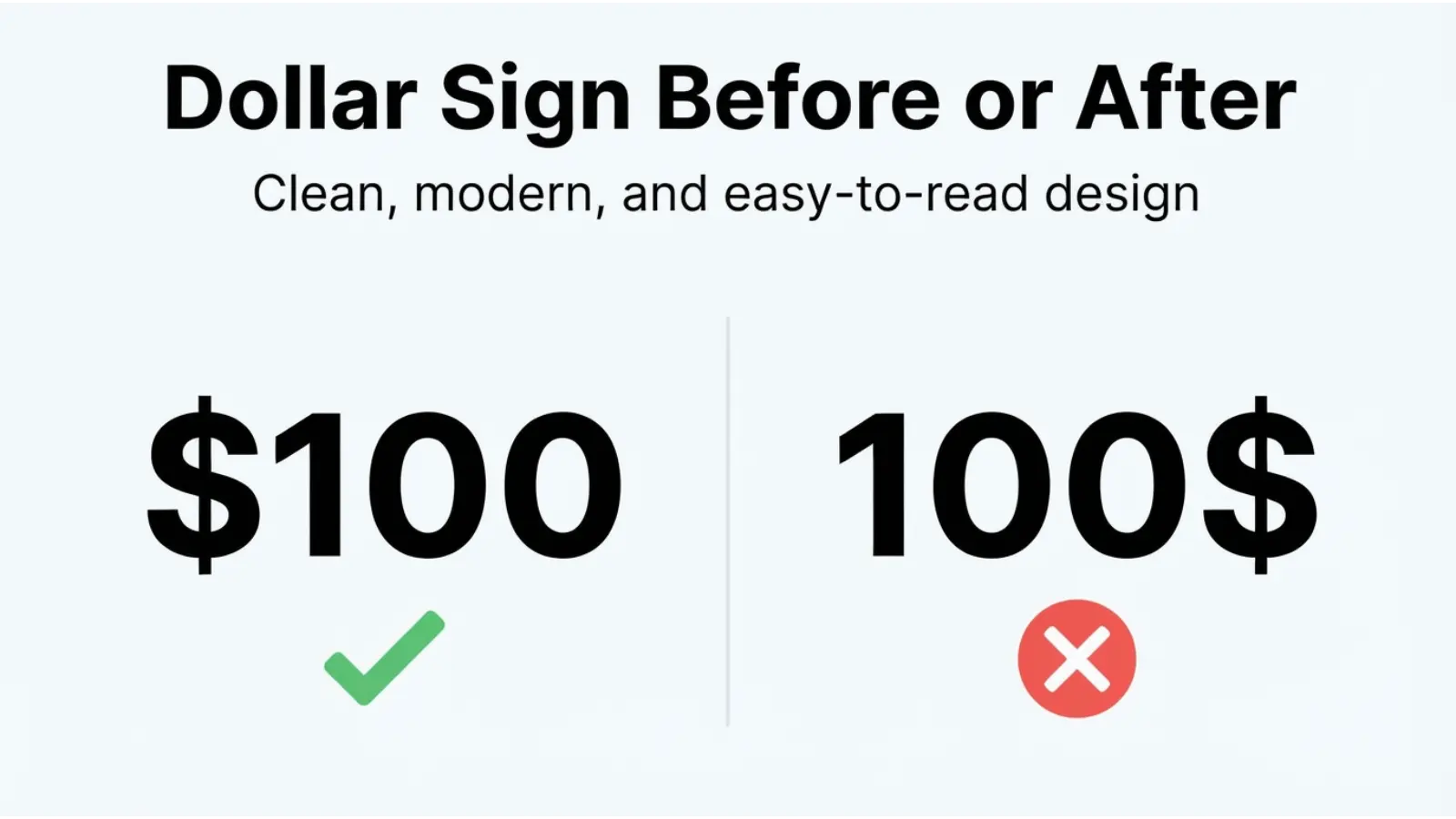
The answer is simple: In standard American English, the dollar sign usually comes before the number. You write $50, not 50$, when referring to fifty US dollars.
However, money symbols can follow different rules in other countries. Some currencies place their symbols before the amount, while others use them after it. You may also see different formats on websites, invoices, shopping apps, and social media posts.
Understanding the correct placement of the dollar sign helps you write prices clearly and avoid confusion. It is especially useful when writing school assignments, preparing business documents, creating online content, or working with international customers.
For example, if you run an online store, writing prices correctly makes your product listings easier to understand. Similarly, knowing the difference between $100 and 100 dollars can help you improve your everyday English and writing skills.
In this guide, you’ll learn the meaning, examples, usage, differences, common mistakes, and simple explanations in easy English.
Dollar Sign Before or After – Quick Answer
The dollar sign ($) usually goes before the number when writing US dollar amounts in standard American English.
- Correct: $10
- Correct: $100
- Incorrect in standard US formatting: 10$
- Incorrect in standard US formatting: 100$
The dollar sign tells readers that the number represents money in dollars.
Examples:
- This shirt costs $25.
- I saved $200 this month.
- The laptop costs $850.
Simple rule: Put the dollar sign first, followed by the number.
Think of it as $ + amount = standard US dollar format.
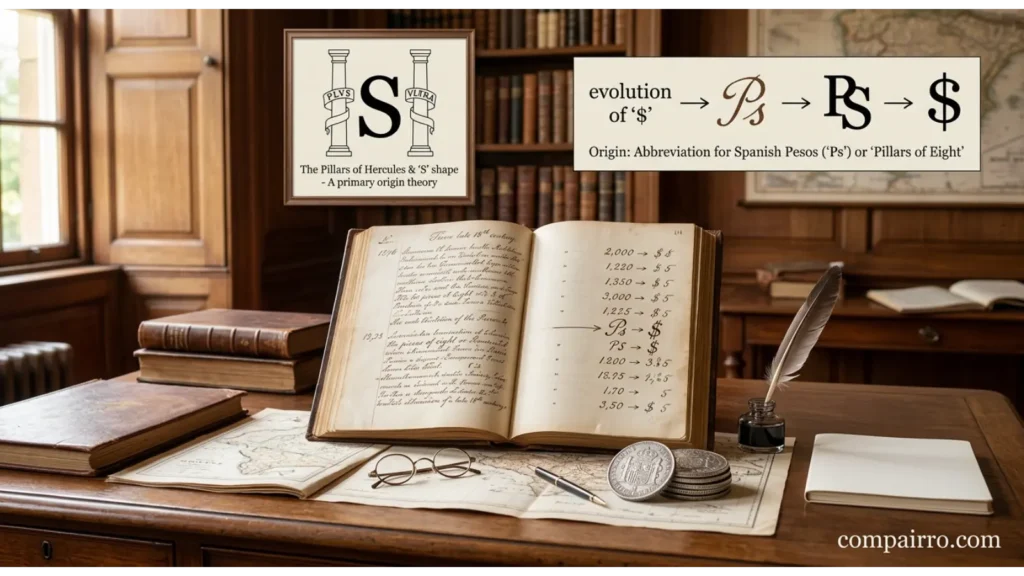
The Origin of the Dollar Sign
The dollar sign ($) is a widely recognized symbol used to represent several currencies, including the US dollar, Canadian dollar, and Australian dollar.
Its exact historical origin is debated. One common explanation connects it to the Spanish peso and the symbol used in trade documents. Over time, the sign became closely associated with the US dollar.
As trade and business grew, the dollar sign became common in newspapers, accounting books, advertisements, and everyday writing.
Today, you can find it on shopping websites, payment apps, financial reports, and social media platforms.
The placement rule is simple in American English: the symbol normally comes before the amount, as in $75.
British English vs American English Usage
The placement of the dollar sign depends more on the currency and writing convention than on British or American English alone.
In standard American English, the dollar sign comes before the number. British English follows the same pattern when referring to US dollars or other dollar-denominated amounts.
For example, both American and British writers can write $40 when discussing forty US dollars.
| Feature | British English | American English | Notes |
|---|---|---|---|
| US dollar amount | $50 | $50 | Symbol comes first |
| Ten dollars | $10 | $10 | Standard format |
| One hundred dollars | $100 | $100 | Standard format |
| Written-out amount | Ten dollars | Ten dollars | Useful in formal writing |
| Informal alternative | 50 dollars | 50 dollars | Clear, but less compact |
Some countries use different currency symbols and formatting rules. For example, the pound sign comes before the number in £50, while other currencies may use different placements depending on the language and local convention.
The key point is that standard US dollar formatting puts the dollar sign before the amount in both British and American English.
Which One Should You Use?
If you are writing an amount in US dollars, use the dollar sign before the number.
Here are some simple guidelines:
- For schoolwork: Write $20 when referring to twenty dollars.
- For business: Use $500 on invoices, price lists, and financial documents when the currency is clear.
- For online shopping: Write $19.99 for a product price in US dollars.
- For social media: Use $100 when sharing a price or budget.
- For formal writing: Use the dollar sign and number consistently throughout your document.
If your readers live in different countries, make the currency clear. For example, US$100 identifies US dollars more clearly than $100 when several dollar currencies are being discussed.
For a general audience, you can also write “100 US dollars” to avoid confusion.

Common Mistakes With the Dollar Sign
Here are four common mistakes people make when writing dollar amounts.
Mistake 1: Putting the dollar sign after the number
❌ Incorrect in standard US formatting: 50$
✔ Correct: $50
The dollar sign normally comes before the number in American English.
Mistake 2: Adding an unnecessary space
❌ Incorrect in standard US formatting: $ 50
✔ Correct: $50
In ordinary US price formatting, do not put a space between the dollar sign and the number.
Mistake 3: Using the dollar sign twice
❌ Incorrect: $$100
✔ Correct: $100
One dollar sign is enough to identify the currency in a standard price.
Mistake 4: Forgetting the currency in international writing
❌ Unclear: The service costs $500.
✔ Clearer when the currency might be confusing: The service costs US$500.
The dollar sign is used by several countries. Adding “US” can help international readers understand which dollars you mean.
Dollar Sign in Everyday Examples
The dollar sign appears in many everyday situations. Here is how to use it correctly.
1. At Work
Employees often use dollar signs in budgets, reports, and business emails.
Examples:
- The project budget is $5,000.
- Our monthly sales reached $12,000.
- The service costs $75 per hour.
Using the correct format makes business documents easier to read.
2. At School
Students may see dollar signs in math questions, economics lessons, and word problems.
Examples:
- A book costs $15.
- Sara has $40 and spends $12.
- What is the total cost of three items priced at $5 each?
Writing the dollar sign before the number helps students recognize money amounts quickly.
3. On Social Media
People often use dollar signs when discussing shopping, earnings, savings, or prices.
Examples:
- I saved $100 this week.
- These shoes cost $60.
- My budget is $250.
The same standard placement applies to posts, captions, and comments written in English.
4. In Daily Life
You may see the dollar sign on restaurant menus, product labels, and online advertisements.
Examples:
- Coffee: $4
- Movie ticket: $12
- Headphones: $35
These examples show how the dollar sign makes prices easy to recognize.
5. In Text Messages
People often use short money formats when chatting with friends.
Examples:
- “I owe you $20.”
- “The ticket is $15.”
- “Can you lend me $10?”
Even in casual messages, writing the USD Symbol first is the standard format for US dollars.
Dollar Sign – Google Trends and Usage Data
People search for “USD Symbol before or after” because they want to know the correct way to write prices. The question is especially common among English learners, students, online sellers, and people who work with international payments.
Search interest can come from several places:
- United States: People learn standard money formatting for school, business, and everyday writing.
- United Kingdom: Users may need to write or understand prices in US dollars.
- India: Students, freelancers, and online shoppers may encounter dollar prices on international websites.
- Pakistan: English learners, digital marketers, freelancers, and online businesses may need to format dollar amounts correctly.
- Canada: People may write Canadian or US dollar amounts and need to make the currency clear.
- Australia: Online shopping and international business can create questions about dollar symbols.
The topic is useful throughout the year because people regularly write prices, budgets, and payments.
However, these examples are not a verified ranking of countries by search volume. Google Trends data changes over time, and a live comparison would be needed to identify the most popular countries or current search patterns.
A common source of confusion is that several countries use the dollar symbol. Another is the difference between a symbol’s placement and the way an amount is written in words.
Comparison Table: Dollar Sign Before or After
The following table shows the standard way to write dollar amounts in common situations.
| Amount in Words | Correct Format | Incorrect in Standard US Formatting |
|---|---|---|
| One dollar | $1 | 1$ |
| Five dollars | $5 | 5$ |
| Ten dollars | $10 | 10$ |
| Fifty dollars | $50 | 50$ |
| One hundred dollars | $100 | 100$ |
| One thousand dollars | $1,000 | 1,000$ |
| Fifty dollars and fifty cents | $50.50 | 50.50$ |
| One thousand five hundred dollars | $1,500 | 1,500$ |
Important: The examples in the final column are not the standard US format. You may encounter different conventions in other languages or local settings.
When writing US dollar amounts, put the symbol before the number and keep the format consistent.
Dollar Sign in Professional Life
Correct currency formatting is important in professional settings because it helps prevent misunderstandings.
Business owners use dollar signs in price lists, invoices, sales reports, and budgets. Freelancers may use them when sending quotes to clients, while digital marketers may include them in advertising campaigns.
For example:
- Website design: $300
- Monthly marketing service: $150
- Advertising budget: $500
- Annual subscription: $120
In international business, it is helpful to identify the currency when needed. A price written as US$300 is clearer than $300 if the reader might confuse US dollars with Canadian or Australian dollars.
Always follow the style required by your employer, client, or accounting software.

Dollar Sign for Students or Beginners
Beginners sometimes struggle with the USD Symbol because other currency symbols and languages may follow different rules.
The easiest way to learn is to practice with small amounts first.
Try these learning tips:
- Write $1, $5, $10, and $20 several times.
- Read each amount aloud as “one dollar,” “five dollars,” and “twenty dollars.”
- Practice writing prices from a shopping list.
- Check whether your examples use US dollars or another currency.
- Remember that the symbol and the amount normally have no space between them in standard US formatting.
You can also practice with simple questions.
Question: How do you write thirty dollars?
Answer: $30.
Question: How do you write twenty-five dollars and fifty cents?
Answer: $25.50.
These small exercises can help you remember the correct format.
Signs or Characteristics of Correct Dollar Sign Usage
You can recognize correct dollar formatting by looking for these features:
- Symbol first: The USD Symbol appears before the number.
- No extra space: Standard formatting uses $25, not $ 25.
- Clear amount: The number after the symbol shows the value.
- Consistent style: The same format is used throughout a document.
- Clear currency: US$ or another suitable label is added when necessary.
- Correct decimal placement: For example, $12.50 represents twelve dollars and fifty cents.
- Readable large amounts: A comma may separate thousands, as in $1,500, following standard US number formatting.
These features make money amounts easier to understand in schoolwork, business documents, and online content.
Simple Trick to Remember the Dollar Sign
Here is an easy trick:
USD Symbol first, number second.
Remember this pattern:
- $5 = five dollars
- $20 = twenty dollars
- $100 = one hundred dollars
Think of the dollar sign as a label that appears before the price. When you see a price written in standard US format, the symbol comes first and the amount follows.
For example, if a notebook costs ten dollars, write $10. If a bag costs fifty dollars, write $50.
Think of it this way: The dollar sign introduces the money amount, just as a label introduces the information that follows it.
FAQs:
1. Does the dollar sign go before or after the number?
In standard American English, the dollar sign goes before the number. Write $50 rather than 50$.
2. Is $100 correct or 100$?
$100 is the standard format for one hundred US dollars. The symbol comes before the amount.
3. Do you put a space after the dollar sign?
No. In standard US formatting, write $25, not $ 25.
4. Does the dollar sign go before cents?
Yes. For an amount that includes dollars and cents, write $5.75, meaning five dollars and seventy-five cents.
5. Is the dollar sign used only for US dollars?
No. Several currencies use the dollar symbol, including the Canadian and Australian dollars. Add a currency label when the meaning might be unclear.
6. Do British people put the dollar sign before the number?
Yes. When writing US dollar amounts in English, British writers generally use the same format: $50.
7. How do you write 1,000 dollars correctly?
In standard US formatting, write $1,000. The USD Symbol comes first, followed by the amount.
Conclusion
Knowing whether the dollar sign goes before or after a number makes writing prices much easier. In standard American English, the correct format is to put the dollar sign before the amount.
For example, write $10, $50, $100, and $1,000. Avoid placing the symbol after the number when following standard US formatting.
Remember that different countries may have different currency conventions, and several currencies use the dollar sign. When writing for international readers, identify the currency if there is any chance of confusion.
Final memory rule: Dollar sign first, number second — $50, not 50$.

Sara Taylor is a passionate English content writer who specializes in word meanings, spelling comparisons, and modern slang explanations. She creates easy-to-understand articles that help readers avoid common English mistakes and improve their writing skills. Her content focuses on simple learning, real-life examples, and clear explanations for everyday readers.